TL;DR

Get furniture and decor delivered free with Prime
- Fast, free delivery on millions of items
- Prime Video, Amazon Music and more included
- Member-only deals all year
An Ideal Home report outlines six habits for drying laundry indoors while limiting moisture build-up: remove more water with an extra spin, space garments out, use suitable drying equipment, choose a well-ventilated position and air the room. The advice is practical guidance, not a guarantee against damp or mould; results depend on the home, weather and drying conditions.
Ideal Home has published six tips for drying laundry indoors while limiting moisture that can contribute to condensation and damp. The advice focuses on removing more water before drying, improving airflow around clothes and using ventilation or moisture-removal equipment.
The recommendations begin with an extra washing-machine spin cycle, if the garment and machine settings allow it. The report says clothes that retain less water should dry faster and release less moisture into the room. It singles out heavier items such as towels, jeans and bedding, while advising readers to use a suitable spin speed.
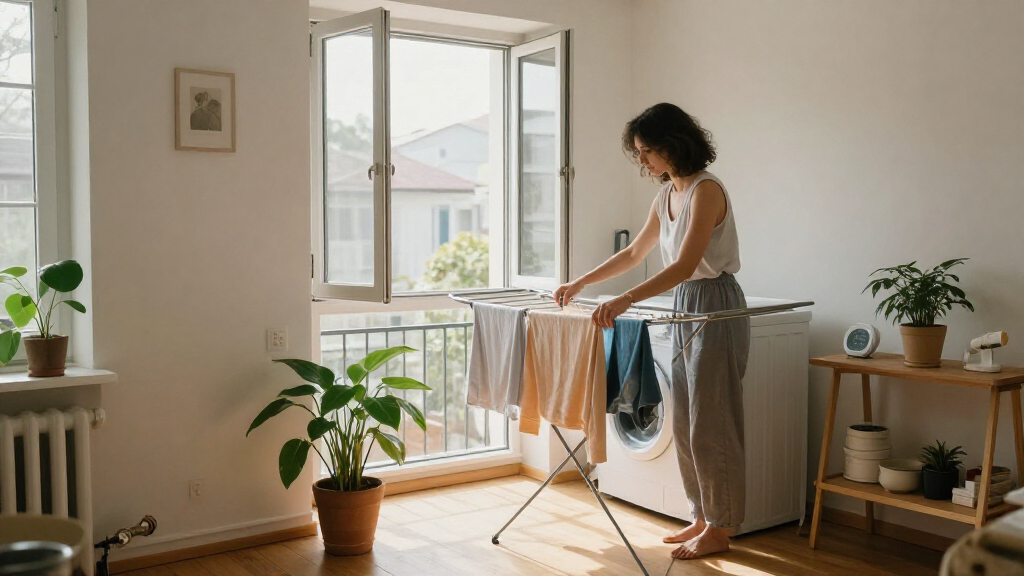
On the airer, the report advises leaving space between garments rather than packing the rack tightly. Brabantia laundry expert Lauren Roelofs says space allows air to circulate and helps clothes dry more evenly. The advice also suggests spreading out sleeves, opening shirts and avoiding folded-over trouser legs; heavier garments can be turned partway through drying to reduce damp patches.
The other recommendations are to consider a heated clothes airer, pair the drying setup with a dehumidifier, position the airer away from walls and ventilate the room. Lakeland buying lead Catrin Parry says a dehumidifier can remove excess moisture from the air, while a cover for a heated airer may reduce drying time depending on the load and conditions. The report does not provide comparative test data for these recommendations.
Keeping Indoor Drying Moisture Down
Wet laundry releases water as it dries. In a room with limited airflow or moisture removal, that can add to indoor humidity and increase condensation concerns, particularly during colder weather when outdoor drying is less practical. The recommendations address both sides of the problem: helping garments dry more efficiently and giving moisture a way to leave the room or be collected.
That distinction matters when choosing equipment. A heated airer may help warm and dry clothes, but, as the report explains, it does not itself remove moisture from the air. A dehumidifier serves a different purpose. Ventilation is another part of the approach, though how much a window can be opened will depend on outdoor conditions, security and the home.
The tips are low-level household guidance, not a mould-removal plan or a promise that damp will be prevented. Persistent condensation, visible mould or a recurring damp problem may have causes beyond laundry and could require advice specific to the property.
Products Worth Considering

Philips Hue Festavia 130-Foot Indoor/Outdoor Smart String Lights, 500 LEDs

Bose SoundLink Flex (2nd Gen) Portable Bluetooth Speaker, Black

LEVOIT Vital 200S-P Smart Air Purifier for Large Rooms
As an affiliate, we earn on qualifying purchases.
Why Winter Laundry Needs Planning
The report frames its advice around cold, wet weather, when outdoor drying is less available and households may rely more on indoor racks. It notes that not everyone has a tumble dryer or can afford to run one, making airers a common alternative.
Its six actions are: run an extra spin where suitable; leave space between clothes; use a heated airer if useful; pair the setup with a dehumidifier; place the airer where air can circulate; and ventilate the room. The article also mentions vertical airers as an option for homes with limited floor space. These are recommendations from a home and interiors report, rather than findings from a controlled comparison of drying methods.
“Leaving space between garments allows air to circulate, helping clothes dry more evenly.”
— Lauren Roelofs, laundry expert at Brabantia, as quoted by Ideal Home
Limits of the Drying Advice
The supplied report does not specify a publication date, quantify how much moisture each measure removes or compare the costs and energy use of different setups. It also does not establish that these steps will prevent damp or mould in every home. Results will vary with room size, ventilation, outdoor weather, laundry load and the condition of the property.
The source material cuts off during its ventilation section, so it does not include the full explanation of how the report recommends ventilating. It is also unclear what exact window-opening schedule or conditions the article advises. Readers should not treat the incomplete text as a detailed ventilation protocol.
Applying the Tips at Home
The immediate next step for households is to adapt the recommendations to their space: use a suitable spin setting, spread clothes out and place the airer where air can move around it. If using a heated airer, follow the manufacturer’s instructions and keep it appropriately positioned; a dehumidifier should also be used and maintained according to its manual. Ventilate where practical, taking account of weather and household safety.
The source describes general household measures, not a new regulation or announced product standard. No further development or follow-up from Ideal Home is specified in the material provided. Where damp or mould persists despite changes to laundry drying, the underlying cause remains to be identified rather than assumed to be the washing alone.
Key Questions
What are the six recommended habits for drying laundry indoors?
The report recommends an extra spin cycle where suitable, spacing clothes out, considering a heated airer, using a dehumidifier, positioning the airer away from walls and ventilating the room.
Why leave space between clothes on an airer?
Brabantia expert Lauren Roelofs says spacing garments allows air to circulate and helps clothes dry more evenly. Spreading sleeves and avoiding overlapping fabric can also reduce areas that stay damp.
Does a heated clothes airer remove moisture from the room?
Not according to the report: it helps dry clothes, but does not itself remove the moisture they release into the room. The article recommends a dehumidifier for that separate function.
Will these steps prevent damp and mould?
The report presents them as ways to limit moisture and improve drying, not as a guarantee. Outcomes depend on the home and conditions, and persistent damp or mould may need a separate assessment.
Source: idealhome.co.uk