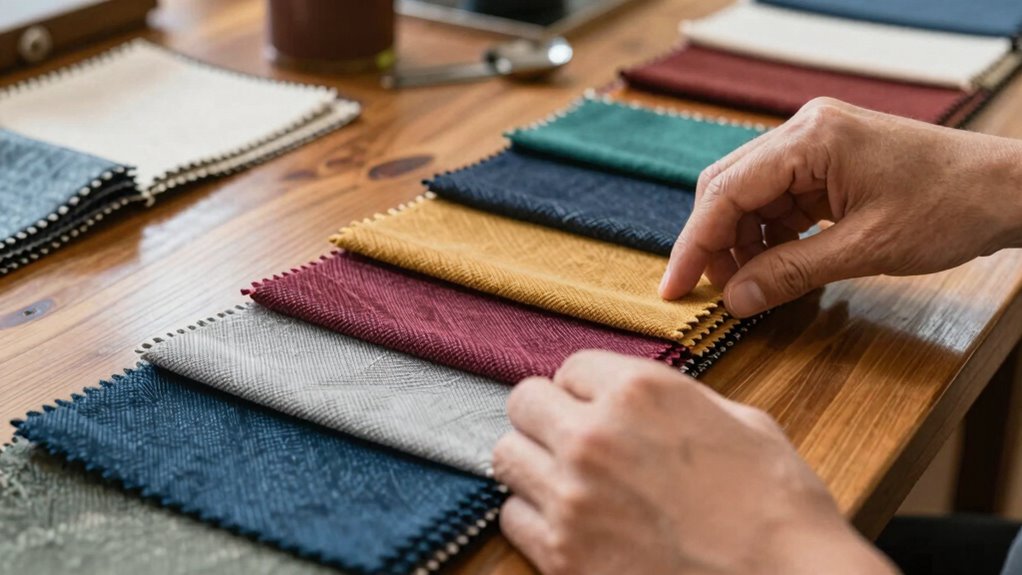

To make samples work harder before final selections, guarantee they accurately reflect your brand’s identity with consistent logos, colors, and packaging. Test their durability and performance by handling them as users would, simulating real-world scenarios. Follow standardized protocols and document all observations thoroughly. Focus on long-term quality, not just appearance, to avoid costly mistakes later. Keep these strategies in mind, and you’ll discover even more effective ways to optimize your sample evaluations.

Get furniture and decor delivered free — and shop member deals
- Fast, free delivery on millions of items
- Access to Prime Big Deal Days deals on October 6–7
- Prime Video, Amazon Music and more included
Key Takeaways
- Implement standardized testing protocols to evaluate durability, appearance, and functionality consistently across all samples.
- Conduct real-world usage simulations to assess long-term performance and identify potential issues early.
- Ensure branding and design elements are uniform and accurately reflect the final product for reliable visual comparison.
- Document all observations meticulously to enable objective analysis and informed decision-making.
- Prioritize durability and performance testing over aesthetics alone to select truly resilient and high-quality samples.

Have you ever wondered how to get the most value out of your product samples? When you’re testing and evaluating different options, it’s easy to overlook how essential it is to use samples that truly reflect your brand’s identity and quality standards. Guaranteeing branding consistency across all samples means that each piece you examine accurately represents your final product. This consistency helps you make more informed decisions, as you’re evaluating materials and design elements that will ultimately appear in your finished items. If your samples lack uniformity in branding—whether it’s in logos, color schemes, or packaging details—you risk making choices based on flawed comparisons. Thus, pay close attention to how well your samples mirror your brand’s core identity, so you can confidently select the options that align with your vision.
Ensure your samples reflect your brand’s identity for accurate comparisons and confident decision-making.
Beyond visual consistency, material durability plays an essential role in making samples work harder for you. A sample’s durability indicates how well the final product will withstand daily wear and tear, so don’t dismiss this aspect when testing. Handling samples repeatedly, subjecting them to various conditions, or even simulating usage scenarios can reveal their true strength. If a sample shows signs of wear prematurely, it signals potential issues with the material choice or manufacturing process. Choosing durable samples helps prevent costly mistakes later, as you’ll have a clearer understanding of what’s feasible for long-term use. Remember, a sample that’s too fragile might look appealing initially but could disappoint in real-world application, leading to customer dissatisfaction and returns. Conducting real-world tests can further ensure your samples truly reflect how the final product will perform in everyday situations. Additionally, considering material properties during testing can help you select options that balance aesthetics with functionality. Incorporating testing protocols into your evaluation process can standardize your approach and improve decision accuracy.
Finally, keep detailed records of your observations during testing. Document how each sample performs in terms of branding consistency, material durability, and overall functionality. This organized approach helps you compare options objectively and avoids rushing final decisions. When you understand exactly how each sample stacks up, you maximize their value and reduce the risk of costly mistakes. In the end, making samples work harder isn’t just about initial appearances; it’s about thorough, strategic testing that ensures your final product hits the mark in both quality and brand presentation.
Frequently Asked Questions
How Can I Ensure Sample Consistency Across Different Batches?
To guarantee sample consistency across different batches, you should focus on proper sample storage, keeping samples in controlled conditions to prevent degradation. Regularly monitor and document batch variation, noting any differences that could impact consistency. Use standardized processes for sampling and handling, and consider mixing or blending samples from different batches to minimize variation. Consistent storage and diligent tracking help maintain uniformity and improve the reliability of your samples over time.
What Metrics Should I Track to Evaluate Sample Effectiveness?
You should track metrics like sample calibration accuracy and data normalization consistency to evaluate sample effectiveness. Regularly assess how well your samples align with expected calibration standards and guarantee data normalization processes are consistent across batches. Monitoring these metrics helps you identify when samples deviate, allowing you to make adjustments early. This proactive approach guarantees your samples remain reliable, ultimately leading to more accurate final selections and better overall quality.
How Do I Gather Unbiased Feedback on Samples?
To gather unbiased feedback on samples, you should directly ask a diverse group of customers about their preferences, ensuring you include varied demographics. Avoid sampling biases by randomly selecting participants instead of cherry-picking. Use anonymous surveys when possible to reduce influence, and compare feedback across different groups. This approach helps you understand genuine customer preferences and minimizes biases that could skew your results.
What Common Mistakes Reduce Sample Testing Efficiency?
Like a leaky faucet wastes water, small sample sizes or inconsistent testing protocols reduce testing efficiency. You might overlook critical flaws or differences if your sample size isn’t representative. Avoid rushing tests or skipping steps, as this compromises data quality. Make sure your testing protocols are clear and followed meticulously, and use a sufficiently large, diverse sample to get accurate, actionable insights before making final decisions.
How Long Should I Test Samples Before Making Final Decisions?
You should test samples for at least as long as your testing protocols specify, usually a minimum of 24 to 72 hours, depending on the material. During this period, focus on proper sample preservation to prevent degradation and guarantee consistent results. Don’t rush the process—adequate testing time reveals true performance, helping you make informed final decisions. Always adhere to testing protocols for accurate, reliable outcomes.
Conclusion
Just like a chef tastes every spice before blending, you should treat your samples as your secret ingredients. Remember the story of a designer who tested her fabric samples in real-world conditions, saving her from costly mistakes later. When you make your samples work harder, you’re not just sampling; you’re crafting your success. So, invest that extra effort—your final selection will thank you, and you’ll end up with a product that truly stands out.
Fall Picks
fall essentials
As an affiliate, we earn on qualifying purchases.