The best countertop water filter overall in this lineup is the Bluevua RO100ROPOT, a reverse-osmosis option for shoppers who want broad filtration without plumbing installation. The DREO countertop RO systems stand out for their autofill pitchers, while the Brita UltraMax offers a simpler, familiar dispenser format. The main tradeoff is between the extra filtration and monitoring features of RO systems and the lower-maintenance routine of gravity and pitcher-style filters. Capacity, counter space, filter replacement, and the contaminants a filter is certified to reduce also affect the choice. Read on for a comparison of all 13 options, plus guidance on matching a filter to your household and water.

Get furniture and decor delivered free with Prime
- Fast, free delivery on millions of items
- Prime Video, Amazon Music and more included
- Member-only deals all year
Complete the kit


Key Takeaways
- Reverse osmosis dominates for feature depth: Bluevua and DREO offer install-free RO systems, but their added controls and pitchers take more counter space and involve more upkeep than basic dispensers.
- Dispenser format can matter more than filtration complexity: PUR, Brita, Waterdrop WFD-40L, and ZeroWater provide larger stored-water capacities suited to frequent pouring, though their filtration approaches differ.
- DREO’s lineup centers on convenience: Autofill pitcher designs distinguish its models, making them worth comparing for hands-light dispensing rather than treating them as identical RO units.
- Simple systems serve different constraints: iSpring CKC1C connects to a faucet, while Purewell uses gravity; neither follows the same install-free, stored-water approach as countertop pitchers and RO units.
- Certification claims need product-level checking: Waterdrop ED01W lists several NSF/ANSI standards, but buyers should verify the exact certified model, tested contaminants, and replacement filter before choosing by label alone.
| PUR 30-Cup Countertop Water Filter Dispenser, White/Blue |  | Best for High-Capacity Basic Filtering | Capacity: 30 cups (7.09 liters) | Dimensions: 15.3 x 5.3 x 10.1 inches | Weight: 8 ounces | VIEW ON AMAZON | See Our Full Breakdown |
| Bluevua RO100ROPOT Countertop Reverse Osmosis Water Filter System |  | Best Premium Glass-Carafe RO System | Filtration stages: 6-stage filtration with RO, UV, and remineralization | RO membrane: 0.0001 μm | Carafe capacity: 1700 ml | VIEW ON AMAZON | See Our Full Breakdown |
| Brita UltraMax 27-Cup Filtered Water Dispenser with Standard Filter, Black |  | Best for Fridge-Friendly Storage | Capacity: 27 cups | Material: BPA-free | Color: Black | VIEW ON AMAZON | See Our Full Breakdown |
| DREO Reverse Osmosis Water Filter Countertop, RO Filtration System, 3:1 Pure to Drain, TDS & Filter Life & 2 Autofill Pitchers, Install-Free, Self-Cleaning Water Purifier, RO Water Filter |  | Best for Autofill Convenience | Filtration: 7-in-1 reverse osmosis | Capacity: 5 liters | Pure-to-drain ratio: 3:1 | VIEW ON AMAZON | See Our Full Breakdown |
| VonWater CT910 7-Stage Countertop Reverse Osmosis Water Filter System |  | Best for Measured, Portion-Controlled Dispensing | Filtration: 7-stage reverse osmosis | Filter capacity: 528 gallons | Filter life: Up to 12 months | VIEW ON AMAZON | See Our Full Breakdown |
| Bluevua RO100ROPOT Countertop Reverse Osmosis Water Filter System |  | Best Overall Reverse Osmosis Pick | Filtration method: Reverse osmosis | Filtration stages: 5, including remineralization | Container material: Borosilicate glass | VIEW ON AMAZON | See Our Full Breakdown |
| DREO Countertop Reverse Osmosis Water Filter with Autofill Pitcher |  | Best for Hands-Off Dispensing | Model: DR-KWF002 | Filtration method: Reverse osmosis | Pure-to-drain ratio: 3:1 | VIEW ON AMAZON | See Our Full Breakdown |
| iSpring CKC1C Countertop Water Filter System |  | Best Faucet-Connected Value | Model: CKC1C | Filter type: 5-micron carbon block cartridge | Filter capacity: 10,000 gallons | VIEW ON AMAZON | See Our Full Breakdown |
| Waterdrop ED01W Electric Water Filter Pitcher, NSF/ANSI 42&53&401&372, White |  | Best for Fast, On-Demand Dispensing | Purification method: Carbon rod | Capacity: 3.5 liters | Maximum flow rate: 0.8 liters per minute | VIEW ON AMAZON | See Our Full Breakdown |
| Purewell 3-Stage Gravity Water Filter System, 2.25 Gallons |  | Best Non-Electric Bulk Capacity | Filtration stages: 3 | Filter pore size: 0.01 microns | Capacity: 2.25 gallons | VIEW ON AMAZON | See Our Full Breakdown |
| DREO Reverse Osmosis Water Filter System Countertop, RO Water Filter 112 3L | 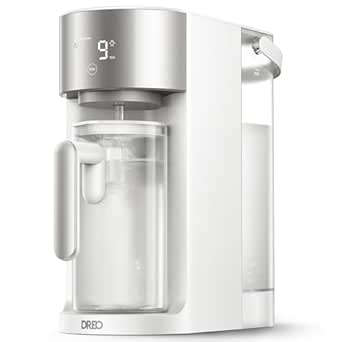 | Best Compact Countertop RO | Filtration method: Reverse osmosis; 7-in-1 filtration | Claimed contaminant reduction: Up to 99.9%; listing cites SGS testing against NSF/ANSI 58 | Reservoir capacity: 3 liters, plus a 1.1-liter pitcher | VIEW ON AMAZON | See Our Full Breakdown |
| Waterdrop WFD-40L Water Filter Dispenser, 35-Cup Capacity, Black |  | Best High-Capacity Gravity Dispenser | Model: WD-WFD-40L | Capacity: 8.2 liters; 35 cups total, with 19 cups in the body | Filtration method: Activated carbon; gravity filtration | VIEW ON AMAZON | See Our Full Breakdown |
| ZeroWater 32-Cup Ready-Read 5-Stage Water Filter Dispenser |  | Best for TDS Reduction in a Large Dispenser | Model: ZD-032-RR | Capacity: 32 cups (7.5 liters) | Filtration method: 5-stage ion exchange | VIEW ON AMAZON | See Our Full Breakdown |
| counterwater filter | Dimensions | Filter life | Capacity |
|---|---|---|---|
| PUR 30-Cup Countertop Water Fi | 15.3 x 5.3 x 10.1 inches | Up to 40 gallons or 2 months | 30 cups (7.09 liters) |
| Bluevua RO100ROPOT Countertop | 10.9 x 15.4 x 14.3 inches | 12 months listed; product description states 12–24 months | — |
| Brita UltraMax 27-Cup Filtered | — | — | 27 cups |
| DREO Reverse Osmosis Water Fil | 15.7 x 6.7 x 13.4 inches | — | 5 liters |
| VonWater CT910 7-Stage Counter | — | Up to 12 months | — |
| Bluevua RO100ROPOT Countertop | 10.9 × 15.4 × 14.3 inches | 12–24 months | 12 liters |
| DREO Countertop Reverse Osmosi | 14.5 × 6.7 × 13.4 inches | 6 months | 3 liters |
| iSpring CKC1C Countertop Water | 4.72 × 4.72 × 9.84 inches | 6–12 months, depending on water quality | — |
| Waterdrop ED01W Electric Water | 12.52 × 12.17 × 7.76 inches | Up to 3 months or 200 gallons | 3.5 liters |
| Purewell 3-Stage Gravity Water | 8.9 × 8.9 × 20 inches | Up to 3,000 gallons per filter | 2.25 gallons |
| DREO Reverse Osmosis Water Fil | 14.5 × 6.7 × 13.4 inches | 265 gallons (1,000 liters) | — |
| Waterdrop WFD-40L Water Filter | 14.4 × 5.5 × 10.2 inches | Up to 200 gallons or 2 months | 8.2 liters; 35 cups total, with 19 cups in the body |
| ZeroWater 32-Cup Ready-Read 5- | 13.13 × 6 × 10.38 inches | — | 32 cups (7.5 liters) |
More Details on Our Top Picks
PUR 30-Cup Countertop Water Filter Dispenser, White/Blue
The PUR 30-Cup Dispenser is a straightforward choice when household capacity matters more than reverse-osmosis filtration. Its 30-cup reservoir holds more than the Brita UltraMax’s 27 cups, while a pull-down spout lets you pour without waiting for the upper reservoir to finish filtering. PUR lists reductions for chlorine, mercury, copper, zinc, and other substances that affect taste and odor, but this is not the broad TDS-reduction approach offered by the Bluevua RO100ROPOT. That simpler design also means no power cord or dispensing electronics. The tradeoffs are a filter rated for only up to 40 gallons or two months and the need to make room on a counter or in a refrigerator. I’d choose it for everyday drinking water, not for buyers seeking reverse osmosis.
Pros:- 30-cup capacity serves multiple people between refills
- Pull-down spout allows pouring while the upper reservoir filters
- Listed to reduce chlorine, mercury, copper, zinc, and other substances
- Dishwasher-safe design and carrying handle support easier handling
Cons:- Included filter is rated for up to 40 gallons or two months
- Requires dedicated counter or refrigerator space
- Plastic construction may not suit buyers who prefer a glass carafe
Best for: Households or dorm residents who want a large, simple dispenser with a spout and listed reductions for common taste and odor concerns.
Not ideal for: Buyers seeking reverse-osmosis filtration, lower-TDS water, or a dispenser that does not take up counter or refrigerator space.
- Capacity:30 cups (7.09 liters)
- Dimensions:15.3 x 5.3 x 10.1 inches
- Weight:8 ounces
- Material:Plastic
- Purification method:Ion exchange
- Filter life:Up to 40 gallons or 2 months
- Maximum supported TDS:500 ppm
- Included components:Dispenser and one filter
- Special features:Pull-down spout, carrying handle, filter lock, dishwasher safe
Our verdict“Choose the PUR if you want a high-capacity, uncomplicated dispenser for everyday tap-water taste improvements rather than reverse osmosis.”
Bluevua RO100ROPOT Countertop Reverse Osmosis Water Filter System
The Bluevua RO100ROPOT is the premium-leaning pick for shoppers who want countertop reverse osmosis without plumbing and prefer a glass serving vessel. Its six-stage system combines a 0.0001-micron RO membrane, UV light, and remineralization, with listed reductions that include TDS, fluoride, arsenic, lead, PFOA, and PFOS. That is a broader filtration approach than the PUR 30-Cup dispenser, which targets a different set of common taste and odor concerns. The 1.7-liter borosilicate carafe is much smaller than PUR’s 30-cup reservoir, so frequent refilling is part of the bargain. Bluevua also uses electricity and occupies a sizable countertop footprint; buyers who want simpler, higher-volume storage may prefer the PUR. Its filter-life display and stated 2:1 pure-to-drain ratio help make ongoing operation easier to track.
Pros:- Six-stage filtration combines RO, UV, and remineralization
- Glass carafe avoids serving water from a plastic vessel
- No plumbing installation is required
- Filter-life and water-quality display helps track system status
Cons:- 1.7-liter capacity is much smaller than the PUR 30-Cup dispenser
- Corded electric system needs an outlet and substantial counter space
- Reverse-osmosis operation produces drain water despite the stated 2:1 ratio
Best for: Buyers who want countertop RO with UV and remineralization, a glass carafe, and no plumbing installation.
Not ideal for: Large households needing a high-capacity reservoir, or shoppers who want a lightweight, non-electric dispenser with minimal counter footprint.
- Filtration stages:6-stage filtration with RO, UV, and remineralization
- RO membrane:0.0001 μm
- Carafe capacity:1700 ml
- Carafe material:Borosilicate glass
- Dimensions:10.9 x 15.4 x 14.3 inches
- Weight:17.8 pounds
- Pure-to-drain ratio:2:1
- Filter life:12 months listed; product description states 12–24 months
- Power source:Corded electric
Our verdict“Pick the Bluevua if you want a feature-rich countertop RO system with a glass carafe and can accept its smaller capacity and electrical requirements.”
Brita UltraMax 27-Cup Filtered Water Dispenser with Standard Filter, Black
The Brita UltraMax earns its place for buyers who want a large filtered-water supply kept cold in the refrigerator. Its 27-cup capacity is slightly below the PUR 30-Cup Dispenser, but Brita’s listed fridge-friendly design, locking lid, and precision-pour spigot make it the more targeted fit for chilled serving. The included Standard filter reduces chlorine taste and odor, copper, mercury, and other impurities; it does not offer the broad TDS reduction of the Bluevua RO100ROPOT. Brita’s compatibility with Standard and Elite filters gives buyers a choice between more frequent replacement and the longer stated life of the Elite filter. The main limitation is physical fit: a large dispenser still occupies refrigerator space, and the included Standard filter is rated for about two months. I’d favor it over PUR when chilled storage is the priority.
Pros:- 27-cup capacity supports household use
- Fridge-friendly form includes a locking lid and precision-pour spigot
- Compatible with Brita Standard and Elite filters
- Change indicator provides a reminder for filter replacement
Cons:- Requires substantial refrigerator space
- Included Standard filter is rated for about 40 gallons or two months
- Standard filtration does not provide the TDS reduction of countertop RO systems
Best for: Families who want a large supply of filtered water chilled in the refrigerator and value a spigot designed for controlled pouring.
Not ideal for: People with limited refrigerator space or buyers seeking reverse osmosis and broad TDS reduction.
- Capacity:27 cups
- Material:BPA-free
- Color:Black
- Included filter:One Standard filter
- Standard filter life:40 gallons or about 2 months
- Elite filter life:120 gallons or about 6 months
- Features:Fridge-friendly design, locking lid, precision-pour spigot, filter-change indicator
- Model number:OB24/OB06
Our verdict“Choose the Brita UltraMax over the PUR when keeping a large filtered-water supply cold is more important than maximum dispenser capacity.”
DREO Reverse Osmosis Water Filter Countertop, RO Filtration System, 3:1 Pure to Drain, TDS & Filter Life & 2 Autofill Pitchers, Install-Free, Self-Cleaning Water Purifier, RO Water Filter
The DREO Countertop RO System is the convenience-led choice in this group: its headline features are two autofill pitchers, touch controls, self-cleaning, and status information for TDS and filter life. That separates it from the Bluevua RO100ROPOT, which emphasizes a glass carafe, UV, and remineralization, and from the VonWater CT910, which offers five selectable dispensing volumes. DREO’s listed 5-liter capacity suits buyers who want a ready supply without plumbing, while the stated 3:1 pure-to-drain ratio addresses a common RO drawback. The product description says the system was SGS-tested to meet NSF/ANSI 58 standards and lists reductions for PFOA, PFOS, chlorine, and fluoride. However, the supplied details do not give a filter-life figure or the exact capacity of each pitcher, making upkeep planning less clear than with the VonWater.
Pros:- Two autofill pitchers reduce the need for manual pouring
- 3:1 pure-to-drain ratio is a stated water-efficiency feature
- TDS and filter-life indicators make system status easier to monitor
- Countertop operation requires no plumbing installation
Cons:- Supplied product details do not state a filter replacement interval
- Requires electricity and notable counter space
- Plastic ABS construction may not appeal to buyers seeking a glass water vessel
Best for: Households who want countertop RO with two autofill pitchers, self-cleaning, and on-device TDS and filter-life information.
Not ideal for: Buyers who need clearly specified replacement intervals, a glass carafe, or a compact, non-electric dispenser.
- Filtration:7-in-1 reverse osmosis
- Capacity:5 liters
- Pure-to-drain ratio:3:1
- Dimensions:15.7 x 6.7 x 13.4 inches
- Weight:10.8 pounds
- Material:Acrylonitrile Butadiene Styrene (ABS)
- Controls and indicators:Touch control, built-in TDS meter, filter-life indicator
- Additional features:Two autofill pitchers and self-cleaning
- Testing listed:SGS-tested to meet NSF/ANSI 58 standards
Our verdict“Choose the DREO if automated pitcher filling and built-in monitoring matter more than a glass carafe or clearly stated filter lifespan.”
VonWater CT910 7-Stage Countertop Reverse Osmosis Water Filter System
The VonWater CT910 suits buyers who want countertop RO with more control over dispensing than the Bluevua’s carafe-centered setup. Its touch screen shows TDS and filter-life status, and five volume choices—from 4 ounces to unlimited—make it easier to fill a cup or bottle without estimating. The seven-stage system has listed NSF/ANSI certifications and a 3:1 pure-to-drain ratio; its filter is rated for up to 528 gallons or 12 months. Compared with the DREO, VonWater provides specific volume settings and a clearly stated filter-life rating, while DREO’s standout is its two autofill pitchers. The tradeoffs are a smaller 1.2-liter detachable pitcher and a 15-pound body that is less convenient to move. This is a more control-oriented countertop RO pick, not the best fit for high-volume storage.
Pros:- Five dispensing options support measured pours into cups and bottles
- LED touch screen displays TDS and filter-life status
- 3:1 pure-to-drain ratio
- Filter rated for up to 528 gallons or 12 months
Cons:- 1.2-liter pitcher is smaller than the 5-liter DREO system capacity
- 15-pound weight makes frequent relocation less convenient
- Corded electric system needs a counter location near an outlet
Best for: People who want countertop RO, visible TDS and filter-life status, and set-volume dispensing for cups or bottles.
Not ideal for: Households that need a large stored-water capacity or buyers who expect to move their filter system often.
- Filtration:7-stage reverse osmosis
- Filter capacity:528 gallons
- Filter life:Up to 12 months
- Pure-to-drain ratio:3:1
- Pitcher capacity:1.2 liters (41 ounces)
- Volume options:4 oz, 8 oz, 12 oz, 17 oz, or unlimited
- Certifications:NSF/ANSI 372, 53, 42, and 58
- Dimensions and weight:8.2 x 13.4 x 15.3 inches; 15 pounds
- Maximum flow rate:0.26 liters per minute
Our verdict“Pick the VonWater CT910 if you want measurable RO dispensing and clear filter-status information in a no-install countertop unit.”
Bluevua RO100ROPOT Countertop Reverse Osmosis Water Filter System
I’d put the Bluevua RO100ROPOT near the top for buyers who want reverse osmosis without connecting a system to a faucet. Its five filtration stages include remineralization, and the glass carafe offers a non-plastic vessel for filtered water. The 2:1 pure-to-drain ratio also uses less water per filtered volume than a less efficient setup. Compared with the DREO Countertop Reverse Osmosis Water Filter with Autofill Pitcher, Bluevua has a larger stated capacity and a longer listed filter life, while DREO adds autofill and self-cleaning features. Bluevua’s tradeoffs are its need for an electrical outlet and the counter space its 10.9 × 15.4-inch footprint takes up. It also won’t suit buyers seeking a faucet-connected, power-free filter.
Pros:- Five-stage reverse osmosis filtration includes remineralization.
- Borosilicate glass carafe avoids storing filtered water in a plastic container.
- 2:1 pure-to-drain ratio limits water waste compared with less efficient RO systems.
- Monitor tracks filter life and water quality.
Cons:- Requires a nearby electrical outlet.
- Its countertop footprint may be awkward in small kitchens.
- Filters require periodic replacement.
Best for: Households wanting countertop reverse osmosis, remineralization, and a glass carafe without plumbing work.
Not ideal for: Buyers who need a compact, electricity-free filter or prefer a faucet-mounted system that does not occupy counter space.
- Filtration method:Reverse osmosis
- Filtration stages:5, including remineralization
- Container material:Borosilicate glass
- Capacity:12 liters
- Pure-to-drain ratio:2:1
- Maximum supported water TDS:1,000 ppm
- Filter life:12–24 months
- Dimensions:10.9 × 15.4 × 14.3 inches
- Installation and power:Countertop, no plumbing; corded electric
Our verdict“Choose Bluevua if you want a feature-rich, installation-free RO system with a glass carafe and can spare counter space and an outlet.”
DREO Countertop Reverse Osmosis Water Filter with Autofill Pitcher
The DREO DR-KWF002 is a strong fit for people who want reverse osmosis with fewer manual steps: its autofill pitcher, touch controls, and self-cleaning feature make daily dispensing more convenient than a basic countertop RO unit. It also includes a TDS meter and filter-life indicator, giving users at-a-glance information about water and maintenance. Its 3:1 pure-to-drain ratio is more water-efficient on paper than the Bluevua RO100ROPOT’s 2:1 ratio. The tradeoff is a 3-liter capacity and a six-month filter life, both less generous than Bluevua’s listed capacity and 12–24-month filter life. DREO’s contaminant-reduction claim is broad, so buyers should check the supporting certification details for the contaminants they care about rather than treating the percentage as a guarantee for every substance.
Pros:- Autofill pitcher reduces manual filling and pouring.
- Built-in TDS meter and filter-change indicator make monitoring straightforward.
- Self-cleaning and touch controls add convenience.
- 3:1 pure-to-drain ratio is more efficient on paper than the Bluevua RO100ROPOT’s 2:1 ratio.
Cons:- Three-liter capacity may require frequent refilling in a busy household.
- Six-month filter life means regular replacement.
- At 9.5 pounds, it is less convenient to move than a lightweight pitcher.
Best for: Busy households that want countertop RO with autofill dispensing, on-unit monitoring, and self-cleaning.
Not ideal for: People who need a larger stored-water supply or want to minimize filter changes, since capacity is 3 liters and filter life is listed at six months.
- Model:DR-KWF002
- Filtration method:Reverse osmosis
- Pure-to-drain ratio:3:1
- Capacity:3 liters
- Maximum supported water TDS:1,200 ppm
- Filter life:6 months
- Features:TDS meter, filter-life indicator, touch control, self-cleaning, autofill pitcher
- Dimensions:14.5 × 6.7 × 13.4 inches
- Installation:Countertop; installation-free
Our verdict“Pick DREO if autofill and automated upkeep matter more than larger capacity and longer filter intervals.”
iSpring CKC1C Countertop Water Filter System
The iSpring CKC1C suits buyers who want to improve the taste and clarity of tap water without adding an electric appliance or a water reservoir to the counter. It connects to most standard kitchen faucets without drilling and uses a 5-micron carbon block to reduce chlorine, odors, and sediment. Unlike the Bluevua RO100ROPOT or DREO RO system, it retains minerals and does not reduce TDS; that is a practical distinction for anyone seeking basic filtration rather than reverse osmosis. The clear housing makes the cartridge visible, but it does not replace following the stated service interval. Faucet compatibility is another limitation: buyers should check their faucet type before choosing it, and filter life can vary with local water conditions.
Pros:- Connects to most standard kitchen faucets without drilling.
- Carbon block reduces chlorine, odors, sand, silt, sediment, and rust.
- Clear BPA-free housing makes the cartridge easy to inspect.
- Retains healthy minerals and operates without an electrical supply.
Cons:- Does not reduce total dissolved solids.
- Faucet compatibility may limit installation options.
- Filter life varies with water quality.
Best for: Renters, RV owners, and households with compatible faucets that want basic chlorine and sediment reduction without electricity.
Not ideal for: Buyers seeking reverse osmosis, TDS reduction, or filtration for contaminants beyond the stated chlorine, odor, and sediment targets.
- Model:CKC1C
- Filter type:5-micron carbon block cartridge
- Filter capacity:10,000 gallons
- Reductions listed:95% of chlorine, odors, sand, silt, sediment, and rust
- Filter life:6–12 months, depending on water quality
- Installation:Connects to most standard kitchen faucets; no drilling required
- Dimensions:4.72 × 4.72 × 9.84 inches
- Materials:Food-grade, BPA-free materials
- Warranty:1-year limited warranty
Our verdict“Choose iSpring for straightforward faucet-connected filtration of chlorine and sediment, not for RO-level treatment or TDS reduction.”
Waterdrop ED01W Electric Water Filter Pitcher, NSF/ANSI 42&53&401&372, White
The Waterdrop ED01W combines pitcher-style storage with electric, one-touch dispensing, making it a useful middle ground between a passive pitcher and the larger RO systems in this lineup. Its stated 0.8-liter-per-minute flow rate and one-second dispensing claim mean less waiting for a glass than with gravity-fed pitchers. I’d favor it over the Bluevua RO100ROPOT when quick dispensing and a rechargeable battery matter more than TDS reduction: Waterdrop explicitly does not lower TDS, while Bluevua uses reverse osmosis. The product lists IAPMO certification against NSF/ANSI 42, 53, 401, and 372, along with reductions for more than 45 contaminants. The compromises are its three-month or 200-gallon filter interval and plastic construction; it is not the pick for buyers seeking RO filtration.
Pros:- One-touch electric dispensing delivers water without waiting for gravity filtration.
- IAPMO-certified against NSF/ANSI 42, 53, 401, and 372.
- Rechargeable battery is listed for up to 30 days of standby use.
- 3.5-liter capacity provides pitcher-style storage.
Cons:- Does not lower TDS, unlike the Bluevua RO100ROPOT.
- Filter is rated for up to three months or 200 gallons, depending on conditions.
- Plastic construction may not suit buyers who prefer glass or metal.
Best for: Apartment dwellers and small households who want fast, battery-powered dispensing and certified carbon filtration without an RO appliance.
Not ideal for: Buyers who need reduced TDS or reverse osmosis, or who prefer a glass water container.
- Purification method:Carbon rod
- Capacity:3.5 liters
- Maximum flow rate:0.8 liters per minute
- Filter life:Up to 3 months or 200 gallons
- Certifications:IAPMO-certified against NSF/ANSI 42, 53, 401, and 372
- TDS reduction:Does not lower TDS
- Power:Rechargeable battery; USB Type-C charging
- Dimensions:12.52 × 12.17 × 7.76 inches
- Material:Plastic
Our verdict“Choose Waterdrop for quick, rechargeable dispensing and certified carbon filtration, but skip it if TDS reduction is your goal.”
Purewell 3-Stage Gravity Water Filter System, 2.25 Gallons
The Purewell 3-Stage Gravity System stands apart from the electric RO options by storing 2.25 gallons and filtering without power. Its three-stage combination of a 0.01-micron hollow fiber membrane, silver ion membrane, and activated carbon block is aimed at chlorine, rust, sediment, organic matter, and some heavy metals. That makes it a better match than the compact iSpring CKC1C for households that want a larger supply ready at the spigot, though iSpring is smaller and connects directly to a faucet. Purewell’s 4-gallon-per-hour stated flow rate supports regular household use, but gravity filtration is not instant, and the system does not lower TDS like the Bluevua RO100ROPOT. It is also tall at 20 inches, and overfilling the lower chamber can lead to leaking.
Pros:- Operates without electricity, making it suitable for indoor or outdoor use.
- 2.25-gallon capacity holds more ready-to-dispense water than a compact faucet filter.
- Three filtration stages include a 0.01-micron hollow fiber membrane and activated carbon block.
- Includes two filters and a stand.
Cons:- Does not lower TDS, unlike the Bluevua RO100ROPOT.
- Gravity filtration takes time and depends on water quality.
- Overfilling the lower chamber can cause leaking.
Best for: Households or outdoor users who want a large, electricity-free supply of filtered water ready at a spigot.
Not ideal for: Buyers with limited vertical counter space, those who need TDS reduction, or anyone expecting instant filtration.
- Filtration stages:3
- Filter pore size:0.01 microns
- Capacity:2.25 gallons
- Filter life:Up to 3,000 gallons per filter
- Recommended replacement:Every 6 months
- Flow rate:4 gallons per hour
- Dimensions:8.9 × 8.9 × 20 inches
- Power source:Non-electric
- TDS reduction:Does not lower TDS
Our verdict“Choose Purewell for a large, power-free reservoir, provided you have room for its tall frame and do not need TDS reduction.”
DREO Reverse Osmosis Water Filter System Countertop, RO Water Filter 112 3L
The DREO is the space-conscious pick for buyers who want reverse osmosis without plumbing. Its footprint is narrower than the Waterdrop WFD-40L dispenser, and the 3-liter tank plus 1.1-liter pitcher suits a one- or two-person household better than a large shared kitchen. The listed seven-stage system is described as reducing 99.9% of possible contaminants, with SGS testing against NSF/ANSI 58; real-time TDS readings and filter reminders add useful monitoring. Compared with the larger-capacity ZeroWater dispenser, DREO offers RO treatment and a self-cleaning flush, but less water ready at once and more moving parts. The claimed 3:1 pure-to-drain ratio is a stated efficiency advantage, though this remains a powered countertop appliance with a finite filter life of 265 gallons.
Pros:- Compact footprint for a countertop RO system
- Real-time raw-water and purified-water TDS readings
- Auto-fill pitcher and automatic internal flushing reduce routine handling
- Twist-in filter replacement and a stated 3:1 pure-to-drain ratio
Cons:- The 3-liter tank and 1.1-liter pitcher mean more frequent refills than the Waterdrop or ZeroWater dispensers
- Requires power and has more components than a gravity-fed filter
- Filter life is limited to a stated 265 gallons
Best for: One- or two-person households seeking countertop reverse osmosis and live TDS monitoring without a permanent installation
Not ideal for: Large households or frequent hosts who need a high-volume reservoir, and buyers who prefer a simple gravity dispenser without powered components
- Filtration method:Reverse osmosis; 7-in-1 filtration
- Claimed contaminant reduction:Up to 99.9%; listing cites SGS testing against NSF/ANSI 58
- Reservoir capacity:3 liters, plus a 1.1-liter pitcher
- Dimensions:14.5 × 6.7 × 13.4 inches
- Weight:9.5 pounds
- Filter life:265 gallons (1,000 liters)
- Pure-to-drain ratio:3:1, as stated by the manufacturer
- Features:Built-in TDS monitoring, filter-change indicator, auto-fill sensor, self-cleaning flush
Our verdict“Choose the DREO if you want compact, installation-free RO with TDS monitoring for a small household, and can accept its smaller water reserve.”
Waterdrop WFD-40L Water Filter Dispenser, 35-Cup Capacity, Black
The Waterdrop WFD-40L is the straightforward choice for households that want a large supply of filtered water without a powered system. Its 35-cup capacity exceeds the ZeroWater dispenser’s 32 cups, while its slim shape can suit a crowded refrigerator or counter—though measuring the available space first is sensible. Activated carbon filtration is aimed at chlorine, odors, and other listed substances, with up to 97.4% chlorine reduction reported by third-party testing and NSF 42 and NSF 372 certifications. Unlike the DREO RO system, it does not reduce TDS, so it is not the pick for buyers seeking dissolved-solids reduction. The 200-gallon or two-month filter rating and replacement indicator simplify upkeep, but the time-based limit means regular changes still matter even when usage is light.
Pros:- 35-cup capacity reduces refill frequency
- Slim profile compared with many large dispensers
- Filter replacement indicator helps track maintenance
- NSF 42 and NSF 372 certifications and BPA-free, lead-free materials
Cons:- Does not reduce TDS, unlike the DREO RO system or ZeroWater dispenser
- Filter replacement is listed at 200 gallons or two months
- Its dimensions may not fit every refrigerator shelf
Best for: Families or shared kitchens that want a high-capacity, gravity-fed dispenser focused on chlorine taste and odor reduction
Not ideal for: Buyers who need lower TDS or reverse-osmosis treatment, or anyone whose refrigerator shelf cannot fit its 14.4-inch length
- Model:WD-WFD-40L
- Capacity:8.2 liters; 35 cups total, with 19 cups in the body
- Filtration method:Activated carbon; gravity filtration
- Filter life:Up to 200 gallons or 2 months
- Certifications:NSF 42 and NSF 372
- Chlorine reduction:Up to 97.4%, according to third-party testing
- Dimensions:14.4 × 5.5 × 10.2 inches
- Weight and materials:4.2 pounds; lead-free, food-grade, BPA-free materials
- Maximum supported TDS:600 ppm; system does not lower TDS
Our verdict“Pick the Waterdrop for a roomy, no-power dispenser when chlorine taste and odor reduction matter more than TDS reduction.”
ZeroWater 32-Cup Ready-Read 5-Stage Water Filter Dispenser
ZeroWater stands out among these gravity dispensers for buyers who specifically want TDS reduction. Its five-stage ion-exchange filter and included meter give users a way to check dissolved-solids readings and follow the stated replacement point of 006. The 32-cup capacity is close to the Waterdrop WFD-40L’s 35 cups, but Waterdrop focuses on chlorine and odor reduction and does not lower TDS. ZeroWater also lists IAPMO certification for reducing lead, chromium, mercury, and PFOA/PFOS. That broader focus comes with a maintenance tradeoff: the meter’s reading signals when the filter needs changing, so filter use may depend on source water and consumption. It is a practical counter or refrigerator dispenser, but buyers seeking the compact footprint and automated flushing of the DREO RO system should expect a simpler, manual setup here.
Pros:- Five-stage ion-exchange filtration reduces TDS
- Included meter checks TDS and indicates the stated filter-change point
- IAPMO-certified reduction claims cover lead, chromium, mercury, and PFOA/PFOS
- 32-cup capacity supports family use
Cons:- Requires filter replacement when the meter reads 006
- Large reservoir uses counter or refrigerator space
- Does not offer the auto-fill and self-cleaning features of the DREO RO system
Best for: Households that want a large gravity dispenser, TDS readings, and listed reduction of lead, chromium, mercury, and PFOA/PFOS
Not ideal for: Buyers who want automated countertop RO, minimal filter monitoring, or a dispenser that takes up little counter or refrigerator space
- Model:ZD-032-RR
- Capacity:32 cups (7.5 liters)
- Filtration method:5-stage ion exchange
- Certified contaminant reduction:Lead, chromium, mercury, and PFOA/PFOS
- Included components:Dispenser, 1 filter, and TDS meter
- Filter-change indicator:TDS meter; replace filter at 006
- Dimensions:13.13 × 6 × 10.38 inches
- Weight and material:5.5 pounds; plastic
- BPA-free:Yes
Our verdict“Choose ZeroWater if TDS reduction and a built-in meter matter more than automated operation or a smaller footprint.”

How We Picked
I compared these countertop water filters by how well their design fits common household needs: filtration approach, capacity, footprint, ease of setup, day-to-day dispensing, and filter maintenance. I gave particular weight to whether a product suits a buyer seeking simple taste improvement, a larger reservoir, or the broader treatment associated with reverse osmosis. Certification details and replacement-filter availability matter too; a standard number or broad filtration claim is useful only when it applies to the exact model and the contaminants a buyer cares about.
The ranking favors useful performance without unnecessary friction, not the longest feature list. Bluevua leads as a balanced install-free RO pick, while DREO’s autofill options earn attention for convenience. Familiar dispensers and gravity systems rank lower for shoppers prioritizing extensive treatment, but can be a better match for simpler routines or larger stored-water needs. The duplicate Bluevua listing is treated as one model rather than counted as a distinct alternative, leaving buyers to compare the genuinely different designs in this lineup.
Factors to Consider When Choosing Counterwater Filters
Before choosing a countertop filter, I would start with the water concern and the routine the system needs to fit. A complex filter can be a poor match if it is awkward to refill or maintain, while a simple dispenser may not address a specific contaminant concern. These broader checks help narrow the field before comparing individual models.
Match Filtration Claims to Your Water
Start with a current water-quality report from your utility, or arrange testing if your water comes from a private well. Then compare the contaminants of concern with the exact product certification and performance documentation, rather than relying on phrases such as “multi-stage” or “purification.” NSF/ANSI standards cover different claims, and a listing of a standard does not mean a filter addresses every contaminant. Reverse osmosis, carbon filtration, and gravity filtration use different methods, so they are not interchangeable just because all produce filtered water. A common mistake is choosing the most elaborate system without confirming that its tested claims match the water problem. If safety is the concern, use documented test results and local guidance to make the selection.
Estimate Daily Demand and Refill Frequency
Capacity figures describe how much water a unit can hold, not necessarily how quickly it can prepare water or how often it needs attention. A household that fills bottles throughout the day may prefer a larger dispenser, while a smaller household may get more value from a compact pitcher or RO unit. Think about peak demand, such as meals or morning routines, rather than estimating only average daily use. Stored-water capacity and filtration speed are different, especially when comparing dispensers with systems that process water in stages. Check whether the listed capacity refers to the raw-water reservoir, filtered-water tank, or a pitcher. That distinction can prevent a unit from feeling smaller than expected once it is in regular use.
Measure the Counter and Plan for Access
Countertop systems need room for more than their base: lids must open, reservoirs need to be removed, and pitchers need clearance for filling. Measure the intended spot and check nearby cabinets, outlets, and faucet access before ordering. Install-free does not mean space-free; countertop RO systems can be larger than gravity dispensers or pitchers because they hold multiple reservoirs and components. Faucet-connected models bring a different constraint: compatibility and convenient access to the tap. Buyers often focus on the advertised dimensions but overlook the space needed to refill, clean, and lift a full tank. Choose a location that makes those everyday tasks easy rather than merely one where the unit fits.
Compare Ongoing Maintenance, Not Just Setup
Each filter type creates a different maintenance routine, from replacing cartridges to cleaning reservoirs and managing RO system components. Check the replacement schedule, the number of separate filters, and whether compatible replacements are readily available for the exact model. Upfront convenience can come with recurring tasks, and skipping replacements may reduce performance or make the product’s claims less relevant. Confirm whether an indicator tracks filter life, water quality, or simply elapsed use; these signals mean different things. Also check if parts that touch water can be removed and cleaned without special tools. The best maintenance plan is one your household can actually keep up with.
Decide Whether Reverse Osmosis Fits Your Priorities
Reverse osmosis can appeal to shoppers seeking a more involved filtration process, but it adds complexity compared with a standard carbon dispenser. Consider its water processing pace, reservoir arrangement, filter replacements, and any drain-water ratio stated by the manufacturer. More filtration stages do not automatically mean a better fit for every household or every water concern. If your main goal is improving taste and reducing a limited set of substances, a simpler certified filter may meet your needs with fewer components. If you prefer RO, check how the system handles stored water and whether its capacity suits your daily use. The right choice balances documented treatment claims with the practical demands of operation.
Read Certification and Replacement Details Carefully
Certification is most useful when buyers verify the precise model number, standard, and contaminant reduction claim in an independent listing or manufacturer documentation. Product families can contain versions with different included filters, so a claim attached to one configuration may not cover another. Confirm the replacement cartridge matches the certified configuration and check how often it needs changing under your expected use. Avoid assuming that “NSF tested,” “NSF compliant,” and certified by NSF mean the same thing. This distinction matters most when buying to address a specific health-related concern rather than taste alone. Keep the documentation and follow the stated replacement schedule after purchase.
Frequently Asked Questions
Is a countertop reverse-osmosis filter a better choice than a dispenser filter?
Not automatically. Reverse-osmosis models in this roundup offer a more involved filtration approach and can suit buyers who want that format without plumbing installation, but they generally involve more components, counter space, and maintenance. A dispenser filter may be easier to refill and manage when the goal is everyday water with a simpler routine. Compare the exact contaminant claims against your water report before treating one method as superior. The better choice is the one whose verified performance and upkeep match your household.
How can I tell whether a countertop filter addresses the contaminant I care about?
Find the contaminant in your water report or test results, then look for product documentation that specifically names its reduction claim for the exact model and filter configuration. A list of NSF/ANSI standards alone does not show which substances are covered or the level of reduction. Check an independent certification directory when available, and confirm the replacement cartridge has the same certification. For private wells or a serious safety concern, consult a qualified water professional or local health authority. Taste improvement by itself is not proof that a filter removes a particular contaminant.
Should I choose a large dispenser or a countertop RO system for a family?
Estimate how much filtered water your household uses between refills and compare that with the product’s filtered-water capacity, not only its total reservoir size. A large dispenser may suit frequent pouring and a straightforward refill routine, while an RO system may appeal when its filtration method is a priority. Check how quickly each unit replenishes water and whether the whole household can use it comfortably. Also account for counter space and the effort of lifting a full reservoir. Family size alone does not settle the choice; daily habits do.
Are two listings for the same Bluevua model different options?
The supplied lineup lists the Bluevua RO100ROPOT twice, so it should be treated as one model unless the listings show a meaningful difference in configuration, included filters, or model number. Compare the seller details and package contents rather than counting the duplicate as a separate alternative. A different listing title does not establish a different filtration system. Check the exact unit and replacement filters before purchase. This roundup compares distinct designs, not duplicate entries.
What should I check before buying a countertop filter for a rental or small kitchen?
Measure the available surface and overhead clearance, including the room needed to lift lids or remove tanks. For a rental, check whether the model needs a faucet connection, a nearby outlet, or any modification that could conflict with lease rules. An install-free unit avoids plumbing changes but may still occupy a substantial part of the counter. Consider where replacement filters and cleaning supplies will be stored, too. A compact design that is easy to maintain can work better than a larger system with features you rarely use.
Conclusion
For the strongest all-around balance in this lineup, I would start with the Bluevua RO100ROPOT, the best overall pick for shoppers seeking install-free countertop RO filtration. The best premium-style fit is a DREO RO model with an autofill pitcher, especially for buyers who put hands-light dispensing high on their list. For best value in a simpler format, compare the Brita UltraMax, PUR dispenser, and Waterdrop WFD-40L by capacity, replacement-filter details, and the claims you need. Beginners who want a familiar dispenser routine may prefer Brita or PUR over a multi-component RO system. For specific needs, the faucet-connected iSpring CKC1C suits buyers open to a direct connection, Purewell offers a gravity-fed approach, and Waterdrop ED01W merits a closer look from shoppers checking its stated standards. Verify exact certifications and replacement filters before deciding, then choose the option whose treatment claims, capacity, and upkeep fit your home.
Halloween Picks

Gemmy 6.4 ft Beetlejuice Animatronic Halloween Decoration with Spinning Head

HOPOCO Halloween Pumpkin Fog Machine with 12 LED Colors and 4 Light Modes

15-Foot Halloween Pumpkin Inflatable with LED Lights and Air Blower
As an affiliate, we earn on qualifying purchases.