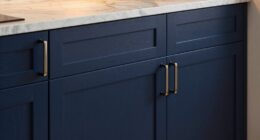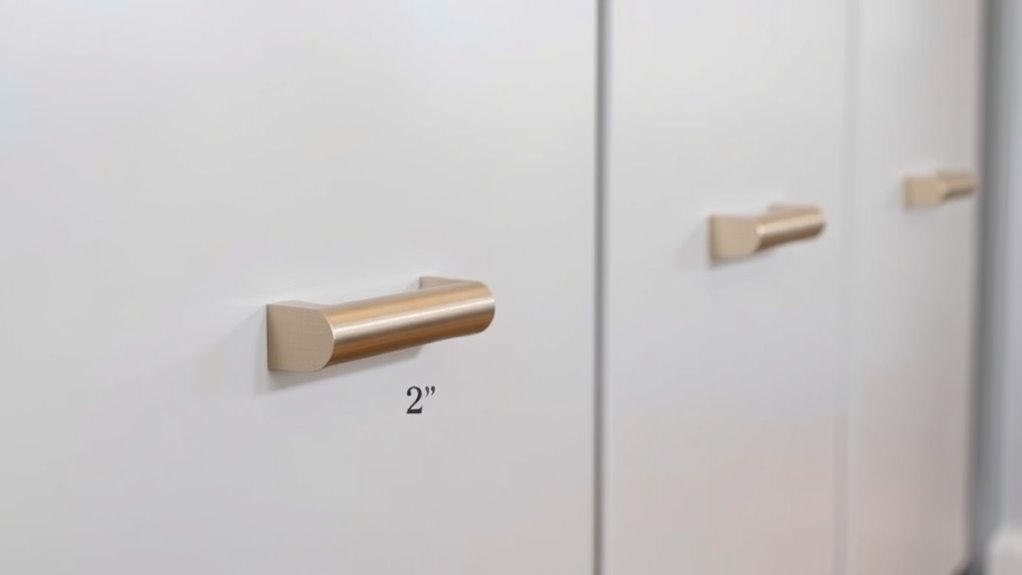

To select the right cabinet hardware sizes and spacing, start by measuring your cabinets carefully, considering drawer width and door dimensions. Opt for pulls that are 20-22 inches long for larger drawers and knobs that feel comfortable in your hand, typically 1.25 to 1.75 inches in diameter. Position hardware about 3 inches from the edge for pulls and 2.5 to 3 inches for knobs, ensuring proportionality and balance. Attention to these details guarantees both functionality and aesthetic harmony—continue to refine your choices for a flawless look.
Key Takeaways
- Measure cabinet door and drawer dimensions to select hardware that fits proportionally and comfortably.
- Choose pull lengths 1.5 to 2 inches longer than drawer width; knobs typically range from 1.25 to 1.75 inches in diameter.
- Position pulls about 3 inches from drawer edges and knobs 2.5 to 3 inches from door edges for optimal spacing.
- Match mounting hole spacing (3, 4, or 5 inches) to hardware specifications using templates for precise placement.
- Ensure hardware style and size complement cabinet proportions for a balanced, cohesive aesthetic.

Choosing the right cabinet hardware sizes and spacing is essential for both functionality and aesthetic appeal. When selecting hardware, you need to consider the dimensions of your cabinets, the weight they will bear, and the overall style you aim to achieve. Hardware that’s too small may look insignificant or get lost, while oversized pulls can overwhelm the cabinet’s design. Accurate measurement ensures that the hardware complements the cabinet’s proportions, providing a cohesive and polished look.
Choosing the right hardware size and spacing enhances both function and style.
Start by measuring the thickness and depth of your cabinet doors and drawers. For pulls, the length should generally be about 1.5 to 2 inches longer than the width of the drawer or door for balanced visual weight and ease of use. For example, if your drawer measures 18 inches wide, a pull around 20 to 22 inches long will provide sufficient grip and proportionality. For knobs, a common diameter ranges from 1.25 to 1.75 inches; select a size that feels comfortable to grasp without overpowering the cabinet face. Keep in mind that larger hardware may require a different mounting height or spacing to prevent crowding or imbalance.
Spacing between hardware pieces is equally critical. When installing pulls or handles on drawers, position them approximately 3 inches from the edge for practical grabability and aesthetic symmetry. For cabinet doors, the placement should be about 2.5 to 3 inches from the edge, centered horizontally or vertically depending on the design. The distance between multiple pulls on a large door should be evenly distributed to distribute stress and maintain visual harmony. Use masking tape to mark proposed positions before drilling, ensuring consistent placement across all doors and drawers.
The mounting hole spacing must match the hardware’s specifications. Standard hole spacings for pulls are 3 inches, but larger or custom hardware may require 4 or 5 inches. Precise measurement and pre-drilling are crucial to avoid misalignment, which can compromise both function and appearance. Always double-check measurements before drilling, and if in doubt, create a template using painter’s tape or cardboard to visualize the final look. This step helps prevent costly errors and ensures the hardware fits perfectly. Additionally, hardware sizes should be proportionate to the overall cabinetry to enhance visual balance and harmony.
Finally, consider the overall style and scale of your cabinetry. Modern designs favor sleek, minimalist hardware with clean lines and subtle spacing, while traditional styles may feature more ornate hardware with larger, more prominent spacing. By paying close attention to these details, you create a balanced, functional, and visually appealing cabinet ensemble that enhances your space’s overall design.

Flexzion 25 Pack Kitchen Cabinet Handles Silver Drawer Pulls 20 inch, 12.5 inch Hole Center, Stainless Steel T Bar with Satin Brushed Nickel, Hardware for Kitchen Cupboard Door Bathroom Furniture
Solid Stainless Steel Cabinet Handles – Featuring solid stainless steel finished construction for durability and rust protection that…
As an affiliate, we earn on qualifying purchases.
As an affiliate, we earn on qualifying purchases.
Frequently Asked Questions
How Do I Measure for Custom Cabinet Hardware?
To measure for custom cabinet hardware, first determine the type of hardware you want, like handles or knobs. Measure the existing holes or marked areas on your cabinet doors and drawers using a ruler or tape measure, noting the center-to-center distance. Verify measurements are precise to avoid mismatched spacing. Double-check your measurements before ordering, and consider the hardware’s size relative to your cabinet’s proportions for a balanced look.
What Materials Are Best for Durable Hardware?
You should choose materials like solid brass, stainless steel, or zinc alloy for durable hardware. These materials resist corrosion, withstand daily use, and maintain their finish over time. Brass offers strength and elegance, stainless steel provides rust resistance, and zinc alloy is cost-effective yet sturdy. Always verify the hardware’s finish and construction quality to guarantee longevity. Proper installation and regular cleaning also help prolong its lifespan.
Can Hardware Sizes Vary Between Cabinet Styles?
Yes, hardware sizes can vary between cabinet styles, just like choosing between a sleek sports car and a rugged truck. For modern cabinets, you might prefer smaller, minimalist knobs that fit seamlessly, while traditional styles often call for larger, ornate pulls that make a statement. Always measure your cabinet doors and drawers carefully, considering both aesthetics and functionality, to guarantee the hardware complements your style and provides comfortable, reliable use.
How Do I Match Hardware Finish With Cabinet Color?
You should choose a hardware finish that complements your cabinet color to create a cohesive look. For light cabinets, opt for warm finishes like brass or gold to add richness. For darker cabinets, sleek finishes like matte black or brushed nickel provide contrast and sophistication. Consider the overall style—modern or traditional—and select finishes that enhance that look. Test samples in your space to verify harmony before committing.
Are There Ergonomic Considerations for Hardware Placement?
Think of your cabinets like a well-tuned instrument; placement affects ease and comfort. You should position handles or knobs at a height that’s natural for your reach—typically around 36 inches from the floor—and make certain they’re centered on doors or drawers for balanced access. Avoid placing hardware too high or low, which can cause strain. Keep clearance ample for comfortable gripping, and consider user height to optimize ergonomic efficiency and prevent fatigue.

Amazon Basics Straight Top Ring Cabinet Knob, 1.25-inch Diameter, Oil Rubbed Bronze, 25-Pack
Dimensions: Cabinet knob has a top diameter of 1-1/4 inches and extends 0.84 inches from the cabinet door…
As an affiliate, we earn on qualifying purchases.
As an affiliate, we earn on qualifying purchases.
Conclusion
By carefully choosing cabinet hardware sizes and spacing, you guarantee a balanced, functional look that’s both comfortable to use and visually appealing. Think of it like tuning a finely crafted instrument—you want every detail to harmonize perfectly. Measure precisely, follow recommended guidelines, and consider your cabinet style to achieve ideal results. Attention to detail here transforms your space from ordinary to refined, making every opening and closing feel seamless and satisfying.
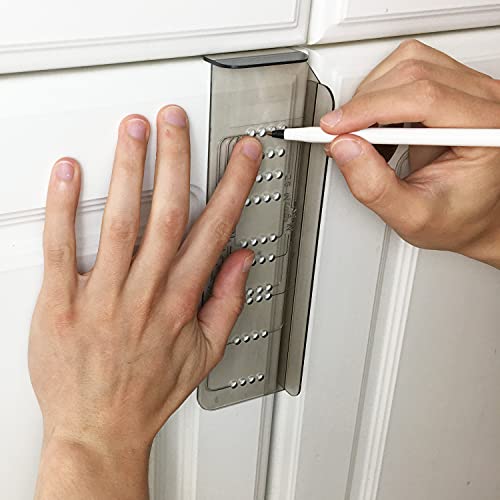
MeasurePro Cabinet Door & Drawer Hardware Installation Template Kit Made in The USA
COMPATIBLE WITH STANDARD CABINETS: Easy installation of handles, knobs and pulls on kitchen cabinet doors and drawers. Our…
As an affiliate, we earn on qualifying purchases.
As an affiliate, we earn on qualifying purchases.

Cabinet Hardware Jig, King&Charles Cabinet Handle Jig with Automatic Center Punch, Avoid Jitter Caused by Direct Drilling. Use for Handles and Pulls on Drawers/Doors, Perfect Set.
⭐【Unique Advantages】- In order to avoid drilling directly with an electric drill will cause the jig to shake,…
As an affiliate, we earn on qualifying purchases.
As an affiliate, we earn on qualifying purchases.