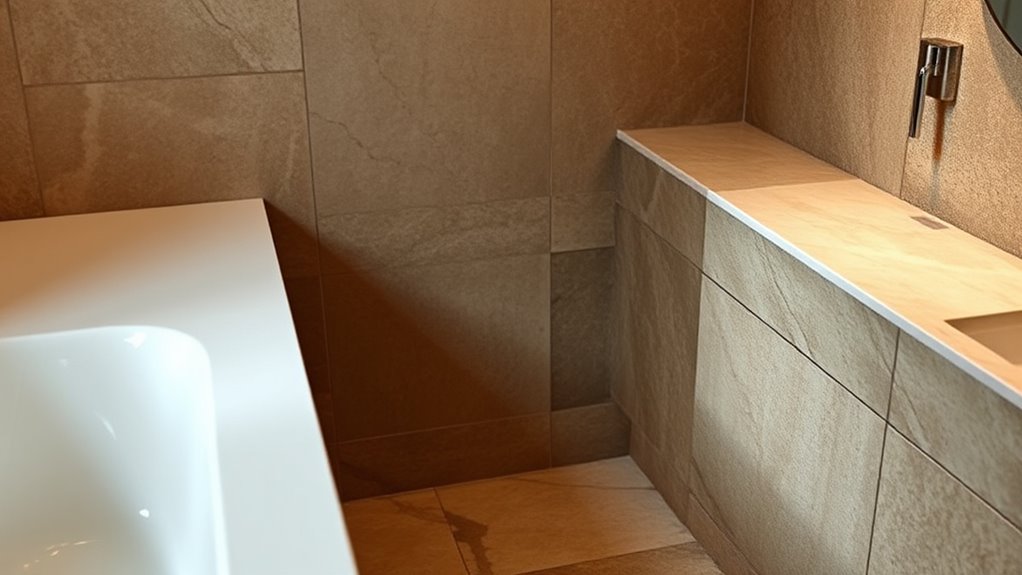

For wet areas, porcelain slabs offer a sleek, durable, and low-maintenance option, resisting water, stains, and scratches with ease, making them ideal for modern, busy environments. Natural stone provides timeless beauty and unique veining but requires sealing and careful upkeep to prevent damage from moisture. Your choice depends on balancing aesthetic appeal with practicality—if you’re curious about how these materials compare in detail, exploring further will reveal all you need to know.

Get furniture and decor delivered free — and shop member deals
- Fast, free delivery on millions of items
- Access to Prime Big Deal Days deals on October 6–7
- Prime Video, Amazon Music and more included
Key Takeaways
- Porcelain slabs are highly water-resistant, non-porous, and require less maintenance in wet areas compared to natural stone.
- Natural stone offers unique veining and organic beauty but needs sealing and regular upkeep to prevent water damage.
- Porcelain’s durability and resistance to scratches and chips make it ideal for high-traffic wet environments.
- Natural stone’s porosity makes it more susceptible to staining and discoloration in wet areas without proper sealing.
- Both materials enhance wet spaces aesthetically, but porcelain provides a sleek, seamless look with easier maintenance.
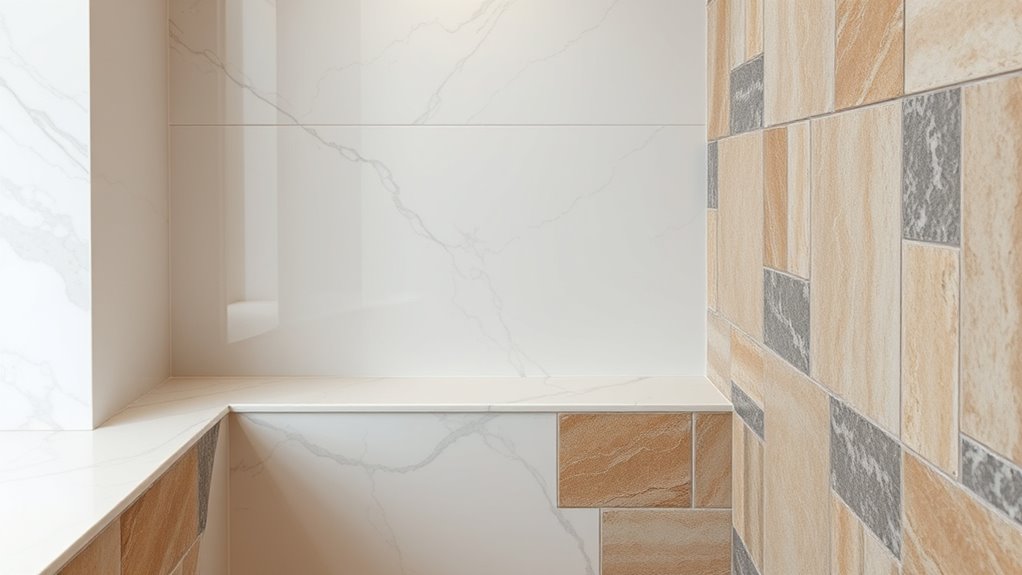
When choosing materials for wet areas like bathrooms and showers, understanding the differences between porcelain slabs and natural stone is essential. These surfaces define the room’s aesthetic and influence its durability, maintenance, and overall functionality. Porcelain slabs have gained popularity for their sleek, modern appeal. They are manufactured from dense clay fired at high temperatures, resulting in a non-porous, uniform surface that resists water absorption and staining. This makes them ideal for wet environments, where moisture control is paramount. Their consistency in color and pattern allows you to create seamless, eye-catching walls or floors, giving your space a clean, continuous look. Plus, because they are engineered, porcelain slabs tend to be more resistant to scratches, chips, and everyday wear and tear, making them a practical choice for high-traffic or busy households.
Porcelain slabs offer a sleek, durable, non-porous surface ideal for modern wet areas.
Natural stone, on the other hand, offers a timeless, organic beauty that’s difficult to replicate. Materials like marble, granite, or travertine each have unique veining, color variations, and textures that add character and sophistication to any wet area. When you choose natural stone, you’re investing in a piece of nature’s artistry. However, because these stones are porous, they require sealing and regular maintenance to prevent water infiltration and staining. Without proper care, moisture can seep into the stone, causing discoloration or damage over time. Natural stone also tends to be softer and more susceptible to scratches and chips, especially in humid environments where moisture can weaken its surface. Yet, for many, the aesthetic appeal and tactile richness of natural stone outweigh these considerations, especially when you’re willing to commit to its upkeep. Additionally, advancements in manufacturing techniques have improved the durability and stain resistance of some natural stones, offering more options for homeowners seeking both beauty and resilience.
Functionally, porcelain slabs are often more practical in wet areas. Their non-porous nature means they do not harbor mold or bacteria, contributing to a healthier environment. Cleaning them is straightforward—just wipe with a damp cloth and a mild cleaner. Natural stone, while beautiful, demands more careful cleaning and sealing routines to maintain its appearance and longevity. If you prefer low-maintenance surfaces that still deliver a modern, polished look, porcelain slabs are likely your best choice. But if your goal is to create a space that exudes natural elegance and character, and you’re prepared to invest in ongoing maintenance, natural stone might be the more appealing option.
Ultimately, your decision hinges on balancing aesthetics, durability, and upkeep. Both porcelain slabs and natural stone can enhance your wet areas beautifully, but understanding their unique qualities helps you select the material that best aligns with your style and lifestyle.
As an affiliate, we earn on qualifying purchases.
Frequently Asked Questions
How Do Maintenance Requirements Differ Between Porcelain Slabs and Natural Stone?
You’ll find porcelain slabs easier to maintain than natural stone. Porcelain resists stains, scratches, and moisture, requiring only regular cleaning with mild soap and water. Natural stone, however, needs sealing and more careful upkeep to prevent water damage, staining, and etching. You’ll need to reseal natural stone periodically and avoid harsh cleaners. Overall, porcelain offers a low-maintenance, durable solution, while natural stone demands more attention and care to preserve its beauty.
Are Porcelain Slabs More Environmentally Friendly Than Natural Stone?
Yes, porcelain slabs are generally more environmentally friendly than natural stone. They’re made from abundant, sustainable materials and require less energy to produce, reducing their carbon footprint. Plus, porcelain’s durability means you won’t need replacements or repairs often, minimizing waste over time. By choosing porcelain, you’re supporting eco-conscious options that combine beauty and function, making it an environmentally responsible choice for your wet areas.
Can Porcelain Slabs Be Used in Outdoor Wet Areas?
Yes, porcelain slabs are perfect for outdoor wet areas, thanks to their durability and resistance to water. Did you know they absorb less than 0.5% of moisture? This makes them less prone to cracking or damage from freeze-thaw cycles. With their sleek, modern look, porcelain slabs combine beauty and function, ensuring your outdoor spaces stay safe, stylish, and weather-resistant year-round.
How Do Slip Resistance Properties Compare for Both Materials?
You’ll find porcelain slabs generally offer better slip resistance than natural stone, especially when treated with textured finishes or anti-slip coatings. Natural stone can be more slippery, particularly when wet or polished, posing a higher risk. To guarantee safety, choose textured porcelain surfaces or seal natural stone properly. Always test slip resistance in your specific environment to match both aesthetic appeal and functionality.
What Is the Lifespan Difference Between Porcelain Slabs and Natural Stone?
Your porcelain slabs could last a lifetime, outliving even the most ancient stones, while natural stone might need some gentle care over decades. Porcelain’s durability and resistance to scratches, stains, and moisture make it nearly eternal in wet areas. Natural stone, though stunning, can wear down faster with exposure to moisture and chemicals. So, if longevity is your goal, porcelain offers a resilient, elegant solution that endures through time’s relentless march.
Conclusion
Choosing between porcelain slabs and natural stone for wet areas depends on your style and needs. While natural stone offers timeless beauty, porcelain provides durability and low maintenance. Imagine a sleek, water-resistant porcelain surface that mimics marble’s elegance—no sealing required—versus the natural stone’s unique veining that ages beautifully. Both enhance your space, but if practicality and longevity matter most, porcelain slabs deliver a stunning, functional solution that keeps your wet areas looking flawless year after year.
Halloween Picks
halloween
As an affiliate, we earn on qualifying purchases.