TL;DR

Get furniture and decor delivered free with Prime
- Fast, free delivery on millions of items
- Prime Video, Amazon Music and more included
- Member-only deals all year
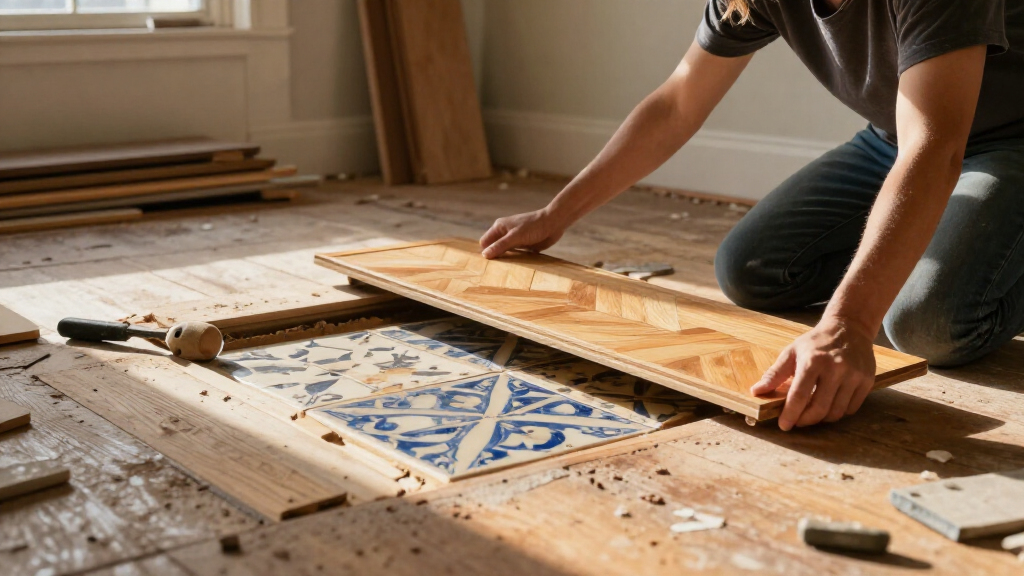
A renovation of an investment apartment in Lisbon uncovered original parquet flooring and patterned tiles beneath later floor coverings. Designer Lana Vakhtina restored those features and other period details while adapting the compact home for renters on a limited budget.
A renovation of a rental apartment in central Lisbon uncovered original parquet flooring and patterned tiles beneath carpet and linoleum, leading designer Lana Vakhtina to preserve the period details rather than replace them. The discovery reshaped a budget-conscious project intended to make an investment property more functional and distinctive for renters.
The apartment sits near Avenida da Liberdade in Lisbon’s historic center. Livingetc reported that years of rental use and later renovations had obscured features associated with its older Portuguese architecture, including high ceilings, wooden shutters and decorative crown molding. Stained carpets and peeling floor coverings concealed parts of the interior.
Vakhtina, of the design firm Sveta Vakhtina, said removing the coverings exposed wooden floors beneath the carpets and original tiles beneath linoleum. The tiles closely resembled a terracotta-and-light checkerboard pattern she had already proposed for the renovation. Livingetc’s report says the discovered tiles were restored, along with the parquet flooring and crown molding.
The owner had bought the apartment as an investment property, and the brief called for a welcoming rental without a large budget. The designer retained the existing structure, which the report says was difficult to alter because of the property’s location in the historic center and the limits on obtaining planning permission. She also reused the original kitchen countertops in the bathroom, avoiding disposal and giving the material a second use.
Restoration Within a Rental Budget
The project shows how uncovering existing materials can affect both the character and the cost of a renovation. In this case, the floors and tiles became a design starting point, rather than features that had to be recreated or replaced. Preserving them also helped the finished apartment retain a connection to its historic setting.
That approach had practical limits: the apartment was small, intended for renters and subject to constraints on structural changes. Livingetc reported that Vakhtina used the existing layout and selected furnishings and finishes to improve how the space worked. The outcome is presented as a design case, not evidence that historic restoration will always reduce costs or improve rental returns.
Products Worth Considering

Dyson W1 PencilWash Cordless Wet and Dry Floor Cleaner with Dock

Shark HydroVac MessMaster Cordless Wet Dry Vacuum and Mop Combo, AW261

Ring Alarm Pro 8-Piece Kit with Built-In eero Wi-Fi 6 Router
As an affiliate, we earn on qualifying purchases.
Years of Coverings Hid Period Details
The apartment had accumulated modern interventions during a period of repeated rental use. Livingetc describes traditional features such as high ceilings and wooden shutters, alongside later wear and additions that masked parts of the original interior. The renovation began with a client brief focused on a functional, welcoming rental rather than a full structural reconfiguration.
Before the coverings came up, Vakhtina had proposed checkerboard tiles to evoke the Portuguese style the client wanted. The report says the tiles found under linoleum were practically identical to that proposed pattern. Their discovery changed the project from an update guided by a historical look into one that could restore original material already in place. Other decisions followed the same principle: preserve what could be salvaged, and adapt it where needed.
Costs and Rental Results Not Reported
Livingetc does not provide the renovation’s total cost, the amount saved through restoration or reuse, or details of the work required to repair the floors and tiles. The report also does not identify the apartment’s exact age, the specific tile materials or the building’s formal heritage designation.
No rental income, occupancy figures or tenant feedback are included, so the article does not establish whether the design increased the property’s financial performance or how renters have responded. The report describes planning permission as difficult to obtain and significant structural changes as limited, but does not give the precise rules or permits involved.
No Further Project Milestone Given
The Livingetc article presents the renovation as completed, but it does not announce a future construction phase, publication date for additional project details or a next formal milestone. Further information about the property’s rental performance, restoration costs and long-term upkeep would be needed to assess results beyond the reported design choices.
For now, the confirmed development is the completed renovation’s use of recovered original finishes and reused materials within a constrained rental brief. The source does not say whether the owner or designer plans additional work.
Key Questions
What did the renovation uncover beneath the floor coverings?
Designer Lana Vakhtina told Livingetc that the team found wooden floors beneath carpets and original tiles beneath linoleum. The report says the parquet and tiles were restored.
Where is the apartment?
The apartment is in Lisbon’s historic center, near Avenida da Liberdade, according to Livingetc.
Why were the original floors and tiles kept?
The designer used the apartment’s existing period features to guide the design and said she looks for what can be preserved before deciding what to replace. Livingetc also reports that retaining materials helped keep the project within a limited budget.
Was the apartment structurally changed?
Livingetc says significant structural changes were limited by the property’s location and the difficulty of obtaining planning permission. The report does not specify which permits were required or provide a full account of alterations.
Did the renovation improve rental income?
The report does not provide rental income, occupancy data or tenant feedback, so the apartment’s financial performance after renovation is not established.
Source: livingetc.com