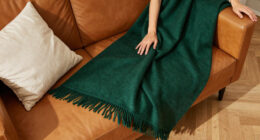
Choosing a luxury decorative throw is rarely just about aesthetics; it is a decision about how you want to feel when you wrap it around yourself. The two most prominent contenders in the high-end market are cashmere and Merino wool. Both materials signal sophistication and comfort, yet they serve distinct purposes and appeal to different lifestyles. The core tension in this comparison lies between the ethereal, cloud-like softness of cashmere and the resilient, practical performance of Merino wool.

Get furniture and decor delivered free with Prime
- Fast, free delivery on millions of items
- Prime Video, Amazon Music and more included
- Member-only deals all year

Cozy Bliss Double-Sided Soft Faux Fur Throw Blanket, 50"x60", Cream White
- ✔ Size: 50 x 60 inches
- ✔ Material: 100% polyester
- ✔ Listed weight: 550 GSM

BOURINA Beige Throw Blanket 50×60 Inch Boho Knitted Soft Throw Sofa Blanket
- ✔ Size: 50 x 60 inches
- ✔ Material: 100% acrylic
- ✔ Construction: Knitted, high-density weave stated

1000GSM Faux Fur Throw Blanket, Super Thick Warm Cozy Heavy Blanket for Couch Bed Sofa, 50”x60”, WhiteBrown
- ✔ Size: 50 x 60 inches
- ✔ Listed weight: 1000 GSM; approximately five pounds stated
- ✔ Material: Acrylic face; polyester fill stated
Readers often struggle with this choice because the price point for both is significant, leading to hesitation about whether the extra cost of cashmere is justified by its tactile qualities. Conversely, some buyers worry that wool might feel scratchy or heavy, despite modern Merino processing. This guide dissects these two options to help you determine whether your priority is the ultimate sensory indulgence or a hard-wearing companion for daily life.
At a Glance
| Criteria | Cashmere Throw | Merino Wool Throw | Winner |
|---|---|---|---|
| Softness & Texture | Extremely soft, silky, smooth | Soft, but with more texture | A |
| Warmth-to-Weight Ratio | High warmth, very lightweight | High warmth, moderate weight | Tie |
| Durability & Longevity | Lower durability, prone to pilling | High durability, resilient fibers | B |
| Care & Maintenance | High maintenance, dry clean preferred | Moderate maintenance, machine washable | B |
| Price & Value | Very high initial cost | Moderate to high cost, better value | B |
| Moisture Management | Poor, absorbs moisture slowly | Excellent, wicks moisture well | B |
| Aesthetic Versatility | Classic, elegant, subtle sheen | Modern, textured, matte finish | Depends |
Cozy Bliss Double-Sided Soft Faux Fur Throw Blanket, 50"x60", Cream White
Cozy Bliss takes our top spot because it sits between the other two throws rather than leaning entirely into one extreme. Its ruched, chinchilla-inspired faux fur creates soft-looking folds with more visual depth than a plain fleece-like surface, while the cream-white color gives it a quiet, adaptable presence on a sofa or bed. Compared with BOURINA’s visible geometric knit and fringe, it feels more plush and tonal; compared with the 1000GSM blanket, it promises an easier, less imposing layer.The listed 550GSM polyester construction and double-sided design are aimed at comfort without the stated five-pound heft of the thickest option. That balance makes sense for a throw we want to keep within reach, rather than reserve as a winter-only accent. Its 50-by-60-inch format is suited to one-person couch use or decorative layering, though it will not cover a large bed or provide generous shared coverage.Practicality is another reason it outranks the more dramatic fur pick: the care instructions allow cold machine washing and low tumble drying, and the product claims resistance to shedding, fading, and pilling. Those are manufacturer claims, not guarantees of long-term results, so gentle handling remains sensible for a textured polyester textile. The tradeoff is that this blanket’s luxury look comes from a plush synthetic surface rather than the structured, artisanal impression of a knit. Buyers seeking crisp pattern, natural fibers, or the densest winter weight should look elsewhere.
Pros:
- Ruched surface gives the blanket dimensional texture for display.
- Double-sided polyester construction is designed for a plush feel on either side.
- Cold machine wash and low tumble dry are more convenient than dry-clean-only care.
- Cream-white color can complement a range of sofa and bedroom palettes.
Cons:
- Polyester faux fur may not appeal to shoppers seeking natural materials or a crisp woven look.
- The 50-by-60-inch size is an accent throw, not generous coverage for two.
- Claims about resisting shedding, fading, and pilling are not a substitute for careful washing.
Best for: Shoppers who want a soft-looking cream accent that can move between sofa styling and regular lounging, with machine-wash care.
Not ideal for: Buyers who prefer knitted pattern and fringe, natural-fiber textiles, or a very heavy blanket with explicit winter-weight heft.
Bottom line: We recommend Cozy Bliss for the strongest overall balance of decorative texture, approachable softness, and manageable care.
“We recommend Cozy Bliss for the strongest overall balance of decorative texture, approachable softness, and manageable care.”
BOURINA Beige Throw Blanket 50×60 Inch Boho Knitted Soft Throw Sofa Blanket
BOURINA is the pick for rooms that need pattern and structure more than plushness. Its beige acrylic knit, geometric motif, and rolled fringe give a sofa or chair a more crafted, relaxed look than either faux-fur option. That distinction matters: Cozy Bliss creates visual softness through gathered pile, while BOURINA adds definition through a visible weave. If your room already has velvet cushions, shaggy rugs, or other soft textures, this knit can bring contrast instead of adding more of the same.The 50-by-60-inch size works well folded over an arm or arranged across the end of a bed, and the product describes the throw as lightweight while also listing it as heavyweight in its warmth information. We would not treat those labels as a precise measure of insulation; its open knitted construction is the more useful clue for buyers deciding between it and the thicker fur styles. It may suit mild lounging and decorative layering better than someone seeking a dense, enveloping winter blanket.BOURINA also has the clearest care routine after Cozy Bliss: it can be machine washed cold on a gentle cycle and tumble dried low. The acrylic material is listed as OEKO-TEX STANDARD 100 certified, and the product claims lightfastness and resistance to shedding. Still, acrylic is synthetic, and the patterned knit with fringe may not match minimalist rooms as easily as Cozy Bliss’s simple cream surface. It is also explicitly described as not suitable for pet use, making it a poor match for households that want a throw to double as a pet blanket. Compared with the 1000GSM pick, it sacrifices warmth and drama for a lighter, more flexible decorative profile.
Pros:
- Geometric knit and rolled fringe offer a distinct decorative look.
- Beige color is easy to pair with warm neutrals and natural wood tones.
- Machine-wash instructions make routine care relatively simple.
- Listed OEKO-TEX STANDARD 100 certification is a useful material-safety detail.
Cons:
- Acrylic construction will not suit buyers prioritizing natural fibers.
- Knitted styling provides less plush, cocooning texture than either faux-fur option.
- The product says it is not suitable for pet use.
- Conflicting lightweight and heavyweight descriptions make warmth harder to judge from the listing.
Best for: Buyers styling a boho, farmhouse, or casual contemporary room who want geometric texture, fringe, and straightforward machine care.
Not ideal for: Shoppers who need maximum winter warmth, a sleek minimalist surface, or a blanket intended for pets.
Bottom line: Choose BOURINA when a room needs a patterned, fringed knit accent more than a thick or furry comfort layer.
“Choose BOURINA when a room needs a patterned, fringed knit accent more than a thick or furry comfort layer.”
1000GSM Faux Fur Throw Blanket, Super Thick Warm Cozy Heavy Blanket for Couch Bed Sofa, 50”x60”, WhiteBrown
For a room that calls for a bold, winter-ready accent, the 1000GSM throw is the most substantial choice here. Its long-haired faux-fur face and velvet-like reverse create a more dramatic, two-texture effect than BOURINA’s neat knit or Cozy Bliss’s softly ruched surface. The listing specifies 1000 GSM and a five-pound weight, making this the clearest option for buyers who want a thick layer that looks and feels more substantial on a sofa or bed.That density comes with a different kind of comfort. The manufacturer says the outer faux fur is deliberately a little stiffer to mimic animal hair, while the reverse is intended to feel softer against skin. Buyers should take that description seriously: it is not the uniformly silky surface promised by a chinchilla-inspired throw. Compared with Cozy Bliss, this is the more tactile and visually assertive pick; compared with BOURINA, it brings far more pile and warmth but loses the knit’s airy, patterned character.The main compromise is maintenance. The care information says dry clean only, with damp-cloth wiping also suggested, and the product acknowledges that some hair loss can occur initially. That makes it less suited to a household seeking a frequently washed, low-fuss sofa throw. Its 50-by-60-inch size is still compact, so the extra weight does not translate into broader coverage. Choose it for a cold-weather focal point or a layered bedroom accent, not as the most practical all-season option. Cozy Bliss is the more sensible everyday choice; this one wins only when heft and dramatic faux-fur presence matter more than easy care.
Pros:
- Listed 1000 GSM and five-pound weight provide the lineup’s most substantial feel.
- Faux-fur face and velvet-like reverse create contrasting textures.
- Long pile gives a bold decorative effect on a bed, sofa, or armchair.
- Designed specifically as a warm winter layer.
Cons:
- Dry-clean-only guidance is less convenient than the machine-washable alternatives.
- The manufacturer warns of possible initial hair loss.
- Outer faux fur is intentionally somewhat stiffer, which may not suit everyone.
- At 50 by 60 inches, it remains an accent throw despite its weight.
Best for: Cold-room dwellers and style-focused buyers who want a heavy, high-pile faux-fur accent for seasonal use.
Not ideal for: Anyone needing easy machine washing, a consistently smooth texture, low-shed use from the outset, or larger coverage.
Bottom line: We would choose this throw for high-impact winter warmth, while accepting that its distinctive pile requires more careful upkeep.
“We would choose this throw for high-impact winter warmth, while accepting that its distinctive pile requires more careful upkeep.”
As an Amazon Associate we earn from qualifying purchases.
Key Differences
The most immediate difference between cashmere and Merino wool is tactile. Cashmere comes from the undercoat of cashmere goats, resulting in fibers that are finer than human hair. This creates a fabric that feels slippery and cool to the touch before warming up rapidly. Merino wool, derived from Merino sheep, has a slightly coarser fiber diameter. While modern Merino is exceptionally soft and far removed from the scratchy wool of the past, it retains a subtle graininess that some users perceive as a lack of luxury, while others appreciate it as a sign of natural robustness.
Beyond feel, the structural integrity of the materials diverges significantly. Cashmere is a delicate fiber. It is susceptible to pilling, stretching, and damage from abrasion. A cashmere throw requires gentle handling and often professional cleaning. Merino wool, by contrast, is naturally elastic and resilient. It can withstand frequent use, washing, and even being tossed onto a sofa armrest without losing its shape. This makes Merino the superior choice for households with pets, children, or high traffic, where durability is non-negotiable.
Finally, the financial implication differs. Cashmere commands a premium due to the labor-intensive harvesting process and limited supply. You are paying for a luxury experience that may not last as long as a wool alternative. Merino offers a more balanced cost-to-longevity ratio. While still expensive compared to cotton or synthetic throws, it provides a longer service life, making it a more prudent investment for those who view their home textiles as functional assets rather than purely decorative objects.
Detailed Comparison
Softness & Texture (Cashmere Throw wins — major)
Cashmere wins decisively here. The fibers are micron-fine, creating a surface that feels like silk against the skin. If you have sensitive skin or simply crave the highest level of tactile comfort, cashmere is unmatched. Merino wool is soft, but it lacks that slippery, liquid-like quality. It feels more like a high-quality sweater than a cloud. For users who prioritize pure sensory pleasure, the difference is major and justifies the choice of cashmere. However, if you dislike the feeling of fabric sliding off your shoulders or prefer a bit of grip, Merino’s texture might actually be preferable.
Warmth-to-Weight Ratio (moderate difference)
This is a close contest, resulting in a tie for most users. Cashmere is renowned for being incredibly light yet warm, trapping heat efficiently without bulk. It is ideal for those who want warmth without feeling weighed down. Merino wool is also an excellent insulator due to its crimped structure, which creates air pockets. However, to achieve the same level of warmth as a high-end cashmere throw, a Merino throw may be slightly heavier and thicker. In practice, both will keep you comfortable in a cool room. The choice here depends on whether you prefer a lightweight drape (cashmere) or a substantial, cozy weight (Merino).
Durability & Longevity (Merino Wool Throw wins — major)
Merino wool takes a clear victory. Wool fibers are naturally elastic and can bend millions of times without breaking. They resist abrasion and maintain their structure over years of use. Cashmere, being finer, is more fragile. It pills easily with friction, such as rubbing against denim or rough upholstery. Over time, a cashmere throw may thin out or lose its shape if not handled with extreme care. If you plan to use your throw daily on a living room sofa, Merino will outlast cashmere by a significant margin. Cashmere is better suited for occasional use, such as on a bed or a dedicated reading chair.
Care & Maintenance (Merino Wool Throw wins — moderate)
Merino wool is more forgiving. Many Merino throws are machine washable on a gentle cycle with wool-safe detergent, though hand washing is often recommended to preserve longevity. They dry relatively quickly and can be reshaped easily. Cashmere requires stricter care. It should generally be dry cleaned or hand washed in cold water with specific cashmere shampoo. Agitation can cause felting, and improper drying can lead to stretching. The maintenance burden for cashmere is higher, which can be a deterrent for busy households. If you value convenience and ease of cleaning, Merino is the practical winner.
Price & Value (Merino Wool Throw wins — moderate)
Merino wool offers better value for money. While both are luxury items, cashmere prices are driven by scarcity and labor, often costing two to three times more than comparable wool. You pay a premium for the softness of cashmere, but you also pay for its fragility. Merino provides 80-90% of the comfort at a more accessible price point, with significantly better durability. For budget-conscious luxury buyers, Merino delivers a higher return on investment. Cashmere is a luxury purchase in the traditional sense: you are buying an experience and a status symbol, not necessarily a long-term utility item.
Moisture Management (Merino Wool Throw wins — minor)
Wool is naturally hygroscopic, meaning it can absorb up to 30% of its weight in moisture without feeling wet. It wicks perspiration away from the body and regulates temperature effectively. This makes Merino wool excellent for year-round use, as it keeps you cool in summer and warm in winter without overheating. Cashmere absorbs moisture but dries slowly and can feel clammy if it gets damp. It lacks the active temperature-regulating capabilities of wool. For users who tend to sleep hot or live in humid climates, Merino is the superior technical choice.
Aesthetic Versatility (minor difference)
This depends heavily on personal style. Cashmere has a subtle sheen and drapes fluidly, making it perfect for minimalist, elegant, or traditional interiors. It looks expensive and refined. Merino wool often has a more matte, textured appearance. It fits well in rustic, farmhouse, or modern casual settings. Neither is objectively better; it is a matter of taste. If your home features sleek lines and polished surfaces, cashmere complements them. If your home features natural wood, stone, and organic textures, Merino blends in more naturally.
Cashmere Throw: Pros and Cons
Pros:
- Unmatched softness and silky texture
- Extremely lightweight and non-bulky
- Elegant drape and subtle sheen
- Hypoallergenic for most users
Cons:
- High price point
- Low durability and prone to pilling
- Requires high-maintenance care (dry cleaning)
- Poor moisture-wicking capabilities
Merino Wool Throw: Pros and Cons
Pros:
- High durability and resilience
- Excellent temperature regulation
- Easier to care for and often machine washable
- Better value for long-term use
Cons:
- Slightly heavier than cashmere
- Less silky texture (more grainy)
- Can feel itchy to very sensitive skin
- Higher initial cost than standard textiles
Who Should Choose What
Choose Cashmere Throw if:
- You have sensitive skin and prioritize ultimate softness above all else.
- The throw will be used for occasional comfort, such as on a bed or in a guest room.
- Your interior design style is minimalist, elegant, or traditional.
- You are willing to pay for dry cleaning and careful storage.
Choose Merino Wool Throw if:
- You need a throw for daily use on a living room sofa.
- You have pets or children who might snag or soil the fabric.
- You prefer easy care options like machine washing.
- You want a balance of warmth, durability, and reasonable cost.
Skip both if: You are looking for a budget-friendly option under $100, as both cashmere and high-quality Merino wool fall into the premium price category.
Value for Money
Is the higher price of cashmere worth it? For most households, probably not. The value proposition of cashmere rests entirely on tactile luxury. If you do not notice or care about the difference between ‘very soft’ and ‘silky soft,’ you are paying a premium for a feature you will not fully utilize. Merino wool offers a more robust value profile. It lasts longer, handles better, and cleans easier, meaning the cost per year of use is often lower than cashmere. However, if you view your home textiles as accessories that enhance your personal well-being and sensory experience, cashmere delivers a unique joy that wool cannot replicate. For the average consumer, Merino is the smarter financial buy; for the luxury seeker, cashmere is the emotional buy.
Final Verdict
For the majority of readers, Merino wool is the better choice. It strikes the optimal balance between comfort, durability, and maintenance. It is a resilient luxury that can withstand the rigors of modern life while still providing high-end warmth and style. Choose Merino wool if you want a throw that you can use every day without worrying about damage or special cleaning requirements.
Choose cashmere only if you are specifically seeking the pinnacle of softness and intend to use the throw for occasional, gentle comfort. It is a beautiful object, but it demands a level of care and protection that makes it less practical for general living spaces. If you are undecided, start with a high-quality Merino throw. It will likely satisfy your need for luxury while offering peace of mind that cashmere cannot provide.
Frequently Asked Questions
Is Merino wool scratchy?
Generally, no. Modern Merino wool has much finer fibers than traditional wool, making it soft enough to wear directly against the skin. While it may not feel as silky as cashmere, it should not itch. If you find it uncomfortable, look for ‘superfine’ or ‘ultrafine’ Merino, which has a lower micron count.
Can I wash a cashmere throw at home?
You can hand wash cashmere in cold water with a dedicated wool detergent, but it is risky. Agitation or heat can cause felting, where the fibers mat together and shrink. To preserve the longevity and texture of a high-end cashmere throw, dry cleaning is the safest and recommended method.
Which is warmer, cashmere or wool?
Cashmere is warmer by weight. Because the fibers are finer, they trap more air in a lighter fabric. However, Merino wool is an excellent insulator as well. In terms of overall warmth retention, they are comparable, but cashmere achieves it with less bulk, making it feel lighter on the body.
Why is cashmere so expensive?
Cashmere is expensive because it is rare and labor-intensive. Each goat produces only a small amount of usable undercoat per year, which must be combed out by hand. The processing and sorting of these fine fibers also require significant skill and time, driving up the cost compared to sheep’s wool, which is harvested in larger quantities.
Evergreen bestsellers Picks

Ninja Prestige Smart XL 10-in-1 Air Fryer and Countertop Oven with Pro Cook System, DT551

Vitamix 5-Speed Immersion Blender, 625-Watt, Stainless Steel/Black

Shark PowerPro Reveal Plus Cordless Stick Vacuum, Charcoal (IZ376H)
As an affiliate, we earn on qualifying purchases.