TL;DR
House Beautiful asked designers which interior choices seen in 2026 they would prefer to leave behind in 2027. The source excerpt names six: one-dimensional lighting, overdone “grandma chic,” curved sofas, excessive ruffles and scallops, imitation materials and trend hopping; it does not provide the other three items or identify a formal industry consensus.
House Beautiful has published designers’ picks for interior choices they would leave behind in 2027, drawing on styles they say they saw frequently in 2026. The available source excerpt names six choices—including flat lighting, overly staged “grandma chic,” curved sofas and trend chasing—but does not show the full list of nine, so the remaining three cannot be confirmed from the material provided.

Get furniture and decor delivered free with Prime
- Fast, free delivery on millions of items
- Prime Video, Amazon Music and more included
- Member-only deals all year
The advice comes from designers interviewed by House Beautiful, rather than from a survey or a formal industry forecast. Their comments describe personal professional preferences and observations about recent interiors; they do not establish that a style has broadly fallen out of favor or that designers agree across the industry. The article frames its list as a look ahead from 2026 to 2027.
Kristen Mendoza of Four Brothers Design + Build objects to lighting a room with a single overhead fixture or extensive recessed lights. She recommends combining sources such as sconces, picture lights, table lamps and accent lighting, and says warm 2700K bulbs on dimmers can help create a more inviting atmosphere. She also argues that lighting choices belong early in design and construction planning.
Stephanie Kraus says “grandma chic” can feel overdone when heavy shades, repeated chintz and fringe are layered together, making a home seem like a period set rather than a space collected over time. She also questions curved sofas, saying they can seat fewer people comfortably and make conversation awkward. Maggie Vollrath of Provision Studios similarly advises restraint with ruffles and scalloped edges: one or two details may feel distinctive, while repeating them across a room can make the look overly themed.
Six trends designers would leave behind in 2027
House Beautiful asked designers about choices they saw in 2026. The available excerpt names six of the nine trends and reflects personal opinions, not an industry-wide consensus.
The six named choices
Designers’ concerns center on restraint, comfort and whether a choice suits the home.
One-dimensional lighting
A single overhead fixture or extensive recessed lights can feel flat. Layer lamps, sconces and accent lighting.
Overdone “grandma chic”
Heavy shades, repeated chintz and fringe can make a room feel staged rather than collected over time.
Curved sofas
Designers raise concerns about comfortable seating capacity and conversation.
Details and materials
- Ruffles and scallops can feel overly thematic when repeated throughout a room.
- A trend may not suit every home; the excerpt mentions polka dots as an example.
- Imitation materials can chase the look of a more expensive finish.
- Consider honest materials that suit the budget.
Make lighting work harder
Kristen Mendoza recommends planning lighting early in a project.
Combine sconces, picture lights, table lamps and accent lighting.
Mendoza suggests warm 2700K bulbs on dimmers.
Design Advice Favors Restraint and Use
The comments offer readers a practical way to evaluate a room beyond whether a look is currently popular. Designers point to comfort, lighting quality and material character as considerations alongside appearance. A sofa that photographs well may not work for a gathering, and decorative details can lose impact when they are repeated across every surface.
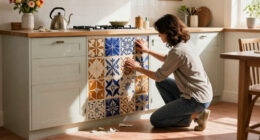
The material advice also touches on spending. Vollrath argues against choosing products chiefly because they imitate a more expensive material, citing mass-produced tile made to resemble handmade zellige. Her alternative is not necessarily to buy the costlier finish: she suggests choosing honest materials that suit the budget, rather than trying to reproduce a particular luxury look. That is a design opinion, not a claim that imitation products are inherently unsuitable.
For homeowners, the broader takeaway is to treat the list as prompts, not rules. The designers do not say every curved sofa or ruffled cushion should be removed. Their stated concern is that a choice may be poorly suited to daily use or may lose its effect when applied too extensively.
Products Worth Considering

Sonos Era 100 Wireless Smart Speaker with Alexa, Black

Dyson Airwrap i.d. 6-in-1 Multi-Styler and Dryer

Shark IY143H Cordless Pet Stick Vacuum
As an affiliate, we earn on qualifying purchases.
The 2026 Styles Behind the Advice
The source presents the recommendations in a year-end format: designers were asked which choices they had seen in 2026 and would be happy to leave behind in 2027. That makes the article a qualitative forecast based on interviews, not a report of measured sales, search activity or a documented shift across the design business.
The excerpt identifies six of the nine promised items. Along with lighting, “grandma chic,” curved sofas and ruffles or scallops, Vollrath criticizes imitation materials, including products made to reproduce the look of handmade finishes. The final named item is trend hopping. Drew Michael Scott of Lone Fox cautions that a trend is not automatically right for a particular home and uses polka dots as an example of a style having a moment.
The source text cuts off during Scott’s comments. It does not include the rest of his explanation or the other three trends in the headline’s count. No additional items should be inferred from the partial excerpt.
““Flat, overly bright lighting can make even the most beautifully designed spaces feel sterile and uninviting.””
— Kristen Mendoza, Four Brothers Design + Build
Three Items Missing From the Excerpt
The source provided does not contain all nine trends. It ends partway through Scott’s discussion of trend hopping, after mentioning polka dots, and does not include the rest of the article. The full list, publication date and any further designer comments are not available here.
The recommendations are attributed to individual designers, but the excerpt gives no information about how many designers were interviewed in total, how they were selected, or whether their views reflect broader industry practice. The comments should be read as expert opinions about styles they observed, not as verified evidence that these choices are disappearing in 2027.
The Full List Needs Verification
To establish all nine items, readers would need the complete House Beautiful article or another source that reproduces its remaining sections. Until then, only the six trends visible in the supplied text can be reported: one-dimensional lighting, overdone “grandma chic,” curved sofas, excessive ruffles and scallops, imitation materials, and trend hopping.
The source does not announce a follow-up, offer market data or identify a next industry milestone. Any assessment of whether these styles actually decline in 2027 would require later reporting, such as additional designer interviews or evidence of changes in product demand and home projects.
Key Questions
Which interior trends are named in the available source?
The excerpt names one-dimensional lighting, overdone “grandma chic,” curved sofas, repeated ruffles and scallops, imitation materials, and trend hopping.
Does the source provide all nine trends?
No. The supplied text stops during Drew Michael Scott’s comments and does not show the remaining three items. The complete nine-item list cannot be confirmed from this excerpt.
Are designers saying these styles are definitively out in 2027?
No. The article reports the preferences and observations of interviewed designers. It does not establish an industry-wide consensus or prove that the styles will disappear.
What lighting does Kristen Mendoza recommend?
Mendoza recommends layering sources such as sconces, picture lights, table lamps and accent lighting. She also suggests warm 2700K bulbs on dimmers and planning lighting early in a project.
What is the designers’ concern about trend hopping?
Drew Michael Scott says a popular style may not suit every home. The excerpt mentions polka dots as an example but cuts off before providing his full explanation, so the rest of his comments are unavailable.
Source: housebeautiful.com