
TL;DR
A luxury decorative throw blanket should feel comfortable, suit the furniture you’ll use it on, and fit your cleaning routine. Compare fiber, weave, dimensions, and care instructions before buying: cashmere feels light and soft, wool brings warmth, and cotton is often easier to wash. A high price alone cannot tell you how well a throw will perform.
A blanket can change the whole mood of a room before you ever wrap it around your shoulders. Fold a charcoal wool throw across a pale sofa and the space feels warmer; drape a nubby cream one over a reading chair and the corner looks ready for a quiet evening.

Get furniture and decor delivered free with Prime
- Fast, free delivery on millions of items
- Prime Video, Amazon Music and more included
- Member-only deals all year
A luxury decorative throw blanket is a small home textile that combines comfort with visual appeal. It can soften furniture, add color or texture, and give you an extra layer of warmth. But “luxury” is a broad marketing term, so the useful details are the fiber, construction, size, and care instructions.
This guide will help you match a throw to the way you live. You’ll see how common materials compare, what to check before ordering, and how to style and care for your pick. For instance, a beautiful cashmere throw may suit a low-traffic bedroom, while a washable cotton blend can make more sense for a sofa shared with children or pets.
Judge a throw by its fiber, weave or knit, finishing, and care instructions—not the word “luxury” on the label.
Cashmere and alpaca can feel soft and warm, while cotton and some blends may fit a busier, easier-wash routine.
Measure the furniture area and decide how you’ll use the throw before choosing its dimensions.
Use one clear styling goal—contrast, a repeated color, or texture—to make a throw feel intentional.
Check sourcing and sustainability claims for specific supporting details, and follow the care label for cleaning.
What Makes a Throw Feel Luxurious in Everyday Use?
A luxury decorative throw blanket feels luxurious when its material, construction, finish, and intended use work together. The label alone tells you little: a lofty, well-finished wool throw may feel better on your sofa than a pricier piece that is scratchy, too small, or difficult to clean.
Think of construction as the way a jacket hangs on your shoulders. Fiber sets the raw ingredients, but the weave or knit shapes the final feel. A tight, smooth weave may drape neatly over an armchair; a chunky knit creates raised loops and a more casual, sink-in texture. Brushed finishes feel soft against your hand, while fringe or blanket stitching adds a visible detail at the edges.
Imagine comparing two throws in a shop. One has a high price and a vague “premium blend” label. The other lists its fiber percentages, gives exact dimensions, and explains that it has a woven finish. The second gives you more to judge. Check the seams, edge finishing, weight, and how the fabric moves when lifted—not just how it looks folded on a shelf.
For a useful luxury decorative throw, look for specific information about fiber content and construction, plus care instructions you can follow. A luxury decorative throw can bring comfort with visual appeal, but the best evidence is how it performs when you use it: whether it feels pleasant against your skin, drapes without looking stiff, and keeps its shape after the care its maker recommends.
Products Worth Considering

Dyson V9 Motorbar Cordless Vacuum

Shark Pet Cordless Stick Vacuum, Up to 40-Minute Runtime, Lightweight, IX141

Ring Alarm 5-Piece Home Security Kit
As an affiliate, we earn on qualifying purchases.
Which Throw Blanket Material Fits Your Home Best?
The right throw blanket material depends on the feel you like, how warm you want to be, and how much care you’re willing to give it. Cashmere and alpaca often feel soft and light; merino and other wool throws bring warmth; cotton tends to suit people who want an easier routine. Blends can balance these qualities.
Cashmere is prized for a soft, fine feel, but it can ask more of you at laundry time. Alpaca can feel warm and silky, while wool varies by fiber and construction: some versions feel plush, others feel rougher. Cotton is a practical choice for a guest room or busy sofa, especially if the label allows machine washing. Linen and silk blends can add a smooth, airy finish, though they may not offer the same cozy heft.
| Material | What you may like | What to check |
|---|---|---|
| Cashmere | Light, soft hand-feel | Gentle care instructions and fiber details |
| Alpaca | Warmth with a smooth, soft texture | Weight, weave, and cleaning guidance |
| Merino or other wool | Warmth and a range of textures | Skin feel and risk of shrinkage if washed incorrectly |
| Cotton | Familiar feel and often simpler care | Whether the fabric may shrink or lose shape |
| Acrylic or polyester blend | Often easy-care and budget friendly | Fiber percentages and how the fabric feels in person |
For instance, if you curl up under a blanket every night, softness and easy care may matter more than a delicate finish. If the throw mostly rests across a bedroom bench, its texture and color may lead your choice. Read the full fiber label and care instructions before you buy. A natural fiber isn’t automatically the best fit, and a synthetic blend isn’t automatically poor quality; the useful question is whether it suits your household.
How Do You Choose a Throw That Fits Your Sofa or Bed?
Choose throw dimensions by deciding how you’ll use the blanket, then compare the listed measurements with the furniture. Throws vary in size, so the word “throw” alone cannot tell you whether a piece will cover your legs on the sofa or sit neatly across a bed.
Start with the job. A throw for an accent chair may only need to soften the seat and provide a light layer for your shoulders. On a sofa, you may want enough fabric to cover your lap without constantly tugging at the corners. At the foot of a bed, a folded throw acts more like a band of color and texture than a full blanket.
Use this quick process before ordering:
- Measure the furniture area you want covered, such as the sofa seat or bed’s foot.
- Choose the use: decorative drape, lap warmth, shoulder wrap, or a mix.
- Compare the listed dimensions against your measurements, allowing extra fabric for a loose drape.
- Check return terms in case the scale looks different once the throw is in the room.
For example, a compact knit that looks abundant over a small armchair may seem skimpy on a wide sectional. If you want the blanket to cover your legs while you stretch out, assess the usable width and length rather than relying on a product photo. A model may appear oversized because it is photographed on a narrow chair. In an online listing, measurements are a more dependable guide than the styling image, and clear dimensions can save you the frustration of unwrapping a throw that only covers half your lap.
How Can You Style a Throw Without Cluttering the Room?
Style a throw by giving it one clear job: add contrast, echo an existing color, or bring texture to a smooth surface. A single well-placed blanket can make a room feel finished, while several competing colors and folds can make the sofa look crowded.
Look at what is already in the room before choosing a color. A muted rust throw can pick up the warm tones in a wooden side table; a deep blue one can give a pale gray sofa a sharper edge. If your room already has patterned cushions, try a solid throw with a visible texture, such as ribbing or boucle. Texture adds interest without introducing another busy print.
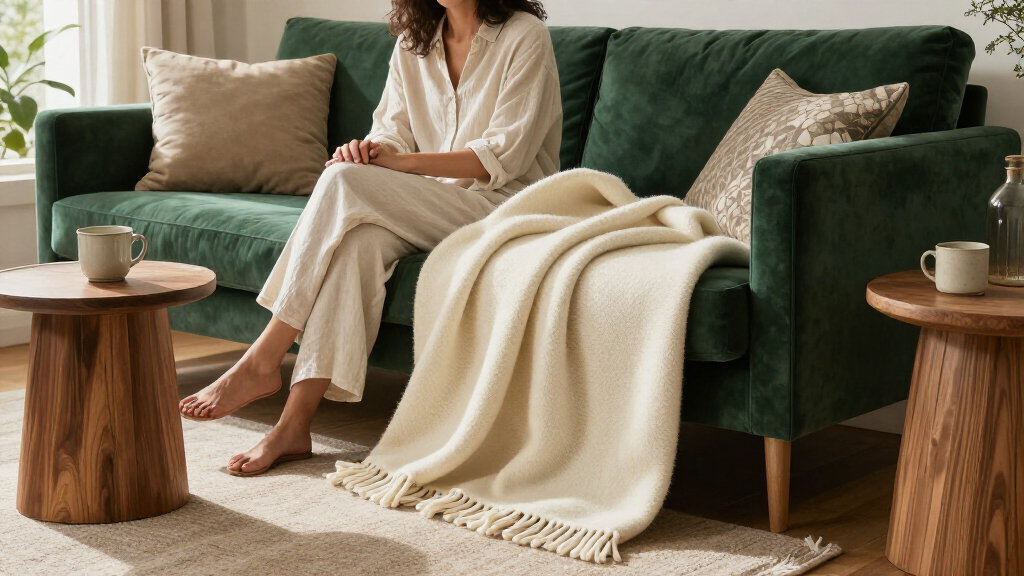
For instance, on a quiet Saturday morning, a soft cream throw over the back of a dark green armchair makes the chair feel inviting and keeps the contrast simple. Fold it lengthwise and let one end fall over the seat. On a patterned sofa, tuck the throw into a loose rectangle instead, so it adds a calm block of color rather than another scattered pattern.
- For a relaxed look: drape one corner over the sofa arm and let the folds fall naturally.
- For a tidy look: fold the throw into thirds across the sofa back or bed foot.
- For a low-key room: use a textured neutral, such as a nubby oatmeal knit.
- For a color accent: repeat a shade already found in a cushion, rug, or artwork.
As broad home-textile trends, natural-looking textures and muted earth tones have remained common, alongside seasonal accent colors. These trends describe a general direction, not a guarantee about any particular brand or current collection. Choose a shade and texture that make sense in your room year-round; a small ochre detail can brighten a winter sofa without forcing you to redecorate around a short-lived trend.
What Should You Check Before Paying a Premium Price?
Before paying a premium, check the fiber content, construction, dimensions, care, sourcing details, and return policy. A high price may reflect the material, production method, design, or brand, but it cannot prove that the throw will feel good in your home or last through your routine.
Read the product description like a practical checklist. Does it state the actual fiber percentages, or does it rely on words such as “luxury blend”? Does it specify where the item was made and how the edges are finished? If the seller calls it handmade, responsibly sourced, or sustainable, look for concrete details supporting that claim. A broad claim by itself cannot tell you what the product contains or how it was made.
Consider a shopper looking at two similarly colored throws: one costs more but provides only a styled photo and a vague description; the other lists its dimensions, materials, care method, and country of manufacture. The second offers more useful information, even if it does not answer every question. If you’re buying online, also look for close-up photos of the weave and a clear return policy. You’ll be better prepared to judge scale and texture, and you’ll know what options you have if the color looks different in your living room.
A throw blanket combines practical warmth with a visible design choice, so judge both parts. If it will sit on a seldom-used guest bed, you may accept careful cleaning in exchange for a particular fiber. If a child or pet will use it daily, easy cleaning and sturdy finishing may be worth more than a prestigious label. Price is one clue, not a quality guarantee; specific product details give you a sounder basis for deciding.
How Do You Keep a Wool or Cashmere Throw Looking Good?
Keep a wool or cashmere throw looking good by following its own care label, cleaning it gently when needed, and storing it clean and dry. Care varies by fiber and finish, so never assume that a blanket is machine washable just because another one in your home can go in the washer.
Before washing, check the label for hand washing, dry cleaning, or machine instructions. If it allows hand washing, use the stated method and avoid twisting the fabric to force water out; rough handling can stretch or distort delicate fibers. Follow the product’s drying instructions too. Cotton and many synthetic throws may allow machine washing, but heat, agitation, and tumble drying can still affect shape or texture.
Picture a wool throw used most evenings over a sofa arm. It doesn’t need a full wash after every use. If the care label allows, spot-clean a small mark promptly, air the throw between uses, and store it only when completely dry. Before putting it away for the season, clean it according to its label and fold it in a clean storage space. Regular gentle handling often makes more sense than frequent aggressive washing.
Keep an eye on loose threads and fringe. If you spot a snag, avoid tugging; pulling can turn a tiny loop into a longer run. Handle the edge gently and follow the maker’s repair advice when available. A throw used for everyday warmth will pick up more wear than a decorative layer on a bedroom bench, so match your care routine to its use. Read the label first, and ask the seller for clear guidance if the instructions are missing.
Frequently Asked Questions
What makes a throw blanket “luxury”?
“Luxury” is a broad label that can refer to fiber, construction, finishing, design, or brand. Check the material percentages, weave or knit, edge finishing, dimensions, and care instructions to see what the particular throw offers.
Is cashmere worth the higher price?
Cashmere may suit you if you value a soft, light feel and are comfortable following its care instructions. It may be a poor fit for a heavily used sofa if you want a throw you can wash without much fuss; compare the label and cleaning requirements before deciding.
What size throw should I buy for a sofa or chair?
Measure the area you want the throw to cover, then compare that with the product’s listed dimensions. A smaller throw may work well across an accent chair, while a wide sofa or lap blanket use may call for more fabric. Sizes vary, so check measurements instead of guessing from the word “throw.”
Can I use a decorative throw blanket every day?
Yes, if its material and care routine suit regular use. A washable cotton or blend may be practical for daily lounging, while a delicate wool or cashmere piece may be better for gentler use. Follow the care label and consider who will share the sofa.
How do I wash a wool or cashmere throw?
Follow the throw’s care label, since washing instructions vary by fiber and finish. Some pieces call for gentle hand washing or dry cleaning, while others may have different instructions. Avoid assuming machine washing is safe, and use the maker’s guidance if the label is unclear.
Are natural-fiber throws always more sustainable?
No single fiber label settles that question. Ask what the throw is made of, where its fibers and finished product come from, and what specific support the seller offers for claims such as responsibly sourced or sustainable. Treat general marketing language as a starting point for questions, not proof by itself.
Conclusion
Choose a throw that fits the way you actually live: the right feel against your skin, the right dimensions for your chair or sofa, and a care routine you can keep up with. Compare the product details before letting a high price or polished photograph make the decision for you.
Then give it a place where you’ll reach for it. The best throw is the one that looks at home on your sofa at noon and feels warm around your shoulders when the evening turns cool.