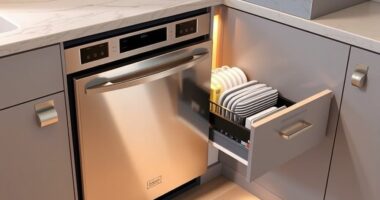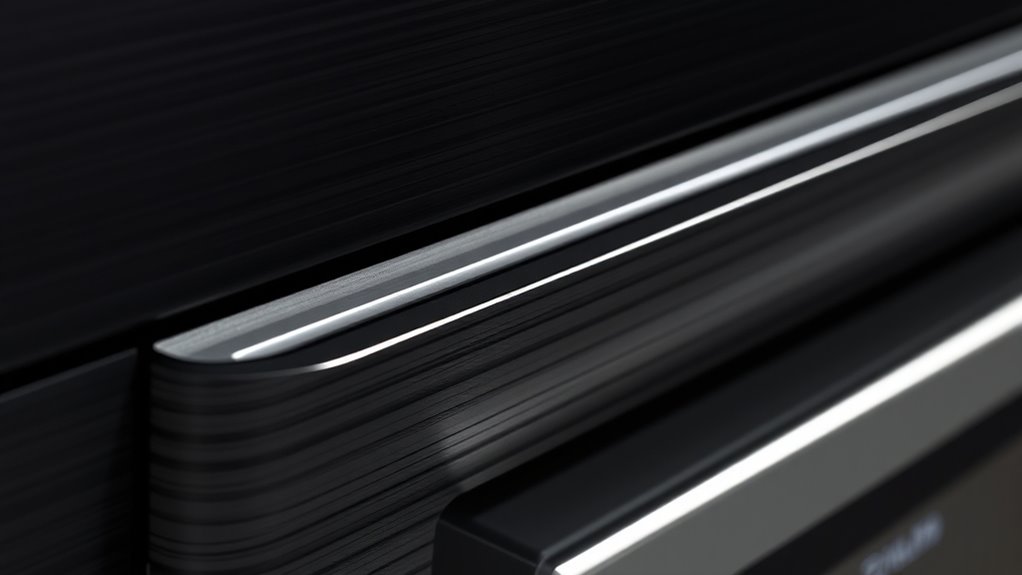
When choosing appliance panel materials, consider high-density fiberboard (HDF), plywood, or MDF, based on moisture exposure, impact resistance, and detailing needs. Plywood offers moisture resistance, HDF provides durability, and MDF suits painted finishes. Edge details like square, eased, or beveled profiles, combined with edge banding materials such as PVC or wood veneer, influence durability and aesthetics. Proper application guarantees long-term performance, and understanding these options helps optimize your panel’s functionality and appearance for specific environments.
Key Takeaways
- Select core materials like HDF, plywood, or MDF based on moisture resistance, impact resistance, and environment suitability.
- Choose appropriate edge profiles (square, beveled, bullnose) to enhance durability and aesthetic appeal.
- Use edge banding methods such as PVC or wood veneer for moisture resistance and visual harmony.
- Ensure precise application of edges to prevent delamination, improve joint strength, and facilitate maintenance.
- Consider maintenance ease; rounded or eased edges are easier to clean and less prone to damage over time.
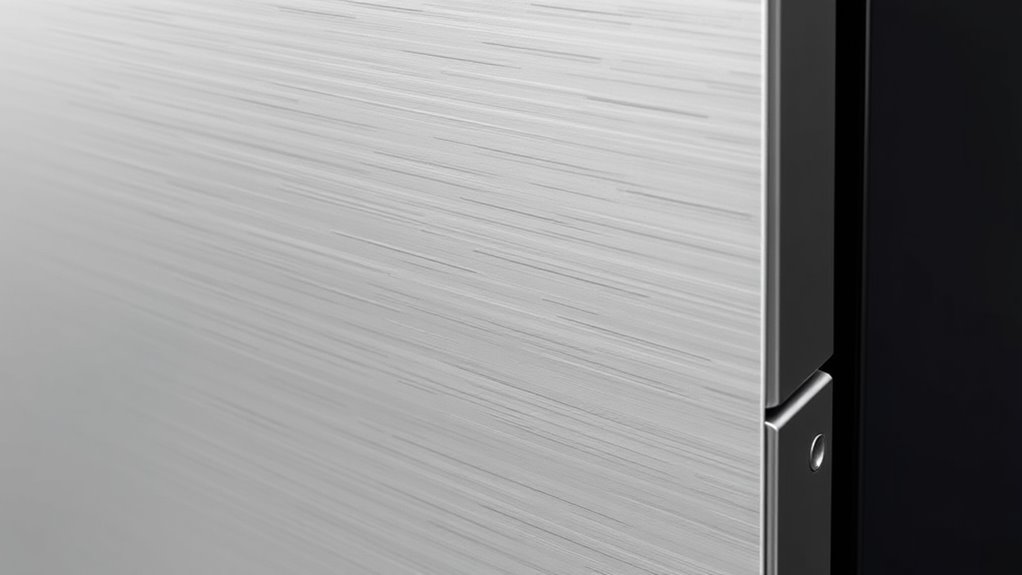
Selecting appropriate materials and edge details for appliance panels is critical to achieving both durability and aesthetic appeal in cabinetry. The material choice directly influences the panel’s resistance to wear, moisture, and temperature fluctuations, while the edge profile affects both structural integrity and visual harmony. You must evaluate the environment where the cabinetry will be installed, considering factors such as humidity, temperature, and usage frequency, to determine the most suitable substrate. Common options include high-density fiberboard (HDF), plywood, and medium-density fiberboard (MDF), each offering distinct advantages. HDF provides a dense, stable surface with good resistance to impact, but it’s less forgiving to moisture. Plywood offers excellent strength and moisture resistance, making it ideal for high-humidity environments, whereas MDF provides a smooth surface suitable for painted finishes and intricate profiles, though it demands careful handling to prevent damage.
Once you’ve selected the core material, attention shifts to edge details, which serve both functional and aesthetic purposes. Edge profiles like square, eased, beveled, and bullnose influence the panel’s durability and visual weight. For high-traffic or moisture-prone areas, applying a thick, sealed edge band or laminate edge is essential to prevent delamination and water ingress. Edge banding can be achieved through various methods: adhesive-backed PVC or wood veneer edge banding, hot-melt gluing, or even solid wood edging, depending on budget and finish requirements. PVC edge banding offers excellent moisture resistance and is available in a wide range of colors and textures, making it suitable for appliance panels where longevity matters. Wood veneer edges deliver a seamless, high-end look but require precise application to prevent peeling or cracking over time.
Precision in applying edge details ensures that the joint is secure and that the transition between the panel face and edge is smooth. You should consider the method of application—hot-melt or cold-press—based on production volume and desired finish quality. Proper edge finishing not only enhances the panel’s resistance to chipping and moisture but also contributes to a refined appearance, aligning with the overall cabinetry design. Moreover, the choice of edge detail impacts ease of maintenance; rounded or eased edges tend to accumulate less dust and are easier to clean, whereas sharp or detailed profiles may require more careful upkeep. Additionally, choosing the right material for appliance panels can influence the panel’s overall durability and compatibility with different edge finishes, ensuring long-lasting performance. Overall, meticulous selection and application of materials and edge details are foundational to producing appliance panels that meet both functional demands and aesthetic standards, ensuring long-lasting performance and visual coherence in cabinetry installations.
Frequently Asked Questions
How Do Panel Materials Affect Appliance Durability?
Panel materials directly impact appliance durability by determining resistance to impacts, scratches, and environmental factors. You’ll want sturdy materials like stainless steel or high-quality composites, which withstand daily wear and tear better than plastics or thin metals. Choosing durable materials guarantees the panel maintains its structural integrity and appearance over time, reducing the need for repairs or replacements. Your selection of panel material is essential for long-lasting appliance performance and aesthetic preservation.
What Are the Latest Trends in Edge Detail Designs?
You’ll notice that sharp, minimalist edges are making a comeback, despite their reputation for being high-maintenance. Modern edge details feature sleek, rounded profiles or subtle chamfers that enhance durability and ease cleaning. Advanced manufacturing techniques now allow for seamless, precise finishes, blending aesthetics with functionality. If you prefer a clean, contemporary look, expect edge designs to prioritize smoothness and longevity, even if they seem to go against the “less is more” mantra.
Are Eco-Friendly Materials Available for Appliance Panels?
Yes, eco-friendly materials for appliance panels are readily available. You can choose from recycled plastics, bamboo, cork, and sustainably sourced wood, which reduce environmental impact without sacrificing durability. These materials often feature advanced coatings for resistance and aesthetic appeal. Incorporating them into your designs not only aligns with sustainability goals but also enhances the modern, eco-conscious look of your appliances, ensuring both functionality and environmental responsibility.
How Do Edge Details Impact Cleaning and Maintenance?
Edge details considerably influence cleaning and maintenance by affecting how easily dirt and grime can be removed. Sharp, smooth edges allow for effortless wiping, reducing buildup, while rough or intricate edges trap debris, making cleaning more challenging. Properly finished edges prevent moisture accumulation, minimizing mold risk and ensuring longevity. Clear, seamless edges streamline maintenance, saving you time and effort—it’s like giving your appliance a protective armor that keeps it pristine with minimal upkeep.
Can Panel Materials Be Customized for Specific Appliances?
Yes, you can customize panel materials for specific appliances to meet your design and functional needs. Manufacturers offer a variety of options, including stainless steel, tempered glass, wood veneer, and plastic laminates. You select the material based on durability, aesthetic preferences, and compatibility with the appliance’s use environment. Customization guarantees seamless integration with your appliance’s style while maintaining structural integrity and ease of maintenance.
Conclusion
Choosing the right panel material and edge detail is vital for both durability and aesthetics. Picture a sleek, seamless surface contrasted with a rugged, protective edge—each element working in harmony. Your selection impacts not just appearance but also longevity and ease of maintenance. By carefully balancing material properties with edge finishing techniques, you guarantee a refined, functional appliance that withstands daily use while maintaining a polished look. Precision in these details elevates your overall design integrity.