To create a moodboard that guides your decisions, focus on crafting a clear visual narrative with purposeful images, textures, and colors. Select tactile textures that evoke emotion and contrast, and develop a cohesive palette with dominant and accent hues. Organize your elements into clusters, layer thoughtfully, and refine regularly to align with your style and goals. As you build, you’ll find that this strategic approach transforms inspiration into a practical roadmap—if you keep exploring, you’ll unseal even more insights.

Get furniture and decor delivered free with Prime
- Fast, free delivery on millions of items
- Prime Video, Amazon Music and more included
- Member-only deals all year
Key Takeaways
- Clearly define the project’s goals and style to ensure the moodboard aligns with your decision-making criteria.
- Select images, textures, and colors that evoke specific emotions and support the intended atmosphere or message.
- Organize elements into cohesive clusters or sections to visualize interactions and prioritize design choices.
- Use consistent themes and intentional pairings to guide aesthetic decisions and maintain visual harmony.
- Regularly review and refine the moodboard to ensure it remains a reliable reference throughout the project.
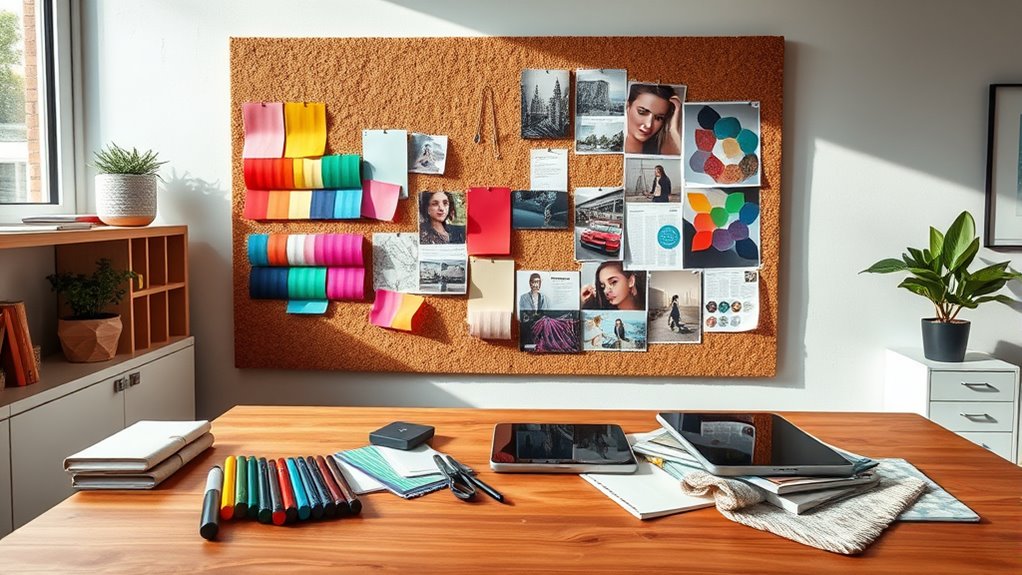
Creating a moodboard isn’t just about collecting pretty images; it’s about crafting a visual blueprint that actively guides your decisions. Imagine it as a living, breathing map that captures the essence of your vision, blending color palettes, textures, and imagery into a cohesive narrative. As you gather elements, think beyond surface appeal—each piece should serve a purpose, contributing to the story you want to tell. Focus on deliberate choices that reflect your style and goals, whether it’s a sleek modern look or a cozy vintage vibe. Every color, pattern, and image should resonate with the mood you aim to evoke, creating an emotional connection that informs your design process. Incorporating organized visual elements can help you maintain clarity and coherence as your project develops.
A moodboard is a strategic visual guide that shapes your style and evokes your desired atmosphere.
When selecting images, go beyond superficial attractiveness. Look for textures that evoke tactile sensations—soft linen, rough brick, shiny metal—that add depth and dimension. Consider how these textures will work together in real life, not just on paper. Play with contrasts—dark vs. light, matte vs. glossy—to create visual interest that guides the eye naturally through your space or concept. Keep a consistent theme in mind, but don’t be afraid to experiment with unexpected pairings. The goal isn’t perfection but a dynamic balance that sparks inspiration while providing clarity.
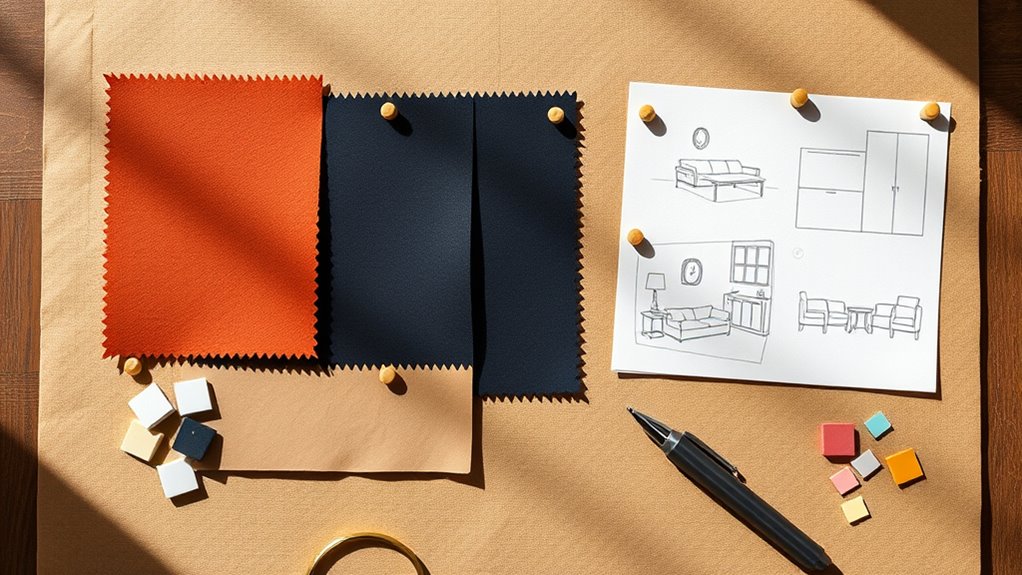
Color is your most powerful tool here. Instead of choosing hues based solely on preference, think about the emotions they evoke and how they interact with each other. Create a palette with a dominant color, complemented by accent shades that highlight specific elements. Use swatches or paint chips alongside your images to see how colors translate from digital to physical. This step ensures your moodboard isn’t just pretty but functional, giving you a tangible reference point that keeps your choices aligned. Remember, a well-structured color scheme will influence everything from furniture selection to lighting choices, forming a consistent atmosphere.
Lastly, organize your moodboard intentionally. Group related images and textures into clusters that represent different aspects of your project—furnishings, materials, lighting, ambiance. Use layers or sections to visualize how these elements interact, ensuring your decisions stay cohesive. Review your board regularly, refining it as your ideas evolve. This ongoing process transforms a collection of images into a strategic tool, sharpening your focus and streamlining your decision-making. When you approach your project with this thoughtful, curated guide, your final outcome will feel authentic, harmonious, and undeniably yours.
As an affiliate, we earn on qualifying purchases.
Frequently Asked Questions
How Do I Choose the Right Tools for Creating a Moodboard?
You pick the right tools by considering your style and project needs. Opt for intuitive apps like Canva or Adobe Spark that blend creativity with ease. Use high-quality images, swatches, and textures to inspire visually. Look for features like drag-and-drop, template options, or color palettes. Trust your instincts, and choose tools that spark your creativity while offering flexibility to refine your moodboard into a guiding masterpiece.
What Size Should My Moodboard Be for Maximum Impact?
For maximum impact, aim for a 24×36-inch size, like a professional art board that commands attention. Imagine you’re designing a boutique hotel’s branding; this size allows you to layer textures, colors, and images vividly, creating a tactile experience. This scale invites viewers to engage deeply, making your vision clear and inspiring action. Keep it large enough to tell your story without overwhelming, balancing detail with visual harmony.
How Often Should I Update or Revise My Moodboard?
You should revisit your moodboard every few months to keep it fresh and aligned with your evolving vision. As your project develops, new inspiration will emerge, and outdated elements may no longer serve your goals. Regular updates, maybe quarterly or after major milestones, guarantee your moodboard remains a vibrant, guiding force. Keep it dynamic, reflective of your growth, and always ready to inspire fresh ideas and cohesive decisions.
Can Digital Moodboards Be as Effective as Physical Ones?
Yes, digital moodboards can be just as effective as physical ones. With high-resolution images, interactive links, and easy updates, they offer flexibility and immediacy that physical boards can’t match. Imagine scrolling through a curated universe of textures, colors, and inspirations at your fingertips—each element whispering inspiration, guiding your decisions seamlessly. This digital domain keeps your vision alive, adaptable, and ever-ready to ignite your creative spark whenever you need it.
How Do I Ensure My Moodboard Aligns With My Brand Identity?
You ensure your moodboard aligns with your brand by immersing yourself in your brand’s core values, personality, and target audience. Curate images, colors, and fonts that evoke your brand’s essence, maintaining consistency in style and tone. Regularly revisit and refine your moodboard, making sure each element reflects your brand’s voice. This intentional curation transforms your moodboard into a visual manifesto that guides every decision with clarity and authenticity.
Conclusion
Like Da Vinci sketching his visions, your moodboard becomes a compass steering your creative voyage. By capturing colors, textures, and feelings, you turn fleeting inspiration into a tangible map. It’s your modern-day oracle, whispering guidance amidst chaos. When decisions feel overwhelming, trust this visual muse to anchor your choices in clarity and purpose. Let your moodboard be the North Star—illuminating your path with beauty, intention, and the silent wisdom of countless dreams woven into one inspiring tapestry.
Fall Picks
fall essentials
As an affiliate, we earn on qualifying purchases.