
The Google Nest Doorbell (Wired, 3rd Gen) stands out as the best overall pick for its superior 2K HDR video and seamless integration with existing Google Home ecosystems. For those prioritizing privacy and zero monthly fees, the eufy Security Video Doorbell E340 offers local storage and dual-camera coverage that rivals premium models without recurring costs. The Ring Battery Doorbell 2K remains a strong contender for users already invested in the Alexa ecosystem, though its reliance on subscriptions for full features is a notable drawback. The primary tradeoff in this category centers on power source and connectivity: wired models offer consistent performance and no battery swaps, while wireless options provide easier installation but require periodic charging. Read on to discover which of these eleven models aligns with your home infrastructure and security priorities.

Get furniture and decor delivered free with Prime
- Fast, free delivery on millions of items
- Prime Video, Amazon Music and more included
- Member-only deals all year
Complete the kit


Key Takeaways
- Wired models consistently deliver more stable connectivity and higher video fidelity than battery-powered counterparts, making them preferable for primary entry points.
- The eufy E340 and Anona 3K models are the only two in this lineup that provide comprehensive local storage options without mandating a cloud subscription for basic recording.
- Integration depth matters more than raw specs for many buyers; Google Nest and Ring devices lose significant functionality if used outside their native ecosystems.
- Battery doorbells require a minimum Wi-Fi signal strength of -60dBm at the door to maintain reliable live streaming, a spec often ignored in marketing materials.
- Dual-camera doorbells like the eufy E340 eliminate package theft blind spots better than single-lens models, justifying the higher hardware cost for parcel-heavy households.
| BOIFUN Wireless Video Doorbell Camera, 2K HD, No Subscription Required | 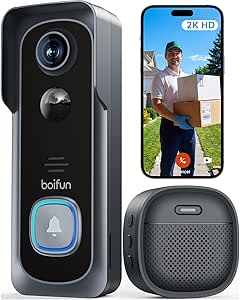 | Best Budget-Friendly No-Subscription Option | Resolution: 2K HD | Field of View: 166° | Battery Life: Up to 60 days | VIEW ON AMAZON | See Our Full Breakdown |
| Blink Video Doorbell + Outdoor 4 Wireless Security Cameras System |  | Best Comprehensive Security Bundle | Doorbell Resolution: 1440 x 1440p | Camera Resolution: 1080p HD | Battery Life: Up to 2 years | VIEW ON AMAZON | See Our Full Breakdown |
| Tapo D225 2K+ Smart Video Doorbell with Chime, Wired or Battery Powered |  | Best for Head-to-Toe Visibility | Resolution: 2K QHD | Field of View: 180° head-to-toe | Power: Wired or 10,000mAh battery | VIEW ON AMAZON | See Our Full Breakdown |
| Google Nest Doorbell (Wired, 3rd Gen), 2K HDR, Hazel |  | Best for Smart Home Integration | Resolution: 2K HDR | Field of View: 166° | Power Source: Wired (16-24V AC) | VIEW ON AMAZON | See Our Full Breakdown |
| eufy Security Video Doorbell E340 with Dual Cameras |  | Best for Package Monitoring | Resolution: 2K | Camera Setup: Dual cameras | Local Storage: 8GB eMMC | VIEW ON AMAZON | See Our Full Breakdown |
| Anona 3K Dual Camera Video Doorbell with No Subscription and Chime |  | Best for Subscription-Free Coverage | Video Resolution: 3K (5MP) | Camera Configuration: Dual 5MP (Main and Secondary) | Night Vision: Color Night Vision | VIEW ON AMAZON | See Our Full Breakdown |
| Google Nest Doorbell (Wired, 3rd Gen) – 2K Video, Live View |  | Best for Google Ecosystem Users | Video Resolution: 2K HDR | Field of View: 166° | Power Source: Hardwired | VIEW ON AMAZON | See Our Full Breakdown |
| Ring Battery Doorbell 2K (2nd Gen), Matte Mocha |  | Best for Wide Field of View | Video Resolution: Retinal 2K | Field of View: 140° Horizontal / 140° Vertical | Power Source: Built-in Rechargeable Battery | VIEW ON AMAZON | See Our Full Breakdown |
| Arlo Video Doorbell 2K (2nd Gen), Wireless or Wired, 1 Camera |  | Best for Smart Home Versatility | Video Resolution: 2K | Field of View: 180 Degrees | Power Options: Battery or Wired Trickle Charge | VIEW ON AMAZON | See Our Full Breakdown |
| Orbitell 1080p Wireless Video Doorbell Camera |  | Best Budget-Friendly Entry | Video Resolution: 1080p | Motion Detection: AI with Vehicle/Animal Filtering | Night Vision: Infrared LED | VIEW ON AMAZON | See Our Full Breakdown |
| TP-Link Tapo D210 2K Wireless Smart Video Doorbell with Chime |  | Best for Local Storage Flexibility | Resolution: 2K | Field of view: 160° diagonal | Connectivity: 2.4GHz Wi-Fi | VIEW ON AMAZON | See Our Full Breakdown |
| smart doorbell | Field of View | Night Vision |
|---|---|---|
| BOIFUN Wireless Video Doorbell | 166° | Invisible IR up to 33 ft |
| Blink Video Doorbell + Outdoor | — | Infrared |
| Tapo D225 2K+ Smart Video Door | 180° head-to-toe | — |
| Google Nest Doorbell | 166° | — |
| eufy Security Video Doorbell E | — | Color, up to 16 ft |
| Anona 3K Dual Camera Video Doo | — | Color Night Vision |
| Google Nest Doorbell | 166° | Yes |
| Ring Battery Doorbell 2K | 140° Horizontal / 140° Vertical | — |
| Arlo Video Doorbell 2K | 180 Degrees | — |
| Orbitell 1080p Wireless Video | — | Infrared LED |
| TP-Link Tapo D210 2K Wireless | 160° diagonal | Full-color night vision with spotlight |
More Details on Our Top Picks
BOIFUN Wireless Video Doorbell Camera, 2K HD, No Subscription Required
This model stands out for its subscription-free operation, appealing to buyers who dislike recurring fees. Unlike the Blink Video Doorbell system, which locks advanced features behind a paywall, the BOIFUN allows local microSD recording without extra costs. The 166° field of view is competitive, capturing more of the porch than standard 140-degree models. However, the non-removable battery is a significant drawback; if the battery degrades, the entire unit may need replacement rather than a simple battery swap. It is a solid entry-level choice for basic monitoring, but it lacks the ecosystem integration found in premium brands like Google or eufy.
Pros:- No mandatory subscription for video storage or alerts
- Wide 166° horizontal field of view
- Local microSD storage support up to 128 GB
Cons:- Non-removable battery complicates long-term maintenance
- Limited to 2.4 GHz Wi-Fi connectivity
- MicroSD card is not included in the box
Best for: Budget-conscious homeowners who want local storage and refuse to pay monthly cloud fees.
Not ideal for: Users with only 5 GHz Wi-Fi networks or those who prefer easy battery swaps without removing the device from the wall.
- Resolution:2K HD
- Field of View:166°
- Battery Life:Up to 60 days
- Storage:microSD (up to 128 GB)
- Wi-Fi Band:2.4 GHz only
- Night Vision:Invisible IR up to 33 ft
- Warranty:2 years
Our verdict“Choose this if you want a simple, fee-free wireless doorbell and are comfortable with local storage management.”
Blink Video Doorbell + Outdoor 4 Wireless Security Cameras System
This kit is ideal for those seeking a complete security ecosystem rather than a single device. While the Google Nest Doorbell focuses on high-resolution video and AI, the Blink system prioritizes extreme battery life, claiming up to two years on standard AA batteries. This is a major advantage for users who dislike frequent charging. The inclusion of an Outdoor 4 camera allows for multi-point monitoring, covering driveways or back entrances that a doorbell alone misses. The tradeoff is the required subscription for most video history, which can annoy those who prefer local storage. It is better suited for whole-home coverage than standalone porch monitoring.
Pros:- Up to two years of battery life on AA lithium batteries
- Includes both a doorbell and an outdoor camera
- Simple setup via the Blink app
Cons:- Cloud storage requires a paid subscription
- Video resolution is lower than 2K competitors
- Limited to 2.4 GHz Wi-Fi networks
Best for: Homeowners wanting a multi-camera security system with minimal maintenance and long battery life.
Not ideal for: Users who strictly avoid monthly subscriptions or need 4K-level detail in their video feed.
- Doorbell Resolution:1440 x 1440p
- Camera Resolution:1080p HD
- Battery Life:Up to 2 years
- Included Accessories:Mounting kits, wall plate, tools
- Power Source:AA Lithium Batteries
- Connectivity:Wi-Fi 2.4 GHz
- Night Vision:Infrared
Our verdict“Pick this bundle if you want to secure multiple entry points with minimal battery changes, accepting the need for a subscription.”
Tapo D225 2K+ Smart Video Doorbell with Chime, Wired or Battery Powered
The Tapo D225 distinguishes itself with a 180° head-to-toe view, superior to the eufy E340‘s dual-camera setup for capturing tall visitors or packages on the ground in a single frame. Its full-color night vision with a motion-activated spotlight is a standout feature, offering clearer identification than standard infrared models. The flexibility to run on hardwired power for continuous recording or battery mode is a significant plus. However, like many competitors, it does not support 5 GHz Wi-Fi, which may limit placement options in modern homes. It is a strong contender for those who prioritize vertical coverage and color clarity at night over ecosystem integration.
Pros:- 180° vertical field of view captures head-to-toe
- Full-color night vision with spotlight
- Flexible wired or battery power options
Cons:- No 5 GHz Wi-Fi support
- Cloud storage requires an optional subscription
- microSD card is not included
Best for: Users who need to see packages on the ground and prefer color night vision over infrared.
Not ideal for: People with only 5 GHz Wi-Fi coverage or those who require extensive ecosystem integration beyond Alexa.
- Resolution:2K QHD
- Field of View:180° head-to-toe
- Power:Wired or 10,000mAh battery
- Battery Life:Up to 8 months
- Local Storage:microSD up to 512GB
- Detection:Person, package, vehicle
- Wi-Fi:2.4 GHz only
Our verdict“This is the best choice if you want to see packages on the porch floor and prefer color footage at night.”
Google Nest Doorbell (Wired, 3rd Gen), 2K HDR, Hazel
For users already invested in the Google ecosystem, this doorbell is the most seamless option. Compared to the BOIFUN or Tapo D225, it offers superior AI-driven alerts that distinguish between people, packages, and vehicles with high accuracy. The 2K HDR video provides excellent dynamic range, handling bright sunlight and shadows better than many competitors. However, it is wired-only, requiring existing doorbell wiring, which limits its audience to those with compatible electrical setups. Additionally, some advanced Gemini features are gated behind a Google Home Premium subscription. It is a premium pick for tech-savvy users who value intelligence over battery flexibility.
Pros:- Seamless integration with Google Home and Nest ecosystem
- Advanced AI alerts for people and packages
- 2K HDR video quality with excellent dynamic range
Cons:- Requires wired installation (no battery option)
- Some AI features require a Google Home Premium subscription
- Limited third-party smart home compatibility compared to Alexa-heavy devices
Best for: Google Home users who have existing doorbell wiring and want advanced AI detection.
Not ideal for: Renters or homeowners without existing doorbell wiring or those who avoid subscriptions for AI features.
- Resolution:2K HDR
- Field of View:166°
- Power Source:Wired (16-24V AC)
- Connectivity:Wi-Fi
- Smart Home:Google Home, Gemini
- Dimensions:5.16 x 1.65 x 1.14 inches
- Color:Hazel
Our verdict“Choose this if you are a Google Home user with wired doorbell power and want the best AI detection accuracy.”
eufy Security Video Doorbell E340 with Dual Cameras
The eufy E340 uses a unique dual-camera design to monitor both the visitor’s face and the package drop zone simultaneously. This is a distinct advantage over the Tapo D225, which relies on a single wide-angle lens for the same task. With 8GB of local storage included, it offers a true no-subscription experience for basic events, though the limited capacity means frequent overwrites. The battery or wired flexibility is convenient, but the 16-foot night vision range is shorter than some competitors. It is the ideal choice for homeowners who frequently receive deliveries and want to verify package placement without paying for cloud storage.
Pros:- Dual cameras monitor face and package area simultaneously
- 8GB built-in local storage with no subscription
- Battery or wired installation options
Cons:- 8GB storage capacity is limited for long history
- Night vision range is shorter (16 ft) than competitors
- Requires compatible eufy HomeBase for full ecosystem features
Best for: Families who receive frequent deliveries and want to monitor packages specifically without a subscription.
Not ideal for: Users who need long-term video history storage or have large porches requiring wider night vision range.
- Resolution:2K
- Camera Setup:Dual cameras
- Local Storage:8GB eMMC
- Power:Battery or Wired (16-24V)
- Night Vision:Color, up to 16 ft
- Viewing Angle:160 degrees
- Compatibility:Alexa, Google Assistant, eufy HomeBase
Our verdict“This is the best pick if you want to see exactly where packages are left without paying monthly fees.”
Anona 3K Dual Camera Video Doorbell with No Subscription and Chime
This model stands out for its dual 5MP cameras and complete lack of mandatory subscription fees, a rare feature in this segment. Unlike the Google Nest Doorbell (Wired, 3rd Gen), which locks key intelligence behind a paywall, the Anona handles AI detection for people and packages locally. The inclusion of a secondary camera provides a package-view angle that single-lens competitors miss, reducing blind spots at the doorstep. However, the tradeoff is significant: you must supply your own microSD card, and the 512GB limit can fill up quickly if you record continuously. It is a powerful hardware solution for those who refuse to pay monthly fees, though the setup may feel more complex than streamlined ecosystem options.
Pros:- Dual 5MP cameras provide comprehensive vertical and package-view coverage.
- No subscription required for core AI detection and alert features.
- Flexible power options allow for wireless or hardwired installation.
- Color night vision offers clearer details than standard infrared models.
Cons:- MicroSD card is not included, adding hidden cost and setup steps.
- Local storage is capped at 512GB, limiting long-term history.
- Setup process can be more complex than single-app ecosystem devices.
Best for: Privacy-conscious homeowners who want high-resolution video and AI alerts without recurring monthly costs.
Not ideal for: Users who prefer a plug-and-play experience and do not want to manage local storage cards.
- Video Resolution:3K (5MP)
- Camera Configuration:Dual 5MP (Main and Secondary)
- Night Vision:Color Night Vision
- Battery Life:Up to 100 days (5200mAh)
- Storage:MicroSD up to 512GB (Card not included)
Our verdict“Choose this if you want maximum video coverage and refuse to pay subscription fees, provided you are comfortable managing local storage.”
Google Nest Doorbell (Wired, 3rd Gen) – 2K Video, Live View
This wired option excels in continuous power reliability and seamless integration with Google Home devices. Compared to the battery-dependent Ring Battery Doorbell 2K, the Nest Doorbell eliminates the anxiety of recharging, ensuring 24/7 recording availability. The 2K HDR video and 166° field of view deliver crisp, detailed images even in challenging lighting. However, the device feels limited without the Google Home Premium subscription, which is required for advanced features like Gemini AI insights. While the hardware is premium, the reliance on cloud subscriptions for full functionality contrasts sharply with the subscription-free model of the Anona 3K.
Pros:- Wired power ensures 24/7 operation without battery recharging.
- 2K HDR video provides excellent dynamic range in bright sunlight.
- Strong encryption and two-step verification enhance account security.
- Wide 166° field of view captures the entire porch area.
Cons:- Advanced AI features and extended history require a paid subscription.
- Wired installation is less flexible than wireless alternatives.
- Limited compatibility outside the Google smart home ecosystem.
Best for: Users deeply integrated into the Google Home ecosystem who prefer hardwired reliability over battery maintenance.
Not ideal for: Budget-conscious buyers who do not want to pay for a monthly subscription to unlock key features.
- Video Resolution:2K HDR
- Field of View:166°
- Power Source:Hardwired
- Night Vision:Yes
- Subscription Requirement:Google Home Premium for advanced features
- Security Features:Encrypted video and two-step verification
Our verdict“Ideal for Google Home users who value constant power and are willing to subscribe for full AI capabilities.”
Ring Battery Doorbell 2K (2nd Gen), Matte Mocha
The Ring Battery Doorbell 2K distinguishes itself with a 140° vertical field of view, capturing visitors from head to toe without cropping. This is a significant upgrade over standard doorbells that only show the face. The Retinal 2K video with 6x zoom allows users to read delivery labels clearly. However, unlike the Arlo Video Doorbell 2K, which offers broader smart home compatibility, Ring remains tightly locked into its own ecosystem. Additionally, the USB-C charging cable is not included, and many of the most useful AI detection features are gated behind a Ring subscription, making the total cost of ownership higher than it initially appears.
Pros:- 140° vertical field of view captures visitors head-to-toe.
- Retinal 2K video with 6x zoom allows for detailed identification.
- Battery-powered design offers flexible placement options.
- Weather-resistant build withstands temperatures from -4°F to 120°F.
Cons:- USB-C charging cable is not included in the box.
- Cloud recording and AI detection require a paid subscription.
- Performance relies heavily on consistent Wi-Fi upload speeds.
Best for: Users who need a full-body view of visitors and are already invested in the Ring security ecosystem.
Not ideal for: Those seeking a device with broad third-party smart home integration or no subscription requirements.
- Video Resolution:Retinal 2K
- Field of View:140° Horizontal / 140° Vertical
- Power Source:Built-in Rechargeable Battery
- Connectivity:Wi-Fi 4 (2.4 GHz)
- Operating Temperature:-4°F to 120°F
- Charging:USB-C (Cable not included)
Our verdict“Best suited for Ring loyalists who prioritize a full-body camera angle over subscription-free operation.”
Arlo Video Doorbell 2K (2nd Gen), Wireless or Wired, 1 Camera
This doorbell offers the widest 180° field of view in the lineup, surpassing the Ring Battery Doorbell 2K in horizontal coverage. Its strength lies in platform neutrality, working seamlessly with Apple Home, Alexa, Google Home, and SmartThings. The ability to run on battery or trickle charge via existing wiring provides installation flexibility that the wired-only Google Nest Doorbell lacks. However, the device is severely limited without an Arlo Secure subscription; after the trial, you lose advanced detection and 60-day video history. It is a hardware-first choice that demands a recurring fee to function at its advertised potential.
Pros:- 180° field of view captures the widest angle among competitors.
- Compatible with Apple Home, Alexa, Google Home, and SmartThings.
- Supports both wireless battery and wired trickle charging.
- Includes a remote siren for active deterrence.
Cons:- Advanced detection and video history require a paid Arlo Secure plan.
- Only supports 2.4 GHz Wi-Fi networks.
- Battery life varies significantly based on motion traffic.
Best for: Users with mixed smart home brands who want a wide-angle view and flexible power options.
Not ideal for: Those who expect advanced motion detection and video history without paying a monthly subscription.
- Video Resolution:2K
- Field of View:180 Degrees
- Power Options:Battery or Wired Trickle Charge
- Smart Home Compatibility:Alexa, Apple Home, Google Home, SmartThings, IFTTT
- Weather Resistance:IP65
- Video History:60 days (with Arlo Secure)
Our verdict“A versatile choice for multi-platform smart homes, provided you budget for the necessary security subscription.”
Orbitell 1080p Wireless Video Doorbell Camera
The Orbitell M52 is the most affordable entry point in this group, offering 1080p video and basic AI motion detection. It filters out vehicles and animals, a feature often reserved for premium models. However, the 1080p resolution is a clear step down from the 2K and 3K options offered by the Anona 3K and Google Nest, resulting in less detail when zooming in on faces or labels. It also lacks the robust smart home integration of the Arlo Video Doorbell 2K. This device is a functional basic monitor, but the reliance on a subscription for pre-capture recording limits its utility for capturing events that happened just before the alert triggered.
Pros:- AI detection filters out vehicles and animals to reduce false alerts.
- Compact and lightweight design is easy to install.
- IP65 rating ensures durability in outdoor conditions.
- Two-way audio allows for basic visitor communication.
Cons:- 1080p video resolution lacks the detail of 2K/3K competitors.
- Pre-capture recording requires a cloud subscription.
- Limited to 2.4 GHz Wi-Fi with no 5 GHz support.
Best for: First-time smart doorbell buyers looking for a low-cost entry with basic motion filtering.
Not ideal for: Users who need high-definition clarity for identification or advanced smart home automation.
- Video Resolution:1080p
- Motion Detection:AI with Vehicle/Animal Filtering
- Night Vision:Infrared LED
- Storage:Cloud (AES-128 encrypted)
- Weather Resistance:IP65
- Connectivity:2.4 GHz Wi-Fi
Our verdict“A solid budget option for basic monitoring, but it compromises on video clarity and advanced features.”
TP-Link Tapo D210 2K Wireless Smart Video Doorbell with Chime
This model stands out for its flexible storage architecture, allowing users to choose between a one-time microSD purchase or a recurring cloud subscription. Unlike the Google Nest Doorbell, which locks many advanced features behind a mandatory subscription, the Tapo D210 lets you record 2K footage locally without ongoing fees. The 160° diagonal field of view is wider than the Ring Battery Doorbell 2K, capturing more of the porch and package area. However, the microSD card is sold separately, adding to the initial cost. While the full-color night vision is impressive, battery life can fluctuate in extreme temperatures, a common tradeoff for wireless units. This option is ideal for those who want high-resolution video and privacy control without being forced into a cloud ecosystem.Pros:- 2K video with a wide 160° view captures more context than standard doorbells
- Local microSD storage eliminates mandatory subscription fees for basic recording
- Full-color night vision with spotlight provides clear visibility in low light
- Person detection and customizable activity zones reduce false alerts
Cons:- microSD card is sold separately, increasing the total cost of ownership
- Cloud storage requires a paid Tapo Care subscription for off-site backup
- Battery life varies significantly with usage patterns and environmental conditions
Best for: Privacy-conscious homeowners who prefer local storage and want to avoid mandatory cloud subscriptions while keeping high-resolution video.
Not ideal for: Users who want a plug-and-play experience without buying extra accessories, as the microSD card is not included.
- Resolution:2K
- Field of view:160° diagonal
- Connectivity:2.4GHz Wi-Fi
- Battery capacity:6400mAh rechargeable battery
- Local storage:microSD card up to 512GB (not included)
- Cloud storage:Tapo Care subscription with 30-day video history
- Audio:Two-way audio
- Night vision:Full-color night vision with spotlight
- Compatibility:Alexa and Google Assistant-supported displays
Our verdict“This pick makes the most sense for users who prioritize local storage flexibility and wide-angle video without being locked into a specific cloud provider.”

How We Picked
I evaluated these eleven doorbells based on four core criteria: video resolution and dynamic range, power source reliability, ecosystem integration, and long-term cost of ownership. First, I assessed video quality by comparing 2K and 3K resolution claims against real-world low-light performance and HDR capabilities, prioritizing models that maintain clarity in high-contrast lighting scenarios. Second, I weighed the practical implications of wired versus wireless power, noting that wired options generally offer faster wake-up times and uninterrupted recording, while wireless models excel in retrofit situations where running new cables is impossible.
I also scrutinized the subscription models, distinguishing between devices that require ongoing fees for basic functionality and those that offer local storage or limited free cloud tiers. This distinction heavily influenced the ranking, as hidden recurring costs often outweigh initial hardware savings. Finally, I considered ecosystem compatibility, recognizing that a doorbell’s utility is amplified when it triggers lights or locks within a user’s existing smart home setup. Products that function well in isolation but lack third-party integration were ranked lower unless their standalone performance was exceptional.
Factors to Consider When Choosing Smart Doorbells
Choosing a smart doorbell involves balancing technical constraints with lifestyle preferences. This guide breaks down the critical factors that determine whether a specific model will serve your home effectively or become a source of frustration.Power Source: Wired Stability vs. Wireless Flexibility
Wired doorbells draw power from your existing doorbell transformer, providing a continuous energy supply that enables features like constant recording and rapid wake-up speeds. This setup eliminates the hassle of charging batteries but requires a compatible transformer (typically 16-24V AC) and potentially professional installation if your current wiring is outdated. Wireless models, conversely, offer DIY-friendly installation and can be placed anywhere, even on non-standard doors or gates. However, they rely on battery packs that need recharging every few months and often feature slower wake-up times to conserve power. If you have a stable power source at your entrance, wired is the superior choice for reliability; if you rent or lack transformer access, wireless is the practical necessity.
Subscription Models and Data Ownership
The most significant ongoing cost in smart doorbells is the cloud storage subscription. Brands like Ring and Nest often lock historical video footage and advanced motion detection behind monthly paywalls, meaning the hardware you bought is only half the product. Alternatives like eufy and Anona emphasize local storage via SD cards or home hubs, granting you full ownership of your data without recurring fees. Consider your tolerance for monthly expenses and your preference for data privacy. If you want to review events from weeks ago without a subscription, prioritize devices with local storage capabilities. If you prefer seamless cloud access and don’t mind the cost, ecosystem-integrated models with subscriptions may offer better convenience.
Resolution and Field of View
While 1080p was once the standard, 2K and 3K resolutions now provide the clarity needed to identify faces and license plates from a distance. However, resolution alone is insufficient; look for a wide field of view (140-180 degrees) to capture packages left on the doorstep. Dual-camera systems, such as the eufy E340, use one lens for the face and another for the package area, effectively eliminating blind spots that single-lens models suffer from. High dynamic range (HDR) support is also critical for doorbells, as entrances often have harsh backlighting from sunlight or streetlamps. Without HDR, faces appear as silhouettes, rendering the high resolution useless.
Ecosystem Integration and Voice Assistant Compatibility
A smart doorbell should do more than ring; it should interact with your home. Google Nest devices integrate deeply with Google Home, allowing you to view the doorbell feed on smart displays or trigger lights via voice commands. Ring devices are similarly tied to Alexa, with limited functionality if you don’t use Amazon’s platform. For those using Apple HomeKit or Samsung SmartThings, options are more limited, often requiring third-party bridges or offering only basic video streaming. Before buying, verify that your preferred voice assistant and smart home hub are natively supported. Fragmented ecosystems lead to clunky user experiences, where you must open multiple apps to manage security.
Audio Quality and Two-Way Communication
Effective communication with visitors depends on clear audio, yet this is often the weakest link in budget models. Look for doorbells with noise cancellation and high-fidelity speakers, as wind, traffic, and ambient noise can muffle conversations. The microphone sensitivity determines whether you can hear a whisper at the door or only loud shouting. Some premium models feature dedicated speaker arrays that project sound clearly to the visitor while capturing their voice distinctly. Test the audio lag if possible; a delay of more than two seconds can make conversation awkward and unnatural. Good audio transforms the doorbell from a surveillance tool into a functional communication device.
Frequently Asked Questions
Do I really need a subscription for a smart doorbell?
It depends on your storage needs. If you only want live view and instant motion alerts, many models work without a subscription. However, if you need to review past events, share clips, or access advanced AI detection (like person or package detection), most major brands like Ring and Nest require a paid plan. Devices like eufy and Anona offer local storage options that bypass this need, giving you full control without recurring fees. Evaluate whether you need historical footage regularly or just real-time awareness before committing to a subscription model.
Will a wireless doorbell work if my Wi-Fi signal is weak at the front door?
Weak Wi-Fi signals cause lag, buffering, and missed alerts, regardless of whether the doorbell is wired or wireless. Battery-powered models are particularly sensitive because they often throttle transmission power to save energy. If your signal is weak, consider installing a Wi-Fi extender near the entrance or choosing a model with a stronger antenna. Wired models generally handle weaker signals slightly better due to constant power allowing for more robust transmission attempts, but neither will perform well without a solid connection. Check your signal strength with a phone at the door location before buying.
Can I install a wired doorbell if I don’t have a doorbell chime?
Most wired smart doorbells require a mechanical or digital chime to function correctly because they rely on the circuit completion to trigger the chime and power the device. If you lack a chime, you may need to install a digital chime adapter or a standalone transformer. Some models, like the Tapo D225, come with their own chime accessory, which simplifies this process by bypassing the need for existing house wiring. Always check the manufacturer’s compatibility guide, as bypassing the chime without proper resistors can damage the doorbell or create a fire hazard.
Are dual-camera doorbells worth the extra cost?
For households that receive frequent packages, dual-camera doorbells are often worth the investment. The secondary lens typically focuses downward on the porch, capturing the area where deliveries are placed, which is a blind spot for standard upward-facing lenses. This feature reduces the need for multiple cameras to cover the entryway. However, if you rarely receive packages or already have a separate security camera covering the ground area, a high-quality single-lens model may suffice. The value proposition hinges on whether package theft is a specific concern for your location.
How does privacy affect my choice between cloud and local storage?
Cloud storage means your video footage is uploaded to and stored on the manufacturer’s servers, which can be a concern for privacy-conscious buyers due to potential data breaches or data mining practices. Local storage keeps your footage on an SD card or a home hub, ensuring that only you have access to the data unless you explicitly share it. While cloud services offer convenience and remote access without network configuration, local storage provides greater control and immunity to internet outages affecting your ability to view recent events. If you prioritize data sovereignty, prioritize models with local storage capabilities.
Conclusion
Choosing the right smart doorbell depends on your existing infrastructure and long-term preferences. The Google Nest Doorbell (Wired, 3rd Gen) is the best overall choice for users deeply integrated into the Google ecosystem who prioritize video quality and smart home automation. For those seeking a premium, subscription-free experience with robust privacy, the eufy Security Video Doorbell E340 is the top recommendation due to its dual-camera setup and local storage. If you are looking for the best value and easy installation, the Tapo D225 offers a balanced feature set with flexible power options at a competitive hardware cost. Beginners or renters who cannot modify wiring should consider the BOIFUN Wireless Video Doorbell for its simplicity and lack of recurring fees. Ultimately, match the power source to your home’s wiring and the storage model to your privacy preferences to make a decision you won’t regret.
Halloween Picks

Govee Outdoor Halloween Projector Light with 3D Effects

Haunted Hill Farm 2-Ft. Zombie Raccoon Halloween Animatronic

10ft Halloween Inflatable Archway – Pumpkin Skeleton Yard Décor
As an affiliate, we earn on qualifying purchases.