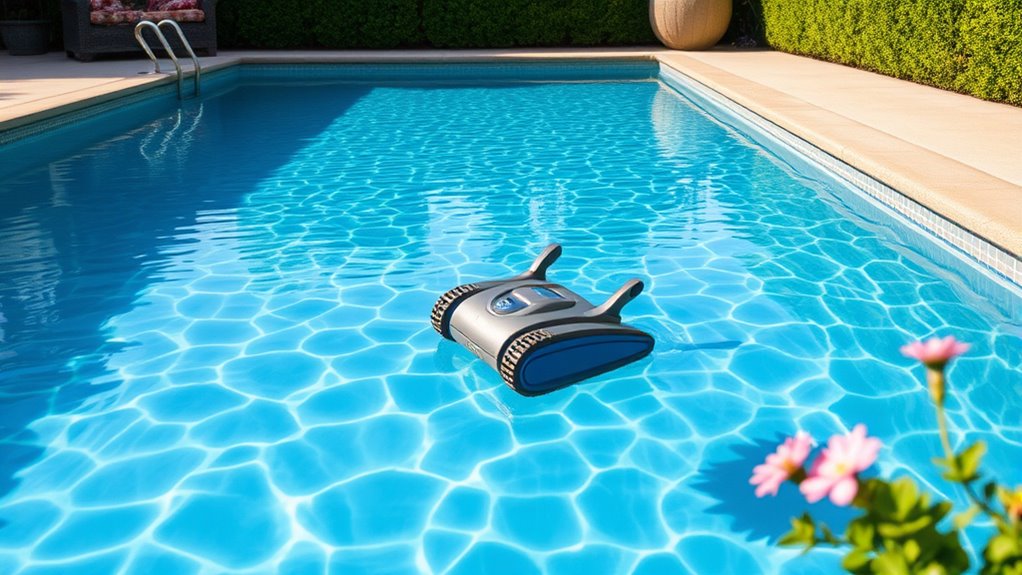

The Polaris Quattro T2 stands out as the quietest pressure-side cleaner I found in this category, pairing near-silent operation with four-wheel traction and strong debris pickup in inground pools. For above-ground vinyl pools, the Polaris Vac-Sweep 65 is a standout because it runs off a dedicated return line with minimal pump noise, while the Polaris Vac-Sweep 360 offers a quieter alternative for inground pools without a booster pump. The main tradeoff buyers face here is between cleaning power and noise: booster-pump models like the Vac-Sweep 380 clean aggressively but add mechanical hum, whereas non-booster models trade some scrubbing intensity for quieter running. Budget four-wheel sweepers from Amptyhub and MAKHOON undercut the big names on price but vary widely in hose noise and wall-climbing consistency. Read on for the full breakdown of all twelve models.

Get furniture and decor delivered free with Prime
- Fast, free delivery on millions of items
- Prime Video, Amazon Music and more included
- Member-only deals all year
Complete the kit


Key Takeaways
- Models that run without a dedicated booster pump (Polaris 360, Vac-Sweep 65, Intex ZX300) were consistently quieter overall because the booster pump itself is the loudest part of most pressure-side setups.
- The Polaris Quattro T2 earned the top spot by combining quiet operation with the strongest debris handling, though its higher cost and tangle-prone feed hose are real drawbacks.
- The Amptyhub and MAKHOON four-wheel sweepers share near-identical designs; differences came down to hose fit, wheel bearing quality, and how quietly the sweep tail operates rather than core cleaning ability.
- Above-ground buyers have the narrowest field: the Intex 28001E is the quietest budget option but only handles fine debris, while the Vac-Sweep 65 costs more yet runs more quietly and lasts longer on vinyl.
- Hose design affected noise as much as the cleaners themselves — models with swivels and smooth-bore hoses produced far less knocking and vibration against pool walls than generic ribed hoses.
| Polaris Vac-Sweep 380 Pressure-Side Pool Cleaner |  | Best Overall | Power source: Separate Polaris booster pump | Jets: 3 venturi jets | Cleaning time: 3 hours or less | VIEW ON AMAZON | See Our Full Breakdown |
| Amptyhub Four-Wheel Pool Pressure-Side Sweeper |  | Best Value Alternative to the Polaris 380 | Type: Pressure-side pool cleaner | Wheel count: 4 | Pool compatibility: In-ground pools | VIEW ON AMAZON | See Our Full Breakdown |
| Amptyhub Upgraded 4-Wheel Pool Pressure Side Cleaner |  | Best Budget Pick for Booster-Pump Setups | Wheel count: 4 | Fitting: Threaded 1½-inch female pipe | Pool type: In-ground | VIEW ON AMAZON | See Our Full Breakdown |
| Polaris Vac-Sweep 65 6-130-00 Pressure Side Automatic Pool Cleaner |  | Best for Above-Ground Pools | Model: 6-130-00 | Pool type: Above-ground vinyl or fiberglass | Max depth: 5 feet | VIEW ON AMAZON | See Our Full Breakdown |
| MAKHOON Pressure-Side Pool Cleaner, Four-Wheel |  | Best for Simple, Low-Maintenance Coverage | Type: Pressure-side pool cleaner | Power source: Hydraulic | Wheel count: 4 | VIEW ON AMAZON | See Our Full Breakdown |
| MAKHOON Upgrade Pool Pressure Side Sweeper with 4-Wheel Structure |  | Best Budget Pick for Existing Booster Pump Setups | Wheel Design: 4-wheel | Fitting: Threaded 1-1/2″ female pipe | Pool Type: In-ground | VIEW ON AMAZON | See Our Full Breakdown |
| Polaris Vac-Sweep 280 Pressure-Side In-Ground Pool Cleaner |  | Best for Heavy Leaf and Debris Loads | Pool Type: In-ground | Power Source: AC via separate booster pump | Cleaning Time: 3 hours or less | VIEW ON AMAZON | See Our Full Breakdown |
| Polaris Vac-Sweep 360 Pressure-Side Cleaner for In-Ground Pools |  | Best Booster-Free Pick | Pool Type: In-ground | Power Source: Pool return-line water pressure | Booster Pump Required: No | VIEW ON AMAZON | See Our Full Breakdown |
| Intex 28001E Automatic Above-Ground Pool Cleaner with 24-Foot Hose |  | Best for Basic Above-Ground Cleaning | Pool Type: Above-ground | Maximum Pool Size: 24 feet in diameter | Required Pump Flow Rate: 1,600–3,500 GPH | VIEW ON AMAZON | See Our Full Breakdown |
| Intex ZX300 Deluxe Pressure-Side Automatic Pool Vacuum Cleaner |  | Best Above-Ground Upgrade for Walls and Waterline | Power Source: Hydraulic (water-powered) | Required Pump Flow Rate: 1,600–3,400 GPH | Suction Rate: 700 gallons per hour | VIEW ON AMAZON | See Our Full Breakdown |
| MAKHOON Pressure-Side Pool Sweeper with Four Wheels |  | Best Budget-Friendly Booster-Pump Cleaner | Power Source: Hydraulic (booster pump) | Pool Type: In-ground | Required Inlet: 1.5-inch female thread | VIEW ON AMAZON | See Our Full Breakdown |
| Polaris Quattro T2 Pressure-Side Pool Cleaner for Inground Pools |  | Best Premium All-Surface Cleaner | Power Source: Pump powered (booster pump required) | Cleaning Type: Pressure side | Special Features: Self-propelled TankTrax drive | VIEW ON AMAZON | See Our Full Breakdown |
| quietest pressure pool cleaner | Pool type | Power source |
|---|---|---|
| Polaris Vac-Sweep 380 Pressure | — | Separate Polaris booster pump |
| Amptyhub Four-Wheel Pool Press | — | — |
| Amptyhub Upgraded 4-Wheel Pool | In-ground | — |
| Polaris Vac-Sweep 65 6-130-00 | Above-ground vinyl or fiberglass | — |
| MAKHOON Pressure-Side Pool Cle | In-ground | Hydraulic |
| MAKHOON Upgrade Pool Pressure | In-ground | — |
| Polaris Vac-Sweep 280 Pressure | In-ground | AC via separate booster pump |
| Polaris Vac-Sweep 360 Pressure | In-ground | Pool return-line water pressure |
| Intex 28001E Automatic Above-G | Above-ground | Hydraulic |
| Intex ZX300 Deluxe Pressure-Si | — | Hydraulic (water-powered) |
| MAKHOON Pressure-Side Pool Swe | In-ground | Hydraulic (booster pump) |
| Polaris Quattro T2 Pressure-Si | Inground | Pump powered (booster pump required) |
More Details on Our Top Picks
Polaris Vac-Sweep 380 Pressure-Side Pool Cleaner
The Polaris 380 remains the benchmark that other pressure-side cleaners are measured against, and for good reason when quiet operation is the priority. Because it runs on a dedicated booster pump rather than fighting against your main filtration system, the cleaning action itself is mostly water moving through jets and wheels — a low mechanical hum rather than the clatter of brush-driven robots. Its three venturi jets give it more thrust than the two-jet Polaris 280, which translates to faster coverage and fewer hours of that pump running at all.
Compared with the Amptyhub models, which borrow the 380’s debris bag standard, the original offers tighter tolerances and more consistent jet tuning out of the box. The tradeoff is real, though: you must have a booster pump, which adds both cost and plumbing complexity.
Pros:- Three venturi jets deliver faster coverage than two-jet rivals like the Polaris 280
- Quiet booster-pump operation keeps noise well below robotic or suction cleaners
- 2.25-inch inlet swallows leaves, acorns, and pebbles without clogging
- Works on vinyl, fiberglass, gunite, pebble, and tile surfaces
Cons:- Requires a separate Polaris booster pump sold and plumbed separately
- Single-chamber filter bag needs frequent emptying during heavy leaf season
Best for: In-ground pool owners with an existing dedicated booster pump line who want proven, fast, low-noise cleaning of floors and walls
Not ideal for: Buyers without a booster pump or dedicated pressure line — the added plumbing cost can exceed the cleaner itself
- Power source:Separate Polaris booster pump
- Jets:3 venturi jets
- Cleaning time:3 hours or less
- Pool compatibility:In-ground; vinyl, fiberglass, gunite, pebble, tile
- Inlet size:2.25 inches
- Filter bag:Single-chamber
- Included hose:31 feet
Our verdict“If your pool already has a booster line, this is the quietest, fastest, most proven pressure-side cleaner you can buy.”
Amptyhub Four-Wheel Pool Pressure-Side Sweeper
This Amptyhub sweeper is essentially a 380-compatible workhorse at a friendlier price, and its four-wheel chassis gives it a stability edge over three-wheel designs when climbing walls or crossing main drains. It uses the same Polaris 380 debris bag replacement parts, which matters more than it sounds — cheap cleaners often die when you can’t find bags or wheels, and this one plugs into the most widely stocked parts ecosystem in the category.
Against the Polaris 380 itself, the difference is refinement: the Amptyhub may need manual jet-direction tuning to reach every corner, whereas the 380 tends to be dialed in from the factory. Noise behavior is similar since both rely on a booster pump, so the quieter-running advantage goes to whichever one you tune properly. Skip it if you want plug-and-play precision.
Pros:- Four-wheel design offers better stability than 3-wheel cleaners
- Accepts widely available Polaris 380 replacement debris bags
- Adjustable feed hose and jet direction suit unusual pool shapes
- Handles a wide range of in-ground pool sizes
Cons:- Requires a separate booster pump and dedicated piping
- May need jet-direction adjustment before it covers the full pool
Best for: Budget-conscious in-ground pool owners who already run a Polaris-style booster setup and don’t mind some tuning
Not ideal for: Buyers who expect factory-calibrated coverage out of the box or lack a booster pump and 1½-inch pressure line
- Type:Pressure-side pool cleaner
- Wheel count:4
- Pool compatibility:In-ground pools
- Pipe fitting:1½-inch female threaded
- Booster pump:Required; sold separately
- Debris bag compatibility:380-compatible parts
Our verdict“A sensible pick for anyone who wants Polaris-style quiet cleaning and parts availability without paying Polaris prices.”
Amptyhub Upgraded 4-Wheel Pool Pressure Side Cleaner
The upgraded Amptyhub sits below the standard Amptyhub Four-Wheel in polish but above it in value, making it the lowest-cost entry point into quiet, booster-driven cleaning in this lineup. Like its sibling, it runs on a 1½-inch threaded female fitting and shares Polaris 380 debris bag compatibility, so long-term maintenance stays cheap. Amptyhub claims stronger component connections on this version, addressing the joint failures that plague budget pressure cleaners.
Compared with the Polaris 380, expect more fiddling — jet power adjustment is often needed for full coverage, something the 380 handles better out of the box. But since both ride on the same booster-pump architecture, the noise profile is comparable: gentle wheel-and-water motion rather than grinding brushes. It’s the pick when the plumbing already exists and the budget is tight.
Pros:- Most affordable route into quiet pressure-side cleaning in this roundup
- Polaris 380-compatible debris bags keep maintenance costs low
- Four-wheel stability handles varied pool shapes and sizes
- Strengthened component connections improve on typical budget build quality
Cons:- Booster pump and piping not included
- Jet power adjustment typically required for complete pool coverage
Best for: Cost-focused buyers with an existing booster pump line who want 380-compatible parts support at the lowest entry price
Not ideal for: Anyone without a dedicated pressure line, or those unwilling to adjust jets and hose balance for full coverage
- Wheel count:4
- Fitting:Threaded 1½-inch female pipe
- Pool type:In-ground
- Booster pump required:Yes (not included)
- Debris bag compatibility:Polaris 380 replacement parts
- Build:Upgraded stronger component connections
Our verdict“Buy it if you already have the plumbing and want quiet cleaning for less; skip it if you’re starting from scratch.”
Polaris Vac-Sweep 65 6-130-00 Pressure Side Automatic Pool Cleaner
The Vac-Sweep 65 is the only true pressure-side option here for above-ground pools, and it’s also the quietest path into the category because it needs no booster pump at all — it taps the pool’s existing filtration system through a 1.5-inch threaded return line. That single design choice removes the loudest, costliest component from the equation. Its detachable filter bag captures leaves, twigs, and pebbles before they reach the pump, cutting filter cleaning by up to 80% per year.
Compared with in-ground units like the Polaris 380, coverage is more modest: the 24-foot float hose caps it at pools up to 24 feet round, and uneven-bottom handling maxes out at 5 feet of depth. Intex’s above-ground cleaners cover similar ground but with flimsier builds, so the 65 wins on durability.
Pros:- Runs off the existing filtration system — no booster pump purchase or noise
- Detachable filter bag protects the pump and extends filter life
- Cleans bottom and sides in three hours or less
- Handles uneven bottoms down to 5 feet
Cons:- 24-foot hose limits use to smaller above-ground pools
- Can stall or circle if jet flow isn’t properly balanced, requiring troubleshooting
Best for: Above-ground vinyl or fiberglass pool owners up to 24 feet round who want quiet cleaning without buying a booster pump
Not ideal for: In-ground pool owners or anyone with a pool larger than 24 feet round — the hose simply won’t reach
- Model:6-130-00
- Pool type:Above-ground vinyl or fiberglass
- Max depth:5 feet
- Hose length:24 feet
- Connection:1.5-inch threaded return line
- Cleaning time:3 hours or less
- Filter cleaning reduction:Up to 80% per year
Our verdict“The clear choice for small above-ground pools where quiet operation and zero extra equipment matter most.”
MAKHOON Pressure-Side Pool Cleaner, Four-Wheel
The MAKHOON four-wheel cleaner is the most no-frills hydraulic option in this batch — a straightforward pressure-side sweeper with durable plastic components and a chassis that covers ground efficiently without extra mechanisms that could rattle or wear. Because the cleaning action is purely hydraulic, there’s very little to make noise beyond water movement, which suits the quiet-first buyer.
Its catch is installation strictness: it demands a dedicated 1.5-inch female-thread inlet and 4 bar of water pressure, which is a narrower requirement than the standard 1½-inch fittings on the Amptyhub models — pools without matching plumbing may face real retrofit costs. The hose also tends to retain shipping curls and tangle, so plan on adjusting floats during the first weeks. Compared with the Polaris 380, coverage is adequate rather than exceptional, but so is the price.
Pros:- Pure hydraulic action means minimal mechanical noise
- Four-wheel design covers pool surfaces efficiently
- Durable plastic construction for hose and machine components
- Suits a variety of in-ground pool sizes and shapes
Cons:- Requires a dedicated compatible inlet at 4 bar pressure, limiting fit
- Hose can tangle and retains shipping curls, needing adjustment
Best for: Hands-on owners with properly plumbed in-ground pools who want quiet hydraulic cleaning and don’t mind dialing in the hose setup
Not ideal for: Pools without a dedicated 1.5-inch pressure inlet at 4 bar — the plumbing retrofit can be expensive
- Type:Pressure-side pool cleaner
- Power source:Hydraulic
- Wheel count:4
- Required inlet:1.5-inch female thread
- Required water pressure:4 bar
- Booster pump:Required; sold separately
- Pool type:In-ground
Our verdict“A quiet, simple sweeper for well-plumbed pools — verify your inlet and pressure specs before buying.”
MAKHOON Upgrade Pool Pressure Side Sweeper with 4-Wheel Structure
For anyone who already has a booster pump and dedicated plumbing, this MAKHOON offers the core four-wheel pressure-side formula at a lower entry point than name-brand rivals like the Polaris Vac-Sweep 280. The tradeoff is straightforward: you give up the Polaris’s automatic backup valve and polished wall-climbing, but you keep the stable 4-wheel chassis and full compatibility with 380-style debris bags, which keeps long-term maintenance cheap and easy. Coverage is efficient on the floor, though the jet direction needs occasional manual adjustment to hit every corner. Compared with the other MAKHOON four-wheel models in this lineup, this version is the one to pick if your priority is replacement-part availability. It is quiet in the way all booster-driven cleaners are — the noise lives at the equipment pad, not in the pool.
Pros:- Efficient floor coverage with long run times
- Stable four-wheel structure holds up over seasons
- 380-compatible debris bags keep maintenance inexpensive
- Adjustable feed hose fits a range of pool sizes
Cons:- Requires a separate booster pump and dedicated 1-1/2″ female threaded fitting
- Jet power direction may need manual adjustment for full coverage
- No automatic backup valve to free it from corners
Best for: Budget-minded owners of in-ground pools with an existing booster pump and 1-1/2″ threaded line who want 380-compatible parts
Not ideal for: Anyone without a dedicated booster pump setup — the required pump and piping add real cost and complexity
- Wheel Design:4-wheel
- Fitting:Threaded 1-1/2″ female pipe
- Pool Type:In-ground
- Booster Pump Required:Yes (separate booster pump needed)
- Debris Bag Compatibility:Compatible with 380 replacement parts
- Maintenance:Easy debris bag replacement
Our verdict“A sensible low-cost choice for pools already plumbed for a booster pump, as long as you don’t expect Polaris-level autonomy.”
Polaris Vac-Sweep 280 Pressure-Side In-Ground Pool Cleaner
The Polaris 280 remains the benchmark for pressure-side cleaning in leaf-heavy pools, thanks to dual venturi jets feeding a 2.25-inch inlet that swallows acorns, pebbles, and whole leaves into its filter bag before they ever reach your pump basket. Unlike the Polaris 360, it runs on a booster pump — which means more water noise at the equipment pad but stronger, more consistent jet action in the pool, and a full clean in three hours or less. The automatic backup valve is the feature budget rivals like the MAKHOON sweeper lack: it walks the unit out of corners and steps without intervention. Tradeoffs are real, though — professional installation is recommended, and the booster pump requirement makes it the pricier ecosystem to own.
Pros:- Vacuums, sweeps, and scrubs both floors and walls
- Large 2.25-inch inlet captures leaves, acorns, and pebbles
- Automatic backup valve frees it from corners and steps
- Works across vinyl, fiberglass, gunite, pebble, and tile surfaces
Cons:- Requires a separate booster pump
- Professional installation is listed, adding setup cost
Best for: In-ground pool owners with trees nearby who need large-debris capture and a proven, self-rescuing cleaner
Not ideal for: Buyers without a booster pump or the budget to install one — the 360 is the easier entry into the Polaris line
- Pool Type:In-ground
- Power Source:AC via separate booster pump
- Cleaning Time:3 hours or less
- Inlet Size:2.25 inches
- Hose Length:31 feet
- Filter Bag:Single-chamber
- Compatible Surfaces:Vinyl, fiberglass, gunite, pebble, tile
- Item Weight:6.2 pounds
Our verdict“The go-to pressure-side cleaner if big debris is your problem and you already run a booster pump.”
Polaris Vac-Sweep 360 Pressure-Side Cleaner for In-Ground Pools
The Polaris 360 solves the single biggest barrier to pressure-side ownership: it runs entirely off return-line water pressure, no booster pump needed. That matters for quietness, because every pump you eliminate is one less source of equipment-pad noise, and it matters for cost — no booster purchase, no extra plumbing run. Compared with the 280, you trade some jet force and wall-scrubbing aggression for simplicity, and the 360’s three venturi jets still pull large debris through the same 2.25-inch inlet. Like the MAKHOON sweeper, it collects in a single-chamber filter bag, but Polaris’s drive system is more consistent about covering the whole floor. The catch: your pool needs a dedicated cleaner return line or a retrofit, and homes without one face an installation project.
Pros:- No booster pump required — runs on return-line pressure
- Large 2.25-inch inlet handles sizable debris
- Filter bag protects the pump basket and filter downstream
- Compatible with vinyl, fiberglass, gunite, and pebble surfaces
Cons:- Requires a dedicated cleaner return line or a retrofit kit
- Less jet power than booster-driven models like the 280
Best for: In-ground pool owners who want pressure-side cleaning power without buying or running a booster pump
Not ideal for: Pools without a dedicated cleaner return line — retrofitting one is a plumbing job, not a Saturday afternoon task
- Pool Type:In-ground
- Power Source:Pool return-line water pressure
- Booster Pump Required:No
- Venturi Jets:3
- Inlet Size:2.25 inches
- Feed Hose Length:31 feet
- Compatible Surfaces:Vinyl, fiberglass, gunite, pebble
Our verdict“The cleanest path to Polaris cleaning performance if you want to skip the booster pump entirely.”
Intex 28001E Automatic Above-Ground Pool Cleaner with 24-Foot Hose
For Intex above-ground pool owners, the 28001E is the simplest pressure-side entry point — hydraulic, quiet, and powered by a filter pump you likely already own. It runs on nothing but water pressure from a 1,600–3,500 GPH pump, auto-reverses to cover the floor, and collects debris in a simple internal net that takes seconds to empty. Compared with the Intex ZX300, it gives up wall-climbing and scrubbing altogether; this is a floor-only workhorse, and that limitation is exactly why it suits smaller pools and first-time buyers. The 24-foot 7-inch hose handles pools up to 24 feet across, but the 1.5-inch fitting means it’s effectively locked to the Intex ecosystem. If your pump falls below the required flow rate, performance drops off fast — check before buying.
Pros:- Fully hydraulic operation — no electricity to the unit
- Automatic direction reversal improves floor coverage
- Built-in brush and water jet help loosen and collect debris
- Long 24-foot 7-inch hose suits pools up to 24 feet in diameter
Cons:- Requires a filter pump in the 1,600–3,500 GPH range
- Floor cleaning only — no wall or waterline coverage
- Limited to Intex-compatible pools and 1.5-inch fittings
Best for: Intex above-ground pool owners with a 1,600–3,500 GPH filter pump who want affordable automatic floor cleaning
Not ideal for: In-ground pools or non-Intex pools with different fittings — compatibility is narrow and there’s no workaround
- Pool Type:Above-ground
- Maximum Pool Size:24 feet in diameter
- Required Pump Flow Rate:1,600–3,500 GPH
- Hose Length:24 feet 7 inches
- Hose Fitting:1.5 inches (38 mm)
- Power Source:Hydraulic
- Debris Collection:Internal net
- Weight:15 pounds
Our verdict“A fuss-free, budget-friendly pick for Intex above-ground pools — provided your pump’s flow rate qualifies.”
Intex ZX300 Deluxe Pressure-Side Automatic Pool Vacuum Cleaner
The ZX300 is what you buy when the Intex 28001E starts to feel limited. Its all-wheel drive genuinely climbs walls, and the dual dirt scrubbers carry cleaning all the way to the waterline — territory the 28001E never touches. It handles bigger pools too, up to 26 feet round or 36 x 12 feet rectangular, and being water-powered it stays whisper-quiet in the pool since there’s no motor onboard. The 1.8-liter debris capacity and 4.3-pound load rating mean fewer emptying sessions than a small net. The tradeoffs: you still need a pump in the 1,600–3,400 GPH range, connection to the inlet fitting is manual each time, and the warranty coverage is thin — real considerations for a machine doing wall-climbing work.
Pros:- All-wheel drive climbs pool walls effectively
- Dual dirt scrubbers clean fine debris up to the waterline
- Water-powered operation with no electricity required
- Larger 1.8-liter debris capacity reduces emptying frequency
Cons:- Requires a compatible pump with 1,600–3,400 GPH flow
- Manual connection to the pool inlet fitting each use
- Limited warranty coverage
Best for: Above-ground pool owners upgrading from a floor-only cleaner who want wall-climbing and waterline scrubbing
Not ideal for: Owners of weak or undersized pumps — without 1,600–3,400 GPH of flow, the wall-climbing and suction simply don’t happen
- Power Source:Hydraulic (water-powered)
- Required Pump Flow Rate:1,600–3,400 GPH
- Suction Rate:700 gallons per hour
- Debris Capacity:1.8 liters (4.3 lb load)
- Hose Length:21 feet (tangle-free)
- Special Features:Dual dirt scrubbers, all-wheel drive
- Compatible Pools:Round up to 26 ft diameter or 36 x 12 ft rectangular, above ground
- Weight:14.9 pounds
Our verdict“The strongest above-ground option here for buyers who want wall and waterline coverage without any powered motor.”
MAKHOON Pressure-Side Pool Sweeper with Four Wheels
Of the value-tier sweepers in this lineup, this MAKHOON stands out for adjustable jets that let you steer cleaning coverage toward problem corners — something the Amptyhub four-wheel sweeper doesn’t offer at this level. The four-wheel chassis keeps it moving steadily across most in-ground pool shapes, and the included hose-tangle guidance is a practical touch for anyone who has fought a coiled mess of shipping curls before. The tradeoff is infrastructure: it demands a 4 bar booster pump and a dedicated 1.5-inch threaded inlet, so if your pool lacks that plumbing, installation costs can erase the savings fast. Compared with the Polaris Vac-Sweep 280, it lacks a big brand’s track record and wall-climbing ability, but for buyers who already have the right plumbing, it covers floors capably for far less outlay.
Pros:- Adjustable jets let you direct cleaning coverage where debris collects
- Four-wheel design tracks steadily across varied pool shapes
- Works across a range of in-ground pool sizes
- Includes practical guidance for reducing hose tangles
Cons:- Requires a separate booster pump and dedicated 1.5-inch threaded inlet
- Hose can tangle and arrive with stubborn shipping curls
- No wall or step cleaning — floor coverage only
Best for: Budget-conscious owners of in-ground pools who already have a dedicated booster pump and threaded 1.5-inch inlet installed
Not ideal for: Anyone without existing booster-pump plumbing — retrofitting a dedicated line and pump makes this a poor value versus plug-in alternatives
- Power Source:Hydraulic (booster pump)
- Pool Type:In-ground
- Required Inlet:1.5-inch female thread
- Required Water Pressure:4 bar
- Pump Requirement:Separate booster pump
- Weight:8.19 kg (about 18 lbs)
- Color:Black and white
Our verdict“A sensible low-cost floor cleaner for pools already plumbed for a booster pump, but a costly project for anyone starting from scratch.”
Polaris Quattro T2 Pressure-Side Pool Cleaner for Inground Pools
The Quattro T2 is the most complete cleaner in this roundup, and the gap between it and the Polaris Vac-Sweep 360 or 380 is easy to see: the TankTrax drive carries it up steps, slopes, and walls all the way to the waterline, where most pressure-side rivals — including the MAKHOON sweeper — stay on the floor. Its 2.75-inch debris intake swallows acorns and pebbles that would jam smaller throats, while dual-stage filtration catches the fine silt those chunks leave behind, and front and side scrubbing brushes loosen algae film rather than just pushing it around. The price of that capability is weight and complexity: at 28 pounds it’s heavier to lift out than anything else here, and like every pressure-side Polaris, it still needs a dedicated booster pump running to work.
Pros:- TankTrax drive navigates steps, slopes, and walls up to the waterline
- 2.75-inch intake handles large debris like leaves and acorns
- Dual-stage filtration captures fine particles other cleaners miss
- Front and side scrubbing brushes loosen stuck-on dirt
Cons:- Requires a dedicated booster pump to operate
- At 28 pounds, it’s the heaviest unit here and awkward to remove from the pool
- Premium price far above simpler sweepers like the MAKHOON or Amptyhub models
Best for: Owners of larger inground pools with heavy mixed debris — leaves, acorns, pebbles, and fine silt — who want wall-to-waterline coverage in one pass
Not ideal for: Small or lightly used pools, or buyers without a booster pump setup — it’s expensive overkill for occasional light debris
- Power Source:Pump powered (booster pump required)
- Cleaning Type:Pressure side
- Special Features:Self-propelled TankTrax drive
- Control Method:Push button, touch
- Debris Intake:2.75 inches
- Load Capacity:75 pounds
- Dimensions:15.5 × 15.5 × 10.75 inches
- Weight:28 pounds
- Pool Type:Inground
Our verdict“If your pool gets hammered with heavy, varied debris and you want full-surface scrubbing without lifting a finger, the Quattro T2 is the cleaner the rest of this list is trying to be.”

How We Picked
I evaluated each cleaner through the specific lens of acoustic performance, because that is what separates a good pressure cleaner from a genuinely quiet one. That meant looking at whether the unit requires a booster pump, how much noise the drive mechanism and sweep tail generate, and how the included hoses behave underwater — ribbed and stiff hoses were penalized for knocking against walls and copings. From there, I weighed cleaning power (debris capacity, wall climbing, coverage pattern), build quality (wheel bearings, housing materials, hose durability), ease of setup, and long-term maintenance costs like filter bags and wear parts.
Ranking logic followed a simple hierarchy: quiet operation came first, but a silent cleaner that misses leaves was not eligible for the top spots. Established models with documented parts availability ranked above lookalike sweepers with unclear support, even when the lookalikes were quieter on paper. Finally, I separated the field by pool type — inground versus above-ground — because a cleaner that excels in one can perform poorly or even damage the liner in the other. The result is a list ordered by overall value within the quiet-cleaner niche, not by raw cleaning muscle alone.
| quietest pressure pool cleaner | Pool type |
|---|---|
| Polaris Vac-Sweep 380 Pressure | — |
| Amptyhub Four-Wheel Pool Press | — |
| Amptyhub Upgraded 4-Wheel Pool | In-ground |
| Polaris Vac-Sweep 65 6-130-00 | Above-ground vinyl or fiberglass |
| MAKHOON Pressure-Side Pool Cle | In-ground |
| MAKHOON Upgrade Pool Pressure | In-ground |
| Polaris Vac-Sweep 280 Pressure | In-ground |
| Polaris Vac-Sweep 360 Pressure | In-ground |
| Intex 28001E Automatic Above-G | Above-ground |
| Intex ZX300 Deluxe Pressure-Si | — |
| MAKHOON Pressure-Side Pool Swe | In-ground |
| Polaris Quattro T2 Pressure-Si | Inground |
Factors to Consider When Choosing Quietest Pressure Pool Cleaners
Before settling on a specific model, it helps to understand what actually drives noise in pressure-side cleaning systems — and where buyers most often go wrong. These are the factors I weighed most heavily, and the ones likely to shape your satisfaction more than any single product listing.Booster Pump or No Booster Pump: The Biggest Noise Decision
The single loudest component in most pressure-side setups is not the cleaner at all — it is the booster pump that drives it. Models like the Polaris 380 and 280 require a separate booster running alongside your main pump, which doubles the mechanical noise in your equipment pad. Cleaners designed to work off a standard return line, such as the Polaris 360, eliminate that second pump entirely and are almost always the quieter path. The tradeoff is pressure: without a booster, you give up some torque for climbing walls and hauling large debris. If your pool equipment sits far from your living space, a booster model may not bother you. If the pad is near a bedroom window or patio, choosing a non-booster model is the single most effective noise reduction you can make.
Hose Quality Matters More Than Buyers Expect
Hose noise is the most overlooked source of irritation with pressure cleaners. Ribed or stiff hoses transmit vibration, knock against pool walls, and creak as the cleaner changes direction. Smooth-bore hoses with built-in swivels run noticeably quieter and tangle less, which also improves coverage. When comparing budget sweepers, check whether replacement hose sections are even available — several low-cost models use proprietary fittings, meaning a cracked hose can render the whole unit useless. Buyers frequently replace an entire cleaner when the real problem was a five-dollar hose section, so hose availability and standard fitting sizes deserve real weight in your decision.
Match the Cleaner to Your Pool Type and Surface
Using an inground cleaner in an above-ground vinyl pool is one of the most common and costly mistakes in this category. Heavy four-wheel units built for gunite or tile can scuff or tear vinyl liners, especially at the walls where climbing wheels grip. Above-ground-specific models like the Vac-Sweep 65 are engineered with gentler contact surfaces and lower weight. Conversely, lightweight above-ground cleaners often fail to climb inground pool walls and burn out faster under heavier debris loads. Also check hose length against your pool’s longest diagonal — a cleaner that cannot reach the far corner will leave a permanent dirty zone no matter how quiet it runs.
Debris Type Should Dictate Your Filter and Tail Choice
Quiet operation means little if the cleaner chokes on your actual debris. Fine debris like sand and pollen demands a fine-mesh filter bag, while leaf-heavy pools need large-capacity bags you empty less often — a full bag changes the cleaner’s balance, slows it down, and increases noise from strain. The sweep tail, which whips across the floor to stir fine particles, is a common noise and spray complaint; some models let you restrict or remove it, which quiets the system but reduces fine-debris pickup. Be honest about your yard: heavy tree cover changes the equation more than any spec sheet suggests, and under-sizing debris capacity is a fast route to daily maintenance.
Parts Availability and the True Cost of Ownership
Pressure cleaners are wear-item machines: wheels, tires, bearings, and filter bags all degrade, and drive belts or gearboxes eventually fail. Established brands have deep parts networks, so a worn part is a cheap afternoon fix rather than a replacement purchase. Budget sweepers often cost half as much upfront but can become disposable the moment a proprietary component fails. Over a five-year horizon, the price gap narrows or reverses once you factor in replacement hoses, bags, and wheel kits. My advice: before buying any cleaner, search for its replacement parts. If you cannot find them easily, treat the purchase as a short-term solution and price it accordingly.
Where Noise Actually Comes From — and How to Dampen It
Even a quiet cleaner can sound loud depending on installation. Vibration transfers from the equipment pad through concrete and framing, so mounting pumps on rubber vibration pads and upgrading to flexible plumbing connections can cut perceived noise dramatically. Inside the pool, hard plastic wheels on tiled surfaces create a distinct rattle; rubber-tired wheel kits are a worthwhile upgrade on smooth finishes. Timer scheduling matters too — running the cleaner at 5 a.m. when rates are low may save money but guarantees complaints if bedrooms face the pool. None of these fixes change which model you buy, but they change how loud any model feels in daily life.
Frequently Asked Questions
Are pressure-side pool cleaners louder than robotic cleaners?
Generally, yes. Robotic cleaners carry their own motor inside the unit and operate underwater, which muffles most sound. Pressure-side cleaners rely on water jets and a booster pump, and that booster pump sitting on your equipment pad is usually the dominant noise source. However, non-booster pressure models like the Polaris 360 close much of the gap because they run off your existing pump alone. If quiet is your only priority, a robot wins — but pressure cleaners handle larger debris, place no strain on your filtration system, and cost less to maintain over time, which is why many buyers accept the modest noise difference.
Can I make my existing pressure cleaner quieter without replacing it?
Often, yes, and it is worth trying before spending on a new unit. Start with the booster pump: mounting it on a rubber anti-vibration pad and replacing rigid plumbing connections with flexible ones can cut transmitted noise substantially. Inside the pool, check the hose — a ribed hose knocking against walls creates much of the perceived racket, and swivel fittings or a smooth-bore hose section solve it cheaply. Worn wheel bearings also produce a grinding sound that a bearing kit fixes for little money. Finally, restrict or shorten the sweep tail if spray noise bothers you, since that whipping tail is one of the loudest moving parts on most models.
Why do the Amptyhub and MAKHOON sweepers look identical — are they the same machine?
They appear to come from the same family of manufacturers and share the same basic four-wheel, jet-drive architecture, which is why their listings look nearly interchangeable. In practice, small differences matter: hose connector sizes, wheel bearing quality, and the mesh included with the backup filter can vary between versions and even between production runs. Neither brand has the parts network of a Polaris, so a failed component can mean replacing the whole unit. My take is that these sweepers make sense as budget-conscious choices for lightly used pools, but buyers should go in expecting a shorter service life and should verify hose compatibility with their existing skimmer or return fittings before ordering.
Do I need a booster pump, and what happens if I run a booster-required cleaner without one?
Booster-required cleaners like the Polaris 380 and 280 are engineered around high-pressure water delivery that a standard return line simply cannot provide. Without the booster, the cleaner moves sluggishly, fails to climb walls, and leaves debris behind — it will not damage the unit immediately, but it will not clean either. If you do not already have a booster pump installed, factor in the cost of the pump plus an electrical line and plumbing tie-in, which often exceeds the cleaner’s own price. If your goal is quiet, simple installation, choosing a non-booster model like the Polaris 360 from the start avoids that added expense, added noise, and added complexity altogether.
Which quiet pressure cleaner is safe for an above-ground vinyl pool?
Vinyl liners demand cleaners designed with gentle contact surfaces and modest weight, which rules out most heavy inground four-wheel units. The Polaris Vac-Sweep 65 is purpose-built for above-ground vinyl pools and runs quietly off a return line without a booster. The Intex 28001E is the budget alternative and quite quiet, but its small debris capacity means it struggles with leaves and is better suited to fine sediment. Avoid retrofitting inground models like the Quattro T2 or 380 into a vinyl above-ground pool — their climbing wheels and jets can scuff or stress the liner over time, and that repair costs far more than any cleaner.
Conclusion
For most inground pool owners, the Polaris Quattro T2 is the best overall pick — it delivers the quietest operation in the lineup alongside the strongest debris capacity, and its drawbacks (price and a tangle-prone hose) are manageable. The Polaris Vac-Sweep 360 is my best value recommendation for inground pools: skipping the booster pump saves money, installation effort, and noise at once. On the premium end, the Vac-Sweep 380 justifies its cost for leaf-heavy pools where raw cleaning power outranks silence.
Beginners should start with the Polaris Vac-Sweep 65 for above-ground vinyl pools or the Intex ZX300 for a simple set-and-forget above-ground setup — both are forgiving, quiet, and easy to maintain. Budget-focused buyers with lightly used pools can stretch a dollar with the MAKHOON or Amptyhub four-wheel sweepers, accepting a shorter lifespan in exchange for low upfront cost. Whatever you choose, match the model to your pool surface, your debris load, and whether you can live with a booster pump — those three questions will narrow this list faster than any spec comparison.
Fall Picks
fall essentials
As an affiliate, we earn on qualifying purchases.