For most birders, the Nikon Monarch M7 10×42 is my best overall pick: it pairs useful reach with a broad view for tracking birds on the move. The Celestron TrailSeeker ED 8×42 stands out for steady, comfortable viewing, while the Leupold BX-4 Pro Guide HD Gen 2 12×50 better suits open country where extra magnification matters. Choosing among premium binoculars for bird watching means balancing reach and detail against steadiness, weight, and how much of the scene you can see at once. An 8×42 is often easier to hold on a moving bird, while a 10×42 or 12×50 can help with distant subjects but asks more of your hands and eyes. Read on for the full comparison and recommendations by birding style.

Get furniture and decor delivered free with Prime
- Fast, free delivery on millions of items
- Prime Video, Amazon Music and more included
- Member-only deals all year
Complete the kit


Key Takeaways
- The Monarch M7 10×42 leads for versatile birding: its 10x reach suits distant birds, while its broad viewing experience helps keep moving subjects in sight.
- Eight-power 42mm models favor quick, steady observation: the TrailSeeker ED, Monarch M5, and Midas UHD suit woodland trails and long handheld sessions better than the 12×50 options.
- Higher magnification is a habitat-specific choice: the Leupold BX-4 Pro Guide HD Gen 2 and BX-3 Alpine HD 12×50 make more sense across open water or grassland than in dense cover.
- Premium needs do not always mean maximum magnification: optical handling, field of view, and comfort can matter more than extra reach when birds flush or move through branches.
- The lineup spans different experience and gear priorities: the Celestron Nature DX and Outland X are approachable entry points, while the ZEISS Terra ED and Leupold 12×50 models target more particular portability or distance needs.
| Vortex Diamondback HD 10×42 Binoculars |  | Best for Long-Range Detail | Magnification: 10x | Objective lens diameter: 42 mm | Field of view: 330 ft | VIEW ON AMAZON | See Our Full Breakdown |
| Leupold BX-3 Alpine HD 12x50mm Binoculars |  | Best for High-Magnification Viewing | Magnification: 12x | Objective lens diameter: 50 mm | Optical system: Elite Optical System | VIEW ON AMAZON | See Our Full Breakdown |
| Celestron Nature DX 8×42 Waterproof Binoculars |  | Best for Wide-View Field Birding | Magnification: 8x | Objective lens diameter: 42 mm | Prism: BaK-4 roof prism | VIEW ON AMAZON | See Our Full Breakdown |
| Leupold BX-4 Pro Guide HD Gen 2 Binoculars, 12x50mm |  | Best for Rugged, Supported Viewing | Magnification: 12x | Objective lens diameter: 50 mm | Weight: 1.8 lbs | VIEW ON AMAZON | See Our Full Breakdown |
| Nikon Monarch M5 8×42 Binoculars |  | Best Overall for Handheld Birding | Magnification: 8x | Objective lens diameter: 42 mm | Field of view: 335 ft | VIEW ON AMAZON | See Our Full Breakdown |
| ZEISS Terra ED 10×42 Compact Waterproof Binoculars | 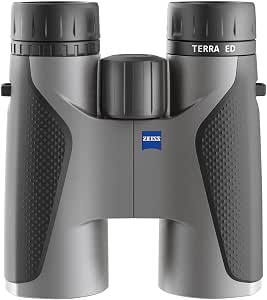 | Best for Compact 10x Viewing | Magnification: 10x | Objective lens diameter: 42 mm | Field of view: 330 ft | VIEW ON AMAZON | See Our Full Breakdown |
| Nikon Monarch M7 10×42 Binoculars |  | Best Wide-View 10x Pick | Magnification: 10x | Objective lens diameter: 42 mm | Field of view: 362 ft | VIEW ON AMAZON | See Our Full Breakdown |
| Nikon PROSTAFF P3 8×42 Waterproof Binoculars |  | Best for Beginners and Steady Tracking | Magnification: 8x | Objective lens diameter: 42 mm | Field of view: 377 ft at 1,000 yds | VIEW ON AMAZON | See Our Full Breakdown |
| Vortex Triumph HD 10×42 Binoculars |  | Best for Supported Long-Range Viewing | Magnification: 10x | Objective lens diameter: 42 mm | Field of view: 0.67 degrees | VIEW ON AMAZON | See Our Full Breakdown |
| Celestron TrailSeeker ED 8×42 Binoculars |  | Best Premium 8x Optical Package | Magnification: 8x | Objective lens diameter: 42 mm | Prism type: Roof prism | VIEW ON AMAZON | See Our Full Breakdown |
| Vortex Crossfire HD 10×42 Binoculars |  | Best for Long-Range Detail | Magnification: 10x | Objective lens diameter: 42 mm | Prism type: Roof prism | VIEW ON AMAZON | See Our Full Breakdown |
| Athlon Optics Midas UHD 8×42 Waterproof Binoculars |  | Best for Eyeglass Wearers | Magnification: 8x | Objective lens diameter: 42 mm | Eye relief: 17.2 mm | VIEW ON AMAZON | See Our Full Breakdown |
| Celestron Outland X 8×42 Binoculars |  | Best for Rugged Outdoor Use | Magnification: 8x | Objective lens diameter: 42 mm | Prism type: BaK-4 | VIEW ON AMAZON | See Our Full Breakdown |
| premium binoculars for bird watching | Magnification | Objective lens diameter | Field of view | Eye relief |
|---|---|---|---|---|
| Vortex Diamondback HD 10×42 Bi | 10x | 42 mm | 330 ft | 15 mm |
| Leupold BX-3 Alpine HD 12x50mm | 12x | 50 mm | — | — |
| Celestron Nature DX 8×42 Water | 8x | 42 mm | 7.4 degrees | 17.5 mm |
| Leupold BX-4 Pro Guide HD Gen | 12x | 50 mm | 6.84° | — |
| Nikon Monarch M5 8×42 Binocula | 8x | 42 mm | 335 ft | 19.5 mm |
| ZEISS Terra ED 10×42 Compact W | 10x | 42 mm | 330 ft | 18 mm |
| Nikon Monarch M7 10×42 Binocul | 10x | 42 mm | 362 ft | 16.5 mm |
| Nikon PROSTAFF P3 8×42 Waterpr | 8x | 42 mm | 377 ft at 1,000 yds | 20.2 mm |
| Vortex Triumph HD 10×42 Binocu | 10x | 42 mm | 0.67 degrees | 17 mm |
| Celestron TrailSeeker ED 8×42 | 8x | 42 mm | — | 17.2 mm |
| Vortex Crossfire HD 10×42 Bino | 10x | 42 mm | 325 ft | 15 mm |
| Athlon Optics Midas UHD 8×42 W | 8x | 42 mm | 8.1°; 426 ft at 1,000 yards | 17.2 mm |
| Celestron Outland X 8×42 Binoc | 8x | 42 mm | 7° angular; item details also state 8.2° | — |
More Details on Our Top Picks
Vortex Diamondback HD 10×42 Binoculars
The 10x magnification gives this Vortex an advantage when I want to distinguish birds at a distance, while its 42 mm objectives keep the body more manageable than the 50 mm Leupold models. Fully multi-coated optics are specified to deliver clear, color-accurate views, and the 330-foot field of view offers a useful balance for scanning. Waterproof, fogproof construction suits changing field conditions; the included GlassPak harness also makes carrying it more convenient.
Compared with the Nikon Monarch M5 8×42, the Diamondback’s extra magnification favors distant subjects, but the Nikon’s lower power and wider 335-foot view are better suited to following birds in motion. The Vortex’s 15 mm eye relief may also be less accommodating for some eyeglass wearers. I’d choose it for distance, not for the steadiest or most relaxed close-range viewing.
Pros:- 10x magnification helps reveal detail on distant birds.
- Fully multi-coated optics are designed for clear, color-accurate views.
- Waterproof and fogproof construction suits varied outdoor conditions.
- Includes a GlassPak harness and tripod compatibility.
Cons:- 15 mm eye relief is comparatively short and may be less comfortable for eyeglass wearers.
- 10x power can make handheld views less steady than 8x binoculars.
- A 4.2 mm exit pupil gives a smaller viewing window than the 8×42 alternatives listed here.
Best for: Birders who regularly watch distant waterfowl or raptors and want 10x reach in a 42 mm format.
Not ideal for: Birders who prioritize a wide, easy-to-scan view, need generous eye relief for glasses, or have trouble holding higher magnification steady.
- Magnification:10x
- Objective lens diameter:42 mm
- Field of view:330 ft
- Eye relief:15 mm
- Exit pupil diameter:4.2 mm
- Optical coating:Fully multi-coated
- Water and fog resistance:Waterproof and fogproof
- Included accessory:GlassPak harness
- Warranty:Transferable lifetime VIP warranty
Our verdict“Choose the Diamondback HD if distant detail matters more to you than the steadier, wider view of an 8×42 binocular.”
Leupold BX-3 Alpine HD 12x50mm Binoculars
The 12x magnification and 50 mm objectives make the BX-3 Alpine HD the far-reaching choice in this group. Its Elite Optical System is described as supporting light transmission, a wide field of view, and sharp detail, while the magnesium chassis is intended to reduce carrying burden compared with a heavier-bodied design. Waterproof and fogproof protection is useful for birding in unsettled weather, and interchangeable eyecups allow some adjustment to viewing comfort.
This extra reach comes with a real handling cost: 12x magnification is harder to keep steady by hand than the Nikon Monarch M5 8×42, which is a more forgiving pick for tracking birds through trees. The 50 mm objectives also make this a larger format than the 42 mm Vortex Diamondback HD. I would choose the Alpine for distant, relatively stationary subjects and plan for support if prolonged steady viewing matters.
Pros:- 12x magnification can help reveal detail at long distances.
- 50 mm objectives support light gathering in a larger optical format.
- Magnesium chassis is designed to keep the body lightweight for its size.
- Waterproof and fogproof construction with interchangeable eyecups.
Cons:- 12x magnification is more prone to hand shake than the 8x models in this roundup.
- 50 mm objectives make it bulkier to carry than 42 mm options.
- The listed weight of 1.12 ounces appears implausible for binoculars, so buyers should verify the actual weight.
Best for: Experienced birders who watch distant birds from open viewpoints and are comfortable using support to steady high magnification.
Not ideal for: Beginners, woodland birders, or anyone wanting a compact binocular that is easy to hold steady while following fast movement.
- Magnification:12x
- Objective lens diameter:50 mm
- Optical system:Elite Optical System
- Chassis material:Magnesium
- Water and fog resistance:Waterproof and fogproof
- Eyecups:Interchangeable
- Listed weight:1.12 ounces
- Warranty:Lifetime repair or replacement
Our verdict“Pick the BX-3 Alpine HD for distant subjects and high magnification, but choose an 8×42 if you need steadier handheld tracking.”
Celestron Nature DX 8×42 Waterproof Binoculars
The Nature DX is a practical choice for birders who need to locate a moving subject quickly. Its 8x magnification and 7.4-degree field of view make scanning more forgiving than with the 10x Vortex Diamondback HD, while a 6.5-foot close focus lets me shift from distant birds to nearby wildlife without changing tools. Fully multi-coated, phase-coated BaK-4 roof prisms are specified for sharp, color-accurate views, and the nitrogen-purged, waterproof housing is built for rough weather.
Compared with the Nikon Monarch M5 8×42, the Celestron lists a wider field of view, but the Nikon offers longer eye relief and ED glass. The Nature DX uses rubber-armored polycarbonate, and its tripod socket does not include the adapter. Its individual focus mechanism may also take more adjustment than a center-focus model. I’d favor this one for broad scanning and close observation, rather than for the most convenient focus operation.
Pros:- 7.4-degree field of view helps locate and follow moving birds.
- 6.5-foot close focus is useful for nearby wildlife and fine detail.
- Fully multi-coated, phase-coated BaK-4 prisms and nitrogen-purged waterproof housing.
- Includes a carrying case, neck strap, rainguard, lens caps, and cleaning cloth.
Cons:- The tripod adapter is not included despite the mounting socket.
- The listed individual focus mechanism may be less convenient to adjust than center focus.
- 17.5 mm eye relief is shorter than the Nikon Monarch M5’s listed 19.5 mm.
Best for: Birders who scan wetlands, woodland edges, and nearby habitat and value a wide view plus close-focus ability.
Not ideal for: Eyeglass wearers seeking longer eye relief or birders who want a center-focus mechanism and an included tripod adapter.
- Magnification:8x
- Objective lens diameter:42 mm
- Prism:BaK-4 roof prism
- Optical coating:Fully multi-coated and phase-coated
- Field of view:7.4 degrees
- Eye relief:17.5 mm
- Close focus:6.5 ft
- Water and fog resistance:Waterproof, nitrogen-purged
- Tripod adaptable:Yes; adapter not included
Our verdict“Choose the Nature DX if a broad scanning view and close focus matter more than longer eye relief or straightforward center focusing.”
Leupold BX-4 Pro Guide HD Gen 2 Binoculars, 12x50mm
The BX-4 Pro Guide HD Gen 2 pairs 12x magnification with 50 mm objectives for birders who want reach and a larger lens format. Its hydrophobic Guard-ion coating helps shed water, dirt, and fingerprints, a useful feature when conditions turn wet or dusty. Waterproof and fogproof construction adds field protection, and the tripod mount gives viewers a way to stabilize the image during extended observation.
Against the Leupold BX-3 Alpine HD 12×50, the BX-4 specifies a 1.8-pound weight, a 6.84-degree field of view, and individual and center focus; the BX-3 instead describes a magnesium chassis and interchangeable eyecups. Both are high-power 50 mm choices, so neither is as easy to hold steady as the Celestron Nature DX 8×42. The BX-4’s listed weight is substantial for a day of walking, and its supplied details do not specify coatings beyond Guard-ion. I’d put it on a tripod for long watches.
Pros:- 12x magnification and 50 mm objectives suit distant observation.
- Guard-ion coating helps repel water, dirt, and fingerprints.
- Waterproof and fogproof construction supports use in poor weather.
- Tripod mount can steady the view during prolonged observation.
Cons:- At 1.8 lbs, it weighs more than the listed BX-3 Alpine HD and is less appealing for long walks.
- 12x magnification makes handheld viewing less steady than 8x binoculars.
- The provided product details do not specify eye relief or optical coating information beyond Guard-ion.
Best for: Birders who spend time at fixed viewpoints, want 12x reach, and value weather-shedding lens protection and tripod mounting.
Not ideal for: Hikers seeking a light, quick-handling binocular or birders who commonly follow fast-moving subjects handheld.
- Magnification:12x
- Objective lens diameter:50 mm
- Weight:1.8 lbs
- Field of view:6.84°
- Exit pupil diameter:4.17 mm
- Prism type:Roof prism
- Focus type:Individual and center focus
- Water and fog resistance:Waterproof and fogproof
- Mount type:Tripod mount
Our verdict“Choose the BX-4 Pro Guide HD Gen 2 for supported, long-distance birding in rough conditions, not for lightweight handheld scanning.”
Nikon Monarch M5 8×42 Binoculars
The Monarch M5 is the most balanced fit here for birders who spend long stretches tracking wildlife by hand. Its 8x magnification is easier to steady than the 10x Vortex Diamondback HD or either 12x Leupold, while the listed 335-foot field of view helps keep moving birds in sight. ED glass and dielectric-coated prisms are designed to produce bright, natural colors, and the 8.2-foot close focus is handy when a bird appears nearby.
Compared with the Celestron Nature DX 8×42, the Nikon has longer 19.5 mm eye relief, which makes it a stronger fit for many eyeglass wearers; the Celestron lists a wider 7.4-degree view and closer focus. At 1.4 lbs, the Nikon is not the lightest option, and its manual center focus still needs adjustment as subjects change distance. I’d choose it for all-around field birding rather than maximum reach.
Pros:- 8x magnification is easier to hold steady while tracking birds than the 10x and 12x options.
- 335-foot field of view helps keep moving subjects in view.
- ED glass and dielectric-coated prisms are designed for bright, natural-color images.
- 19.5 mm eye relief and adjustable eyecups suit many eyeglass wearers.
Cons:- At 1.4 lbs, it is not the lightest listed 8×42 option.
- Manual focus requires adjustment as viewing distance changes.
- Its 8x magnification offers less reach than the Vortex Diamondback HD 10×42 and 12×50 Leupold models.
Best for: Birders seeking one versatile, handheld 8×42 for tracking moving wildlife, viewing nearby detail, and wearing glasses.
Not ideal for: Viewers who prioritize maximum magnification for distant birds or want a lightweight 42 mm binocular for extended hikes.
- Magnification:8x
- Objective lens diameter:42 mm
- Field of view:335 ft
- Close focus:8.2 ft
- Eye relief:19.5 mm
- Exit pupil diameter:5.3 mm
- Optics:ED glass and dielectric-coated prisms
- Weight:1.4 lbs
- Water and fog resistance:Waterproof and fogproof
Our verdict“Choose the Monarch M5 for steady, comfortable all-around birding, especially if you wear glasses and value tracking over extra reach.”
ZEISS Terra ED 10×42 Compact Waterproof Binoculars
The ZEISS Terra ED 10×42 pairs higher magnification with a compact, weather-ready body, making it a strong fit for birders who want more reach without carrying a large setup. Its ED glass and hydrophobic multi-coating are aimed at keeping views crisp and contrasty when light or weather is less cooperative. The large focus wheel also helps when a bird appears suddenly and needs a quick refocus. Compared with the Nikon PROSTAFF P3 8×42, this ZEISS gives more magnification, but its narrower 330-foot field of view and 10x shake make locating and following fast-moving birds harder. At 1.5 pounds it remains relatively portable, though a steady stance matters more than with an 8x model. Choose it for detail at distance; skip it if broad, easy tracking is your priority.
Pros:- ED glass and hydrophobic multi-coating support clear, high-contrast views
- Waterproof, nitrogen-filled construction suits wet and changeable conditions
- Compact 1.5-pound design is convenient to carry
- Large focus wheel supports quick manual adjustment
Cons:- The 330-foot field of view is narrower than the Nikon PROSTAFF P3 8×42’s 377-foot view
- 10x magnification can amplify hand shake and complicate tracking birds in flight
- Manual focus requires active adjustment rather than automatic focusing
Best for: Birders who often watch distant or stationary birds and want a compact 10x model for travel and changing weather.
Not ideal for: Beginners who prioritize a wide view and easy tracking, or anyone who finds 10x magnification difficult to hold steady.
- Magnification:10x
- Objective lens diameter:42 mm
- Field of view:330 ft
- Eye relief:18 mm
- Exit pupil diameter:4.2 mm
- Prism type:Roof prism
- Water resistance:Waterproof
- Weight:1.5 lb
Our verdict“Choose the ZEISS Terra ED if extra reach and compact weatherproofing matter more than the steadier, wider view of an 8x binocular.”
Nikon Monarch M7 10×42 Binoculars
The Nikon Monarch M7 10×42 is a good match for birders who want 10x detail without accepting the especially narrow view some higher-powered binoculars deliver. Its 362-foot field of view gives it an advantage over the ZEISS Terra ED 10×42’s 330 feet when scanning a habitat, while ED glass and multilayer coatings support bright, detailed views. Waterproof and fogproof construction, plus adjustable eyecups, make it practical for outdoor sessions and eyeglass wearers. It still cannot match the easier tracking of an 8x model such as the Celestron TrailSeeker ED 8×42; 10x magnification makes moving birds and handheld viewing less forgiving. The 1.5-pound weight is also noticeable on long walks. This is the more suitable 10x choice when field width matters, but not when effortless flight tracking is the main goal.
Pros:- 362-foot field of view is generous for a 10x binocular
- ED glass and multilayer coatings support bright, detailed viewing
- Waterproof and fogproof construction is suited to outdoor use
- Adjustable eyecups and 16.5 mm eye relief accommodate many eyeglass wearers
Cons:- 10x magnification is less forgiving for tracking moving birds than the 8x Celestron TrailSeeker ED
- At 1.5 pounds, it can feel heavy during extended carry
- The 16.5 mm eye relief may be less accommodating for some eyeglass users than longer-relief options
Best for: Eyeglass-wearing birders who want 10x reach and a comparatively wide field for scanning open habitats.
Not ideal for: Birders who frequently follow fast-moving birds handheld or want a lighter binocular for long hikes.
- Magnification:10x
- Objective lens diameter:42 mm
- Field of view:362 ft
- Eye relief:16.5 mm
- Exit pupil diameter:4.2 mm
- Prism type:Roof prism
- Focus type:Center focus
- Weight:1.5 lb
Our verdict“Pick the Monarch M7 if you want a broad view for a 10x binocular and can manage its weight and greater sensitivity to hand movement.”
Nikon PROSTAFF P3 8×42 Waterproof Binoculars
The Nikon PROSTAFF P3 8×42 favors an easy-to-use view over the extra reach of the 10x ZEISS Terra ED and Nikon Monarch M7. Its 8x magnification and 377-foot field make it easier to find a bird quickly and keep it in view, while the 5 mm exit pupil supports a bright-looking image in varied daylight. Long eye relief and adjustable eyecups also make it a practical choice for people who wear glasses. Its multilayer-coated optics and waterproof, fogproof build suit regular outdoor use, though this is a straightforward full-size binocular rather than a compact carry option. The Celestron TrailSeeker ED 8×42 adds ED glass and a magnesium-alloy body, which may appeal to buyers prioritizing those materials. The P3 makes more sense for approachable handling and broad scanning, with the tradeoff of less magnification for distant subjects.
Pros:- Wide 377-foot field of view helps locate and follow birds
- 8x magnification is easier to hold steady than the 10x ZEISS Terra ED
- 20.2 mm eye relief and adjustable eyecups suit many eyeglass wearers
- Waterproof and fogproof construction with rubber armor supports outdoor use
Cons:- 8x magnification offers less reach for distant birds than the Nikon Monarch M7 10×42
- Full-size body takes more space than a compact travel binocular
- Waterproofing is specified to 3.3 feet and the binoculars are not intended for underwater use
Best for: New birders and eyeglass wearers who want a bright, wide view that is forgiving when locating and tracking birds.
Not ideal for: Birders who regularly identify distant subjects across open terrain or need a compact binocular for minimal-bulk travel.
- Magnification:8x
- Objective lens diameter:42 mm
- Field of view:377 ft at 1,000 yds
- Eye relief:20.2 mm
- Exit pupil diameter:5 mm
- Prism type:Roof prism
- Focus type:Center focus
- Weight:1.3 lb
- Water resistance:Waterproof to 3.3 ft; not intended for underwater use
Our verdict“Choose the PROSTAFF P3 for an approachable, wide 8x view, especially if easy bird tracking matters more than distant detail.”
Vortex Triumph HD 10×42 Binoculars
The Vortex Triumph HD 10×42 suits birders who want high magnification and useful carrying accessories, and who are prepared for a heavier setup. Its fully multi-coated HD optics, waterproof and fogproof construction, and adjustable diopter make it adaptable to outdoor viewing; tripod compatibility can help steady the image when observing a distant bird for longer stretches. The included GlassPak harness offers a practical carry option, but it does not erase the 2.3-pound weight. That is substantially heavier than the 1.5-pound ZEISS Terra ED 10×42 and Nikon Monarch M7 10×42. Its 10x power also makes quick handheld tracking more demanding than with the 8x Nikon PROSTAFF P3. This pick favors supported observation and bundled carrying gear over low weight, so it is a poor fit for birders who spend the day walking with binoculars in hand.
Pros:- Fully multi-coated HD optics support sharp, color-accurate views
- Waterproof, fogproof, and shockproof construction suits demanding outdoor use
- Tripod adaptable for steadier observation at 10x
- Includes a neck strap and adjustable GlassPak harness
Cons:- At 2.3 pounds, it is much heavier than the ZEISS Terra ED and Nikon Monarch M7
- 10x magnification can make handheld viewing and tracking moving birds harder
- The stated field of view is 0.67 degrees, which is less directly comparable with the lineup’s foot-based figures
Best for: Birders who watch distant subjects from a fixed position and value tripod compatibility and an included harness.
Not ideal for: Hikers seeking a lightweight binocular or birders who mainly track fast-moving subjects handheld.
- Magnification:10x
- Objective lens diameter:42 mm
- Field of view:0.67 degrees
- Eye relief:17 mm
- Exit pupil diameter:4.2 mm
- Lens coating:Fully multi-coated
- Water resistance:Waterproof
- Weight:2.3 lb
- Mounting:Tripod adaptable
Our verdict“Choose the Triumph HD if you prioritize a supported 10x view and included carrying gear over a light load for long birding walks.”
Celestron TrailSeeker ED 8×42 Binoculars
The Celestron TrailSeeker ED 8×42 brings ED glass and coated BaK-4 prisms to an 8x format that is naturally easier to steady and track with than the 10x ZEISS Terra ED or Nikon Monarch M7. Its 5.2 mm exit pupil and fully multi-coated optics support a bright view, while the wide apparent angle of view helps make scanning feel expansive. A waterproof, nitrogen-purged magnesium-alloy body gives it a more substantial construction story than the polycarbonate Nikon PROSTAFF P3, though it is not as simple a beginner-oriented pick. The included carry harness, neck strap, and case help with field use. One limitation in the supplied specifications is that the field of view is listed in meters without a stated distance, and the diopter range is not provided. Choose this for its optical materials and 8x handling, not for a fully documented spec sheet.
Pros:- ED glass supports sharp views and color correction
- Fully multi-coated optics and BaK-4 prisms support light transmission
- Waterproof, nitrogen-purged magnesium-alloy construction helps resist weather and internal fogging
- Includes a carry harness, neck strap, and protective case
Cons:- Field of view is listed as 142 m without a viewing distance, limiting direct comparison
- Diopter adjustment range is not specified in the supplied product data
- Its 8x magnification offers less distant reach than the 10x Nikon Monarch M7
Best for: Experienced birders who want an 8x binocular with ED glass, BaK-4 prisms, a magnesium-alloy body, and included carrying accessories.
Not ideal for: Buyers who need a clearly stated diopter range or want field-of-view data in the same format as other models for direct comparison.
- Magnification:8x
- Objective lens diameter:42 mm
- Prism type:Roof prism
- Prism glass:BaK-4
- Eye relief:17.2 mm
- Exit pupil:5.2 mm
- Apparent angle of view:59.1 degrees
- Body material:Magnesium alloy
- Water resistance:Waterproof
Our verdict“Choose the TrailSeeker ED if you want premium-oriented optical materials in a steady 8x format and can accept gaps in the listed specifications.”
Vortex Crossfire HD 10×42 Binoculars
The 10x magnification gives birders a closer view of distant plumage than the 8x Athlon Optics Midas UHD, which is easier to steady while following moving birds. The Crossfire HD pairs that reach with fully multi-coated HD optics and a 325-foot field of view, a useful combination for scanning open water or treetops, though the narrower view than an 8x design can make quick-moving subjects harder to track. Its waterproof, fogproof, shock-resistant build suits changing field conditions, and the included GlassPak harness helps distribute its 1.4-pound weight. Compared with the Vortex Diamondback HD 10×42, this is another 10x option in the same lineup, but the supplied details do not establish a clear optical advantage over it. I’d choose the Crossfire for long-distance viewing and its practical carry kit, not for the lightest all-day setup.
Pros:- 10x magnification helps reveal detail on distant birds
- Fully multi-coated HD optics are designed for light transmission and edge-to-edge sharpness
- Waterproof, fogproof, and shock-resistant construction suits variable field conditions
- GlassPak harness, adjustable eyecups, and tripod compatibility add practical flexibility
Cons:- The 1.4-pound weight may tire users during extended carry
- Its 325-foot field of view is narrower than the 8x Athlon Midas UHD’s stated 426 feet at 1,000 yards
- The warranty excludes loss, theft, deliberate damage, and cosmetic damage that does not affect performance
Best for: Birders who often watch distant shorebirds or raptors and want 10x reach with a supplied carrying harness
Not ideal for: Birders who prioritize a broad view for tracking fast, nearby birds or want a lighter binocular for long walks
- Magnification:10x
- Objective lens diameter:42 mm
- Prism type:Roof prism
- Field of view:325 ft
- Eye relief:15 mm
- Exit pupil diameter:4.2 mm
- Weight:1.4 lbs
- Weather resistance:Waterproof
- Included accessory:GlassPak binocular harness
Our verdict“Choose the Crossfire HD if distant detail matters more than a wide tracking view or low carry weight.”
Athlon Optics Midas UHD 8×42 Waterproof Binoculars
The Midas UHD is the comfort-oriented pick here: its 17.2 mm eye relief gives eyeglass wearers more room to see the full image than the Vortex Crossfire HD’s 15 mm. Its 8x magnification also provides a steadier, wider-feeling view for locating birds in brush, while the listed 426-foot field of view at 1,000 yards supports scanning. ED glass helps reduce color fringing around high-contrast edges, and phase-corrected BaK-4 roof prisms with fully multi-coated lenses support bright, color-accurate viewing. Compared with the Celestron Outland X 8×42, the Athlon’s ED glass and longer eye relief are more specifically appealing for detail and glasses comfort; the Outland instead emphasizes rubber armor and tripod adaptability. The Midas weighs 25 ounces and is waterproof and argon-purged, but the listed color conflicts between gray and green, so buyers should verify the finish.
Pros:- 17.2 mm eye relief is accommodating for many eyeglass wearers
- ED glass helps reduce chromatic fringe around bird outlines
- 8x magnification supports a steadier view and easier tracking than 10x models
- Waterproof, argon-purged construction and fully multi-coated optics suit outdoor use
Cons:- Product details conflict on whether the binoculars are gray or green
- 8x magnification provides less reach on distant birds than the Vortex Crossfire HD 10×42
- At 25 ounces, it may feel substantial on long walks
Best for: Eyeglass-wearing birders who want an 8x view for tracking birds in woodland or across open habitat
Not ideal for: Birders who need higher magnification for distant subjects or who want a clearly confirmed color option before buying
- Magnification:8x
- Objective lens diameter:42 mm
- Eye relief:17.2 mm
- Field of view:8.1°; 426 ft at 1,000 yards
- Close focus:2 m / 6.5 ft
- Weight:25 oz
- Prism type:Roof prism, BaK-4 glass
- Lens coating:Fully multi-coated
- Weather resistance:Waterproof and argon-purged
Our verdict“Pick the Midas UHD if you wear glasses and want a bright, steady 8x view with ED glass.”
Celestron Outland X 8×42 Binoculars
The Outland X puts weather protection and a grippy rubber-armored body ahead of specialty glass features, making it a practical choice for birders who carry binoculars through wet trails or rough conditions. Its 8×42 configuration favors a steadier view for following birds in nearby cover, unlike the Vortex Crossfire HD 10×42, whose higher power is better suited to picking out distant detail but can be harder to hold steady. The Outland’s multi-coated optics and BaK-4 prisms are designed for bright, high-contrast views, while twist-up eyecups support comfortable positioning. It can also mount on a tripod for prolonged observation, though the adapter is not included. Compared with the Athlon Midas UHD, the Outland’s listed details do not include ED glass or a specified eye-relief figure, and its field-of-view information conflicts: 7° in one place and 8.2° in another. That uncertainty makes it harder to judge tracking width before purchase.
Pros:- Waterproof and nitrogen-purged fogproof construction supports use in changing weather
- Rubber-armored polycarbonate housing helps protect against bumps
- 8x magnification offers a steadier view for locating birds in nearby cover
- Twist-up eyecups and tripod adaptability support different viewing positions
Cons:- Product details give conflicting field-of-view figures of 7° and 8.2°
- Tripod adapter is not included
- The supplied specifications do not list ED glass or eye relief, unlike the Athlon Midas UHD
Best for: Birders who want a weather-ready 8×42 for damp trails, casual wildlife watching, and occasional tripod use
Not ideal for: Birders who need verified field-of-view data, ED glass, or a tripod-ready setup without buying a separate adapter
- Magnification:8x
- Objective lens diameter:42 mm
- Prism type:BaK-4
- Field of view:7° angular; item details also state 8.2°
- Construction:Rubber-armored polycarbonate
- Weather resistance:Waterproof and nitrogen-purged fogproof
- Eyecups:Twist-up
- Tripod adaptable:Yes; adapter not included
- Warranty:Limited lifetime
Our verdict“Choose the Outland X for a rugged, weather-protected 8×42, provided its field-of-view uncertainty and separate tripod adapter are acceptable.”

How We Picked
I compared all 13 models through the needs of birders who may spend hours scanning, follow fast-moving birds, or watch at distance. The ranking considers magnification and objective size alongside practical effects: steadiness, field of view, comfort, weather protection, portability, and how well each design fits common birding settings. I also weighed how accessible each model is to a newer birder against the performance and handling demands it places on the user.
The order favors balanced, handheld birding over maximum reach or specialized use. That puts the Nikon Monarch M7 10×42 first as a versatile all-rounder, with the steadier 8×42 options close behind for woodland and general use. The 12×50 Leupold models rank lower for everyday handheld birding because added reach comes with more shake and bulk; they can be the better choice when distance is the main priority. More accessible models remain useful picks, but they give up some refinement or versatility relative to the leaders.
| premium binoculars for bird watching | Prism type |
|---|---|
| Vortex Diamondback HD 10×42 Bi | — |
| Leupold BX-3 Alpine HD 12x50mm | — |
| Celestron Nature DX 8×42 Water | — |
| Leupold BX-4 Pro Guide HD Gen | Roof prism |
| Nikon Monarch M5 8×42 Binocula | — |
| ZEISS Terra ED 10×42 Compact W | Roof prism |
| Nikon Monarch M7 10×42 Binocul | Roof prism |
| Nikon PROSTAFF P3 8×42 Waterpr | Roof prism |
| Vortex Triumph HD 10×42 Binocu | — |
| Celestron TrailSeeker ED 8×42 | Roof prism |
| Vortex Crossfire HD 10×42 Bino | Roof prism |
| Athlon Optics Midas UHD 8×42 W | Roof prism, BaK-4 glass |
| Celestron Outland X 8×42 Binoc | BaK-4 |
Factors to Consider When Choosing Premium Binoculars For Bird Watching
Before choosing a model, match the binocular to the way you actually watch birds. A specification that helps at a coastal lookout may frustrate you in a shaded forest, and a brighter image on paper cannot compensate for a view you struggle to hold steady.
Choose Magnification for Your Habitat
Eight-power binoculars show a wider, steadier view, which can make it easier to locate a bird among leaves or follow it through flight. Ten-power models bring distant subjects closer, but their narrower view and more visible hand movement can make reacquiring a bird slower. Twelve-power options favor open settings, where a bird is already easy to locate and distance is the main obstacle. A common mistake is to buy the strongest magnification available and assume it is always better for identifying detail. Think about where you spend most of your time, not the rare occasion when a bird sits far across a lake.
Treat Objective Size as a Handling Decision
The objective lens diameter affects how much light the binocular can gather, but it also changes bulk and balance. A 42mm model is a practical middle ground for dawn walks and all-day carrying, while larger 50mm objectives can be appealing for dim conditions or distant viewing. Bigger glass does not automatically produce a more useful image if the binocular feels tiring or difficult to hold steady. Check the full setup, including strap and case, if you regularly hike between birding locations. For most handheld use, a comfortable 8×42 or 10×42 is a safer choice than a heavier configuration bought for occasional low-light sessions.
Prioritize Field of View for Moving Birds
Field of view describes how much of the scene you can see through the binocular at a given distance. A broad view can make it easier to find a bird in a flock, track a warbler through branches, or keep a raptor in sight as it turns. Buyers often compare magnification and lens size while overlooking this practical measure. Do not judge field of view in isolation, since eye placement and viewing comfort also affect how much of the image you can take in. If you bird in dense cover or watch fast-moving species, favor a view that feels easy to scan over a small increase in reach.
Check Fit, Eye Relief, and Focus Controls
Binoculars need to fit your face as well as your hands. If you wear glasses, eye relief and adjustable eyecups can determine whether you see the full field without removing them. A focus wheel that is easy to reach and turn helps when switching quickly between a nearby branch and a distant bird. Try to check the hinge range and how securely the barrels hold your preferred spacing, especially if more than one person will use the binoculars. A poor fit can erase the benefit of better optics, so comfort should be part of the decision rather than an afterthought.
Pay for the Upgrade You Will Notice
Moving up a tier is most worthwhile when the improvement addresses a real limitation: difficult viewing in changing light, uncomfortable handling, or trouble following birds at distance. A more refined optical system can improve clarity and color control, but it cannot make 12x magnification steady in every user’s hands. Weather resistance also matters if you bird in rain, near salt spray, or through frequent temperature changes, though care and storage still affect service life. Beginners may gain more from a forgiving 8×42 design than from expensive glass with a narrow, shaky view. Compare the handling and intended use first, then pay more only for features that match your routine.
Match Carrying Plans to Weight and Protection
For a short walk from the car, a heavier binocular may be an acceptable trade for a larger objective or more reach. On a full-day hike, neck fatigue and the size of the binocular can affect how often you bring it up to your eyes. Compact designs help with travel, but smaller bodies are not automatically more comfortable for every hand or face. Weather sealing is useful in field conditions, yet it does not remove the need to keep lenses clean and dry them properly after exposure. Decide whether your priority is a binocular that stays with you all day or one built for a fixed vantage point.
Frequently Asked Questions
Should I choose 8×42 or 10×42 binoculars for bird watching?
Choose 8×42 if you often watch birds in woods, need to find subjects quickly, or want a steadier view during long handheld sessions. A 10×42 brings distant birds closer and can suit open habitats, but its narrower view makes locating a moving subject more demanding. In this roundup, the Monarch M7 is the versatile 10x option, while the TrailSeeker ED and Monarch M5 represent the more forgiving 8x approach. If you are unsure, consider borrowing or trying both magnifications before buying. The best choice is the one that lets you acquire and hold a bird comfortably.
Are 12×50 binoculars a good choice for handheld birding?
They can work handheld for users with steady hands, but the higher magnification makes movement more noticeable and can slow tracking. Their larger objectives and added bulk also make them less comfortable for carrying on long walks than typical 42mm models. The Leupold BX-3 Alpine HD and BX-4 Pro Guide HD Gen 2 are better matched to distant viewing in open country than fast searches in thick foliage. A tripod or support can help if you spend long periods scanning from one location. For general handheld birding, an 8×42 or 10×42 is usually easier to manage.
Which features matter most if I wear glasses?
Start with eye relief and eyecup adjustment, since these determine whether you can see the full image while keeping your glasses on. A comfortable fit should show the whole field without black crescents at the edges or requiring you to press the binoculars hard against your face. The shape of your glasses and face can affect the result, so published specifications alone cannot guarantee a good match. Check the eyecups and viewing position in person when possible. If you cannot test a model, confirm its eye-relief details and return terms before purchasing.
Is a wider field of view more useful than extra magnification?
For many birding situations, a wider field is more useful because it helps you locate and follow a bird before you need to inspect fine detail. Extra magnification helps when the subject is far away, but it can make the view less steady and reduce the area visible at once. The right balance depends on whether you spend more time scanning nearby cover or watching distant birds across open ground. The lineup illustrates that distinction: several 8×42 models favor easy tracking, while the 10x and 12x options trade some ease for reach. Consider your usual habitat and the species you most often watch.
Can one pair of binoculars handle both woodland walks and distant waterbirds?
A balanced 10×42 can serve both roles reasonably well, especially if you are comfortable keeping it steady while scanning. In woodland, an 8×42 generally makes quick acquisition and tracking easier; across water, greater magnification can reveal more detail at distance. No single configuration removes that tradeoff, so your most frequent setting should guide the choice. The Monarch M7 is a strong all-round option in this comparison, while a Leupold 12×50 is more specialized for distant subjects. If waterbird observation dominates your outings, a stable support can make a higher-power model more practical.
Conclusion
For one pair to cover varied birding, I recommend the Nikon Monarch M7 10×42 as best overall for its balance of reach and usability. The Celestron TrailSeeker ED 8×42 is my best value choice for birders who favor a steady, broad-view style, while the ZEISS Terra ED 10×42 is the best premium-leaning pick for shoppers prioritizing a compact waterproof design. Beginners should start with an approachable 8×42 such as the Celestron Nature DX or Nikon PROSTAFF P3, where lower magnification helps with quick tracking. For specific needs, pick the Leupold BX-4 Pro Guide HD Gen 2 12×50 for distant birds in open country, or choose a lighter 8×42 for woodland hikes. Match the binocular to your most common habitat, and you are less likely to trade everyday comfort for reach you rarely use.
Halloween Picks

JOYIN 5-Foot Halloween Animatronic Drinking Skeleton

Gemmy 6.4 ft Beetlejuice Animatronic Halloween Decoration with Spinning Head

Haunted Hill Farm 2-Ft. Zombie Raccoon Halloween Animatronic
As an affiliate, we earn on qualifying purchases.