
For most campers seeking a high-end tent for camping, I’d start with The North Face Wawona 6: its balance of usable space, familiar tent design, and practical versatility makes it the strongest all-around choice in this lineup. The Kodiak Canvas Flex-Bow Deluxe is a standout for campers who prioritize durable canvas shelter, while the Snow Peak Amenity Dome 5 suits buyers who want a more compact, refined tent rather than a large group base camp. The main tradeoffs are space versus packed size, quick setup versus a more traditional pitch, and specialized features versus everyday flexibility. Capacity labels alone do not tell you how comfortably people and gear will fit. Read on for the full breakdown and guidance on matching a tent to your camping style.

Get furniture and decor delivered free with Prime
- Fast, free delivery on millions of items
- Prime Video, Amazon Music and more included
- Member-only deals all year
Complete the kit


Key Takeaways
- The North Face Wawona 6 is the lineup’s best all-around starting point: it avoids the bulk of the 8- and 10-person shelters while offering more room than the Wawona 4.
- Canvas and inflatable designs serve different priorities: Kodiak Canvas and WHITEDUCK Rover lean toward substantial shelter, while VEVOR and NANJEEN use inflatable structures that trade familiar pole pitching for a different setup system.
- Large capacity is most useful for base-camp trips: the CORE 12-Person and Wakeman 10-Person Bell Tent favor group space, but their footprint and transport needs make them less suited to compact campsites.
- Fast setup is not the same as versatile performance: CORE Instant and FanttikOutdoor Instant models favor convenience, while the Naturehike Dune’s stove jack points to a more specialized cold-weather use.
- The Wawona range offers a clear size choice: the 4, 6, and 8 models let buyers prioritize a smaller footprint, balanced shared space, or room for a larger group without changing tent family.
| Wakeman Outdoors 10-Person Bell Tent, 16 x 16 ft, Beige |  | Best for Spacious Group Camping | Capacity: 10 people | Dimensions: 192 x 192 x 119 in | Peak height: 119 in | VIEW ON AMAZON | See Our Full Breakdown |
| Kodiak Canvas Flex-Bow Deluxe 10×14 ft Camping Tent | 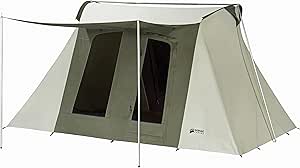 | Best Premium Canvas Base Camp | Capacity: 8 people | Dimensions: 14 ft W × 10 ft D × 6 ft 6 in H | Fabric: Hydra-Shield 100% cotton duck canvas | VIEW ON AMAZON | See Our Full Breakdown |
| Snow Peak Amenity Dome 5-Person Camping Tent |  | Best Compact Four-Season Option | Occupancy: 5 people | Season: 4 season | Tent style: Freestanding dome | VIEW ON AMAZON | See Our Full Breakdown |
| CORE 9-Person Instant Cabin Tent, 14′ x 9′, Green |  | Best for Fast Family Setup | Occupancy: 9 people | Dimensions: 14 ft x 9 ft | Floor area: 126 sq ft | VIEW ON AMAZON | See Our Full Breakdown |
| The North Face Wawona 8 Tent |  | Best for Vestibule Storage | Capacity: 8 persons | Water resistance: Water repellent | Vestibule: Attached | VIEW ON AMAZON | See Our Full Breakdown |
| The North Face Wawona 6 Six-Person Tent |  | Best Overall for Spacious Family Camping | Capacity: 6 people | Water resistance: Water repellent | Vestibule: Attached | VIEW ON AMAZON | See Our Full Breakdown |
| VEVOR Inflatable 4-Season Camping Tent with Hand Pump |  | Best for Large-Group, Four-Season Base Camps | Season: 4-season | Capacity: 8–12 people; product information also lists 16-person occupancy | Floor area: 186 sq. ft. (17.28 m²) | VIEW ON AMAZON | See Our Full Breakdown |
| WHITEDUCK Rover 4-Season Canvas Scout Tent |  | Best Canvas Pick for Cold-Weather Camping | Occupancy: 4 people | Seasons: 3-season and 4-season | Material: Polycotton canvas | VIEW ON AMAZON | See Our Full Breakdown |
| CORE 12-Person Instant Cabin Tent with LED Lights |  | Best for Fast Setup and Shared Family Camps | Capacity: Up to 12 people without gear; comfortably fits 6 with gear | Dimensions: 18 ft × 10 ft × 80 in | Floor area: 180 sq. ft. | VIEW ON AMAZON | See Our Full Breakdown |
| FanttikOutdoor 4-10 Person Instant Camping Tent – 60 Second Setup |  | Best for Quick-Pitch Group Camping | Occupancy: 10 people; product information states 5 people with gear | Season: 3-season | Water resistance: 1500 mm | VIEW ON AMAZON | See Our Full Breakdown |
| Naturehike Dune 4-Season Hot Tent with Stove Jack, 2–4 Person |  | Best for Four-Season Stove Camping | Occupancy: 4 people | Material: 75D 210T polyester | Water resistance: PU 10000mm+ | VIEW ON AMAZON | See Our Full Breakdown |
| The North Face Wawona 4 Tent |  | Best for Straightforward Four-Person Camping | Capacity: 4 people | Vestibule: Attached | Weather protection: Water-repellent fabric | VIEW ON AMAZON | See Our Full Breakdown |
| NANJEEN Inflatable Cotton Camping Tent, 2–10 Person |  | Best for Large-Group Inflatable Camping | Occupancy: Up to 10 people | Interior area: 12 m² | Material: 100% cotton | VIEW ON AMAZON | See Our Full Breakdown |
| EVER ADVANCED 8–10 Person Blackout Camping Tent |  | Best for Fast-Pitch Family Base Camps | Occupancy: Listed as 10 people; also described as accommodating a family of four | Floor dimensions: 14 × 10 ft | Center height: 78 in | VIEW ON AMAZON | See Our Full Breakdown |
| FanttikOutdoor Alpha C4 Ultra Camping Tent |  | Best for Fast-Pitch Four-Person Comfort | Capacity: 4 people | Dimensions: 94 × 94 × 80 in | Weight: 27.5 lb | VIEW ON AMAZON | See Our Full Breakdown |
| highend tents for camping | Water resistance | Capacity | Dimensions |
|---|---|---|---|
| Wakeman Outdoors 10-Person Bel | — | 10 people | 192 x 192 x 119 in |
| Kodiak Canvas Flex-Bow Deluxe | — | 8 people | 14 ft W × 10 ft D × 6 ft 6 in H |
| Snow Peak Amenity Dome 5-Perso | — | — | — |
| CORE 9-Person Instant Cabin Te | 1,200 mm; taped rainfly and sealed seams | — | 14 ft x 9 ft |
| The North Face Wawona 8 Tent | Water repellent | 8 persons | — |
| The North Face Wawona 6 Six-Pe | Water repellent | 6 people | — |
| VEVOR Inflatable 4-Season Camp | PU2000 coating with seam sealing; described as suitable for light rain | 8–12 people; product information also lists 16-person occupancy | 15.75 × 11.81 × 7.22 ft |
| WHITEDUCK Rover 4-Season Canva | Water repellent | — | — |
| CORE 12-Person Instant Cabin T | 1200 mm | Up to 12 people without gear; comfortably fits 6 with gear | 18 ft × 10 ft × 80 in |
| FanttikOutdoor 4-10 Person Ins | 1500 mm | — | 168 in × 120 in |
| Naturehike Dune 4-Season Hot T | PU 10000mm+ | — | 14.5 × 9.1 × 6.8 ft |
| The North Face Wawona 4 Tent | — | 4 people | — |
| NANJEEN Inflatable Cotton Camp | 3500 mm | — | — |
| EVER ADVANCED 8–10 Person Blac | 4000 mm coating | — | — |
| FanttikOutdoor Alpha C4 Ultra | — | 4 people | 94 × 94 × 80 in |
More Details on Our Top Picks
Wakeman Outdoors 10-Person Bell Tent, 16 x 16 ft, Beige
The Wakeman bell tent prioritizes shared living space over weather range: its 16-by-16-foot floor and 9.8-foot peak give a large group room to move around, while the tall door makes frequent comings and goings less awkward. Three mesh windows and four roof vents help air circulate, a useful counterpoint to the more enclosed cabin layout of the CORE 9-Person Instant Cabin Tent. It also includes a full set of poles, guy lines, and stakes, so the main setup hardware comes with the tent.
The tradeoff is its two-season, light-rain protection. The polyurethane-coated fabric is described as shedding light rain, not as a choice for prolonged storms or harsher conditions. At 23 pounds, it is lighter than the Kodiak Canvas Flex-Bow Deluxe, but the Wakeman is a better fit for fair-weather group camps than for buyers seeking a premium all-season shelter.
Pros:- 16-by-16-foot floor provides generous shared space for up to 10 people
- 9.8-foot peak and 79-inch door make movement easier than in lower-profile tents
- Three mesh windows and four top vents support airflow
- Includes two steel poles, 14 guy lines, and 25 stakes
Cons:- Two-season design is a poor match for harsher weather
- Water protection is specified for light rain rather than extended downpours
- Large packed dimensions take up substantial storage space
Best for: Large groups or families who want a tall, roomy base camp for fair-weather trips and value interior space over all-season protection.
Not ideal for: Campers planning trips in sustained rain, strong winds, or cold conditions, since the tent is rated for two seasons and its water resistance is described for light rain.
- Capacity:10 people
- Dimensions:192 x 192 x 119 in
- Peak height:119 in
- Weight:23 lb
- Fabric:68D polyester taffeta with polyurethane coating
- Season:2 season
- Ventilation:3 mesh windows and 4 top vents
- Included setup accessories:2 steel poles, 14 guy lines, and 25 stakes
Our verdict“Choose the Wakeman for a spacious, tall group tent in mild weather, but pick the Kodiak Canvas Flex-Bow Deluxe for a more weather-oriented canvas shelter.”
Kodiak Canvas Flex-Bow Deluxe 10×14 ft Camping Tent
The Kodiak Canvas Flex-Bow Deluxe is the strongest fit here for campers who want a durable-feeling, breathable canvas shelter rather than a lightweight tent. Its Hydra-Shield cotton duck fabric, spring-steel frame, 6-foot-6-inch ceiling, two doors, and four mesh windows make it a practical base camp for groups who expect to spend time inside. Compared with the Wakeman 10-Person Bell Tent, it gives up floor area and capacity but offers a more substantial canvas construction and a four-season designation.
That designation has limits: the tent is not intended for heavy snow or extreme winter mountaineering. Its biggest everyday drawback is portability. At 79 pounds packed, it is far less convenient to move than the 17.6-pound Snow Peak Amenity Dome. The included awning adds sheltered outdoor space, but this is best treated as a vehicle-accessible camp shelter, not a tent for carrying far from the car.
Pros:- Breathable, water-resistant Hydra-Shield cotton duck canvas
- 6-foot-6-inch ceiling allows most campers to stand and move around
- Two doors, four no-see-um mesh windows, and a large awning
- Spring-steel Flex-Bow frame is designed for quick setup
Cons:- 79-pound packed weight makes transport and handling demanding
- Not designed for extreme winter mountaineering or heavy snow
- Less floor area and capacity than the 10-person Wakeman bell tent
Best for: Car campers who want an eight-person canvas base camp with headroom, cross-ventilation, and a covered awning, and who can manage a heavy load.
Not ideal for: Backpackers, campers with limited vehicle storage, or winter travelers expecting the tent to handle heavy snow or extreme mountain conditions.
- Capacity:8 people
- Dimensions:14 ft W × 10 ft D × 6 ft 6 in H
- Fabric:Hydra-Shield 100% cotton duck canvas
- Frame:Spring steel Flex-Bow
- Doors and windows:2 doors; 4 windows with no-see-um mesh
- Pack weight:79 lb
- Awning:Large covered awning
- Season:4 season; not designed for extreme winter conditions or heavy snow
Our verdict“Pick the Kodiak for a roomy, vehicle-based canvas camp in varied conditions, but skip it if low carrying weight or severe-winter performance is a priority.”
Snow Peak Amenity Dome 5-Person Camping Tent
The Snow Peak Amenity Dome is the most compact, weather-oriented pick in this group: its freestanding dome shape, four-season design, and treated rainfly suit smaller camping parties who want a shelter that is easier to place than a large cabin or bell tent. It sleeps up to five, has two doors, and includes its poles, stakes, guylines, repair pipe, and carrying cases. That makes it a more manageable alternative to the 79-pound Kodiak Canvas Flex-Bow Deluxe, though at 17.6 pounds it is still a substantial load for long-distance hiking.
The dome’s smaller footprint is a clear compromise next to the CORE 9-Person Instant Cabin Tent: there is no comparable multi-room family layout, and five-person capacity leaves less room for gear. The rainfly has a stated minimum water resistance of 1,800 mm, while the source listing gives inconsistent water-resistance measurements, so buyers should avoid treating every protection figure as equally certain.
Pros:- Four-season design and freestanding dome structure
- Rainfly has water-repellent and UV-protective treatments
- Two doors and two interior pockets add access and storage options
- Includes poles, stakes, guylines, repair pipe, and carrying cases
Cons:- 17.6-pound weight is substantial for backpacking
- Single-room layout offers less separation than the CORE cabin tent
- Product information gives inconsistent water-resistance measurements
Best for: Small families or groups of up to five who want a freestanding, four-season-style shelter with a more compact footprint than a cabin or canvas tent.
Not ideal for: Large groups, campers who need separate rooms, or backpackers seeking a very light load; the tent weighs 17.6 pounds and has one room.
- Occupancy:5 people
- Season:4 season
- Tent style:Freestanding dome
- Item weight:8 kg (17.6 lb)
- Doors and rooms:2 doors; 1 room
- Rainfly material:75D polyester taffeta with PU coating
- Rainfly water resistance:1,800 mm minimum
- Poles:Duralumin A7001
- Included components:Tent body, poles, pegs, guylines, repair pipe, and carrying cases
Our verdict“Choose the Snow Peak for a smaller party seeking a more compact four-season-style shelter, but opt for a larger cabin or canvas model when group living space matters more.”
CORE 9-Person Instant Cabin Tent, 14′ x 9′, Green
The CORE 9-Person Instant Cabin earns its place through setup speed and family-friendly layout. Pre-attached poles are designed to get the tent standing in two minutes or less, a practical advantage when arriving late or setting up with children. Its 126-square-foot floor, 78-inch center height, and two-room layout give it a more organized feel than the single-room Snow Peak Amenity Dome. A taped rainfly, sealed seams, and 1,200 mm water resistance add defined rain protection for three-season trips.
The advertised nine-person capacity is not the same as comfortable family use: the product notes that it fits about four people comfortably when gear is included. At 27.6 pounds, it is also a car-camping tent, not a lightweight option. Compared with the larger Wakeman bell tent, it has less floor area but a quicker setup and a two-room arrangement that can help divide sleeping and living space.
Pros:- Pre-attached poles support setup in two minutes or less
- Two-room layout offers more separation than a single-room dome
- 78-inch center height and 126-square-foot floor provide usable family space
- Taped rainfly, sealed seams, and 1,200 mm water resistance provide specified rain protection
Cons:- 27.6-pound weight limits it to car camping for most buyers
- Comfortable capacity is about four people when carrying gear
- Three-season design is not suited to winter camping
Best for: Families who camp by car, want a fast setup and two-room layout, and need enough floor area for beds and organized gear.
Not ideal for: Backpackers or groups expecting comfortable space for nine people with luggage; its weight and practical capacity make that use unrealistic.
- Occupancy:9 people
- Dimensions:14 ft x 9 ft
- Floor area:126 sq ft
- Center height:78 in
- Weight:27.6 lb
- Setup time:2 minutes or less
- Water resistance:1,200 mm; taped rainfly and sealed seams
- Rooms and doors:2 rooms; 2 doors
- Season:3 season
Our verdict“Choose the CORE if quick setup and family room division matter more than low weight or a true nine-person fit.”
The North Face Wawona 8 Tent
The Wawona 8 stands out for combining eight-person capacity with an attached vestibule, giving camping groups a covered area for gear or extra living space outside the sleeping area. That makes it a different proposition from the CORE 9-Person Instant Cabin: the CORE specifies two rooms and quick setup, while the Wawona’s supplied details emphasize the vestibule and easy setup rather than a divided interior. Its water-repellent design also adds a basic layer of weather protection for general camping use.
This is a promising choice for a large group that wants more than a sleeping compartment, but the available specifications are sparse. There is no supplied information on dimensions, weight, season rating, or a water-resistance rating, making it harder to judge how it will fit a site or handle specific conditions. Unlike the Kodiak Canvas Flex-Bow Deluxe, it is not presented with a defined canvas build or four-season specification, so I would not choose it for demanding weather based on these details alone.
Pros:- Accommodates up to eight people
- Attached vestibule adds a separate area for gear or use outside the sleeping space
- Water-repellent design offers stated weather protection
- Designed for easy setup
Cons:- Supplied specifications do not state dimensions or weight
- No season rating or quantified water-resistance figure is provided
- The available details do not confirm separate interior rooms
Best for: Large car-camping groups who want an attached vestibule for gear and prefer an easy-to-set-up tent over a specified multi-room layout.
Not ideal for: Buyers who need confirmed dimensions, weight, season rating, or quantified rain protection before choosing a tent for a particular site or weather conditions.
- Capacity:8 persons
- Water resistance:Water repellent
- Vestibule:Attached
- Setup:Designed for easy setup
Our verdict“Consider the Wawona 8 if an attached vestibule and large-group capacity are your priorities, but choose a better-documented model when weather ratings and fit are deciding factors.”
The North Face Wawona 6 Six-Person Tent
The Wawona 6 is a sensible high-end pick for campers who want room for a group without moving to a very large, heavy cabin tent. Its six-person capacity and attached vestibule give you space for sleeping plus a separate area for gear, helping keep bags and muddy footwear out of the main living area. Compared with the CORE 12-Person Instant Cabin Tent, it has a smaller stated capacity but a more manageable scale for a typical family campsite. The tradeoff is limited detail in the supplied specifications: its water protection is described as water repellent, not with a waterproof rating, and no setup time or weight is provided. I’d shortlist it for buyers prioritizing practical space and vestibule storage over room-dividing features or built-in lighting.
Pros:- Six-person capacity suits family and group camping
- Attached vestibule provides space for gear outside the sleeping area
- Water-repellent design offers a measure of protection from damp conditions
- Straightforward setup is suited to campers who want a less complicated pitch
Cons:- Water protection is listed only as water repellent, with no rating supplied
- No weight, dimensions, or setup-time details are provided in the supplied specifications
- Does not list room dividers or built-in lighting like the CORE 12-Person Instant Cabin Tent
Best for: Families or small groups who want a six-person tent with a separate vestibule for storing camping gear.
Not ideal for: Large groups needing distinct sleeping rooms or buyers who require a stated waterproof rating and detailed weight information before choosing.
- Capacity:6 people
- Water resistance:Water repellent
- Vestibule:Attached
- Setup:Designed for straightforward setup
- Brand:The North Face
- Product type:Camping tent
Our verdict“Choose the Wawona 6 if your group wants a practical six-person shelter with vestibule storage rather than the extra rooms and features of a larger cabin tent.”
VEVOR Inflatable 4-Season Camping Tent with Hand Pump
The VEVOR inflatable tent is the lineup’s big, feature-rich base camp: its 186-square-foot interior, two-room layout, stove jack, and AC port suit groups who plan to stay put rather than carry their shelter far. The included pump is listed for a 10–15-minute setup, a different approach from the pole-based CORE 12-Person Instant Cabin Tent, which prioritizes rapid assembly but lacks the VEVOR’s stated four-season features. Ventilation comes from four mesh windows, two doors, and two skylights, while removable curtains let campers divide the space. The main compromise is substantial: at 134.7 pounds, this is a car-camping shelter, not a practical option for a remote walk-in site. Its PU2000 coating is described as suited to light rain, so buyers should not treat the four-season label as proof of heavy-weather protection.
Pros:- Large 186-square-foot interior with a two-room layout and removable curtains
- Included hand pump supports a stated 10–15-minute setup
- Stove jack and AC port add options for extended-season campsite use
- Two doors, four mesh windows, and two skylights provide multiple ventilation routes
Cons:- At 134.7 pounds, it is difficult to transport beyond a vehicle-accessible campsite
- Waterproofing is described as suitable for light rain despite the four-season designation
- Capacity information conflicts, listing 8–12 people and also a 16-person occupancy
Best for: Large groups and families at drive-up campsites who want a divided living space, stove jack, and inflatable setup.
Not ideal for: Backpackers, campers who must carry their tent any distance, or people needing confidently specified protection in sustained heavy rain.
- Season:4-season
- Capacity:8–12 people; product information also lists 16-person occupancy
- Floor area:186 sq. ft. (17.28 m²)
- Dimensions:15.75 × 11.81 × 7.22 ft
- Weight:134.7 lb
- Setup time:10–15 minutes
- Water resistance:PU2000 coating with seam sealing; described as suitable for light rain
- Doors and windows:2 doors, 4 mesh windows, and 2 skylights
- Included components:Inflatable tent, hand pump, and storage bag
Our verdict“Pick the VEVOR for a large, vehicle-supported base camp with seasonal features, but skip it if carrying weight or heavy-rain protection is a priority.”
WHITEDUCK Rover 4-Season Canvas Scout Tent
The WHITEDUCK Rover is the canvas-focused choice for campers who value breathable fabric and a stove-compatible layout over low carry weight. Its polycotton canvas, sewn-in groundsheet, two doors, and stand-up headroom create a more substantial camp shelter than the lighter-feeling nylon-and-polyester style implied by the Wawona 6. A stove jack and UV-resistant, water-repellent fabric support use across seasons, while the stated setup time of under 15 minutes keeps assembly practical for a canvas tent. The tradeoff is that water resistance is described as water repellent rather than with a rating, and the product information conflicts on pole material, naming aluminum in one place and galvanized steel in another. I’d choose it for deliberate, vehicle-accessible camping, not for anyone who needs precise materials information or a tent to leave up unattended.
Pros:- Polycotton canvas is described as breathable, water repellent, and UV resistant
- Stove jack supports cold-weather camping with a compatible stove
- Sewn-in groundsheet and stand-up headroom suit extended campsite stays
- Includes poles, stakes, tool kit, and weatherproof storage bag
Cons:- Pole material is inconsistent across the supplied product information
- Water protection is described as water repellent without a rating
- Care instructions warn against leaving the tent up permanently or unattended
Best for: Car campers seeking a breathable canvas shelter with a stove jack, sewn-in groundsheet, and headroom for longer stays.
Not ideal for: Backpackers, buyers who need a clearly documented waterproof rating, or campers who plan to leave a tent pitched permanently or unattended.
- Occupancy:4 people
- Seasons:3-season and 4-season
- Material:Polycotton canvas
- Shape:Rectangular
- Doors:2
- Water resistance:Water repellent
- Setup time:Under 15 minutes
- Included features:Stove jack, sewn-in groundsheet, aluminum poles listed in package contents, stakes, tool kit, weatherproof storage bag
Our verdict“Choose the Rover for a breathable, stove-ready canvas base camp, provided its materials ambiguity and care limits fit your plans.”
CORE 12-Person Instant Cabin Tent with LED Lights
The CORE 12-Person Instant Cabin Tent is built around convenience at a crowded campsite: pre-attached poles support a stated setup of two minutes or less, and built-in LED lighting means there is no need to rely only on lanterns after dark. Two room dividers let a group create privacy, while the 18-by-10-foot floor is more generous than the Wawona 6 for campers who need separate zones. Its headline capacity needs context, though: the product states that it comfortably fits six people with gear, despite a maximum of twelve without gear. At 54 pounds, it is best suited to car camping, and its 1200 mm water-resistance specification makes it less compelling than a shelter chosen specifically for prolonged wet conditions. This is a convenience-first family tent, not a lightweight or weather-specialist option.
Pros:- Pre-attached poles support setup in two minutes or less
- Built-in LED lighting has three brightness settings
- Two room dividers allow flexible privacy inside the cabin
- Taped rainfly, sealed seams, and adjustable ventilation are included
Cons:- At 54 pounds, it is intended for car camping rather than carrying far
- Comfortable capacity is six people with gear, not twelve
- 1200 mm water resistance is a modest specification for buyers focused on wet-weather camping
Best for: Families and car-camping groups who value very fast pitching, built-in lighting, and flexible privacy for up to six people with gear.
Not ideal for: Backpackers, groups expecting twelve comfortable sleeping spaces with luggage, or campers prioritizing a lighter tent or stronger stated water resistance.
- Capacity:Up to 12 people without gear; comfortably fits 6 with gear
- Dimensions:18 ft × 10 ft × 80 in
- Floor area:180 sq. ft.
- Weight:54 lb (24.5 kg)
- Setup time:2 minutes or less
- Water resistance:1200 mm
- Doors and windows:2 doors and 3 windows
- Room dividers:2
- Materials:Polyester tent, steel poles and stakes, polyethylene floor
Our verdict“Choose the CORE if fast family setup and built-in lighting matter more than low weight or comfortable space for a full twelve-person group.”
FanttikOutdoor 4-10 Person Instant Camping Tent – 60 Second Setup
The FanttikOutdoor instant tent is the quick-pitch alternative for groups who want a large floor without the VEVOR’s inflatable frame or four-season features. Its pre-attached steel frame is designed for setup in under 60 seconds, and six windows plus mesh ventilation help air move through the single-room interior. The 168-by-120-inch footprint and 76-inch center height offer usable room for car camping, but the stated capacity of ten does not mean ten people will have much space for gear; product information says it fits five with gear. Compared with the CORE 12-Person Instant Cabin Tent, it is lighter at 27.5 pounds and faster to pitch, but has one door, no room dividers, and no built-in lighting. Its mesh inner roof also relies on the outer rainfly in rain.
Pros:- Pre-attached frame is designed for setup in under 60 seconds
- Six windows and mesh ventilation promote airflow
- 1500 mm water resistance and a tub-style floor offer practical rain protection when used with the rainfly
- 27.5-pound frame weight is lower than the 54-pound CORE 12-Person Instant Cabin Tent
Cons:- Mesh inner roof needs the outer rainfly for rain protection
- One door and one room limit separation and access for larger groups
- Capacity is listed as ten, but the stated fit with gear is five people
- Zippers may stick if the tent is packed incorrectly
Best for: Car-camping groups who want a quick-pitch, well-ventilated tent and expect to sleep around five people with gear.
Not ideal for: Campers needing a divided family layout, a waterproof inner roof, or a tent for frequent long-distance carrying.
- Occupancy:10 people; product information states 5 people with gear
- Season:3-season
- Water resistance:1500 mm
- Dimensions:168 in × 120 in
- Center height:76 in
- Frame weight:27.5 lb
- Doors and windows:1 door and 6 windows
- Materials:Polyester, B3 mesh, steel poles, and polyethylene floor
- Setup:Instant; under 60 seconds
Our verdict“Pick the FanttikOutdoor for fast setup and ventilation for a smaller group, but choose the CORE if you need room dividers or built-in lighting.”
Naturehike Dune 4-Season Hot Tent with Stove Jack, 2–4 Person
The Naturehike Dune is the specialist pick here for campers who want a four-season shelter with a stove jack, rather than a quick-pitch summer cabin. Its two-room layout, six mesh doors, four windows, and adjustable top vent give groups several ways to manage airflow and shelter. The 132-square-foot floor is generous for a tent rated for four, though at 27.6 pounds this is a car-camping choice, not a backpacking one. Compared with the NANJEEN Inflatable Cotton Camping Tent, the Dune is much lighter and offers a stronger stated water-resistance rating, while NANJEEN has more room for a very large group. The tradeoff is that the Dune’s canopy and TPU curtains are separate purchases, so its multiple shelter configurations may require extra gear.
Pros:- Stove jack and adjustable top vent support cold-weather use
- Two rooms and 132.05 square feet provide ample space for a group
- Multiple doors and windows allow flexible airflow
- PU 10000mm+ water resistance and UPF50+ coating are specified
Cons:- At 27.6 pounds, it is suited to vehicle-based camping
- Canopy and TPU curtains are sold separately
- Its size and six-pole structure mean more to manage than a simple small tent
Best for: Car campers who want a roomy four-season tent with a stove jack and flexible ventilation for cold-weather trips.
Not ideal for: Backpackers or buyers seeking a complete shade setup in one package; it weighs 27.6 pounds and the canopy and TPU curtains are sold separately.
- Occupancy:4 people
- Material:75D 210T polyester
- Water resistance:PU 10000mm+
- Floor area:132.05 sq ft
- Dimensions:14.5 × 9.1 × 6.8 ft
- Weight:27.6 lb
- Layout and openings:2 rooms, 6 mesh doors, 4 windows
- Setup:Freestanding
Our verdict“Choose the Dune if stove-compatible, adaptable four-season camping matters more than low weight or an all-in-one shade package.”
The North Face Wawona 4 Tent
The Wawona 4 earns its place as a practical group-camping option: its stated strengths are a spacious four-person interior, easy setup, water-repellent fabric, and an attached vestibule for gear. That vestibule matters when four people need to keep bags and muddy equipment out of the sleeping area. Unlike the FanttikOutdoor Alpha C4 Ultra, the Wawona’s supplied details do not promise a 60-second setup or specify a tall center height, so buyers have less basis for judging pitch speed and standing comfort. It is also a simpler proposition than the Naturehike Dune, which adds a stove jack and four-season configurations. The Wawona’s main limitation is sparse published detail: capacity and broad features are provided, but dimensions, weight, and a specific water-resistance rating are not.
Pros:- Four-person capacity suits small groups
- Attached vestibule gives gear a separate storage area
- Spacious interior is intended for group comfort
- Easy setup and water-repellent fabric are listed features
Cons:- No dimensions or packed weight are supplied
- Water protection is described as water-repellent without a rating
- No four-season or stove-jack capability is specified
Best for: Four-person car-camping groups who want an attached gear vestibule and a tent described as easy to set up.
Not ideal for: Buyers who need published dimensions, weight, or a quantified waterproof rating before choosing, or who want a stove-compatible four-season shelter.
- Capacity:4 people
- Vestibule:Attached
- Weather protection:Water-repellent fabric
- Setup:Designed for easy setup
- Brand:The North Face
- Tent type:Camping tent
Our verdict“Pick the Wawona 4 for uncomplicated group camping with vestibule storage, but choose a more fully specified model if technical details drive your decision.”
NANJEEN Inflatable Cotton Camping Tent, 2–10 Person
The NANJEEN targets a different scale of camping than the four-person Wawona 4: its 12 m² interior and listed capacity of up to 10 make it the large-group choice, while an inflatable frame is designed to pitch in under eight minutes with the included hand pump. Cotton construction and 10 windows make it a roomier, more open-feeling base camp than a compact tent, but the 77.2-pound weight firmly limits it to trips where transport is by vehicle. Its stated 3500 mm water resistance is lower than the Naturehike Dune’s PU 10000mm+ specification, so buyers prioritizing that figure for wet conditions may prefer the Dune, despite its smaller capacity. The NANJEEN also calls for hand washing, adding care work after a muddy or dusty trip.
Pros:- 12 m² interior and capacity of up to 10 suit large groups
- Inflatable setup is listed as taking under eight minutes
- Cotton construction and 10 windows create a spacious, ventilated shelter
- Two doors and two vestibules offer multiple access and storage areas
Cons:- 77.2-pound weight makes carrying it any distance impractical
- 3500 mm water resistance is below the Naturehike Dune’s stated rating
- Hand-wash care may take extra effort after use
Best for: Large families or groups traveling by vehicle who value a spacious cotton shelter and fast inflatable setup.
Not ideal for: Backpackers, small-car campers with limited cargo room, or buyers who want the highest stated water-resistance figure among these picks.
- Occupancy:Up to 10 people
- Interior area:12 m²
- Material:100% cotton
- Water resistance:3500 mm
- Setup:Inflatable; under 8 minutes
- Doors and windows:2 doors, 10 windows
- Weight:77.2 lb
Our verdict“Choose the NANJEEN for vehicle-based group camping where interior space and quick inflation outweigh heavy transport and more involved cleaning.”
EVER ADVANCED 8–10 Person Blackout Camping Tent
The EVER ADVANCED is aimed at families who want a large cabin tent without spending long on frame assembly. Its pre-attached frame and stated 3–5 minute setup are a clear advantage over the larger NANJEEN, which uses an inflatable pump and weighs 77.2 pounds. The two-room, 14-by-10-foot layout, blackout fabric, and 78-inch center height prioritize family comfort and separation; five mesh windows and two doors give airflow options. However, the listing is inconsistent about capacity: it calls the tent an 8–10-person model while also describing space for a family of four. I would treat the floor plan as a family base camp rather than assume 10 people will sleep comfortably. Its 4000 mm coating is described as water-resistant, not fully waterproof.
Pros:- Pre-attached frame is listed for setup in 3–5 minutes
- Two-room 14 × 10 ft layout offers family separation and usable floor space
- Blackout fabric can help reduce outside light inside the tent
- Five mesh windows and two doors support ventilation
Cons:- Capacity guidance conflicts between 8–10 people and a family of four
- 4000 mm protection is described as water-resistant rather than fully waterproof
- Steel frame and large floor plan favor car camping over carrying
Best for: Families who want a quick-pitch, two-room car-camping tent with blackout fabric and standing-height space.
Not ideal for: Groups counting on a comfortable 10-person sleeping fit, or campers who require a clearly stated waterproof rating for severe weather.
- Occupancy:Listed as 10 people; also described as accommodating a family of four
- Floor dimensions:14 × 10 ft
- Center height:78 in
- Layout:2 rooms
- Setup time:3–5 minutes
- Water resistance:4000 mm coating
- Frame:Alloy steel
- Openings:2 doors, 5 zippered mesh windows
Our verdict“Choose this tent for a fast-pitch family base camp, but do not rely on the 10-person label without checking your group’s sleeping layout.”
FanttikOutdoor Alpha C4 Ultra Camping Tent
The Alpha C4 Ultra stands out for buyers who want a four-person cabin tent that is ready quickly and tall enough to stand in. Its pop-up X-frame is listed for a 60-second setup without tools, and the 80-inch center height gives it a more upright interior than the Wawona 4, whose supplied details do not state a height or pitch time. Twelve double-paned mesh windows favor airflow and visibility, while the rainfly and sealed seams address wet-weather protection. Those conveniences come with a substantial 27.5-pound weight and a 57.8-inch packed length, so this is a vehicle-camping tent rather than a portable trek shelter. It also has one door, fewer access points than the Naturehike Dune’s six mesh doors, and its three-season rating narrows its use compared with four-season options.
Pros:- Pop-up X-frame is listed for setup in 60 seconds without tools
- 80-inch center height provides standing room
- Twelve double-paned mesh windows support airflow and visibility
- Rainfly, sealed seams, and PFAS-free fabric are specified
Cons:- 27.5-pound weight is unsuitable for backpacking
- 57.8-inch packed length can be awkward in smaller vehicles
- One door and a three-season rating limit access and seasonal range
Best for: Four-person car campers who prioritize rapid setup, standing room, and plentiful ventilation.
Not ideal for: Backpackers or drivers with limited cargo space, and campers who need a four-season tent or multiple doors.
- Capacity:4 people
- Dimensions:94 × 94 × 80 in
- Weight:27.5 lb
- Setup time:60 seconds
- Shell and floor:150D Oxford Weave shell; 300D Oxford Weave floor
- Shape:Hexagonal cabin
- Openings:1 door, 12 windows
Our verdict“Pick the Alpha C4 Ultra for quick, roomy three-season car camping, not for long carries or winter trips.”

How We Picked
I compared these 15 tents by how well their designs match real camping needs: usable sleeping and gear space, shelter style, setup demands, likely transport burden, and the specific conditions their features are meant to address. Capacity labels matter, but I gave more weight to whether a tent’s format makes sense for its intended group and trip type. A quick-pitch cabin can be appealing for family weekends, while a canvas or stove-jack tent asks for a more deliberate setup in exchange for a different kind of shelter.
The ranking favors versatility and a clear buyer fit over the longest feature list. That puts the Wawona 6 first as a balanced option, with the Kodiak Canvas and Snow Peak Amenity Dome serving distinct priorities rather than trying to suit everyone. Larger instant cabins, bell tents, inflatable tents, and specialist hot tents rank by how well their advantages justify their added footprint, setup considerations, or narrower use. I also account for the drawbacks: these are not interchangeable tents, and the best pick depends on group size, travel method, and camping conditions.
Factors to Consider When Choosing Highend Tents For Camping
Before choosing among high-end tents, I’d settle the trip profile first: who sleeps inside, how the tent reaches camp, and whether it needs to handle more than fair-weather weekends. The following factors can prevent an impressive feature list from leading to the wrong purchase.
Choose Capacity by Sleeping Layout, Not the Label
Tent capacity usually describes how many sleepers can fit closely, not how much room remains for bags, pets, or changing clothes. For a comfortable family setup, I’d look for space beyond the number of people who will sleep inside, especially if everyone carries bulky bedding. Check floor dimensions and the shape of the sleeping area rather than relying on a headline capacity. Cabin-style walls can make more of the floor feel usable, while sloped walls may reduce standing and edge space. A common mistake is buying the largest tent available without checking whether it fits the campsite or vehicle. Choose enough room for your actual layout, but not so much that pitching and transport become chores.
Match the Shelter Material to Your Travel Routine
Canvas, synthetic fabric, and inflatable structures involve different compromises in weight, care, and setup. Canvas can appeal to campers who want a substantial shelter, but its bulk and the need to store it dry deserve a place in the decision. Lighter or more compact designs may be easier to carry, though the exact packed dimensions and weight should be checked for each model. Inflatable tents replace conventional pole sections with air-supported structure, so buyers should consider pump use, repair planning, and how the system suits their campsite routine. Don’t assume a premium material automatically means better performance for every trip. If you move camps often or travel with limited vehicle space, transport convenience may matter more than fabric heft.
Treat Fast Pitching as One Part of Setup
Instant frames and inflatable supports can reduce some pitching steps, but setup still includes choosing level ground, securing the shelter, arranging rain protection, and packing everything away correctly. A first-time pitch at home is a better test of usability than a marketing setup time. Check whether the tent can be pitched by the number of people who will usually be at camp; a large shelter may be easier with a partner even if its frame opens quickly. Traditional pole tents can take longer to assemble but may pack into a more familiar shape. Think about what happens after arrival too: teardown, drying, and fitting the tent back into its storage bag all affect how convenient it feels over a trip.
Separate Weather Features from Season Labels
A four-season label does not by itself tell you how a tent will perform in the weather you expect. Look for design details that match your exposure, such as ventilation, rain coverage, structural support, and any stove-compatible features. A stove jack is useful only to buyers prepared to manage a stove and the associated safety needs; it does not turn a tent into a carefree winter shelter. For warm or humid trips, airflow and condensation management may matter more than extra insulation or enclosed fabric. Read the manufacturer’s conditions and setup guidance rather than treating broad labels as guarantees. Match the tent to your expected wind, precipitation, temperature, and campsite protection.
Account for Campsite Footprint and Transport
Large group tents can make shared trips more comfortable, yet their footprint may rule out smaller or wooded sites. Measure the full pitch area, including guy lines and vestibule space, rather than comparing only the floor dimensions. Then check packed size and weight against your vehicle, storage space, and the distance from parking to camp. A tent that works well at a drive-in campground may be impractical for a walk-in site. Buyers often focus on sleeping capacity and forget that a tall, broad shelter also needs suitable ground and a workable pitch location. If your trips vary, a mid-size tent can be a better compromise than a very large base-camp design.
Pay for Features You Will Use Repeatedly
Premium construction and specialized design make sense when they solve a recurring problem, not simply because they sound advanced. A large instant cabin may earn its place for frequent family trips where fast pitching and shared space matter. A canvas shelter or hot tent may suit a camper with a consistent base-camp or cold-weather routine, but it can be excessive for occasional summer weekends. Compare the features you will use every trip against the maintenance and transport work they bring. Also check replacement-part availability and care instructions before choosing a more complex system. The better value is the tent that fits repeated use without carrying unused capacity or specialized hardware.
Frequently Asked Questions
Which tent in this lineup is the safest choice if I want one tent for mixed family trips?
I’d begin with the The North Face Wawona 6 because it sits between the smaller Wawona 4 and the larger Wawona 8 in the same family. That middle size is easier to match to varied group sizes than a very large base-camp tent. If your family regularly brings extra gear or wants more shared space, compare it with the Wawona 8 before choosing. For a more compact group shelter, the Snow Peak Amenity Dome 5 is another direction, though its design and feel differ. Confirm floor dimensions against your sleeping pads and typical luggage before deciding.
Should I choose a canvas tent or an instant cabin for frequent car camping?
I’d base that choice on whether shelter substance or arrival convenience matters more across your trips. The Kodiak Canvas Flex-Bow and WHITEDUCK Rover represent the canvas route, while the CORE and FanttikOutdoor instant models emphasize quicker setup. Canvas buyers should be comfortable with a bulkier shelter and careful drying and storage. Instant cabins may reduce pitching steps, but their larger frames can still need generous campsite space and vehicle room. If you camp often in changing locations, consider the complete routine from loading to packing away, not just the time it takes to open the tent.
Is a four-season tent the right choice for camping in cold weather?
Not automatically: a season label is only a starting point, and the right shelter depends on the weather, exposure, and camping method. The VEVOR and WHITEDUCK models carry four-season positioning, while the Naturehike Dune adds a stove jack for campers planning a hot-tent setup. A stove jack brings extra equipment and safety responsibilities, so it is not a casual substitute for insulation or sound site selection. For cold trips without a stove, inspect ventilation, weather protection, and setup requirements closely. Follow the manufacturer’s limits and practice the full setup before relying on any tent in severe conditions.
Are inflatable tents a better choice than pole tents for a family?
Inflatable tents can appeal to families who want a different pitching process, but they are not automatically simpler for every group. The VEVOR and NANJEEN options use inflatable support systems, so buyers should be comfortable carrying and using the pump and planning for the possibility of repairs. Pole tents such as the Wawona models rely on a more familiar frame approach and offer several size choices. Compare the setup steps with the number of adults who will pitch the tent, along with packed size and storage. A practice pitch at home can reveal which system suits your household better than a feature list can.
When is a 9- to 12-person tent worth choosing over a smaller model?
A large tent makes sense when a group regularly camps together, needs indoor room for gear, or values shared base-camp space more than a compact footprint. The CORE 9-Person and 12-Person models, Wakeman 10-Person Bell Tent, and other large-format options are built around that kind of use. Their stated capacities do not guarantee comfortable space for the same number of adults plus bags, so map your sleeping layout before buying. Check campsite dimensions, vehicle storage, and whether the tent can be pitched with your usual group. If the large interior would go unused on most trips, a mid-size option is likely easier to manage.
Conclusion
For the best overall balance, I’d choose The North Face Wawona 6; it offers a middle ground between the Wawona 4’s smaller footprint and the Wawona 8’s extra space. For best value in practical use, consider the CORE 9-Person Instant Cabin if your priority is a roomy family shelter with a quick-pitch format, while checking its footprint against your usual campsites. The best premium-style choice for canvas-focused campers is the Kodiak Canvas Flex-Bow Deluxe, provided you accept its bulk and care needs. For beginners, the Wawona 6 is a straightforward size and use-case starting point; campers who put setup speed first can compare the CORE instant tents. For specialized needs, the Naturehike Dune fits hot-tent planning, the Snow Peak Amenity Dome 5 suits buyers seeking a more compact group shelter, and the larger CORE or Wakeman designs favor roomy base camps. Pick by trip pattern and transport limits first, then choose the features that solve a problem you actually have.
Halloween Picks

8.5 Foot Halloween Inflatable Haunted House Castle with Skeleton, Ghost & Skulls

Kalolary 12ft Halloween Witch Haunted House Inflatable Archway

Vexalify 11-Inch Halloween Pumpkin Fog Machine with 12-Color Lights
As an affiliate, we earn on qualifying purchases.