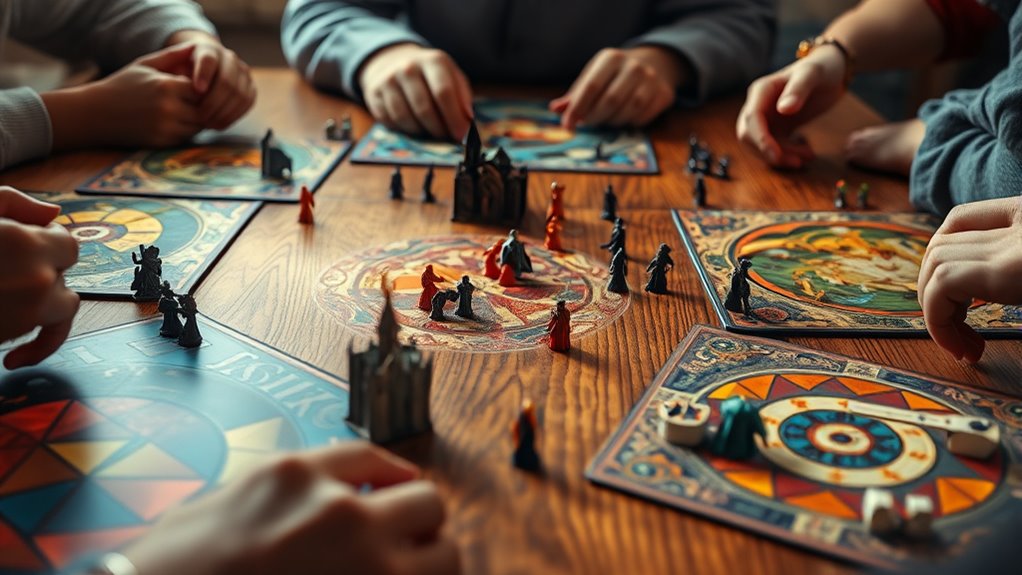

For strategy lovers, finding the right board game means balancing complexity, replayability, and theme. Stratego stands out as a timeless two-player classic, while Catan offers a versatile, resource-management experience for larger groups. Each game presents different tradeoffs—some prioritize depth, others accessibility. Continue reading to explore 12 top options suited for various preferences and skill levels.
Prime for Young Adults — start your free trial
Fast free delivery, streaming and member deals for eligible 18–24 year olds.
Try it freeAs an affiliate, we earn on qualifying purchases.
Complete the kit



Key Takeaways
- The top games balance complexity with accessibility, making them suitable for both seasoned strategists and newcomers.
- Cooperative options like Spirit Island and Forbidden Island offer strategic depth without competitive pressure, appealing to different play styles.
- Tile placement and resource management are recurring themes that add layers of decision-making complexity.
- Price and replayability vary widely, so buyers should consider how often they’ll play and with whom.
- Premium components and artwork distinguish higher-end choices, but budget-friendly options still deliver strategic depth.
| Stratego – Original Strategy Board Game for 2 Players |  | Best for Classic Two-Player Battle of Wits | Number of Players: 2 | Ages: 8+ | Includes: 40 pre-printed pieces, game board, screen, 2 sorting trays | VIEW ON AMAZON | See Our Full Breakdown |
| Catan Board Game (6th Edition) |  | Best for Resource Management and Modular Strategy | Players: 3-4 | Ages: 10+ | Playtime: 60-90 minutes | VIEW ON AMAZON | See Our Full Breakdown |
| Everdell Board Game – Worker Placement Strategy Game for 1–4 Players |  | Best for Elegant Worker Placement and City-Building | Players: 1–4 | Ages: 14+ | Components: Over 120 illustrated cards, resource tokens, 3D Ever Tree, game board | VIEW ON AMAZON | See Our Full Breakdown |
| Asmodee Azul Board Game – Mosaic Pattern Placement & Beautiful Art |  | Best for Elegant Pattern Building and Quick Play | Players: 2-4 | Ages: 8+ | Playtime: 30-45 minutes | VIEW ON AMAZON | See Our Full Breakdown |
| Ravensburger Othello – Classic Strategy Board Game for 2 Players |  | Best for Quick, Deep Two-Player Strategy Battles | Number of Players: 2 | Ages: 8+ | Game Type: Strategy Board Game | VIEW ON AMAZON | See Our Full Breakdown |
| Carcassonne Board Game – Tile Placement Strategy for Adults & Families |  | Best for Family-Friendly Strategy with Replayability | Players: 2-5 | Playtime: 35 minutes | Ages: 7+ | VIEW ON AMAZON | See Our Full Breakdown |
| Spirit Island – Cooperative Strategy Board Game for 1-4 Players |  | Best for Deep Cooperative Strategy and Replayability | Number of Players: 1-4 | Ages: 14+ | Play Time: 90–120 minutes | VIEW ON AMAZON | See Our Full Breakdown |
| Asmodee Splendor Board Game – Gem Trading & Engine-Building Strategy for Adults & Families |  | Best for Quick, Strategic Engine Building | Players: 2-4 | Ages: 10+ | Playtime: 30 minutes | VIEW ON AMAZON | See Our Full Breakdown |
| Forbidden Island – Cooperative Strategy Board Game |  | Best for Quick Cooperative Adventures | Players: 2-4 | Ages: 10 and up | Playing Time: 30 minutes | VIEW ON AMAZON | See Our Full Breakdown |
| Risk Board Game |  | Best for Classic Conquest Strategy with Family Appeal | Players: 2-5 | Ages: 10 and up | Includes: gameboard, armies, 56 Risk cards, 5 dice, war crates, game guide, dragon token | VIEW ON AMAZON | See Our Full Breakdown |
| Wingspan (Base Game) by Elizabeth Hargrave |  | Best Overall for Strategy and Theme | Players: 1-5 | Playing Time: 70 minutes | Awards: Kennerspiel des Jahres 2019 | VIEW ON AMAZON | See Our Full Breakdown |
| Plunder A Pirate’s Life – Family Board Game for Adults and Kids |  | Best for Family and Casual Strategy Play | Number of Players: 2 to 6 | Average Playtime: 20 minutes per player | Game Type: Strategy, Family | VIEW ON AMAZON | See Our Full Breakdown |
| board games for strategy lover | Ages | Players |
|---|---|---|
| Stratego | 8+ | — |
| Catan Board Game | 10+ | 3-4 |
| Everdell Board Game | 14+ | 1–4 |
| Asmodee Azul Board Game | 8+ | 2-4 |
| Ravensburger Othello | 8+ | — |
| Carcassonne Board Game | 7+ | 2-5 |
| Spirit Island | 14+ | — |
| Asmodee Splendor Board Game | 10+ | 2-4 |
| Forbidden Island | 10 and up | 2-4 |
| Risk Board Game | 10 and up | 2-5 |
| Wingspan | — | 1-5 |
| Plunder A Pirate’s Life | — | — |
More Details on Our Top Picks
Stratego – Original Strategy Board Game for 2 Players
Stratego stands out as a timeless game that combines strategic planning with hidden information, making it ideal for players who enjoy head-to-head duels. Unlike Othello, which emphasizes quick, straightforward tactics, Stratego requires players to anticipate and deceive, offering a richer strategic experience. Its comprehensive set of 40 pre-printed pieces and additional components make setup straightforward, but the game’s complexity might challenge younger children or casual players. Compared to newer titles like Azul, Stratego offers more direct confrontation and less emphasis on pattern-building, appealing to those who prefer competitive mental battles. However, its reliance on two players and the small size of pieces could be limiting for larger groups or those with visual impairments.
Pros:- Engages strategic thinking and planning
- Includes comprehensive game components for an immersive experience
- Perfect for two players to compete head-to-head
Cons:- May be too complex for very young children
- Requires two players to play, limiting flexibility
- Small pieces could be difficult for some users to handle
Best for: Strategy enthusiasts who enjoy classic, head-to-head tactical challenges
Not ideal for: Casual players or families with very young children who might find the rules complex or the pieces small
- Number of Players:2
- Ages:8+
- Includes:40 pre-printed pieces, game board, screen, 2 sorting trays
Our verdict“Stratego is a strong choice for players who want a classic, competitive game that rewards strategic deception and planning, especially for two players.”
Catan Board Game (6th Edition)
Catan’s modular hexagonal board offers a dynamic experience that shifts each game, making it ideal for players who enjoy resource management and long-term planning. Compared with Azul’s pattern-focused gameplay, Catan emphasizes expansion, trade, and negotiation—adding a layer of social strategy that appeals to groups. While Azul’s quick setup and beautiful design suit casual play, Catan’s deeper complexity and longer playtime are better suited for those seeking a more involved strategic challenge. Its need for 3-4 players and variable game length might be a downside for smaller groups or casual sessions. Nonetheless, Catan remains the gold standard for strategy game nights centered around resource control and territorial expansion.
Pros:- Highly replayable due to modular board setup
- Encourages strategic resource management and negotiation
- Suitable for both casual and serious strategy players
Cons:- Can be complex for very young players or newcomers
- Requires multiple players for full engagement, limiting solo or two-player experiences
Best for: Families and strategy players who enjoy resource trading and strategic expansion over multiple sessions
Not ideal for: Players looking for quick, light games or those with fewer than three players
- Players:3-4
- Ages:10+
- Playtime:60-90 minutes
- Edition:6th
Our verdict“Catan is perfect for groups who want a deeply strategic game with evolving setups and social interaction, though it’s less ideal for quick or solo play.”
Everdell Board Game – Worker Placement Strategy Game for 1–4 Players
Everdell offers a visually stunning and thoughtfully designed experience that combines worker placement with tableau building, making it suitable for players who enjoy building their woodland city. Unlike Azul’s pattern-centric gameplay, Everdell’s focus on resource management and strategic expansion provides deeper complexity and replayability, especially with its beautiful artwork and premium components. Its solo mode and casual yet strategic mechanics make it appealing for a wide range of players, but the game’s setup and space requirements may be off-putting for those seeking quick or minimalist experiences. Compared to Stratego’s head-to-head challenge, Everdell is more about developing a long-term strategy and creating a thriving tableau.
Pros:- Award-winning game with high replayability
- Beautiful artwork and high-quality components
- Suitable for both casual and competitive players
Cons:- May be too complex for very casual or first-time players
- Requires considerable space and setup time
- Not ideal for players seeking quick, short games
Best for: Players who appreciate thematic, aesthetically pleasing games with layered strategic choices
Not ideal for: Casual players or younger children who prefer straightforward, quick games
- Players:1–4
- Ages:14+
- Components:Over 120 illustrated cards, resource tokens, 3D Ever Tree, game board
Our verdict“Everdell suits strategic players who value beautiful design and layered long-term planning, though it demands patience and space.”
Asmodee Azul Board Game – Mosaic Pattern Placement & Beautiful Art
Azul combines stunning mosaic-inspired artwork with accessible yet deep pattern placement mechanics, making it ideal for players who enjoy visual strategy and quick, engaging gameplay. Unlike the more complex resource management of Catan, Azul’s straightforward drafting and placement allow for fast turns and immediate strategic decisions. Its award-winning design and 30-45 minute playtime make it perfect for casual game nights or family gatherings, but for seasoned gamers craving complex strategies, Azul might feel a bit too simple. Its limited player count and repetitive nature over many plays could also be a drawback for dedicated strategists seeking variety.
Pros:- Stunning mosaic-inspired artwork
- Easy to learn with deep strategic potential
- Quick setup and playtime
Cons:- May be too simple for experienced gamers seeking complexity
- Limited player count restricts larger groups
- Can become repetitive over extended play
Best for: Players seeking a beautiful, quick, and accessible strategy game for family or casual play
Not ideal for: Hardcore gamers looking for complex, multi-layered strategies or large groups
- Players:2-4
- Ages:8+
- Playtime:30-45 minutes
- Awards:Spiel des Jahres 2018
Our verdict“Azul is perfect for those who want an elegant, quick game with beautiful design, though it may lack depth for heavy strategists.”
Ravensburger Othello – Classic Strategy Board Game for 2 Players
Othello remains a classic for players who enjoy quick, intense strategic confrontations. Its simple rules and compact design make it highly accessible, yet mastering the game involves deep positional strategy similar to chess, which appeals to experienced players. Compared to Stratego’s deception and planning, Othello emphasizes immediate tactical thinking and board control, making it ideal for shorter game sessions. However, its strict two-player format and relatively straightforward gameplay may not satisfy those seeking a more layered or social experience. For players who want portability and quick matches, Othello delivers a compelling challenge without the fuss.
Pros:- Easy to learn with simple rules
- Deep strategic gameplay for experienced players
- Compact and portable design
Cons:- Limited to two players, restricting social options
- May be too simple for advanced gamers looking for complexity
- Requires strategic understanding for full enjoyment
Best for: Players who want a portable, fast-paced, two-player strategy game that rewards tactical skill
Not ideal for: Larger groups or players seeking a game with more thematic or resource management layers
- Number of Players:2
- Ages:8+
- Game Type:Strategy Board Game
- Features:Portable, Compact, Storage Drawers
Our verdict“Othello is ideal for quick, strategic battles between two players who appreciate deep tactical play in a portable format.”
Carcassonne Board Game – Tile Placement Strategy for Adults & Families
Carcassonne stands out for its intuitive tile placement mechanics that make it accessible for players of all ages, especially when compared with more complex games like Spirit Island. Its simple rules foster quick learning, yet the randomized tiles ensure each game feels fresh, keeping players engaged over multiple sessions. The inclusion of mini-expansions like The Abbot and The River adds variety without complicating gameplay. However, for players seeking deep, layered strategy, Carcassonne’s simplicity might feel limiting, and its relatively short game length can leave some craving more complex engagement. Compared to Spirit Island’s deep cooperative strategy, Carcassonne offers a more relaxed experience suitable for casual game nights, but it sacrifices the strategic depth that seasoned players might seek.
Pros:- Engaging, intuitive rules suitable for all ages
- Highly replayable due to randomized tile draws
- Includes mini-expansions for added variety
Cons:- May be too simple for experienced gamers seeking complexity
- Game length might be too short for some players
Best for: Families or casual gamers wanting a straightforward, replayable strategy game with a medieval theme.
Not ideal for: Hardcore strategy enthusiasts who prefer complex, deeply tactical games like Spirit Island or Risk.
- Players:2-5
- Playtime:35 minutes
- Ages:7+
- Includes Mini-Expansions:The Abbot and The River
Our verdict“This game is perfect for families or new players seeking a light, replayable tile-laying experience with strategic choices.”
Spirit Island – Cooperative Strategy Board Game for 1-4 Players
Spirit Island offers a level of strategic depth that surpasses many traditional board games like Risk, especially with its array of spirits and difficulty settings. Its cooperative nature encourages players to develop complex strategies to defend their island from invading colonizers, making each game a unique puzzle. The game’s high replay value is amplified by multiple expansions like Jagged Earth and Horizons, adding new spirits and scenarios. Nonetheless, its rules can be daunting for newcomers, and the 90-120 minute playtime may deter casual players seeking lighter experiences. Compared to Carcassonne’s straightforwardness, Spirit Island demands more planning and teamwork, but rewards players with a richly strategic and highly customizable experience.
Pros:- Deep strategic gameplay with multiple spirits and difficulty levels
- Excellent for solo or multiplayer cooperative play
- Highly expandable with numerous expansions
Cons:- Steep learning curve for new players
- Longer sessions may not suit casual gaming
Best for: Strategic gamers looking for a challenging cooperative experience with high replay value and expansion options.
Not ideal for: Players new to complex strategy games or those who prefer shorter, less demanding gameplay sessions.
- Number of Players:1-4
- Ages:14+
- Play Time:90–120 minutes
- Expansions:Spirit Island: Branch & Claw, Jagged Earth, Horizons, and more
Our verdict“This game excels for dedicated strategy lovers who enjoy deep, cooperative gameplay with extensive replay options.”
Asmodee Splendor Board Game – Gem Trading & Engine-Building Strategy for Adults & Families
Splendor offers a streamlined yet strategic engine-building experience that contrasts with the more complex Spirit Island. Its core mechanic of collecting gems and purchasing development cards encourages players to craft efficient strategies to attract noble patrons and earn prestige. The game’s quick 30-minute playtime makes it ideal for casual game nights, and its simple rules facilitate easy learning for new players, unlike the more intricate rules of Spirit Island. However, for seasoned gamers seeking deep tactical layers, Splendor’s straightforwardness might feel limiting. Compared to Carcassonne’s tile placement, Splendor focuses more on resource management and strategic sequencing, making it a perfect choice for those who want quick, satisfying decisions within a Renaissance theme.
Pros:- Easy to learn with strategic depth for quick gameplay
- Suitable for both families and adults
- Offers varied replay experiences with different card combinations
Cons:- May be too simple for experienced strategists
- Limited player count might restrict larger groups
Best for: Families or casual players wanting a fast, engaging engine-building game with strategic depth.
Not ideal for: Hardcore gamers looking for lengthy, complex strategic challenges or thematic storytelling.
- Players:2-4
- Ages:10+
- Playtime:30 minutes
- Theme:Renaissance commerce
Our verdict“Ideal for players seeking a fast, strategic game with engine-building elements in a Renaissance setting.”
Forbidden Island – Cooperative Strategy Board Game
Forbidden Island provides a faster, more accessible cooperative experience compared to Spirit Island’s depth. Its focus on teamwork to recover treasures from a sinking island makes it ideal for players who enjoy light strategic planning within a shorter 30-minute game. While it fosters cooperation and strategic movement, it lacks the complexity and variety found in Spirit Island, which might limit replayability for seasoned strategists. Its straightforward rules and engaging theme make it suitable for a wide age range, but experienced gamers seeking intricate cooperative puzzles will find it too simple. Compared with Risk’s territorial conquest, Forbidden Island emphasizes teamwork and resource management over aggressive expansion, making it perfect for casual groups or family play.
Pros:- Encourages teamwork and strategic movement
- Quick, engaging gameplay suitable for all ages
- Accessible rules and compelling theme
Cons:- Lacks the depth and variety of Spirit Island
- Limited replayability for experienced players
Best for: Casual players or families seeking a quick, cooperative adventure with light strategic elements.
Not ideal for: Advanced gamers craving complex, multi-layered cooperative challenges or longer sessions.
- Players:2-4
- Ages:10 and up
- Playing Time:30 minutes
- Awards:Mensa Favorite Brainy Games Winner 2010
Our verdict“This game is great for casual groups or families wanting a straightforward, cooperative challenge in under half an hour.”
Risk Board Game
Risk remains a staple in the realm of strategic board games, offering a more confrontational and territorial approach compared to the cooperative and resource management games like Forbidden Island and Spirit Island. Its classic gameplay involves empire expansion, troop movement, and card-based tactics, appealing to players who enjoy direct conflict and strategic planning. The inclusion of various accessories, such as the optional Alexa integration and the dragon token challenge, adds modern twists, but the core experience remains rooted in risk-taking and area control. Its rules can be dense for newcomers, and the game’s longer, often unpredictable sessions may not suit players seeking quick, casual gameplay. Compared to Splendor’s streamlined engine-building, Risk demands more prolonged engagement and strategic foresight, making it ideal for those who enjoy competitive conquest.
Pros:- Classic game with enduring appeal and strategic depth
- Suitable for a wide age range and group sizes
- Includes modern accessories and optional voice features
Cons:- Rules can be complex and intimidating for newcomers
- Longer game times may be less suitable for casual gaming sessions
Best for: Families and teens who enjoy territorial control and conflict-driven strategy with a traditional feel.
Not ideal for: Players seeking quick, lighter games or those uncomfortable with complex rules and longer play sessions.
- Players:2-5
- Ages:10 and up
- Includes:gameboard, armies, 56 Risk cards, 5 dice, war crates, game guide, dragon token
Our verdict“This game is best for players who enjoy classic, competitive conquest with a preference for longer, strategic battles.”
Wingspan (Base Game) by Elizabeth Hargrave
Wingspan stands out as a strategy game that combines thematic depth with engaging mechanics, appealing to players who appreciate engine-building and nature themes. Its detailed bird cards and artwork make it visually appealing, and the high replayability ensures it remains interesting over multiple sessions, unlike simpler family games like Plunder A Pirate’s Life. However, its setup process can be daunting for newcomers, and the game length might challenge casual players looking for quick fun. Compared with Plunder, Wingspan offers richer strategic choices but requires a longer time commitment, making it better suited for dedicated strategy enthusiasts rather than casual game nights. This game makes the most sense for players who value thematic complexity, strategic depth, and high-quality components.
Pros:- Beautiful artwork and thematic design that immerses players in birdwatching
- High replayability with numerous bird cards, goals, and strategies
- Suitable for solo play, families, and groups, offering flexible gameplay options
Cons:- Complex setup can be intimidating for new players
- Game length of around 70 minutes may be too long for casual or impatient players
Best for: strategy lovers who enjoy thematic, engine-building games with high replay value and detailed artwork
Not ideal for: casual players or those seeking quick, light gaming sessions due to its setup complexity and longer game length
- Players:1-5
- Playing Time:70 minutes
- Awards:Kennerspiel des Jahres 2019
- Theme:Bird collecting and nature
- Designers:Elizabeth Hargrave, Natalia Rojas, Ana Maria Martinez Jaramillo, Beth Sobel
- Publisher:Stonemaier Games
Our verdict“Wingspan is an excellent choice for strategy enthusiasts who appreciate thematic richness and deep gameplay, despite its longer setup and playtime.”
Plunder A Pirate’s Life – Family Board Game for Adults and Kids
Plunder A Pirate’s Life offers a lively, accessible approach to strategy, blending resource management, fleet command, and island conquest in a modular, customizable board. Its straightforward rules make it a solid entry point for families or players new to strategy games, contrasting with the more complex setup of Wingspan. While its shorter individual turn time keeps gameplay brisk, the overall game can extend longer than expected if players take time to explore all options, especially with a full six-player crew. Compared to Wingspan’s thematic richness, Plunder emphasizes quick, tactical decisions and fun thematic immersion suitable for mixed-age groups. This pick makes the most sense for families seeking a versatile, easy-to-learn game that still offers strategic depth and high replay value.
Pros:- Easy to learn with intuitive gameplay mechanics
- High replayability thanks to a modular, customizable board setup
- Great for family game nights and players of all ages
Cons:- Average playtime can feel lengthy for some players, especially with many players
- Requires multiple players for optimal experience, limiting solo or small-group play
Best for: families or casual gamers seeking a quick, fun strategy game that appeals to all ages
Not ideal for: hardcore strategy players looking for deep, complex mechanics or longer, more contemplative sessions
- Number of Players:2 to 6
- Average Playtime:20 minutes per player
- Game Type:Strategy, Family
Our verdict“Plunder A Pirate’s Life is perfect for families and casual players wanting a quick, engaging strategy game with high replayability and thematic fun.”

How We Picked
Our selection process focused on evaluating each game’s strategic depth, ease of learning, replayability, build quality, and overall value. We prioritized games with clear rules but enough complexity to challenge experienced players, while also considering accessibility for newcomers. The ranking reflects a balance between innovation, player engagement, and longevity, ensuring each game offers a rewarding experience suited to strategy enthusiasts. We also considered reviews and popularity among dedicated gamers to identify the most relevant options for 2026.Factors to Consider When Choosing Board Games For Strategy Lovers
Choosing a strategy board game involves weighing several key factors beyond just theme or price. Understanding these can help you pick a game that matches your skill level, playing style, and group size. From game complexity to component quality, each aspect influences how much you’ll enjoy the game and how often you’ll want to play it.Game Complexity and Learning Curve
Some strategy games are quick to learn but offer deep decision-making, while others have a steeper learning curve but provide richer gameplay. Consider your group’s familiarity with strategy games—beginners may prefer lighter options like Carcassonne or Splendor, whereas seasoned players might enjoy the complexity of Spirit Island or Risk. Striking the right balance ensures everyone stays engaged without feeling overwhelmed.
Player Count and Group Size
Not all games scale well. For example, Stratego is designed specifically for two players, making it ideal for intimate matches. Conversely, Catan and Wingspan accommodate larger groups, enhancing social interaction. Think about your typical playgroup size and whether you want a game that can handle multiple players or a more focused, head-to-head experience.
Replayability and Variability
High replay value often depends on game mechanics like tile placement, variable setups, or multiple strategies. Games like Carcassonne and Catan excel here, offering different experiences each session. Avoid games with repetitive gameplay if you want to keep your strategy sessions fresh and engaging over time.
Component Quality and Aesthetics
Investing in well-made components can enhance immersion, especially for visually appealing games like Azul or Wingspan. However, higher quality often comes with a higher price tag. Balance your budget with your desire for aesthetic appeal and durability, particularly if you expect frequent use or family play.
Price and Value
Price points vary significantly, with premium games offering complex mechanics and beautiful components, while budget options may deliver straightforward, enjoyable gameplay. Consider how often you’ll play, who you’ll play with, and whether the game’s depth justifies its cost. Sometimes, a more affordable game can provide hours of strategic fun without breaking the bank.
Frequently Asked Questions
Is it better to choose a complex or beginner-friendly strategy game?
The choice depends on your gaming group’s experience level. Beginners should start with simpler games like Carcassonne or Splendor to learn strategic thinking without feeling overwhelmed. More experienced players might prefer complex titles like Spirit Island or Risk, which offer deeper mechanics and longer play sessions. Ultimately, choosing a game that matches your group’s familiarity ensures everyone stays engaged and enjoys the challenge.
Can I find a strategy game suitable for different age groups?
Yes, many strategy games are designed with flexibility in mind. For example, Plunder A Pirate’s Life offers family-friendly gameplay that appeals to both adults and kids, while Wingspan balances accessibility with strategic depth for older players. When selecting for mixed age groups, focus on games with straightforward rules, but enough strategic options to keep everyone interested.
How important are artwork and components in a strategy game?
Artwork and components significantly influence immersion and overall enjoyment. Beautifully designed games like Azul and Wingspan can make setup and gameplay more compelling, especially for visual learners. However, premium components often come at a higher cost, so weigh whether aesthetic appeal outweighs budget constraints for your gaming sessions.
Are cooperative strategy games worth considering?
Absolutely. Cooperative games like Spirit Island and Forbidden Island allow players to collaborate on shared strategies, which can be refreshing for strategy lovers seeking teamwork over competition. They often require different planning skills and can be less confrontational, making them ideal for casual game nights or groups with varying skill levels.
Should I prioritize replayability or game depth?
Both matter, but your choice should align with how often and with whom you play. High replayability ensures the game remains fresh over many sessions, perfect for casual or frequent players. Deep, complex games might offer richer strategies but can be more time-consuming and challenging to learn. Balancing these factors based on your gaming habits will lead to more satisfying purchases.
Conclusion
For the best overall experience, Spirit Island stands out as a top pick for dedicated strategy players seeking depth and replayability. Catan offers excellent value for those who enjoy resource management and social play, while Azul appeals to those who appreciate beautiful design and tactical tile placement. Beginners and families may find Carcassonne or Plunder A Pirate’s Life more accessible, while premium players might lean toward Risk or Wingspan for high-quality components and expansive gameplay. Consider your group size, experience level, and how much complexity you desire to make the best choice.Fall yard work Picks
leaf blowers
As an affiliate, we earn on qualifying purchases.