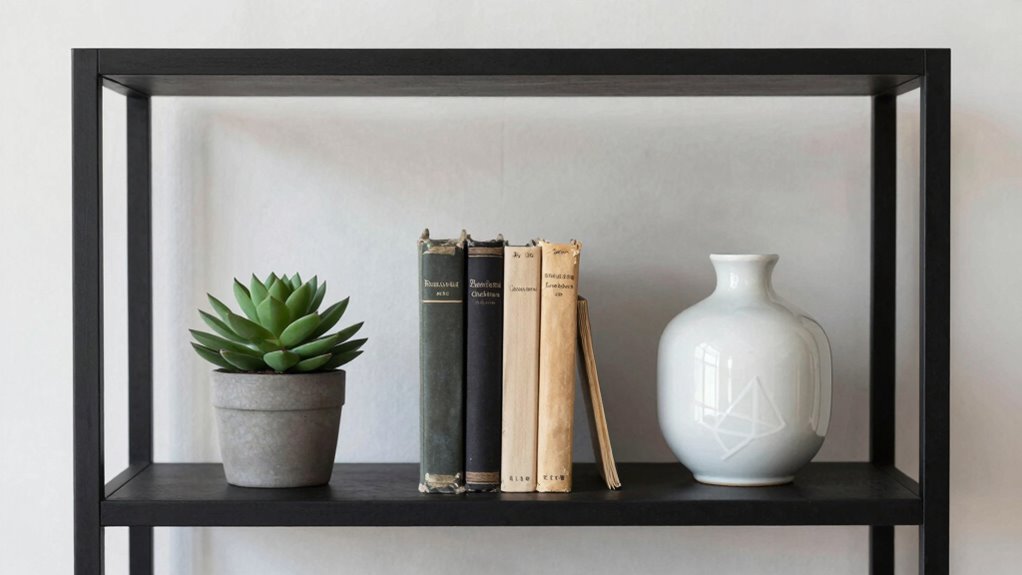

To instantly improve your shelf styling, use fewer objects with intentional placement. Select a few meaningful items, like a small plant, artwork, or decorative accents, and give each piece space to breathe. Focus on balance, cohesion, and highlighting your favorites, rather than clutter. Carefully arranging these objects creates a polished, impactful display that feels intentional and stylish. Keep practicing the principles, and you’ll uncover even more simple techniques to elevate your shelves effortlessly.

Get furniture and decor delivered free with Prime
- Fast, free delivery on millions of items
- Prime Video, Amazon Music and more included
- Member-only deals all year
Key Takeaways
- Select a few meaningful, visually appealing objects to create impact and avoid clutter.
- Use cohesive color schemes to unify the display and enhance visual flow.
- Prioritize space and spacing to highlight each item’s significance effectively.
- Incorporate balance and rhythm through thoughtful arrangement for harmony.
- Focus on intentionality, choosing objects that reflect your style and purpose.
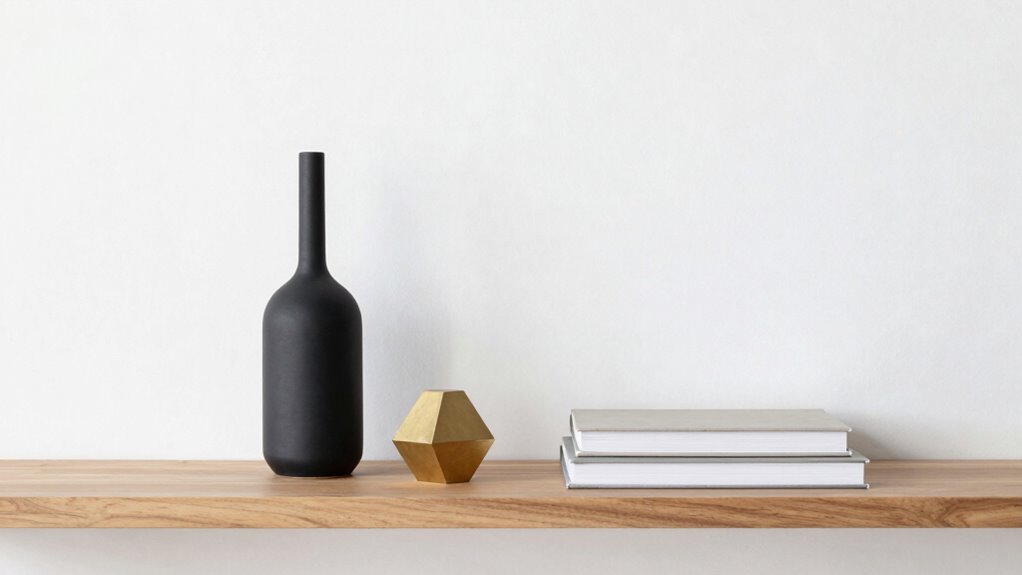
When it comes to shelf styling, less truly is more. You don’t need a cluttered display to make an impact; instead, focusing on a few carefully chosen objects can create a more polished and inviting look. The key is to select decorative accents that speak to your style without overwhelming the space. Think of these accents as the jewelry of your shelf—small, deliberate pieces that add personality and charm. Instead of filling every inch with knickknacks, choose a handful of meaningful items that complement each other. This approach not only keeps your shelf looking tidy but also makes each object stand out more. Incorporating visual harmony through thoughtful object selection can elevate the overall aesthetic. Color coordination plays a crucial role in achieving a cohesive aesthetic. When you choose decorative accents, aim for colors that either match or harmonize with your existing decor. This doesn’t mean everything has to be identical, but selecting a palette that flows naturally creates visual unity. For example, if your room features soft pastels, pick decorative accents in similar shades or subtle patterns. If your style leans toward bold contrasts, use objects with vibrant hues that pop against a neutral background. By controlling the color scheme, you guide the eye smoothly across your shelf, avoiding chaos and confusion. It’s about creating a balanced, curated look where each piece enhances the overall harmony. You’ll find that using fewer objects also allows for better emphasis on each piece. When you don’t overcrowd your shelf, it becomes easier to highlight special items or decorative accents that truly resonate with you. Whether it’s a unique vase, a piece of artwork, or a small plant, giving each object space makes it more noticeable and appreciated. This minimal approach encourages intentionality—every object on your shelf has a purpose and adds value. Plus, it simplifies your styling process. Instead of trying to fit everything in, you can focus on selecting the right objects and arranging them thoughtfully. Additionally, understanding crafting tools and their placement can help you organize your shelf more efficiently, making it easier to update and maintain your display over time. Incorporating design principles, such as balance and rhythm, can further enhance your arrangement and create a more harmonious look. When you understand spatial arrangement, you can better manipulate space to achieve a balanced composition. Ultimately, taking a mindful approach to placement and spacing can also help you achieve a balanced aesthetic that feels both intentional and inviting. Finally, don’t forget the importance of spacing. Leaving enough room between objects prevents your shelf from looking busy and allows each decorative accent to breathe. This ensures your display feels balanced and intentional. With fewer objects, you can also experiment more easily with different arrangements until you find what feels right. Remember, the goal is to create a visually appealing display that reflects your personality without feeling cluttered. By embracing simplicity, you’ll find that less truly is more, and your shelf will become a stylish focal point in your space.
small decorative plant for shelves
As an affiliate, we earn on qualifying purchases.
As an affiliate, we earn on qualifying purchases.
Frequently Asked Questions
How Do I Choose the Right Objects for My Shelf?
To choose the right objects for your shelf, start by selecting decorative accents that complement your style and color scheme. Incorporate personal mementos to add meaning and personality. Keep the arrangement balanced by mixing different heights and textures, but avoid overcrowding. Focus on a few meaningful pieces rather than filling every space, creating a curated and visually appealing display that reflects your personality.
Can Minimal Styling Work in Small or Cluttered Spaces?
You might find that minimal styling actually works well in small or cluttered spaces, especially when you focus on clutter reduction and space optimization. By choosing a few meaningful objects, you create a clean, balanced look that feels intentional rather than crowded. It’s a simple trick: less is more, and your shelf becomes a calming focal point instead of a visual chaos. Sometimes, minimalism brings the biggest impact.
What Colors Should I Use for a Cohesive Look?
You should choose a cohesive color palette with complementary or analogous shades to unify your shelf. Stick to a few key colors to keep it simple and balanced. Incorporate texture combinations like matte, glossy, or woven materials to add visual interest without clutter. This approach creates harmony, even with fewer objects, making your shelf look polished and intentional, while avoiding overwhelming small or cluttered spaces.
How Often Should I Update My Shelf Styling?
You should update your shelf styling seasonally, about every few months, to keep it fresh and engaging. Incorporate seasonal updates that reflect current trends or holidays, and use these changes as an opportunity to express your personality. Regular updates prevent your shelves from feeling stale and help you showcase different aspects of your style. Keep it simple and intentional, so each change enhances your space without overwhelming it.
Are There Specific Objects to Avoid on Shelves?
Avoid cluttering your shelves with decorative vases and oversized books, as they can overwhelm the space. Steer clear of objects that don’t complement your overall decor or seem disproportionate. Instead, choose items with clean lines and appropriate sizes that add visual interest without crowding. Keep a balanced arrangement by limiting larger pieces, which helps your shelf look stylish and organized while highlighting your favorite decor elements effectively.
Conclusion
By keeping your shelves simple with fewer objects, you create a more inviting and organized space. Studies show that minimalistic decor can reduce stress and boost mood, making your home feel more calming. Remember, less truly is more—focusing on a few key pieces allows each item to shine. So, next time you style your shelves, embrace simplicity and enjoy the tranquil, polished look it brings to your space.
Halloween Picks
halloween
As an affiliate, we earn on qualifying purchases.