
TL;DR

Get furniture and decor delivered free with Prime
- Fast, free delivery on millions of items
- Prime Video, Amazon Music and more included
- Member-only deals all year
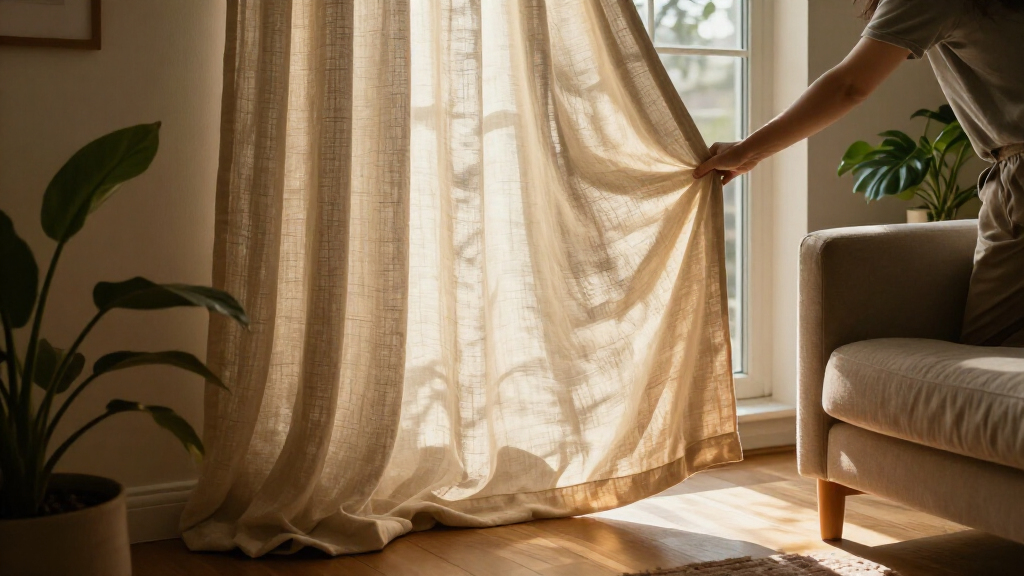
An Ideal Home writer reports that closing curtains shortly before sunset helped rooms feel warmer and recorded a 2°C difference across thermal curtains. The report does not measure energy or bill savings, which depend on the home and its window coverings.
Ideal Home has reported that closing curtains shortly before sunset may help retain warmth indoors, based on a writer’s experience and temperature readings in her home. The test found a 2°C difference in front of and behind thermal curtains after sunset, but it did not establish how much energy or money the habit saves.
The report’s writer said she had been closing curtains before dark and found her home felt warmer for longer in the evening, reducing her perceived need to run central heating for an extra hour. She described the result as a household observation, not a controlled test of heating use or utility bills.
She compared temperatures on either side of several types of window coverings. The reported difference was 2°C across thermal curtains and blinds, just under 1°C across wooden blinds, and about 0.5°C across standard curtains. The report gives no measurement protocol, room-by-room data or information on how long the readings were taken.
Stuart Middleton, So Energy’s consumer energy expert, said windows can be a source of heat loss and that curtains add a layer that may slow heat escaping. He said thick, well-fitting or thermally lined curtains can be particularly effective, while the potential saving depends on the windows, coverings and insulation in each home.
Curtains Can Slow Evening Heat Loss
Closing curtains is a no-cost household habit that may help some rooms stay comfortable after daylight fades. If a room retains more warmth, a household may feel less need to turn up the heating or use a separate electric heater. The source, however, does not quantify any reduction in heating demand or bills, so readers should not treat the temperature readings as proof of a specific saving.
The reported differences also suggest that the type and fit of a window covering matter. Thermal curtains performed better than standard curtains in the writer’s comparison, but the findings come from one home and cannot establish the result other households will get. Window quality, drafts, room layout and existing insulation can all affect the outcome.
Products Worth Considering

Sonos Era 100 Wireless Smart Speaker, Black

Hisense 85 U6 Pro Series Mini-LED ULED 4K UHD HDR Gaming AI Smart Fire TV (85U6SF Pro)

TCL 85-Inch QM6K Series QLED Mini LED 4K HDR Smart Google TV
As an affiliate, we earn on qualifying purchases.
The Sunset Timing Behind the Test
The article recommends drawing curtains shortly before sunset, rather than waiting until later in the evening. Its rationale is to allow daylight to warm a room during the day, then add a barrier at the window as outdoor temperatures fall. The writer said sunset was due at 4:52 p.m. on the day she gave as an example and set a reminder for about 4:30 p.m.; those times are specific to her location and date, not a general schedule.
For people away from home at dusk, the report discusses motorised curtain and blind devices that can operate on a schedule or in response to light. It cites the SwitchBot Curtain 3 and products from Aqara as examples. Becky, Ideal Home’s digital editor, said she used a scheduled SwitchBot device to adjust curtains seasonally. These examples describe product use, not independent evidence that automation produces a particular energy saving.
“Windows can be a source of heat loss, so drawing your curtains creates an additional layer of insulation that helps slow the rate at which heat escapes.”
— Stuart Middleton, So Energy’s consumer energy expert
Household Savings Remain Unmeasured
The report does not provide meter readings, heating-use records or bill comparisons from before and after the curtains were closed. Its temperature observations lack details about the instruments, exact locations and measurement conditions, and the reported differences do not show how much energy was saved.
It is also unclear how consistently the results would apply to homes with different glazing, curtain coverage, drafts or heating systems. Middleton’s comments describe why curtains may slow heat loss, but no saving estimate is given. The report’s remarks about energy-price changes are not needed to establish the test’s result and do not supply evidence of household savings from this practice.
A Simple Habit to Try at Home
The report’s practical suggestion is to close curtains shortly before local sunset and use a phone reminder if needed. People can observe whether their rooms feel more comfortable, while keeping in mind that personal impressions are not a measure of bill savings. A scheduled curtain device is an option for people who are away at dusk, but it adds an upfront cost and the article does not show that it pays for itself.
No larger study or follow-up measurement is described in the source material. The next useful evidence would be a comparison of heating use under similar weather conditions, alongside clearly documented temperature readings. Until then, the reported result is best understood as a household test suggesting a possible comfort benefit, not a quantified energy-saving guarantee.
Key Questions
Does closing curtains before sunset save energy?
It may help slow heat loss through windows and reduce the need for heating, but the Ideal Home report did not measure energy use or establish a specific saving.
When should I close my curtains?
The report recommends closing them shortly before local sunset. Sunset time varies by location and date, so the example time in the article is not universal.
Which curtains performed best in the reported test?
The writer recorded a 2°C difference across thermal curtains and blinds, compared with just under 1°C across wooden blinds and about 0.5°C across standard curtains. These are observations from one home, not results from a controlled study.
Can I automate curtains to close at dusk?
The report names motorised curtain and blind devices that can use schedules or light levels. It gives examples of use but does not establish how much energy automation saves.
Source: rss