
TL;DR
Livingetc’s stylist says two lamps are a useful starting point for most living rooms, not a fixed requirement. The number should reflect the room’s layout and uses, with lamps placed to provide separate pools of ambient, reading or accent light.
Livingetc’s stylist recommends starting with two lamps in most living rooms, while treating that number as a guide rather than a rule. The advice focuses on creating separate pools of light for different activities and moods, with larger or divided spaces potentially needing three or more lamps.

Get furniture and decor delivered free with Prime
- Fast, free delivery on millions of items
- Prime Video, Amazon Music and more included
- Member-only deals all year
The report says a pair of lamps is a comfortable starting point for many living rooms, alongside a ceiling light if the room has one. In a smaller room with effective overhead lighting, one table lamp and one floor lamp may be enough. A larger room, or one with a reading corner and a separate television area, may benefit from additional lamps.
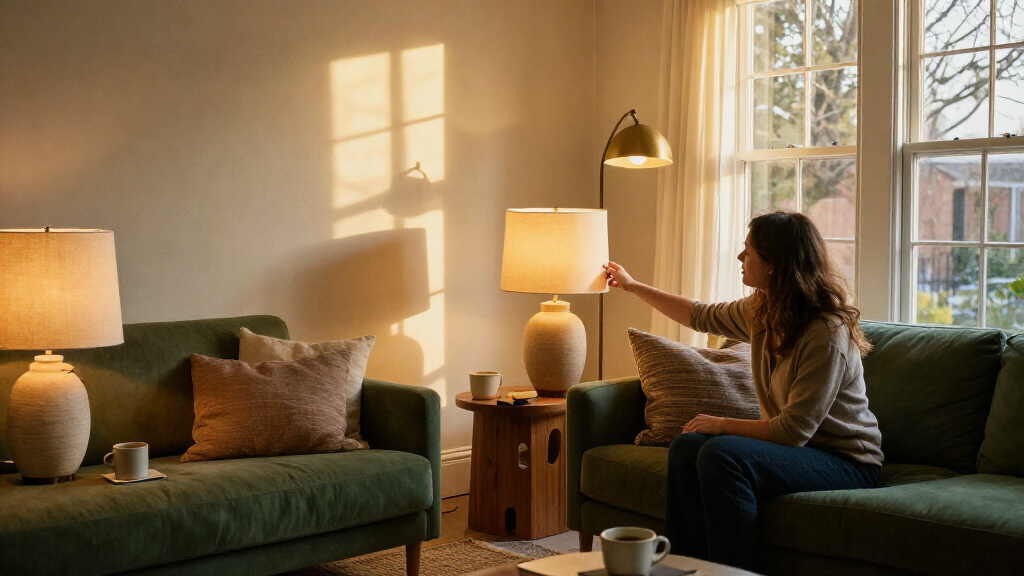
The stylist’s recommendation is based less on square footage alone than on where people sit and what they do. A lamp near a sofa can soften evening light; a floor lamp beside an armchair can support reading; and a lamp on a console or sideboard can brighten a darker stretch of wall. Lamps at different heights and around different parts of the room can spread light more evenly than relying on a single central fitting.
The report also advises choosing lamps for distinct roles instead of buying several that perform the same job. A fabric shade can provide a softer glow, a sculptural lamp can contribute visually when switched off, and an adjustable floor lamp can direct light toward a reading spot. It recommends checking a lamp’s height and reach, as well as bulb and dimmer compatibility, before purchasing.
Lighting Choices Follow Room Use
The advice gives readers a practical way to plan living-room lighting without treating a particular lamp count as a design standard. The number that works depends on whether the room is used for reading, relaxing, watching television, hosting guests or working, and whether those activities take place in one area or several.
That distinction can help homeowners avoid two common problems: relying on a ceiling light that leaves corners dim, or filling the room with lamps that do not serve a clear purpose. A few well-positioned sources can make it possible to switch off overhead lighting while keeping the room comfortable. The report frames the goal as useful, layered light, not simply adding fixtures for decoration.
Its guidance is also relevant before a renovation, when lamp locations, outlets and switches can be planned alongside the room layout. For people working with existing wiring, plug-in table and floor lamps offer another way to add light without changing the fixed installation.
Products Worth Considering

Levoit Vital 200S-P Smart Air Purifier for Large Rooms (up to 1875 ft²)

Sonos One Two-Room Set Smart Speakers with Built-In Alexa, Black

Philips Hue Festavia Permanent Outdoor String Lights, 80 Lights, 150 ft
As an affiliate, we earn on qualifying purchases.
Plan Around Activities and Zones
The Livingetc report places its advice against a design trend toward expressive lamp shapes and softer, atmospheric lighting. It describes lamps as contributing to a room’s appearance even when switched off, but its core recommendation is functional: make sure the room has enough light in the places people use it.
Emma Deterding, founder and creative director of Kelling Designs and KDLoves, advises planning lighting around how a room will be used, including whether it needs to accommodate reading or a desk area. Suzanne Duin, founder of lighting brand Maison Maison, describes a mix of ambient, task and accent lighting as a way to serve different purposes. Those comments support the report’s central point that placement and function matter more than a universal count.
““There’s no magic number, I’d start with two lamps in most living rooms, then add another if the space is large, open-plan, or divided into different zones.””
— Livingetc stylist, in the report
No Fixed Lamp Count Applies
The recommendation is styling guidance, not a measured standard. The supplied report does not set a required lamp count by room dimensions, provide lighting levels or compare outcomes across different room designs. It also does not specify a publication date in the material provided.
Whether two lamps are sufficient will depend on factors the report does not quantify, including the room’s existing ceiling light, natural light, layout and the reach and brightness of each lamp. The advice does not replace a tailored lighting plan for a particular home.
Choose Lamps for Specific Tasks
Readers can apply the advice by mapping where they sit and what each area needs: softer light near the sofa, focused light for reading, or accent light for a console or display. From there, they can begin with two lamps and add another if a separate zone remains poorly served. The report recommends checking lamp scale, light reach and bulb or dimmer compatibility before buying.
For renovation plans, Deterding’s advice points to considering lighting positions, outlets and switches early. The supplied report does not identify a later update or planned follow-up; its practical next step is to assess the room’s uses and select lighting accordingly.
Key Questions
How many lamps does a living room usually need?
Livingetc’s stylist suggests starting with two lamps in most living rooms. The right number depends on the room’s layout, existing lighting and activities.
Can a living room work with only one lamp?
The report does not set a minimum. It says that in a smaller room with a good ceiling light, one table lamp and one floor lamp may be enough; a room with fewer lamps may still depend on its existing light sources and needs.
When might a living room need three or more lamps?
A larger, open-plan or divided room may need additional lamps, particularly if it has separate areas for reading, television or other activities.
Where should lamps go in a living room?
Place them where light is needed: near a sofa for softer evening lighting, beside an armchair for reading, or on a console or sideboard to brighten a dim area. The report also recommends spreading light around the room and varying its height.
What should I check before buying a lamp?
Consider whether the lamp has a distinct purpose, its size and light reach, and whether its bulb and dimmer are compatible. The report also suggests weighing its color, material and shape against the room’s existing furnishings.
Source: rss