
To make your minimalist space feel welcoming, focus on maximizing natural light with large windows or sheer curtains, creating a bright and inviting atmosphere. Add cozy textiles like soft throws and textured rugs to introduce warmth and comfort. Choose furniture with clean lines but make certain it’s also functional and comfortable. Incorporate gentle scents with candles or oils, and include touches of nature, such as plants, to bring life into the space. If you want to learn more, there’s plenty to explore.
Key Takeaways
- Maximize natural light with large windows and light fabrics to create an open, warm ambiance.
- Incorporate cozy textiles like throws and cushions to add comfort and softness.
- Choose furniture with clean lines, keeping surfaces uncluttered and functional for a welcoming feel.
- Add sensory elements such as candles, gentle sounds, or subtle scents to enhance relaxation.
- Use biophilic design, like indoor plants, to create harmony and connect the space with nature.

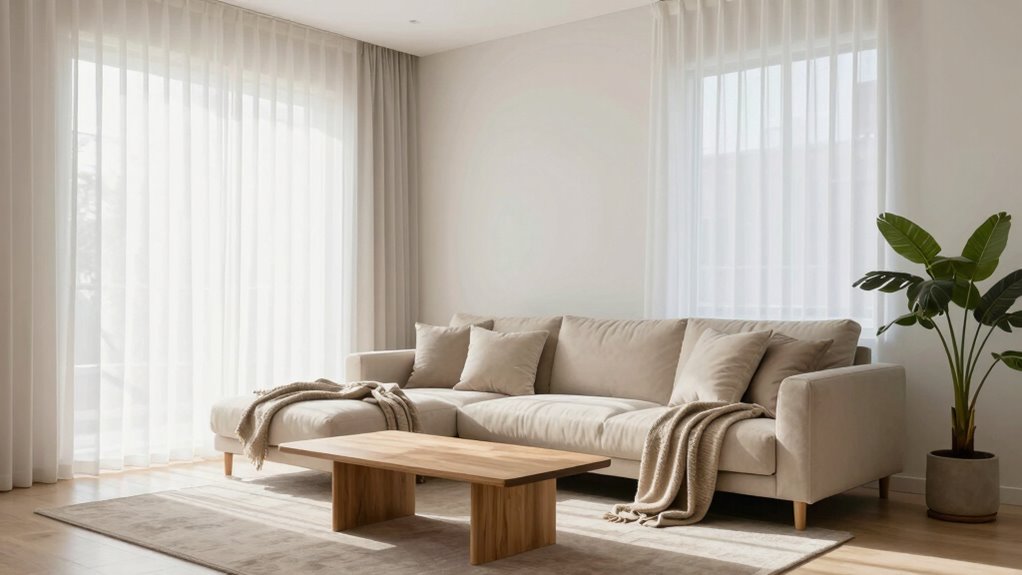
Have you ever wondered how a space can feel peaceful and uncluttered at the same time? Achieving that balance is the essence of creating a welcoming minimalist environment. It’s about more than just clearing out excess; it’s about thoughtfully designing a space that invites comfort and calm. To start, focus on natural lighting. Large windows or sheer curtains allow sunlight to flood the room, emphasizing clean lines and open space. Natural light lifts the mood and makes the space feel alive, rather than sterile or cold. It also highlights the simplicity of your décor, making even minimal furnishings feel warm and inviting. To maximize this effect, keep window areas free of heavy drapes or dark blinds. Instead, opt for light, airy fabrics that soften the sunlight and create a gentle glow throughout the day.
Next, incorporate cozy textiles to counteract any potential starkness. Minimalism doesn’t mean sacrificing comfort. Use soft throws, plush cushions, and textured rugs to add layers of warmth. These textiles aren’t just practical—they’re visual cues that the space is meant to be lived in and enjoyed. Choose neutral tones or subtle patterns that blend seamlessly with your overall aesthetic, ensuring they enhance the simplicity rather than clutter it. When placed thoughtfully, these textiles make the space feel intimate and welcoming, inviting you to relax and unwind. Additionally, natural lighting plays a crucial role in enhancing the overall ambiance, making your space feel more open and inviting. Incorporating a sense of harmony through balanced proportions and cohesive design elements can further elevate the welcoming feel of your minimalist space. Creating this harmony also involves paying attention to sustainable living practices, which can complement a minimalist aesthetic while promoting environmental responsibility. Incorporating biophilic design elements, such as indoor plants, can also strengthen this connection to nature and increase the sense of calm in your space.
Be mindful of your furniture choices too. Opt for pieces with clean lines and minimal ornamentation, but make certain they’re comfortable. A well-chosen armchair with a cozy throw draped over it can become a favorite spot to read or reflect. Keep surfaces clear and clutter-free, but don’t shy away from adding a few meaningful decorative objects—like a simple vase with fresh flowers or a piece of art that resonates with you. These small touches inject personality without overwhelming the space.
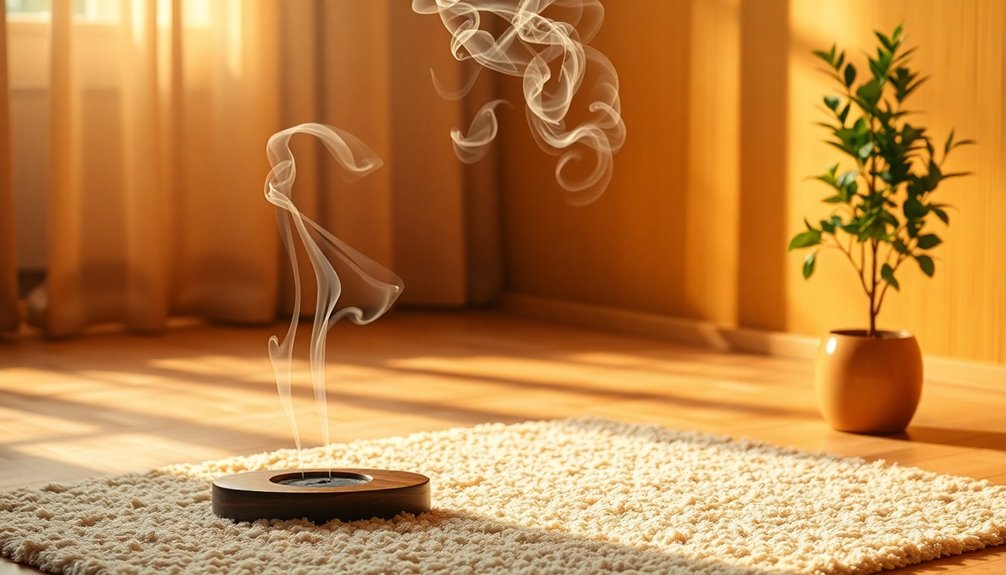
Finally, pay attention to scent and sound. A subtle aroma from natural candles or essential oils can evoke calm, while soft background music or the gentle hum of a fan can reinforce a peaceful atmosphere. When you combine natural lighting, cozy textiles, intentional furniture, and sensory details, your minimalist space transforms into a welcoming retreat. It’s not just about having less; it’s about creating an environment where simplicity feels warm, inviting, and truly your own.
As an affiliate, we earn on qualifying purchases.
Frequently Asked Questions
How Can I Add Warmth to a Minimalist Space?
You can add warmth to your minimalist space by incorporating artistic accents like vibrant artwork or unique sculptures. Use textured textiles such as cozy throw blankets, plush cushions, or woven rugs to create a sense of comfort. These elements introduce visual and tactile warmth, making your space inviting without cluttering it. Focus on subtle contrasts and soft layers to balance simplicity with a welcoming atmosphere.
What Colors Make a Space Feel More Inviting?
Bright, warm colors like soft terracotta, gentle mustard, and cozy blush instantly make your space feel more inviting. These hues harness powerful color psychology, boosting mood and creating a warm atmosphere that feels like a hug. Think of these colors as mood enhancers, turning a plain minimalist room into a comforting haven. So go ahead—add a splash of warmth and watch your space radiate friendliness and calm!
How Do I Incorporate Personal Touches Without Clutter?
You can incorporate personal touches by adding artistic accents like meaningful artwork or decorative objects, and textured fabrics such as cozy throws or cushions. Keep these items simple and intentional, placing them thoughtfully to avoid clutter. Rotate or update your accents periodically to refresh the space. This approach allows your personality to shine through without overwhelming the minimalist aesthetic, creating a warm, inviting environment that feels both personal and serene.
What Lighting Options Create a Cozy Atmosphere?
You can create a cozy atmosphere with warm ambient lighting, such as soft white bulbs or dimmable fixtures, to gently illuminate your space. Incorporate statement fixtures like a sculptural pendant or a sleek floor lamp to add visual interest and warmth. These choices balance functional lighting with aesthetic appeal, making your minimalist space feel inviting without overwhelming it. Adjust the lighting levels to suit different moods and occasions.
How Can I Balance Functionality and Aesthetics?
In your quest to balance functionality and aesthetics, think of yourself as a modern Marie Kondo. You should focus on carefully selecting decorative accessories that enhance without cluttering. Prioritize smart spatial organization to keep the space practical yet visually appealing. This way, every piece serves a purpose and adds beauty, ensuring your minimalist space remains both functional and inviting. Keep it simple, intentional, and harmonious.
Conclusion
Think of your minimalist space as a garden—every element is like a carefully chosen flower or stone, adding beauty without overwhelming. When you embrace simplicity and add warm touches, your space transforms into a cozy sanctuary rather than a cold exhibit. With mindful details, your minimalist room becomes a welcoming oasis where every item invites relaxation and comfort. Remember, less truly can be more, creating an environment that feels both peaceful and inviting.