
TL;DR

Get furniture and decor delivered free with Prime
- Fast, free delivery on millions of items
- Prime Video, Amazon Music and more included
- Member-only deals all year
Designer Fatih Arslan published a tour of lamps in his home, describing pieces by Artemide, Isamu Noguchi and Louis Poulsen. The report is a personal account of a collection, not an announcement about a new product or industry development.
Designer Fatih Arslan published a tour of the lamps in his home on October 5, describing a collection that includes classic models by Artemide, Isamu Noguchi and Louis Poulsen. His account offers readers a personal look at how design history, lighting and collecting shape a household collection, while acknowledging that many of the pieces cost far more than ordinary lamps.
Arslan says the lamps are not inexpensive, and that their prices may not be justified for someone seeking only illumination. For him, he writes, collecting changes the calculation: the objects are worth the expense as pieces of design. He also points to alternatives, saying IKEA and other retailers sell lamps with appealing designs at a fraction of the cost, while vintage shops and fairs can offer lower prices for older pieces.
The collection spans desk, table, floor and wall lighting. Among its best-known designs are the Artemide Tolomeo Mini, designed by Michele De Lucchi and Giancarlo Fassina in 1987, and the Tizio Micro, designed by Richard Sapper in 1972. Arslan describes the Tolomeo as practical and easy to reposition at a work desk. The Tizio uses its arms to conduct electricity and counterweights to keep the adjustable lamp balanced.
Several lamps belong to Isamu Noguchi’s Akari series, which Arslan says began in 1951 after the designer visited Gifu, Japan. The models in his home include the 1A, 3A, 16A and 75A, made from washi paper and, in some cases, wooden details. He also owns two Louis Poulsen designs: Poul Henningsen’s PH 5, introduced in 1958, and a glass PH 3/2 using Henningsen’s three-shade lighting system. The home tour also features an AJ wall lamp by Arne Jacobsen, designed in 1957 for Copenhagen’s SAS Royal Hotel.
Design Objects Beyond Illumination
Arslan’s tour shows why a lamp can carry value beyond its basic function. Collectors may prize the designer, construction and place in design history, while everyday buyers may weigh price and practical use more heavily. His account makes that distinction explicit rather than presenting expensive lamps as necessary household purchases.
The pieces also illustrate different approaches to controlling light. Henningsen’s layered shades conceal the bulb and soften its glare; Noguchi’s paper forms diffuse light through washi; and the adjustable Tolomeo and Tizio direct light toward a workspace. Those design choices help explain the appeal Arslan describes, though the article does not compare their brightness, energy use or performance with other lamps.
Products Worth Considering
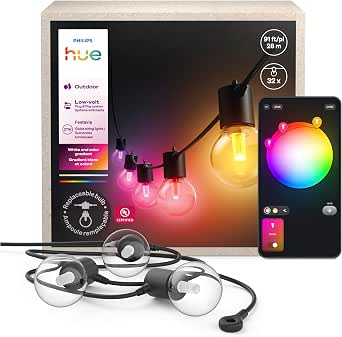
Philips Hue Festavia Globe Outdoor String Lights, 32 Bulbs, 91 ft

Philips Hue Large Smart Light Tube, Black – White and Color Ambiance LED Color-Changing Light – 1 Pack

Dyson Ball Animal 3 Extra Upright Vacuum
As an affiliate, we earn on qualifying purchases.
A Collection With Design Histories
The tour places household objects within a longer history of industrial and lighting design. Arslan notes that the Tolomeo won the Compasso d’Oro in 1989 and says similar-looking desk lamps have since been produced by IKEA and other companies. He connects Sapper’s use of red accents on the Tizio to details in other products he designed, including the first IBM ThinkPad.
Noguchi’s Akari series draws on Gifu’s paper-lantern tradition. Arslan says the lamps are still made by hand at Ozeki, a family-run workshop in Gifu, using traditional methods. He also says authentic Akari lamps carry a red sun-and-moon stamp and that Noguchi designed more than 100 models. Henningsen developed his three-shade system in 1925; Arslan says the PH 3/2 was the first lamp to use it, while the PH 5 came decades later.
These details come from Arslan’s personal report, which is primarily a tour rather than a market survey. He says photographs accompanying the original post were taken in his own house. His descriptions reflect his experience and preferences, including his view that the PH 3/2 glass shade is fragile and that one replacement took months to arrive.
“Are they worth it? Probably not for their price, but for me they are worth every penny.”
— Fatih Arslan
Prices and Availability Vary
The report does not give purchase prices, current retail availability or a model-by-model comparison with less expensive alternatives. Arslan says vintage shops and fairs can have good prices, but does not provide examples or a typical discount. His estimate that some IKEA lamps cost about one-tenth as much is not tied to a specific model or a stated comparison method.
The article is a personal account, so it does not establish how widely other collectors share his views or how the lamps perform under standardized conditions. It also does not provide independent confirmation of production details, awards or historical claims. No new product launch, pricing change or broader industry announcement is reported.
More From Arslan’s Tour
The source report continues its room-by-room object tour with descriptions of the lamps and their placement. In the supplied material, the final description of the AJ wall lamp ends mid-sentence, after Arslan says he likes that it can tilt and that he sometimes points it somewhere. The rest of that thought is unavailable here, so the intended direction and any further details about the lamp remain unknown.
No follow-up announcement or next milestone is stated. Readers seeking current prices or availability would need to check retailers or vintage sellers directly; the report does not list sellers or provide buying guidance.
Key Questions
What did Fatih Arslan publish?
He published a first-person tour of the lamps in his home, discussing their designers, histories, features and his reasons for owning them.
Which designers’ lamps appear in the collection?
The tour includes designs by Michele De Lucchi, Giancarlo Fassina, Richard Sapper, Isamu Noguchi, Poul Henningsen and Arne Jacobsen.
Does Arslan say the lamps are worth their prices?
He says they may not be worth the cost if judged only as sources of light, but that they are worth it to him as collectible design objects. He also notes that more affordable options exist.
Where are Noguchi’s Akari lamps made, according to the report?
Arslan says the Akari lamps are still made by hand at Ozeki, a family-run workshop in Gifu, Japan, using traditional methods.
Source: hn