TL;DR

Get furniture and decor delivered free with Prime
- Fast, free delivery on millions of items
- Prime Video, Amazon Music and more included
- Member-only deals all year
A House Beautiful report describes designers moving some clients away from engineered quartz toward natural stones such as quartzite, granite and soapstone, as well as porcelain slabs. The shift reflects design preferences and concerns about quartz’s limitations and worker exposure to crystalline silica; it does not establish that quartz is disappearing nationwide.
Some interior designers are steering clients from engineered quartz countertops toward quartzite, granite, soapstone and porcelain, according to a House Beautiful report, citing changing aesthetic preferences, practical expectations and health concerns for stone fabricators. The report describes a shift in recommendations, not evidence that quartz is being phased out nationally.
The report cites an annual trend report from the National Kitchen & Bath Association, saying 78% of designers are sourcing quartzite while fewer are selecting quartz. It gives no comparison figure or time series for the decline in quartz, so the statistic indicates sourcing activity, not how sharply demand has changed or how many finished kitchens use each material.
Designers interviewed by House Beautiful described quartz as stain-resistant, not stain-proof, and said some clients expect more from it than it can deliver. Barrett Oswald said she sees less depth and individuality in engineered stone than in natural stone. Kilian Camp said that after seeing natural slabs, some clients choose real stone for kitchens and primary bathrooms.
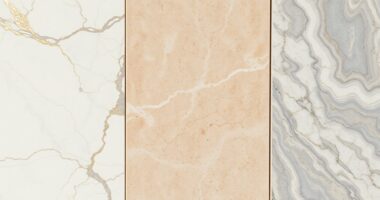
The alternatives vary in appearance, care and price. Designers cited quartzite and marble for natural variation, and granite and soapstone as options they recommend for kitchens where lower maintenance is a priority. Camp and Steven Cooper also recommended porcelain slabs, describing them as durable and potentially suitable for tighter budgets, showers or fireplaces. The article does not provide comparative prices, maintenance schedules or product testing.
Choices Affect Cost and Care
Countertops are a costly, disruptive part of a kitchen renovation, so changing advice from designers may affect what homeowners compare before committing to a material. The choice is not simply between a fashionable and an outdated surface: buyers must weigh up-front cost, upkeep, durability and appearance, as well as how they feel about marks that accumulate with use.
The reported safety issue has a different set of stakes. House Beautiful says California is preparing to ban production of engineered quartz because of concerns that crystalline silica exposure can cause silicosis among workers. That is a concern about fabrication and occupational health, not evidence in the source that an installed countertop poses the same risk to homeowners. Readers considering a project should distinguish the handling and cutting of stone from ordinary use of a finished surface.
For consumers, the practical takeaway is to ask fabricators and suppliers about the specific slab, maintenance needs and fabrication practices rather than assume that quartz is maintenance-free or that every alternative performs alike. The report’s designer interviews provide professional opinions, but they are not a controlled comparison of countertop materials.
Products Worth Considering

Dyson Ball Animal 3 Extra Upright Vacuum

LEVOIT Vital 100S-P Smart Air Purifier with Washable Pre-Filter

Shark Rocket Pet Plus Corded Stick Vacuum, Bordeaux, HV322
As an affiliate, we earn on qualifying purchases.
Why Designers Are Reconsidering Quartz
Engineered quartz has appealed to homeowners because it offers consistent patterns, durability and relatively low maintenance, while imitating the veining of natural stone. The designers quoted in the report say some clients are now placing more value on natural variation and surfaces that develop a patina, even if that means accepting more visible wear.
Camp told House Beautiful that she takes clients to slab yards to compare materials, while Jessica Risko Smith said clients may mistakenly expect a “bulletproof” surface. Cooper’s guidance was that quartz is stain-resistant, not stain-proof. These are individual designers’ experiences and advice, not universal performance guarantees for every product or installation.
The report also links the discussion to regulation. It says California is reportedly preparing a production ban because of worker-health concerns, and quotes Camp predicting other regions could take precautions. The article does not cite a specific law, effective date or finalized rule, so that forecast should not be treated as a nationwide policy change.
““We’ve always felt that quartz lacks the depth, warmth, and individuality of natural stone.””
— Barrett Oswald, interior designer
How Broad Is the Quartz Shift?
The report does not establish that quartz countertops are broadly disappearing from the market. The 78% figure concerns designers sourcing quartzite; it is not a measure of the share of designers abandoning quartz, consumer purchases or year-over-year change. No national sales data or broader survey results are provided.
The status and scope of the reported California measure are also not detailed: the source does not identify a final regulation, its timing, which products or production processes it would cover, or whether it has been enacted. Camp’s expectation that other regions may follow is a designer’s forecast, not a confirmed policy development.
Finally, the article offers no standardized performance or cost comparison across quartz, natural stone and porcelain. Suitability depends on the particular product, installation, household use and willingness to maintain or accept signs of wear.
Compare Materials Before Renovating
Homeowners planning a renovation can ask suppliers and fabricators for product-specific information on staining, sealing, cleaning, repair and total installed cost. Viewing full slabs in person may help compare pattern variation and finish, but a showroom sample alone does not resolve questions about long-term care or performance.
Any change to California rules, including its timing and scope, would need confirmation from state authorities; the source gives no implementation date. Until there is further reporting or official detail, the clearest development is a change in some designers’ recommendations—not a confirmed national replacement of quartz.
Key Questions
Are quartz countertops being banned across the United States?
No national ban is established by the source. House Beautiful reports that California is reportedly preparing a production ban, but gives no finalized rule, date or details, and says nothing confirming a nationwide policy.
Which materials are designers recommending instead?
The report names quartzite, marble, granite, soapstone and porcelain slabs. Each has different appearance, care and cost considerations; the article does not rank them through comparative testing.
Is quartz stain-proof?
No. Cooper, a kitchen professional quoted in the report, describes it as stain-resistant, not stain-proof. Actual performance can depend on the product, installation and how it is used and maintained.
Why does the report mention silicosis?
It says California is reportedly preparing a production ban because of concerns about crystalline silica exposure among fabricators. The source does not show that ordinary use of an installed countertop creates the same exposure risk.
Source: housebeautiful.com