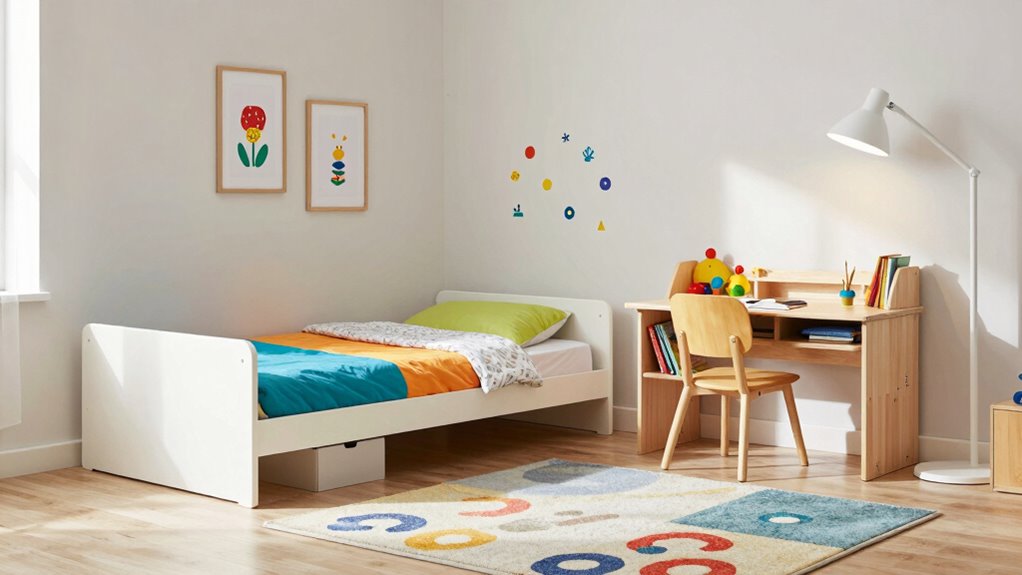
Designing your child’s room for change helps it grow with them, making it more versatile and long-lasting. By choosing adaptable furniture, creative storage, and flexible layouts, you provide a space that can shift with their evolving needs and interests. Involving your child in personalization fosters ownership and cooperation. When you plan ahead, you avoid frequent updates and create a practical, engaging environment. Keep exploring to discover how this approach can keep your child’s space functional and fun over time.

Get furniture and decor delivered free — and shop member deals
- Fast, free delivery on millions of items
- Access to Prime Big Deal Days deals on October 6–7
- Prime Video, Amazon Music and more included
Key Takeaways
- Flexible layouts allow rooms to adapt to evolving needs and activities as children grow.
- Adjustable furniture ensures the space remains functional for different developmental stages.
- Creative storage solutions keep rooms organized and easily reconfigured for new interests.
- Involving children in design fosters ownership and makes transitions smoother.
- Long-term, adaptable designs save money by reducing the need for frequent room updates.

Designing a children’s room for change means creating a space that adapts as your child grows and their needs evolve. When you prioritize flexibility, you make it easier for the room to serve different purposes over time. One of the key ways to achieve this is by incorporating creative storage solutions. Instead of bulky, fixed furniture, opt for clever storage options that can be tucked into corners, hung on walls, or hidden beneath beds. These solutions not only maximize space but also make it simple to keep the room tidy as your child’s belongings increase. Using baskets, modular shelves, and multi-purpose units allows you to easily swap out items or reorganize without major renovations.
Flexible storage solutions keep your child’s room organized and adaptable as their needs change over time.
Equally important is choosing adaptable furniture that can grow with your child. For example, a bed with adjustable height or a desk that can be resized ensures that furniture remains useful for years to come. Convertible cribs that turn into toddler beds or desks designed to expand as your child reaches new school levels are excellent investments. This kind of furniture reduces the need to replace pieces frequently, saving money and effort. Additionally, pieces that can serve multiple functions—like a storage ottoman that doubles as seating—help create a versatile environment that can shift from playroom to study space effortlessly.
When you design a room with change in mind, you also avoid clutter and create a calm, organized atmosphere. A clutter-free space helps your child focus, whether they’re playing, studying, or relaxing. Incorporating open shelving and clear storage containers to make it easy for your child to find and put away their belongings is essential. Keep the room’s layout flexible, allowing furniture to be moved around or reconfigured for different activities. This way, the room remains dynamic, reflecting your child’s interests and developmental stages. Recognizing the importance of storage solutions can significantly impact the room’s adaptability. Including modular furniture that can be rearranged or expanded is another way to maintain flexibility as your child’s needs change. Thinking about future needs during the planning process ensures the space remains functional long-term. Considering systems thinking in your design approach can help you see how different elements work together to create a cohesive and adaptable space.
Finally, involving your child in the design process fosters a sense of ownership and makes transitions smoother. Let them choose colors, themes, or storage options, which encourages cooperation and makes the space uniquely theirs. By planning with adaptability in mind, you create a room that’s not just functional today but will continue to serve your child well into the future. This approach saves you time and money while supporting their growth and changing needs.
As an affiliate, we earn on qualifying purchases.
Frequently Asked Questions
How Often Should Children’s Rooms Be Redesigned?
You should redesign your child’s room every couple of years, or when their room layout and color schemes no longer match their interests or developmental needs. Kids grow quickly, and their preferences change, so updating the space keeps it functional and inspiring. Regularly rejuvenating the room encourages creativity and comfort, making it easier for your child to feel at home and thrive in a space tailored to their evolving tastes.
What Are Budget-Friendly Ways to Update a Child’s Room?
You can breathe new life into your child’s room without breaking the bank by using creative storage solutions like under-bed bins or wall-mounted shelves. Add inexpensive wall decor such as colorful posters or DIY artwork to make the space lively. Repurpose old furniture or swap out accessories to refresh the look. These small updates are a quick fix, proving that sometimes, less is more, and a little effort goes a long way.
How Can I Incorporate My Child’s Preferences Into the Design?
You can incorporate your child’s preferences by involving them in choosing personalization options like wall decals, bedding, and accessories. Use their favorite color themes to create a space they love. Let them pick artwork or storage solutions to make it truly theirs. This not only reflects their personality but also makes the room more inviting and fun for them to enjoy daily.
What Safety Considerations Are Important During a Room Redesign?
You should prioritize safety by childproofing the room with measures like outlet covers and securing furniture to prevent tipping. Guarantee all furniture has sturdy, stable bases to avoid accidents, and keep cords out of reach. Use non-slip rugs and install window locks or guards. Regularly check for hazards, and involve your child in safety routines. These steps create a safe, adaptable space where your child can explore confidently.
How Do I Balance Functionality and Creativity in the Space?
Did you know kids’ creativity peaks between ages 3 and 7? To balance functionality and creativity, use flexible furniture that adapts as they grow. Incorporate vibrant color schemes to inspire imagination without sacrificing practicality. Keep storage accessible to encourage independence, while designing open spaces for play and learning. This approach guarantees the room remains versatile, fun, and useful, supporting your child’s development and creative spirit simultaneously.
Conclusion
By designing your child’s room to grow with them, you’re planting a seed that blossoms into endless possibilities. Flexibility transforms the space into a chameleon, adapting effortlessly to new interests and ages. When you embrace change, you’re not just creating a room—you’re nurturing a garden of growth, where your child’s imagination can flourish without limits. Remember, a room that evolves with your child is like a trusty compass, always guiding them toward new adventures.
Fall Picks
fall essentials
As an affiliate, we earn on qualifying purchases.