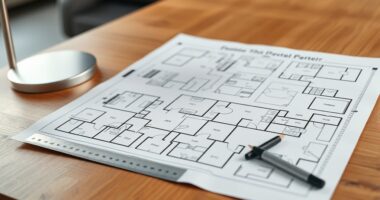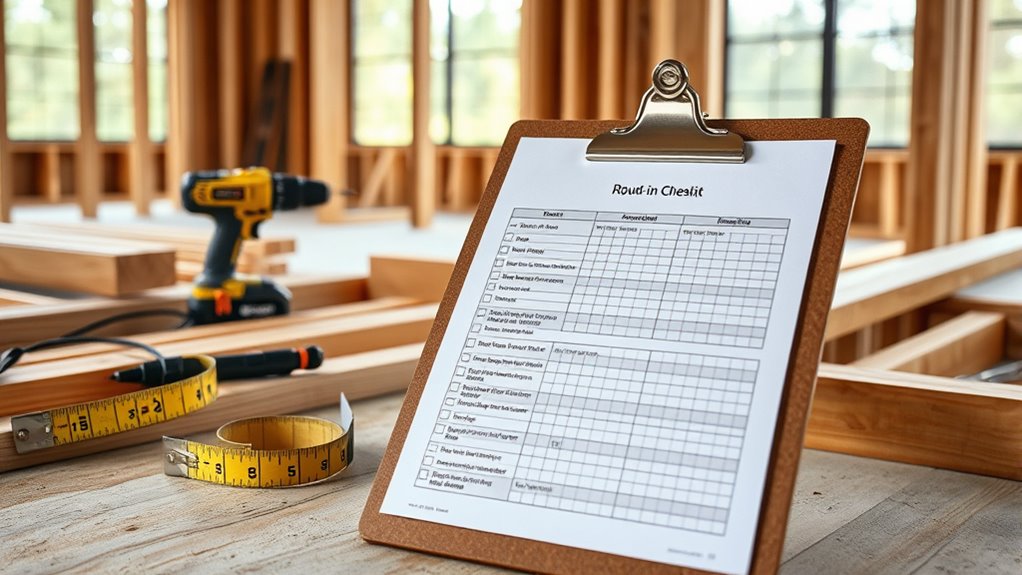

To conduct an effective rough-in framing walk, follow a detailed checklist focusing on foundation stability, wall framing accuracy, and load transfer elements. Verify proper anchoring, stud spacing, and straightness, while confirming headers and openings are correctly reinforced. Inspect sheathing, bracing, and fireblocking for security and code compliance. Document any discrepancies or damage immediately. Staying organized ensures thorough inspections, and if you continue, you’ll discover essential tips to streamline and enhance your framing inspections.

Get furniture and decor delivered free with Prime
- Fast, free delivery on millions of items
- Prime Video, Amazon Music and more included
- Member-only deals all year
Key Takeaways
- Verify foundation and sill plates are level, properly anchored, and free from damage.
- Check stud spacing, alignment, and plumbness according to project plans.
- Inspect floor and ceiling joists for correct installation, spacing, and support.
- Confirm sheathing, bracing, and load transfer elements are correctly installed and fastened.
- Document all markings, labels, discrepancies, and flag issues for immediate correction.
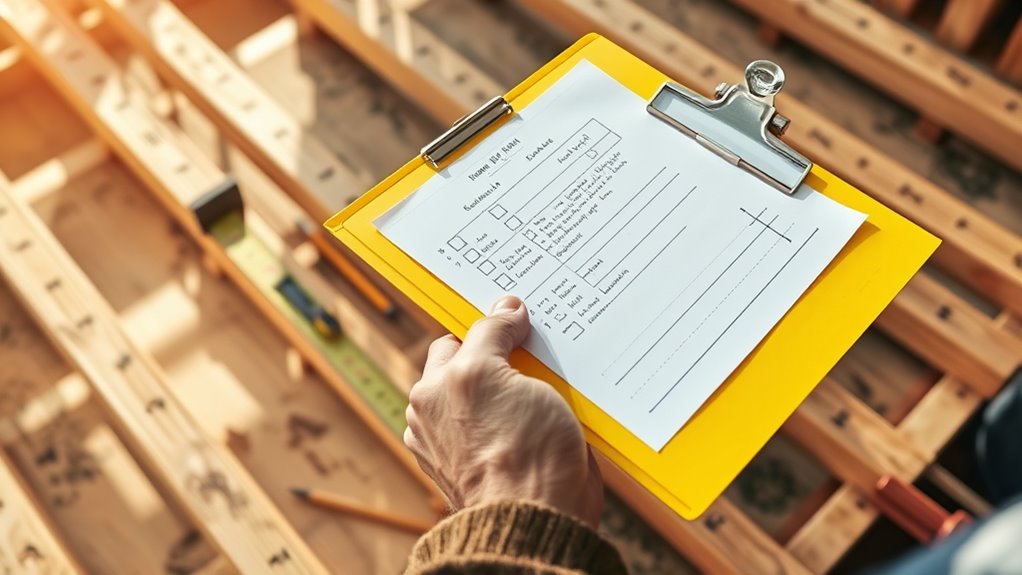
Before beginning your framing walk, it’s essential to have a thorough rough-in checklist to guarantee all critical components are inspected thoroughly. This checklist serves as your comprehensive guide to verify that every element of the framing aligns with design plans, building codes, and safety standards. Starting with a well-organized list minimizes the risk of overlooking essential details, saving time and preventing costly rework later. Your focus should be on structural integrity, proper measurements, and adherence to specifications, making your walkthrough efficient and effective.
Begin by inspecting the foundation and sill plates to confirm they are level, properly anchored, and free of damage or defects. Ensure that all anchor bolts are correctly positioned and tightened to specifications. Next, move to wall framing, verifying that all stud spacing conforms to the project plans—typically 16 or 24 inches on center—while checking for straightness and plumbness. Use a level and a plumb bob to identify any misaligned studs or framing members that could compromise wall stability. Confirm that headers over door and window openings are correctly sized and securely fastened, providing adequate support for the loads they bear.
When examining floor and ceiling joists, look for proper installation, accurate spacing, and correct fastening methods. Ensure that load-bearing walls are correctly positioned and supported, with all necessary blocking and bracing in place. Pay close attention to the installation of fireblocking and draftstopping elements, especially at intersections, to meet safety requirements. Check that all openings for electrical, plumbing, or HVAC installations are accurately framed, with adequate clearance and reinforcement where necessary.
Additionally, review the placement and attachment of sheathing or bracing materials, verifying that they are installed with appropriate fasteners and in the correct orientation. Confirm that headers, lintels, and other load transfer elements are properly supported and securely fastened, preventing shifting or settling. Don’t forget to inspect for compliance with local building codes, including fire safety and egress requirements, and ensure that all markings, labels, and documentation are visible and legible. Also, remember that regular inspection of electrical and plumbing openings is crucial to prevent future issues.
Throughout your walk, document any discrepancies, damages, or deviations from plans, and flag them for immediate correction. Using a detailed checklist helps you maintain consistency and objectivity during inspections, ensuring nothing is missed. Remember, a meticulous rough-in inspection is crucial for a safe, durable, and compliant structure. By following this organized approach, you’ll not only uphold quality standards but also facilitate a smoother transition to subsequent construction phases. Your thoroughness at this stage ultimately safeguards the project’s integrity, efficiency, and long-term performance.
As an affiliate, we earn on qualifying purchases.
Frequently Asked Questions
What Tools Are Essential for Framing Rough-In Inspections?
You’ll need a tape measure, a level, and a square to verify dimensions and alignment accurately. A flashlight helps inspect hard-to-see areas, while a clipboard and checklist keep you organized. A pencil or marker is essential for marking issues, and a cordless drill or screwdriver assists in minor adjustments. Use a stud finder to locate framing members, ensuring everything aligns with building codes and plans during your rough-in inspection.
How Do I Ensure Code Compliance During Framing Walks?
Think of your framing walk as a meticulous voyage through a legal maze. You guarantee code compliance by thoroughly reviewing each element against local building codes and standards. Use detailed checklists to verify proper spacing, alignment, and structural integrity. Confirm that fire blocking, insulation gaps, and anchoring meet specifications. Document every inspection point, and address discrepancies immediately. Staying organized and vigilant guarantees your framing adheres strictly to code, avoiding costly rework later.
When Should I Schedule a Framing Walk in the Construction Timeline?
You should schedule a framing walk once the framing is approximately 75% complete, guaranteeing all major structural elements are in place. Confirm that walls, beams, and load-bearing components are properly installed and temporarily braced. Coordinate with your team to review critical areas, verify measurements, and address any discrepancies before proceeding. This timing allows for efficient inspection, helps prevent costly rework, and ensures your project stays on schedule and compliant with building codes.
Who Should Be Present During the Framing Rough-In Inspection?
During the framing rough-in inspection, you should guarantee that key personnel are present: the general contractor, framing supervisor, and the subcontractors responsible for plumbing, electrical, and HVAC. This team verifies that all framing components meet specifications, code requirements, and are properly aligned. It’s also helpful to have a building inspector present to approve the work and address any issues immediately, ensuring the project stays on schedule and passes subsequent inspections smoothly.
What Common Issues Should I Look for During Framing Walks?
During framing walks, you should look for proper alignment, correct spacing, and secure connections. Check for plumb walls, level floors, and accurate measurements. Guarantee headers, joists, and studs are correctly installed without damage. Look for missing or misplaced blocking, gaps, or poor nailing. Confirm that openings for doors and windows are accurate, and verify that all framing adheres to code specifications. Address issues promptly to prevent future structural problems.
Conclusion
By meticulously following these rough-in checklists during your framing walks, you guarantee every beam, stud, and joint is perfectly aligned—preventing costly errors and catastrophic failures down the line. Skipping these steps is like building a skyscraper on a shaky foundation; it’s just asking for disaster. Stay organized, double-check every detail, and treat each walk as if your entire project depends on it—because, in reality, it does. Precision now saves chaos later.
Halloween Picks
halloween
As an affiliate, we earn on qualifying purchases.