
Many people don’t realize how critical electrical plans are until costly mistakes happen, like missing components or incorrect wiring placements that cause delays or safety issues. Overlooking details such as load calculations, adherence to codes, and future expansion needs can lead to dangerous overloading or expensive rework. If you want to avoid surprises and ensure your project stays on track, there’s more essential information you need to be aware of upfront.
Key Takeaways
- Overlooking detailed load calculations can lead to system overloads and costly upgrades later.
- Misinterpreting symbols or missing components on blueprints causes installation delays and safety hazards.
- Failing to plan for future expansion may result in expensive rework and limited scalability.
- Ignoring electrical code compliance increases fire risks, legal liabilities, and potential fines.
- Inadequate contractor selection and testing can compromise safety, quality, and long-term system performance.
What Do Electrical Plans Include and Why Are They Important?
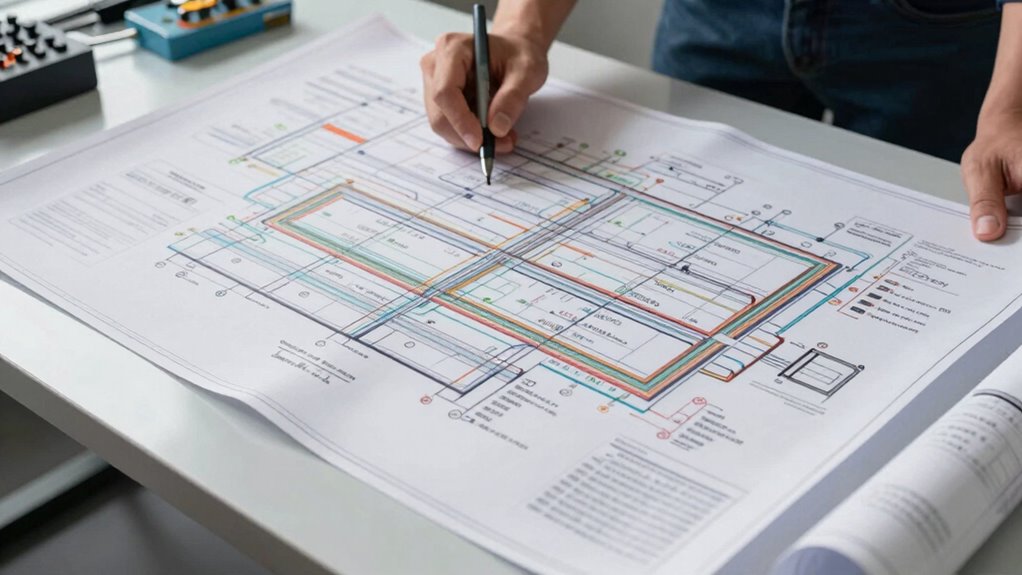
Electrical plans are essential tools that detail the layout and specifications of a building’s electrical system. They include detailed wiring diagrams that show how electricity flows throughout the space, guaranteeing everything functions safely and efficiently. Electrical symbols are used throughout these plans to represent outlets, switches, lights, and other components clearly and consistently. By understanding these symbols, you can interpret the plan accurately and avoid costly mistakes. These plans also specify the placement of fixtures, circuit breakers, and wiring routes, which helps you visualize the entire electrical setup before construction begins. Having a clear, thorough electrical plan allows you to coordinate with electricians, ensure code compliance, and streamline installation, making your project safer and more efficient from start to finish. Additionally, understanding the material choices used in wiring and components can impact the durability and safety of your electrical system over time. Proper wiring techniques are crucial to prevent issues such as shorts or fire hazards, emphasizing the importance of detailed planning. Incorporating inspection procedures into your planning process ensures compliance with safety standards and reduces the risk of future electrical failures. Moreover, thorough planning can help identify potential future upgrades, making it easier to expand or modify your electrical system as needed.
Common Mistakes Builders Make When Interpreting Electrical Blueprints

One common mistake builders make when interpreting electrical blueprints is misreading symbols and abbreviations, which can lead to incorrect placement of outlets, switches, or fixtures. This oversight risks electrical safety and violates wiring standards. To avoid errors, familiarize yourself with standard symbols such as GFCI outlets, switch types, and circuit labels. Misinterpretation can cause unsafe wiring or code violations, leading to costly fixes later. Always double-check the legend on the blueprint before proceeding. Here’s a quick reference:
| Symbol | Meaning | Common Use |
|---|---|---|
| GFCI | Ground Fault Circuit Interrupter | Wet areas like kitchens/baths |
| SW | Switch | Lighting control |
| REC | Receptacle | Power outlets |
Understanding these details guarantees safe, compliant installations. Additionally, being aware of energy-efficient standards can help ensure that your electrical plans align with modern sustainability goals, and paying attention to code compliance is essential to avoid future legal issues. Recognizing the importance of proper wiring practices can further prevent common mistakes during installation, ensuring long-term safety and reliability. Incorporating standardized symbols in your plans helps prevent confusion and errors during construction.
How Overlooking Key Details Can Lead to Costly Electrical Failures
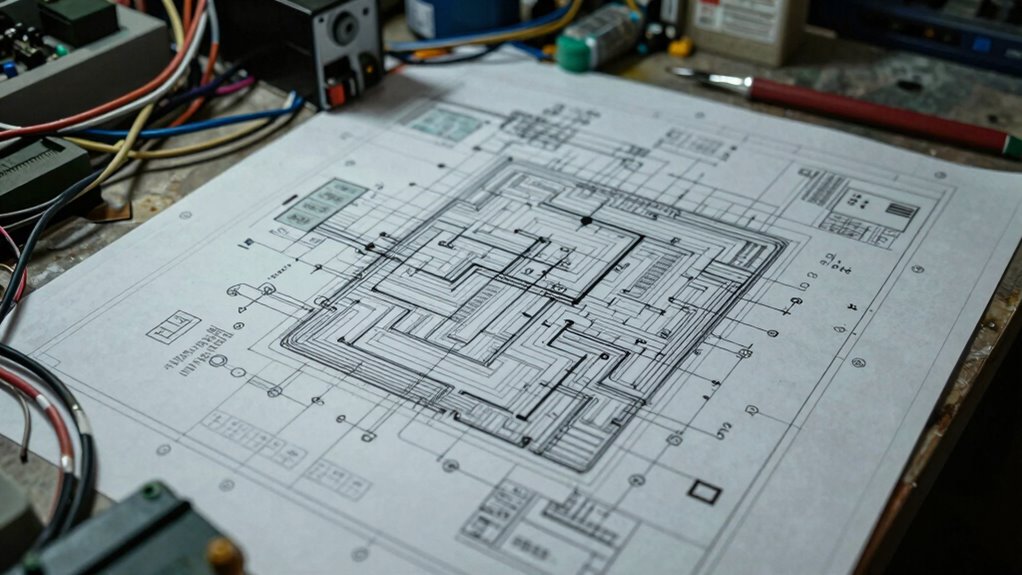
Ignoring proper load calculations can cause your electrical system to overload or underperform. Failing to plan for future expansion might mean costly upgrades down the line. Paying attention to these details now saves you money and headaches later. Additionally, neglecting proper maintenance procedures can lead to system failures and increased repair costs.
Inadequate Load Calculations
Failing to perform accurate load calculations can lead to serious electrical failures and unexpected costs. When you overlook proper load assessments, you risk load miscalculations that underestimate the power your system needs. This can result in circuit overloads, where circuits are pushed beyond their capacity, leading to frequent tripping, overheating, or damage to wiring and equipment. Such mistakes often stem from neglecting to account for all appliances, lighting, and future growth. Without precise calculations, your electrical system becomes vulnerable to failure, increasing safety hazards and costly repairs. Proper load calculations ensure your system is adequately sized, preventing overloads and ensuring reliable operation. Additionally, understanding the importance of electrical system capacity can help you design a safer and more efficient setup. Taking the time to get this step right saves you money and headaches down the line. Ensuring that your system is correctly rated and includes considerations for seasonal variations can further enhance safety and performance, especially when factoring in seasonal load changes that may affect electrical demand throughout the year. Properly accounting for future expansion can also prevent the need for costly upgrades later on. Being aware of load growth trends can help you plan for long-term needs and avoid premature system replacements.
Overlooking Future Expansion
If you overlook future expansion when planning your electrical system, you risk facing costly failures down the line. Failing to account for potential growth can limit the electrical capacity needed for new equipment or additional circuits. This oversight often leads to the need for costly upgrades or rewiring later, disrupting operations and increasing expenses. To avoid this, you should design your electrical plan with scalability in mind, including extra capacity where possible. Proper system sizing and anticipating future needs ensures your system can handle increased load without immediate overhaul. Properly planning for future expansion not only saves money but also prevents delays and safety issues caused by overloading existing circuits. Think ahead to keep your electrical system flexible and capable of supporting your growth. Smart planning in your electrical design can make all the difference in avoiding these costly issues. Additionally, consulting with an experienced electrician during the design phase can help identify potential future electrical demands and ensure your system remains adaptable as your needs evolve. Recognizing the importance of system scalability is essential for long-term reliability and safety.
Why Ignoring Electrical Codes Can Cost You More Than You Think

Neglecting electrical codes might seem like a quick way to save time or money initially, but it can lead to costly consequences down the line. Ignoring code compliance jeopardizes electrical safety, increasing the risk of fires, shocks, or equipment failure. When you bypass established standards, you may face fines, legal liabilities, or costly repairs later. Proper adherence to electrical standards ultimately saves you money and trouble. Additionally, failure to comply with electrical codes can result in insurance claim issues, complicating any future claims or coverage. Skipping these steps might seem convenient now, but it can cause delays, expenses, and safety hazards that far outweigh the initial savings. Prioritizing code compliance from the start helps you avoid unnecessary risks and ensures your electrical system is safe, efficient, and up to regulation standards. Being aware of the impact of non-compliance can motivate you to follow safety protocols diligently. Moreover, understanding the importance of electrical codes is vital for long-term system durability and legal protection.
How Poor Planning Can Delay Your Construction Timeline
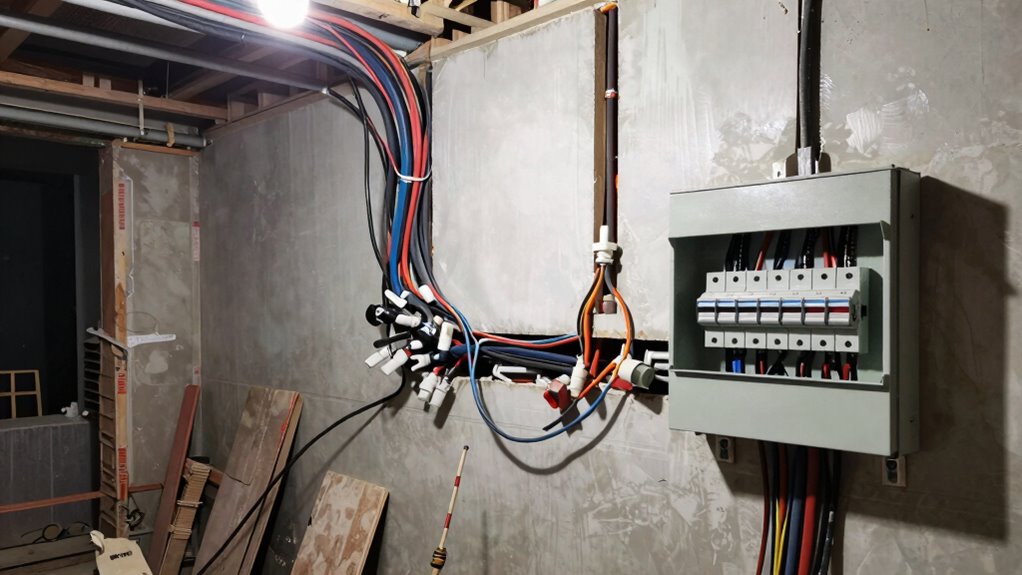
Poor wiring layouts can cause unexpected delays as electricians need to redo work or troubleshoot issues. Overlooking future expansion plans may lead to costly redesigns and schedule setbacks once your project is underway. Taking the time to plan carefully now keeps your construction timeline on track and prevents avoidable delays.
Inadequate Wiring Layouts
Inadequate wiring layouts can cause significant delays in your construction timeline, especially when issues are discovered late in the process. Poor planning often leads to wiring complexity that’s difficult to manage, creating confusion for electricians and contractors. When layout clarity isn’t prioritized, you risk misplacing outlets, switches, or circuits, which forces rework and additional inspections. These mistakes can halt progress and push back project deadlines. To prevent this, guarantee your electrical plans are detailed and organized, with clear labeling and logical routing. A well-thought-out wiring layout streamlines installation and minimizes surprises. Investing time upfront to develop a thorough plan saves you from costly delays later, keeping your project on track and avoiding unnecessary setbacks caused by inadequate wiring layouts. Additionally, considering total‑cost clarity during planning helps identify potential expenses early, ensuring your project remains within budget. Paying attention to electrical plan organization can also reduce the risk of unforeseen issues during installation. Furthermore, incorporating detailed schematics can greatly enhance communication among team members, reducing errors and misunderstandings.
Overlooking Future Expansion
Failing to plan for future expansion can cause major delays once your project is underway. Without proper scalability planning, adding new systems or upgrades becomes costly and time-consuming. You might face rerouting wiring, tearing down walls, or upgrading electrical panels, all of which slow your timeline. Imagine discovering that your electrical system can’t support additional equipment, forcing redesigns. To avoid this, consider:
- Installing extra conduit pathways for easy future wiring
- Choosing flexible circuit breakers that accommodate expansion
- Planning larger panels to handle increased load
- Incorporating space for additional outlets and connections
Thinking ahead ensures your electrical plan supports future needs without costly disruptions. Prioritizing scalability planning from the start keeps your project on schedule and prevents avoidable setbacks.
Understanding Load Calculations and Circuit Capacity Needs
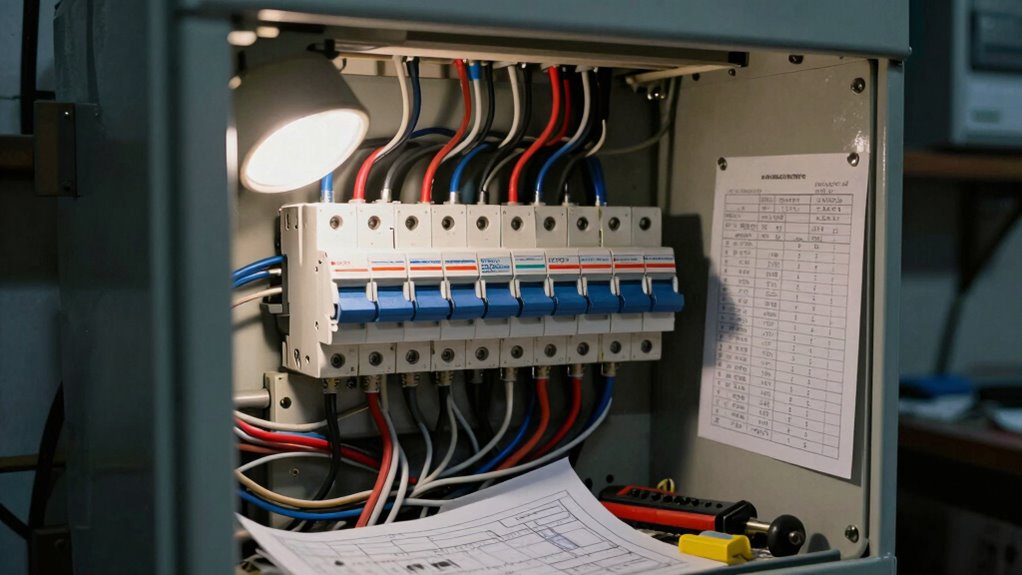
Understanding load calculations and circuit capacity needs is essential for guaranteeing your electrical system can safely handle the demands of your appliances and devices. Load calculations determine the total electrical load your home will require, factoring in all circuits and devices. Accurate calculations prevent overloads and ensure each circuit has enough capacity. Circuit capacity refers to the maximum current a circuit can safely carry without tripping or causing damage. When plans overlook these aspects, you risk designing an electrical system that’s either underpowered or dangerously overloaded. Properly evaluating load calculations helps you allocate sufficient circuit capacity for every area of your home, avoiding future issues like frequent breaker trips or fire hazards. Mastering these concepts guarantees a safe, reliable electrical system tailored to your needs.
Proper Lighting and Outlet Placement: What Plans Should Show

Proper lighting and outlet placement are crucial elements that your electrical plans must clearly show to guarantee safety and convenience. Accurate lighting placement ensures every room is well-lit without shadows or glare. Proper outlet positioning prevents extension cords and reduces tripping hazards. Your plans should illustrate:
- Strategic lighting placement to cover all functional areas
- Outlet positioning near desks, beds, and appliances
- Placement of switches for easy access
- Adequate outlets in kitchens and bathrooms for safety
This clarity helps electricians understand where to install fixtures and outlets, avoiding future issues. Properly marked lighting and outlet locations ensure your space is both safe and functional, reducing the need for costly modifications later. Make sure these details are clearly indicated in your plans before construction begins.
How to Spot Missing Components or Conflicts in Electrical Drawings
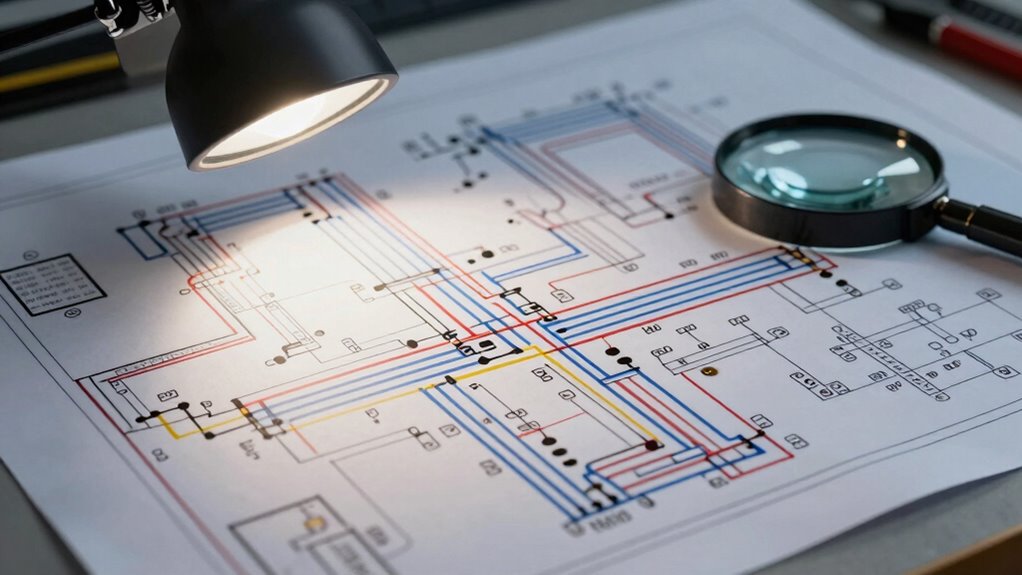
When reviewing electrical drawings, you need to look for missing components that could disrupt the system’s functionality. It’s also important to spot design conflicts, such as overlapping circuits or incompatible connections, which can cause issues later on. Paying close attention now helps make certain your plans are complete and conflict-free before installation begins.
Detecting Missing Components
Detecting missing components in electrical drawings requires a careful, systematic review. You need to identify potential component gaps or missing devices that could cause issues later. Look for inconsistencies such as absent symbols where devices should be, incomplete wiring paths, or unexplained empty spaces in the panel schedules. Pay attention to connections that abruptly end or don’t align with the circuit flow. Check for missing labels or annotations that indicate the presence of certain components. Also, compare drawings against project specifications to ensure all required devices are included. These visual cues can help you spot missing components before installation, avoiding costly rework. Staying vigilant for these signs ensures the electrical plan is complete, accurate, and ready for successful implementation.
Identifying Design Conflicts
Identifying design conflicts in electrical drawings requires a keen eye for inconsistencies and discrepancies that can compromise the integrity of the plan. Look for mismatched symbols, conflicting labels, or overlapping components that may signal coordination issues. These conflicts can lead to costly rework if overlooked early. Pay attention to the following aspects:
| Issue Type | What to Look For |
|---|---|
| Missing Components | Absent switches, outlets, or panels |
| Conflicting Details | Different specifications for the same element |
| Spatial Conflicts | Overlapping wiring paths or equipment |
Planning for the Future: How to Future-Proof Your Electrical System

Planning for the future of your electrical system guarantees it can handle new technologies and increased demands without costly upgrades. To achieve this, consider expanding capacity now to support smart technology and renewable integration. Future-proofing involves designing a system that adapts to evolving needs, avoiding frequent rewiring. Visualize:
- Extra circuit capacity for expanding smart home devices
- Wiring that supports high-power appliances and EV chargers
- Incorporation of dedicated circuits for renewable energy sources
- Flexibility to upgrade panels or add outlets easily
Questions to Ask Your Electrician About Your Electrical Plans
As you consider expanding and future-proofing your electrical system, it’s important to ask your electrician the right questions to make certain your plans align with your needs. Start by inquiring about electrical safety measures to ensure your system complies with current codes and standards. Ask how they select reliable contractors for specialized work, which impacts the quality and safety of the installation. Clarify if they will conduct thorough inspections and testing before completing the project. Don’t hesitate to question their experience with similar upgrades and how they plan to address potential issues. A reputable contractor will prioritize electrical safety and transparency, helping you avoid costly mistakes. Asking these questions helps you make informed decisions and ensures your electrical plans are built to last.
Frequently Asked Questions
How Do Electrical Plans Impact Overall Project Costs?
Electrical plans directly impact your project costs by influencing design efficiency and preventing cost overruns. Clear, detailed plans help avoid expensive revisions and delays, saving you money in the long run. If overlooked, you risk costly mistakes that can inflate your budget. Proper planning guarantees your electrical system aligns with project goals, reducing unexpected expenses and keeping your project on track financially.
What Are Common Signs of Faulty Electrical Blueprint Interpretation?
You can spot faulty electrical blueprint interpretation through unclear electrical symbols and confusing wiring diagrams. If symbols seem inconsistent or wiring routes don’t match the project layout, it’s a red flag. You might also notice missing components or discrepancies between diagrams and actual site conditions. These signs indicate misinterpretation, which can lead to costly mistakes or safety hazards if not addressed early. Always double-check your electrical symbols and wiring diagrams carefully.
How Often Should Electrical Plans Be Reviewed During Construction?
You should review electrical plans at least every two weeks during construction to catch issues early. Regular inspections prevent delays caused by plan discrepancies, ensuring smooth progress. Keep updates on hand and compare them with the original plans to identify any discrepancies. Staying proactive minimizes costly mistakes and inspection delays. Consistent plan reviews also help you adapt quickly to any necessary plan updates, maintaining the project’s timeline and safety standards.
What Legal Liabilities Arise From Ignoring Electrical Plan Details?
Ignoring electrical plan details can expose you to serious liability risks, including lawsuits and fines if safety standards aren’t met. You might also face compliance issues with local building codes, resulting in project delays or even halting construction altogether. By neglecting these details, you put yourself at legal and financial risk, so it’s essential to follow the plans precisely and address any discrepancies early to protect yourself and your project.
How Can Homeowners Verify the Accuracy of Electrical Plans?
You can verify the accuracy of electrical plans by cross-checking electrical symbols with actual fixtures and components in your home. Look for plan discrepancies, such as mismatched symbols or missing details, and compare them with the installed wiring. It’s wise to consult a licensed electrician to review the plans, ensuring they match the real setup. Doing this helps catch errors early, saving you time and costly fixes later.
Conclusion
Just like Da Vinci’s sketches revealed masterpieces, understanding your electrical plans opens a smooth build. By paying attention now, you avoid the pitfalls that can turn your project into a costly, tangled mess—think of it as avoiding the Minotaur in the labyrinth. Stay proactive, ask questions, and make sure your plans are clear. With careful planning, you’ll create a space that’s safe, efficient, and ready for whatever the future holds.