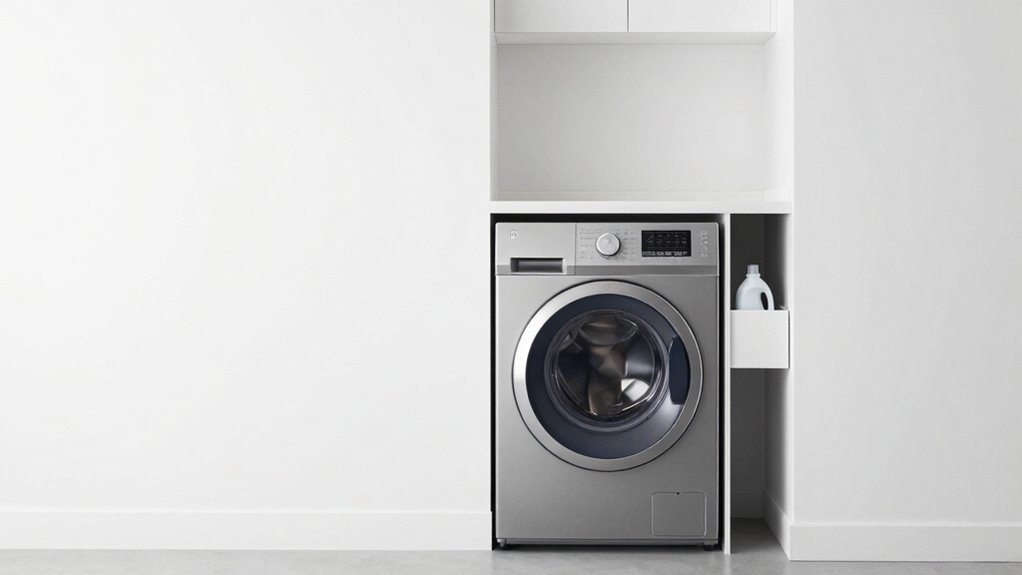

To save steps when placing your washer and dryer, position them side by side near plumbing and electrical outlets to avoid stretching cords and hoses. Keep laundry baskets close, either above or beside your units, to reduce transfer effort. Make certain good lighting and ventilation to speed up tasks and prevent moisture buildup. Incorporate ergonomic height and easy access to controls for comfort and safety. If you want to optimize your laundry area further, you’ll find helpful tips if you keep exploring.
Key Takeaways
- Position washer and dryer close to utility outlets and plumbing for quick, direct access.
- Arrange appliances side-by-side to minimize movement between loading, washing, and drying.
- Place laundry baskets nearby or above appliances to streamline transfer of clothes.
- Ensure good lighting over the appliances for easier sorting and operation.
- Incorporate proper ventilation near dryers to improve airflow and reduce moisture buildup.
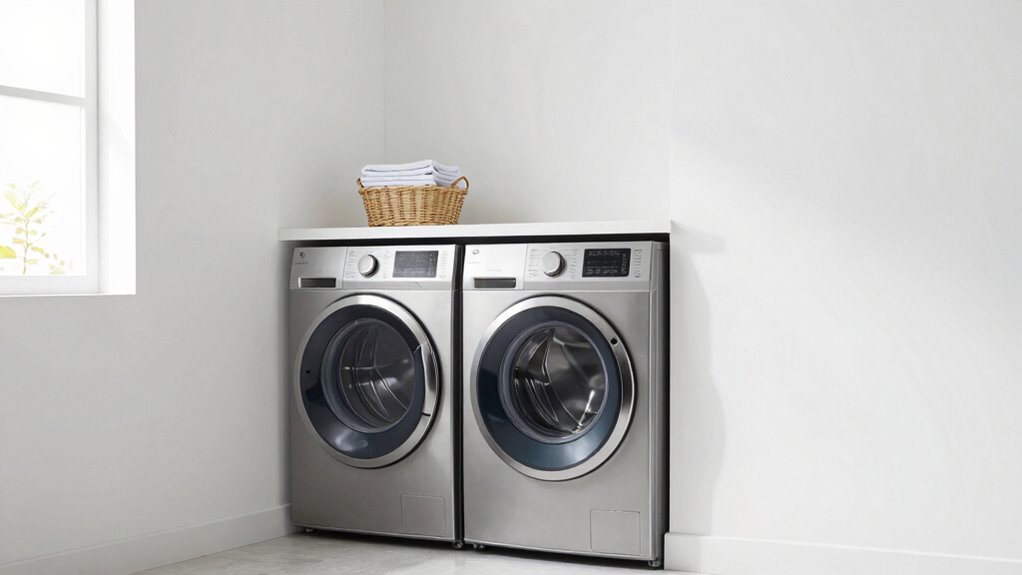
Proper placement of your washer and dryer can make a significant difference in the efficiency and convenience of your laundry routine. When you position these appliances thoughtfully, you minimize unnecessary steps, making laundry day less of a chore. One of the most overlooked aspects of placement is considering the layout of your laundry room, especially in relation to laundry room lighting and ventilation solutions. Good lighting ensures you can see what you’re doing—whether sorting clothes, adding detergent, or checking for stains—without straining your eyes. Bright, well-placed lighting reduces errors and speeds up your process. You might want to install overhead lights or adjustable task lighting directly above your washer and dryer area to keep everything clearly visible.
Ventilation solutions are equally essential. Proper ventilation prevents excess moisture buildup, which can lead to mold and mildew, and helps eliminate hot, humid air generated during drying. When placing your dryer, ensure it’s near an exhaust vent or has access to a venting system that directs air outside. If your laundry room lacks a dedicated vent, consider installing a ventilation fan or dehumidifier. These solutions help keep the room dry and fresh, protecting your appliances and your health. Positioning your washer and dryer close to these ventilation outlets also reduces the length of vent hoses, which improves airflow and drying efficiency.
Beyond ventilation, think about how your laundry room’s lighting influences your movement. A well-lit space prevents you from having to fumble for supplies or struggle to see labels on detergent bottles. It also helps you quickly identify laundry types, which can streamline sorting and folding. Combining good lighting with strategic appliance placement minimizes the steps you take from sorting to folding. For example, situate your laundry baskets nearby or above the washer and dryer, so you can transfer clothes easily without walking across the room multiple times. This layout reduces fatigue and saves valuable time. Additionally, considering utilizing optimal placement can further enhance your laundry workflow by reducing the need to reach or move around excessively. Properly organizing your laundry area can also prevent clutter and make your space more functional, ultimately saving even more time and effort.
Furthermore, incorporating ergonomic principles into your laundry setup can help prevent strain and injury during use. Additionally, consider the accessibility of your plumbing and electrical outlets. Placing your washer and dryer within easy reach of these connections avoids awkward maneuvering or extension cords, which can be hazards. When you optimize placement with regard to lighting, ventilation, and utility access, you create a laundry space that’s both efficient and comfortable. In the end, thoughtful placement isn’t just about space; it’s about designing a workflow that saves steps, improves safety, and makes laundry less of a hassle.
washer and dryer side by side installation kit
As an affiliate, we earn on qualifying purchases.
As an affiliate, we earn on qualifying purchases.
Frequently Asked Questions
Can I Install a Washer and Dryer Outdoors?
Yes, you can install a washer and dryer outdoors, but you need to take into account weatherproofing. Choose models specifically designed for outdoor use or make sure yours are properly protected from the elements. Install them in a covered area and use weatherproof electrical outlets and hoses. Regular maintenance and sealing are essential to prevent moisture damage. With careful planning, outdoor installation can be practical and convenient.
What Are the Best Flooring Options for Washer and Dryer Placement?
You should choose flooring with high durability and water-resistant materials for your washer and dryer area. Options like ceramic tile, vinyl, or sealed concrete work well because they withstand moisture and heavy use. These materials prevent water damage, are easy to clean, and last longer, making them ideal for laundry spaces. Avoid carpet or wood, as they’re less resistant to water and can warp or stain over time.
How Do I Vent a Dryer in Tight Spaces?
Venting a dryer in tight spaces is like fitting a puzzle piece—challenging but doable. To tackle venting challenges, choose a flexible, rigid metal vent pipe, and keep bends to a minimum for ideal airflow. Use an angled vent hood to direct exhaust outside efficiently. To maximize space, consider wall-mounted venting options or venting through a nearby cabinet, ensuring you prioritize safety and proper airflow for efficient drying.
Are There Specific Height Requirements for Washer and Dryer Hookups?
Yes, there are specific height requirements for washer and dryer hookups, usually dictated by local plumbing codes and electrical requirements. You should position the water supply and drain hookups between 30 to 36 inches from the floor, and the electrical outlet typically needs to be within 48 inches of the appliance’s connection point. Always verify your local building codes to guarantee compliance and safe installation.
What Safety Precautions Should I Consider During Installation?
During installation, prioritize electrical safety by turning off power before connecting appliances. Use properly grounded outlets and avoid overloading circuits. For water connection safety, verify hoses are securely attached and check for leaks regularly. Keep electrical cords away from water sources, and consider installing a GFCI outlet for added protection. These precautions prevent shocks and water damage, making your washer and dryer safer and more reliable.
Conclusion
By carefully planning your washer-and-dryer placement, you can save steps and streamline your laundry routine. Imagine reducing your daily laundry trips by 30% just by choosing the right spot—think of it as shaving nearly an hour off your weekly chores. With these tips, you’ll turn laundry from a tedious task into a more efficient, even satisfying, part of your home. So, make your laundry space work smarter, not harder!




![Google DeepMind Eyes Self-Improving AI In 1 Year [2026]](https://berkleyvallone.com/wp-content/uploads/2026/09/google-deepmind-eyes-self-improving-ai-in-1-year-2026-featured-260x140.jpg)