
TL;DR

Get furniture and decor delivered free with Prime
- Fast, free delivery on millions of items
- Prime Video, Amazon Music and more included
- Member-only deals all year
A House Beautiful report describes designers using decorative marbling across interiors in 2026, including wallpaper, murals, upholstery, lampshades and furniture. Designers quoted in the report say the pattern offers movement and a handmade look, though the examples do not establish how widely the trend is spreading.
Designers are using decorative marbling on walls and household objects, according to a House Beautiful report on interior design in 2026. The examples include murals, wallpaper, upholstery and lampshades, showing how a historic pattern-making technique is being adapted beyond traditional paper and bookbinding.
The designers interviewed describe marbling as a way to add movement, color and handmade character to rooms. Cara Woodhouse said some clients are looking beyond flat, neutral walls, while Sasha Bikoff emphasized that marbling can take forms beyond traditional paper, including textiles, furniture and decorative objects. These are designers’ observations, not measured findings about the broader market.
The report traces paper marbling to 10th-century Japan, where artisans made patterns by floating and manipulating ink on water. By the 15th century, the practice was known in Turkey as “the art of clouds” and later reached Venetian and Florentine bookbinders. Modern interior applications vary from flowing wallpaper to colored resin chairs and hand-marbled shades.
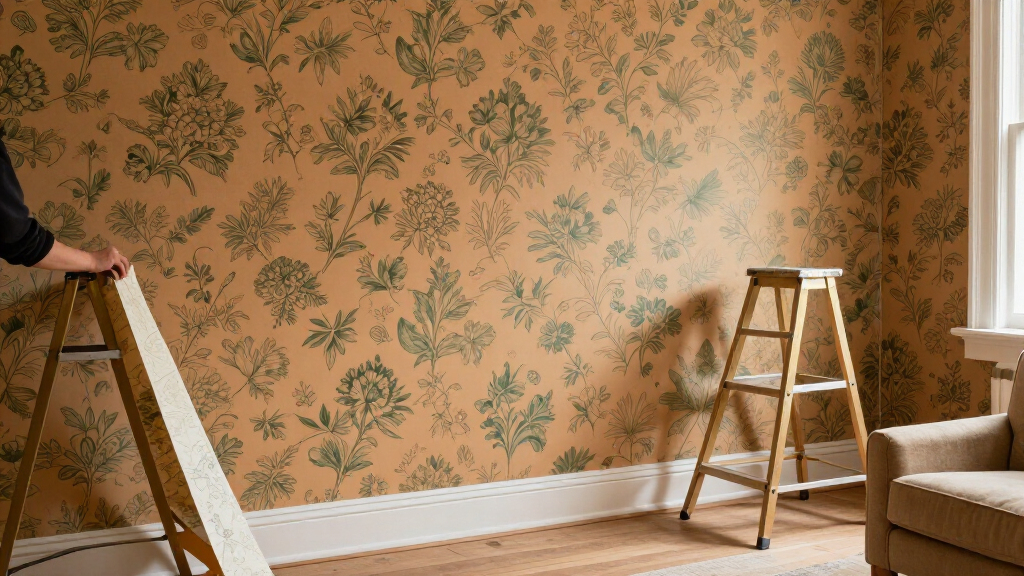
Among the examples, designer Michelle Fahmy used a large-scale marbled wallpaper mural in a stairwell that opens onto a living room. Bikoff chose wallpaper with elongated, liquid-like lines for a project in a Zaha Hadid building. In a bathroom designed by Marta St. Amour, a Lee Jofa wallpaper pattern informed the room’s mix of amber, blue and sandy tones. Analisse Taft-Gersten used marbled silk for a powder-room sink skirt, while other examples include resin chairs and lampshades.
From Feature Walls to Small Accents
Marbling gives homeowners and designers several ways to introduce pattern without relying on a repeating print. Its irregular lines and color movement can serve as a focal point on a wall or appear in a smaller accent, such as a lampshade. The examples suggest the approach can be scaled to different rooms and budgets, though the report provides no pricing or sales data.
The trend also places emphasis on craft and individual variation. Woodhouse said that no two passes of marbling are alike, describing the result as closer to art than conventional wallpaper. That is a designer’s assessment of the technique’s appeal, rather than evidence that marbling is replacing neutral interiors across the market.
Products Worth Considering

LG C2 Series 65-Inch OLED evo 4K Smart TV (OLED65C2PUA, 2022)

iRobot Roomba 105 Vac Robot Vacuum

Bose TV Speaker (2nd Gen) Compact Soundbar with Bluetooth and HDMI
As an affiliate, we earn on qualifying purchases.
A Craft With Many Applications
Marbling creates patterns by manipulating color on a liquid surface and transferring the resulting design to another material. The House Beautiful report connects the craft’s historical roots in Japan and Turkey with its later use by European bookbinders. Contemporary examples adapt the visual effect through wallpaper, fabric, resin and painted surfaces.
Designers in the report use the pattern in different ways: some choose large, immersive applications, while others limit it to furnishings or accessories. Bikoff’s flowing wallpaper was selected to echo the organic character of a modern building; St. Amour used the colors of a wallpaper pattern to coordinate bathroom finishes. These case studies illustrate design choices but do not establish a single preferred style or a broad shift in consumer behavior.
“People are tired of flat, safe walls.”
— Cara Woodhouse, designer
How Broad Is the Shift?
The report offers designer interviews and project examples, not survey data, sales figures or market research. It does not establish how many homeowners are choosing marbling, whether demand has increased over a defined period, or whether the pattern is replacing beige and other neutral finishes at scale. The headline’s suggestion of replacement should therefore be understood as a design-trend framing, not a documented market-wide change.
It is also unclear how accessible the featured treatments are for typical households. The report does not compare costs, installation requirements, durability or maintenance across wallpaper, custom fabric, murals and resin furniture. Those details depend on the product and project.
More Uses, No Market Measure
The report points to continued experimentation with marbling across walls, textiles and furnishings, including floral fabrics and smaller decorative pieces. It does not announce a formal industry forecast or identify a date for a next milestone. Readers considering the look can use the examples as inspiration, while checking product specifications, samples and installation needs with suppliers or designers before making a decision.
Whether marbling becomes a lasting preference or remains a prominent choice in selected projects is not yet clear. A broader assessment would require sales, survey or industry data beyond the individual projects and professional opinions cited in the report.
Key Questions
What is decorative marbling?
Decorative marbling is a technique that creates flowing, irregular patterns by manipulating color on a liquid surface and transferring the design to a material. Designers now use marbled effects on wallpaper, fabric, furniture and accessories.
Where are designers using marbling in homes?
The House Beautiful report features wall murals, wallpaper, upholstery, resin chairs and lampshades, as well as a silk sink skirt in a powder room. Some projects use it across a large surface; others keep it to a single accent.
Is marbling replacing beige walls?
The report describes designers seeking more expressive surfaces, but it provides no market data showing that marbling is replacing beige or neutral walls broadly. Its examples document a design choice, not a measured shift among homeowners.
What is the history of paper marbling?
The report traces the practice to 10th-century Japan, where artisans formed designs by manipulating ink on water. It says the technique was known in 15th-century Turkey as “the art of clouds” and later reached Venetian and Florentine bookbinders.
Source: housebeautiful.com