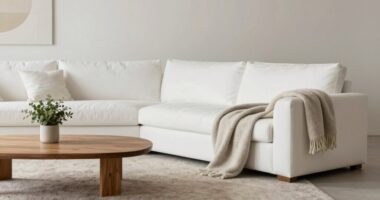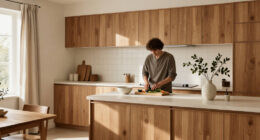
To keep your rooms feeling authentic and inviting, focus on a cohesive styling principle that balances color harmony and textural variety. Avoid making everything look perfect or staged by mixing textures—smooth with rough, shiny with matte—and choosing colors that complement rather than clash. This helps create a natural, lived-in feel that reflects personality and authenticity. By paying attention to how elements interact and support each other, you’ll craft a space that feels both stylish and genuine. Keep exploring to learn more.

Get furniture and decor delivered free with Prime
- Fast, free delivery on millions of items
- Prime Video, Amazon Music and more included
- Member-only deals all year
Key Takeaways
- Prioritize cohesive color schemes that support visual flow and avoid stark contrasts.
- Incorporate a variety of textures to add depth and create a layered, authentic feel.
- Focus on balance and harmony between colors and textures for a natural, inviting look.
- Mix materials thoughtfully to prevent a staged or overly curated appearance.
- Pay attention to how design elements interact to ensure the space feels personal and lived-in.
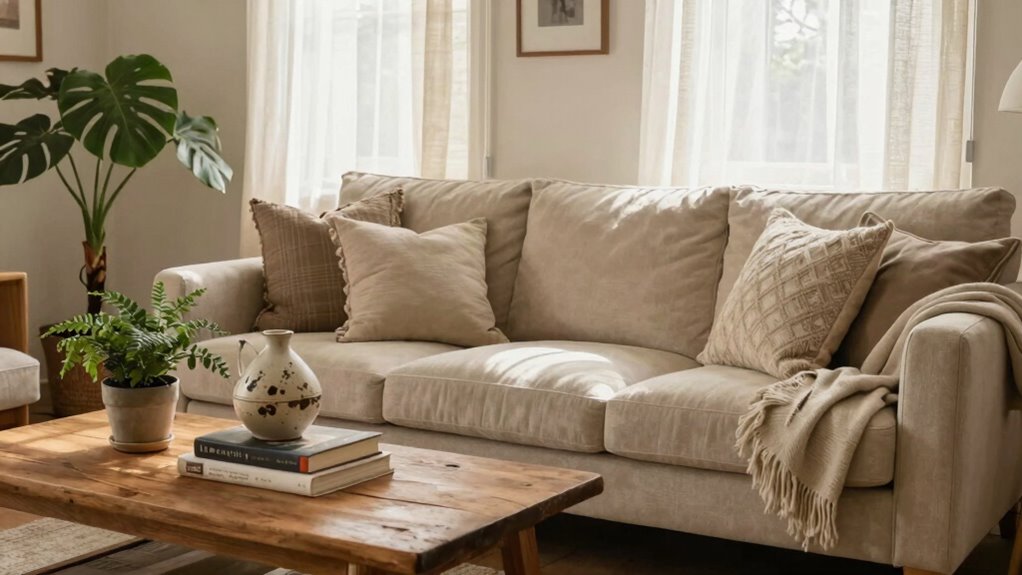
Creating a beautiful room isn’t about following strict rules; it’s about understanding and applying a fundamental styling principle that guides your choices. At the heart of this principle are two key concepts: color harmony and textural balance. When you get these right, your space feels cohesive, inviting, and effortlessly stylish—without ever looking staged or overly curated.
Color harmony is essential because it creates a visual flow that feels natural and pleasing to the eye. Instead of randomly picking colors or sticking to stark contrasts, you aim for a palette that complements and enhances each element in your room. Think of it like a song—each note should support the others. You might choose a dominant color and then select secondary hues that work well with it, or stick to a monochromatic scheme with subtle variations for depth. This approach prevents your room from looking chaotic or mismatched, instead fostering a sense of unity. When you practice color harmony, your furniture, accessories, and walls all come together, making the space feel balanced and intentional.
Achieve harmony by selecting colors that support and enhance each other, creating a balanced, unified, and intentional space.
Textural balance is just as critical. It’s not enough to have a pretty color palette; the textures of your materials add depth and interest. Imagine mixing smooth, shiny surfaces with rough, tactile fabrics. When you balance these textures thoughtfully, your room feels layered and dynamic rather than flat or dull. For example, pairing a velvet sofa with a chunky knit throw, or a sleek glass table with woven baskets, creates a tactile contrast that invites touch and exploration. This balance prevents your space from feeling sterile or overly uniform. Instead, it adds warmth and personality, making your room inviting and comfortable. Additionally, incorporating natural materials can enhance this effect, grounding your space in a sense of authenticity and sustainability. Being mindful of material selection helps ensure that your textures work harmoniously. Paying attention to the play of light and shadow within these textures can further elevate the overall aesthetic, creating visual interest throughout the day.
The key is to combine these two principles seamlessly. Use color harmony to set the mood and establish a cohesive look, while textural balance introduces variety and richness. Think about how different elements can create a visual contrast that is interesting yet harmonious. To achieve this, paying attention to the interplay of color and texture can help you create a space that feels both curated and authentic. Always consider how each piece interacts with others—does it support the overall color scheme? Does its texture add contrast or harmony? When you pay attention to these details, your room naturally feels authentic and lived-in, not staged.
Ultimately, the secret to a beautiful room isn’t following rigid rules but understanding how to marry color harmony with textural balance. When you do, your space will radiate personality, comfort, and style—without looking overly curated. It’s about creating a place that feels right to you, where every element supports the whole, resulting in a harmonious, inviting environment.
cohesive color scheme for living room
As an affiliate, we earn on qualifying purchases.
As an affiliate, we earn on qualifying purchases.
Frequently Asked Questions
How Do I Balance Personal Touches With Universal Appeal?
You balance personal expression and universal appeal by blending your unique style with elements that resonate broadly. Incorporate cultural influences to add authenticity and depth, making your space feel personal yet inviting. Use neutral backgrounds or classic pieces to serve as a canvas for your personal touches, ensuring your personality shines without overwhelming. This way, your room reflects you while remaining appealing to a wide range of tastes.
What Are Subtle Ways to Add Character Without Clutter?
You can add character subtly through textural layering, like combining soft throws with woven baskets, and by incorporating color accents through small decor pieces. Keep these elements intentional and balanced, avoiding clutter. Use different textures to create depth and interest without overwhelming the space. Select a few standout accessories that reflect your personality, ensuring they complement the room’s overall vibe. This approach keeps your space inviting, personalized, and effortlessly stylish.
How Can I Update a Room Without a Full Redesign?
You can update a room effortlessly by creating a new focal point, like a bold artwork or statement piece, that draws the eye. Play with color harmony through fresh accessories or soft paint touches to refresh the vibe without a full overhaul. Ironically, minimal changes like swapping out pillows or adding a new rug can make your space feel both updated and inviting, all while maintaining that effortless, styled look.
What Are Common Mistakes That Make Rooms Look Staged?
You often make rooms look staged by overusing artificial decor or adding exaggerated accessories that feel out of place. These choices can make a space seem overly curated rather than inviting. To avoid this, stick to authentic, thoughtfully selected pieces and keep accessories balanced. Focus on creating a natural flow, so your room looks stylish yet comfortable, rather than overly curated or artificially perfect.
How Do I Maintain a Natural Look Over Time?
Think of your room as a living painting; to keep it natural, regularly refresh furniture arrangement and update accessories. Stick to a cohesive color coordination, like blending shades in a sunset, to create harmony. Avoid over-accessorizing and let some space breathe. This way, your room evolves naturally over time, maintaining a genuine, comfortable vibe that feels effortless, authentic, and inviting—never staged or frozen in time.
Conclusion
By embracing the styling principle that balances authenticity with effortless charm, you’ll create beautiful rooms that feel inviting rather than staged. Remember, a recent survey found that 78% of people feel more relaxed in spaces that showcase genuine personality and lived-in touches. So, trust your instincts, add personal details, and avoid over-perfecting. When your space reflects your true self, it naturally exudes warmth and authenticity, making it truly beautiful and welcoming.
Columbus Day / Indigenous Peoples' Day Picks
long weekend sales
As an affiliate, we earn on qualifying purchases.