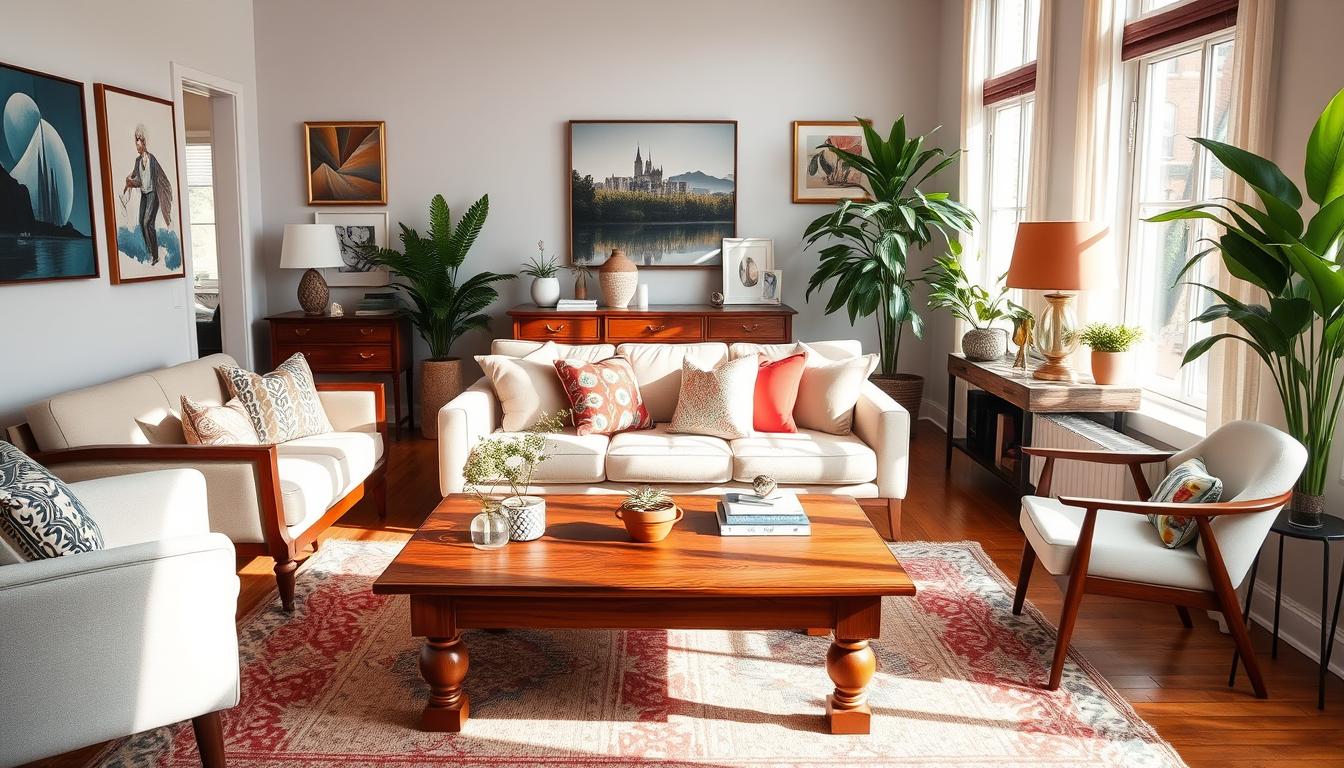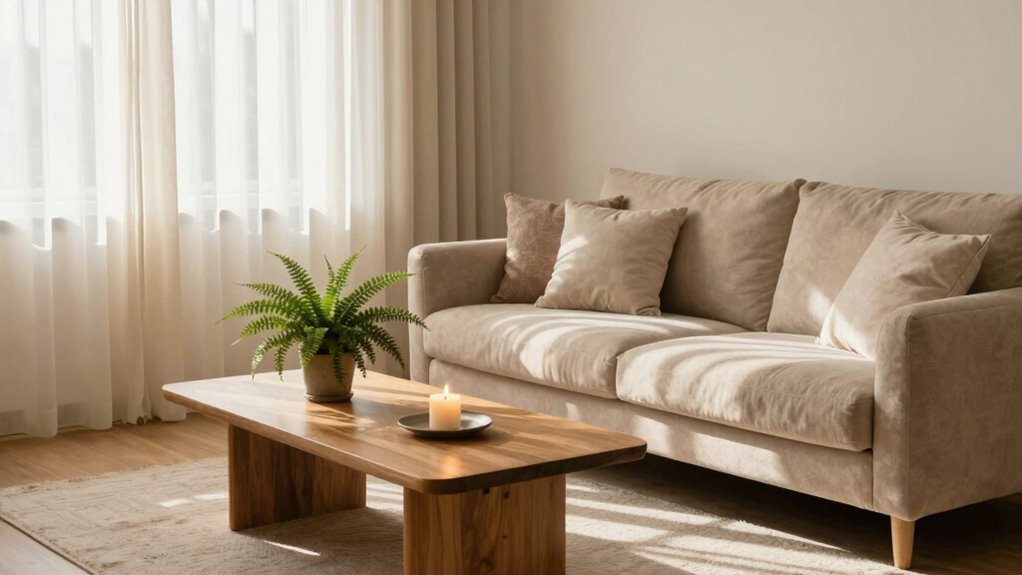

You can make a room feel instantly calm without it looking empty by using strategic spatial balance and thoughtful placement of furniture that promotes harmony and ease of movement. Soft, calming colors like pastels and neutrals help create a serene atmosphere, while deliberate arrangements guide your eye smoothly across the space. These elements work together to foster a peaceful environment that feels inviting yet uncluttered. Stay with us to uncover more secrets behind creating calming, balanced spaces.
Key Takeaways
- Strategic furniture placement creates a balanced layout that feels open yet inviting.
- Use of soft, muted colors promotes a calm atmosphere without overwhelming the space.
- Arranging decor to guide the eye smoothly enhances visual harmony and relaxation.
- Avoiding clutter and overcrowding maintains a sense of spaciousness and peace.
- Thoughtful design principles combine color and spatial balance for instant serenity.
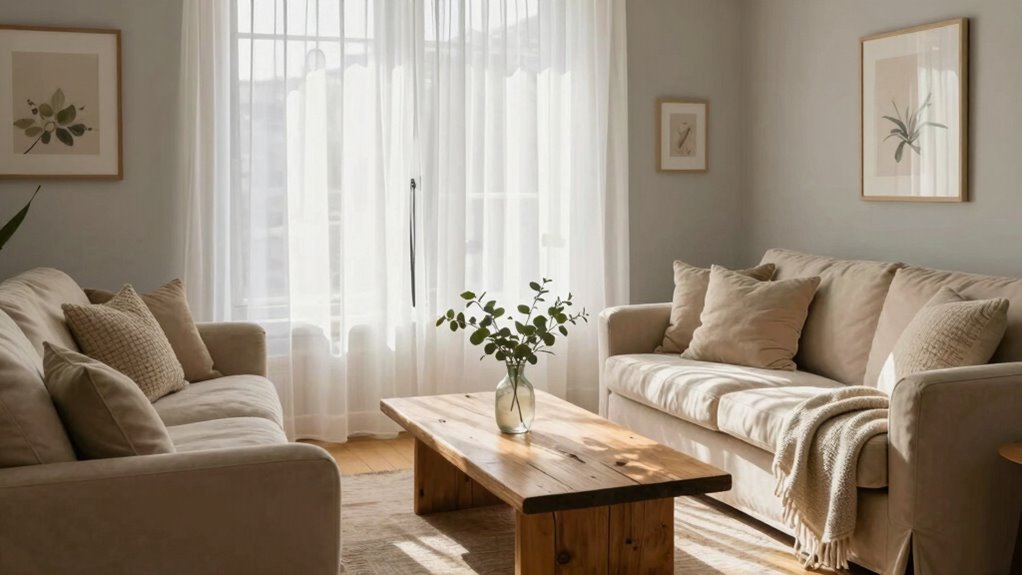
Have you ever stepped into a room that feels peacefully balanced, even though it isn’t cluttered? That sense of calm often comes down to more than just the absence of mess. It’s about how the space is thoughtfully arranged and how color choices influence your mood. When a room feels instantly calming without looking empty, it’s usually because of effective spatial balance combined with the principles of color psychology. You might notice that the furniture placement feels natural, with enough open space to breathe without feeling sparse or bare. This balance doesn’t mean everything has to be perfectly symmetrical but that the elements are arranged in a way that guides your eye smoothly across the room, creating a harmonious flow.
Color psychology plays a vital role in establishing that tranquil vibe. Soft, muted hues like pastel blues, gentle greens, or warm neutrals tend to evoke feelings of serenity and stability. When you select these colors for walls, accents, or furniture, they subtly influence your emotional state, making the space feel more calming. It’s not just about the colors themselves but how they’re used—fewer bold, jarring shades prevent overstimulation and help maintain a peaceful atmosphere. You might find that when walls are painted in soothing tones and complemented with carefully chosen decor, the room feels inviting yet unobtrusive. This careful curation of colors prevents the space from feeling overly busy or chaotic, even if it’s fully furnished. Incorporating visual harmony through color choices and arrangement enhances the calming effect further. Additionally, spatial balance is crucial because it ensures the arrangement feels natural and comfortable, rather than forced or crowded. The visual rhythm created by well-planned placement guides the eye seamlessly and promotes relaxation. Creating a balanced and harmonious environment often involves understanding how color psychology influences mood and emotion, which helps in designing a space that truly feels peaceful. The goal is to create a visual rhythm that feels natural and unforced, encouraging a sense of calm as soon as you enter. Ultimately, a room that feels peaceful without looking empty is a balance of thoughtful design, calming colors, and strategic placement. It invites you to breathe easier and settle in, knowing that serenity is achieved through intention, not excess.
As an affiliate, we earn on qualifying purchases.
Frequently Asked Questions
How Do Color Choices Influence a Calming Room Atmosphere?
Color choices influence a calming room atmosphere through color psychology and hue harmony. You’ll want to select soft, muted tones like blues, greens, or pastels, which promote relaxation and reduce stress. These colors work harmoniously together, creating a balanced and peaceful environment. By understanding hue harmony, you guarantee the colors complement each other, making your space feel inviting and serene without feeling empty or overwhelming.
Can the Use of Lighting Affect the Room’s Tranquility?
Yes, lighting considerably affects a room’s tranquility. You can create an ambient glow with soft, warm lights that reduce harsh shadows and promote relaxation. Natural illumination during the day enhances calmness, making the space feel airy and inviting. By balancing ambient glow with natural light, you craft a peaceful environment. Dimming switches or lamps allow you to adjust the mood, ensuring your space remains soothing and serene at all times.
What Role Do Textures Play in Creating a Peaceful Space?
Textures are your secret weapon for a peaceful space, transforming it into a sanctuary. You can create a calming atmosphere through textural contrast—pairing sleek surfaces with cozy, tactile comfort. Imagine running your fingers over soft throws or plush rugs, instantly soothing your mind. These tactile elements invite touch and relaxation, balancing visual simplicity with sensory richness. Using textures thoughtfully makes your room feel warm, inviting, and endlessly calming.
How Does Furniture Arrangement Impact the Room’s Calmness?
Furniture placement considerably impacts your room’s calmness by promoting smooth space flow. You should arrange furniture to create open pathways, avoiding clutter and congestion. Keep larger pieces against walls and position seating to encourage conversation without blocking movement. This thoughtful layout allows energy to circulate freely, making the space feel more tranquil and inviting. When your furniture is well-placed, the room naturally exudes a peaceful ambiance.
Are Plants Essential for Making a Room Feel Serene?
Research shows that indoor greenery can boost mood and reduce stress by up to 15%. Plants aren’t essential, but plant placement and indoor greenery greatly enhance serenity. They soften sharp lines, add natural textures, and create visual interest without clutter. You can achieve a calming atmosphere with thoughtfully placed plants that complement your furniture and decor, making your space feel more inviting and peaceful without overwhelming it.
Conclusion
So, next time you crave serenity, remember: a room doesn’t need to be packed with clutter to feel full. Sometimes, leaving space and embracing simplicity creates calm that’s almost too good to be true. Ironically, by doing less, you might just invite more peace. After all, in a world of constant noise and chaos, isn’t it invigorating to find tranquility in the quiet? Sometimes, emptiness really is the ultimate comfort.