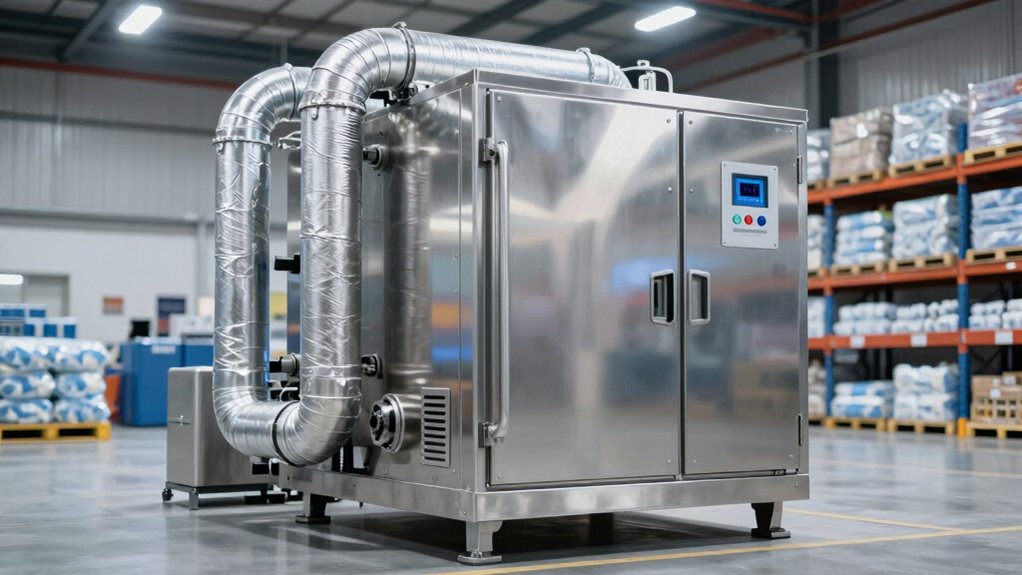
Secondary refrigeration systems are becoming more common because they provide better energy efficiency, safety, and environmental benefits compared to traditional direct systems. By separating the primary refrigerant from the storage area, you reduce leak risks and lower operational costs. These systems also support sustainable practices and can be fine-tuned for peak performance. If you want to understand how these advantages can impact your operations, there’s a lot more to discover.

Get furniture and decor delivered free with Prime
- Fast, free delivery on millions of items
- Prime Video, Amazon Music and more included
- Member-only deals all year
Key Takeaways
- Increased demand for energy-efficient and sustainable cooling solutions across industries.
- Enhanced safety by minimizing refrigerant leaks in occupied or sensitive spaces.
- Improved system performance through separation of primary and secondary refrigerants.
- Technological advancements enable real-time monitoring and optimized operation.
- Growing industry focus on environmental impact reduction and regulatory compliance.
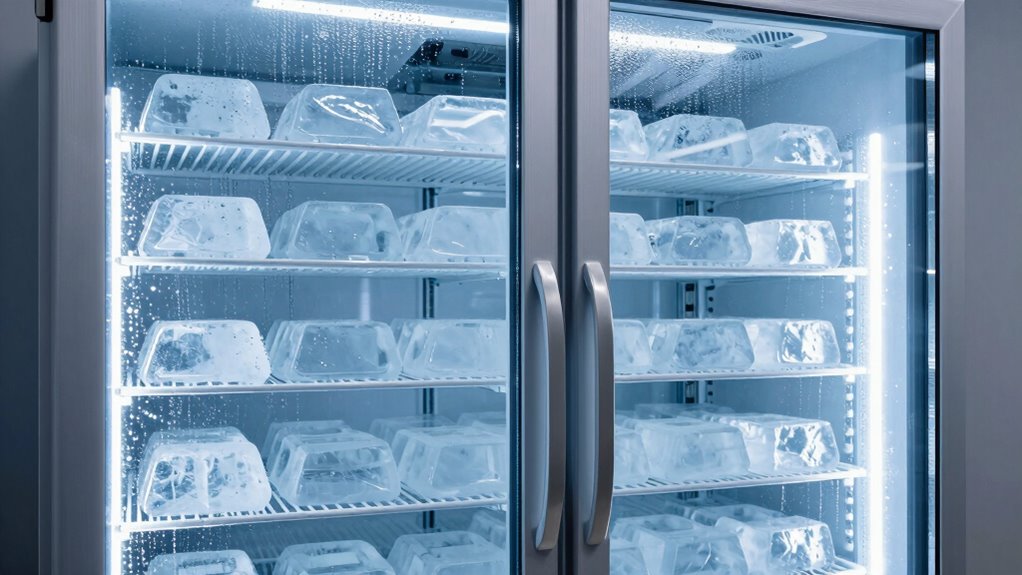
As industries seek more efficient and sustainable cooling solutions, secondary refrigeration systems are gaining popularity. You might notice this trend in food storage, pharmaceuticals, and other sectors that require precise temperature control. These systems are designed to maximize energy use while reducing their environmental impact, making them an attractive choice for modern facilities. You can see how system design plays a crucial role in optimizing performance and safety in these setups. Unlike traditional direct refrigeration, secondary systems rely on a primary refrigerant to cool a secondary medium, such as brine or chilled water, which then circulates through the storage or processing areas. This separation improves overall energy efficiency because the primary system can operate at ideal levels without being burdened by the load demands of the entire space. Additionally, energy efficiency is enhanced through the even distribution of the cooled medium, further reducing operational costs. Secondary refrigeration also offers improved safety benefits by reducing the risk of refrigerant leaks in occupied spaces, which is an important consideration for environmentally conscious operations. The ability to fine-tune cooling processes means you can avoid overcooling or unnecessary energy expenditure, making your operation more sustainable overall. Moreover, advancements in system controls allow for better monitoring and optimization, further increasing efficiency and safety. Incorporating innovative control systems can further enhance these benefits by providing real-time data and automation to optimize performance continuously.
As an affiliate, we earn on qualifying purchases.
Frequently Asked Questions
How Does Secondary Refrigeration Impact Energy Efficiency?
Secondary refrigeration boosts your energy efficiency by enabling better system optimization. It allows you to maintain precise temperatures with less energy, reducing overall consumption. By isolating primary chillers from direct load demands, you can adapt to fluctuating requirements more effectively. This leads to significant energy savings, lowers operational costs, and extends equipment lifespan, making secondary refrigeration a smart choice for efficient, sustainable cooling solutions.
What Are the Initial Installation Costs for Secondary Refrigeration Systems?
The initial installation costs for secondary refrigeration systems can vary based on factors like system size and complexity. You should conduct a thorough cost analysis to evaluate equipment, labor, and potential infrastructure upgrades. Be prepared for installation challenges, such as space constraints or integration with existing systems, which might increase costs. While upfront expenses may be higher, the long-term energy savings often justify the investment.
Are Secondary Refrigeration Systems Suitable for Small-Scale Operations?
Secondary refrigeration systems are perfect for small-scale operations, offering a cost-effective alternative cooling solution. You won’t believe how much they simplify your setup, reducing energy costs and maintenance efforts. When comparing costs, secondary systems often prove cheaper than traditional methods, making them ideal for tight budgets. They’re flexible, efficient, and scalable, allowing you to maintain precise temperature control without overwhelming your space or expenses.
How Do Maintenance Requirements Compare to Primary Refrigeration?
System maintenance for secondary refrigeration is generally simpler and less intensive than primary systems. You’ll find that equipment durability is often higher because secondary systems operate at lower pressures and temperatures, reducing wear and tear. This means fewer repairs and less downtime. You should regularly check insulation and pumps, but overall, maintenance requirements are more manageable, making secondary refrigeration a cost-effective choice, especially for smaller or less complex operations.
What Safety Considerations Are Unique to Secondary Refrigeration?
You might find it surprising, but secondary refrigeration demands unique safety considerations. You need to follow strict safety protocols to prevent hazards like refrigerant leaks, which can cause health issues or slips. Proper training in hazard prevention is essential to avoid accidents, especially since secondary systems often involve large, complex setups. Regular inspections, proper ventilation, and clear signage help guarantee safety, keeping everyone protected from potential risks associated with refrigerant handling and equipment operation.
Conclusion
As you embrace secondary refrigeration, you’re not just adopting a trend—you’re stepping into a future where efficiency and sustainability shine. Like a quiet revolution, its rising popularity hints at a smarter way to chill and store, whispering that innovation often begins with a simple change. So, consider this your call to action: in a world craving smarter solutions, secondary refrigeration isn’t just an option; it’s your next step toward a cooler, greener tomorrow.
Columbus Day / Indigenous Peoples' Day Picks
long weekend sales
As an affiliate, we earn on qualifying purchases.