Secondary dishwashers and drawers are ideal when you need to optimize space and increase cleaning capacity in busy kitchens or high-demand environments. They efficiently handle multiple loads independently, reducing cycle times and improving workflow. Designed for ergonomic access, they conserve water and energy with advanced filtration and adaptable settings. If you’re considering multifunctional solutions to enhance operational efficiency, understanding when they make sense can help you make an informed choice as you explore further.
Key Takeaways
- Ideal for handling small loads efficiently without running full-sized dishwashers.
- Perfect for busy households or commercial settings with high-volume, quick turnaround needs.
- Enable simultaneous cleaning of different load types or soils, saving time and improving workflow.
- Compact, modular designs suit limited kitchen spaces and enhance ergonomic access.
- Cost-effective for frequent, lightweight cleaning tasks, reducing energy and water consumption.
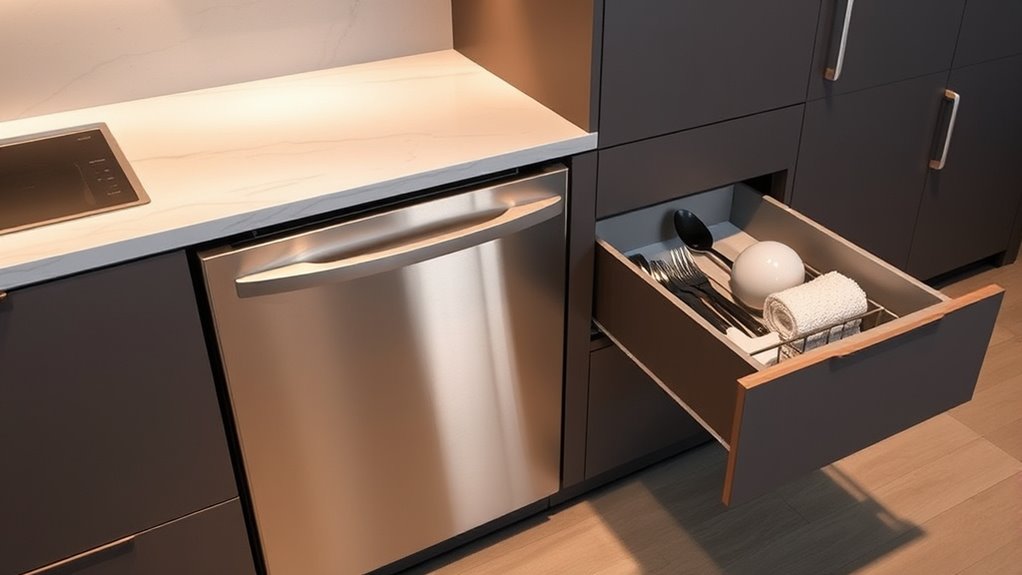
Secondary dishwashers and drawers serve as efficient supplementary cleaning stations within modern kitchens, providing an alternative or additional option to traditional under-counter dishwashers. These units are typically designed with compact, modular configurations that optimize space utilization without sacrificing functionality. They often feature individual or double-drawer setups, enabling users to run separate loads independently, therefore reducing cycle times and increasing overall dishwashing throughput. The design emphasizes ergonomic access, allowing you to load and unload with minimal bending or reaching, which improves convenience during frequent use. Additionally, many models include user-friendly controls and customizable settings to enhance ease of operation.
Secondary dishwashers offer compact, modular solutions for efficient, ergonomic kitchen cleaning.
Technically, secondary dishwashers utilize similar cleaning mechanisms as standard models, incorporating spray arms, filtration systems, and heated drying elements. The spray arms are precisely engineered to optimize water coverage, ensuring thorough cleaning even in tight or awkwardly shaped loads. Filtration systems are designed for easy removal and cleaning, preventing clogs and maintaining consistent spray pressure. Modern units often include multiple wash cycles, ranging from quick rinse to intensive cleaning, with customizable options for soil levels, temperature, and drying time. These features allow you to tailor the operation to specific load requirements, enhancing efficiency and cleaning performance.
Power consumption and water usage are critical considerations when evaluating secondary dishwashers. Advances in pump technology and spray arm design have reduced both parameters, making these units energy-efficient and environmentally friendly. For example, many models operate on low-voltage heating elements and utilize recirculating water systems to minimize waste. Sensors monitor soil levels and water clarity, automatically adjusting cycle duration and intensity to optimize resource use. Such features are especially valuable in high-demand environments, such as busy households or commercial settings, where minimizing utility costs is a priority. Moreover, energy efficiency standards continue to drive innovation in reducing operational costs and environmental impact.
Installation compatibility is also a key aspect. These units typically connect to standard plumbing and electrical outlets, but precise measurements and clearances are essential to ensure proper fit and operation. Many secondary dishwashers are designed for under-counter integration, with front-panel customization options to match existing cabinetry. Some models are portable, with plug-and-play configurations that allow for flexible placement, making them suitable for rental properties or temporary setups.
Frequently Asked Questions
Can Secondary Dishwashers Be Integrated Into Existing Kitchen Cabinetry?
Yes, secondary dishwashers can be integrated into existing cabinetry if your kitchen design allows for custom modifications. You’ll need to make certain that proper dimensions, plumbing, and electrical connections are feasible within your cabinetry framework. It’s essential to work with a professional installer who can modify or build cabinetry to accommodate the unit, ensuring seamless integration and maintaining the overall aesthetic. Proper planning guarantees functionality without compromising your kitchen’s design integrity.
What Are the Energy Efficiency Differences Between Drawers and Traditional Dishwashers?
You’ll notice that drawer dishwashers generally consume less energy per cycle than traditional models, thanks to their smaller size and targeted wash zones. Their efficiency stems from using less water and electricity, which reduces overall energy use. Additionally, because you can run smaller loads more frequently, you avoid unnecessary cycles, further optimizing energy consumption. This design makes drawer dishwashers a more sustainable choice for energy-conscious households.
How Much Noise Do Secondary Dishwashers Typically Produce During Operation?
Secondary dishwashers typically produce between 40 to 50 decibels during operation, comparable to a quiet library. This noise level results from their efficient, insulated design and quieter pump motors. You might notice minimal sound while they run, making them suitable for open-concept kitchens or homes requiring low ambient noise. Proper installation and maintenance can further reduce operational noise, ensuring a discreet, unobtrusive dishwashing experience.
Are There Specific Brands Known for Durable Secondary Dishwasher Drawers?
You’ll find that brands like Miele, Bosch, and Fisher & Paykel are known for durable secondary dishwasher drawers. Miele’s units feature high-quality stainless steel interiors and robust construction, guaranteeing longevity. Bosch offers reliable, well-engineered models with solid build quality, and Fisher & Paykel emphasizes innovative design with durable materials. Choosing these brands ensures you get a long-lasting, efficient secondary dishwasher drawer that withstands frequent use and resists wear over time.
What Is the Typical Lifespan of a Secondary Dishwasher or Drawer?
A secondary dishwasher or drawer typically lasts about 7 to 12 years, depending on usage and maintenance. You might worry about frequent repairs, but proper care can prolong its lifespan. Regularly clean filters, ensure proper loading, and use recommended detergents. High-quality brands like Bosch or Miele offer durable options. With diligent upkeep, you can maximize performance and get the most value out of your appliance over its lifespan.
Conclusion
In the world of kitchen efficiency, secondary dishwashers and drawers act like reliable sidekicks, seamlessly fitting into your culinary routine. They handle everyday loads with precision, freeing up your main dishwasher for larger tasks. Think of them as the backstage crew—quiet, efficient, and essential for maintaining a spotless performance. When your kitchen demands speed and specialization, these appliances become the well-oiled gears that keep your space running smoothly, ensuring every dish shines like a star.