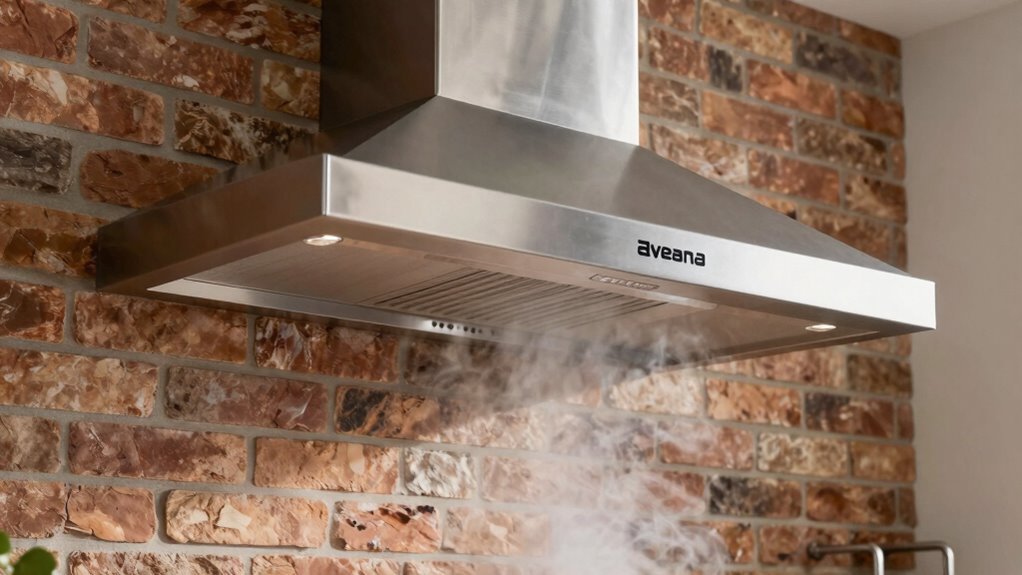

To prevent cooking smells from spreading, choose a range hood that matches or exceeds your cooktop’s width for proper coverage. Make sure it has enough power to capture odors effectively, and install it 24 to 30 inches above the cooktop for ideal operation. Proper ductwork or filtration is also key to maintaining air quality. By selecting correctly sized and installed hoods, you’ll keep your kitchen fresher—keep exploring to learn more about a flawless setup.

Get furniture and decor delivered free — and shop member deals
- Fast, free delivery on millions of items
- Access to Prime Big Deal Days deals on October 6–7
- Prime Video, Amazon Music and more included
Key Takeaways
- A properly sized range hood that matches or exceeds the cooktop width effectively captures and contains cooking odors.
- Installing the hood at the correct height (24-30 inches) ensures optimal odor removal.
- Ducted vents with straight, short ductwork prevent odor leaks and improve airflow efficiency.
- Regular cleaning of filters and ductwork maintains the hood’s ability to prevent smells from escaping.
- Choosing a powerful, appropriately rated hood reduces the chance of odors traveling into other indoor spaces.

Are you unsure how to choose the right range hood for your kitchen? The right range hood can make a significant difference in controlling cooking odors and maintaining a fresh environment. To start, you’ll want to consider the size and power of the unit. A hood that’s too small won’t effectively capture smoke and smells, while an oversized one might be noisy and unnecessary. Measure your cooktop’s width and select a hood that’s at least as wide, ideally a few inches wider, to ensure proper coverage.
Choose a range hood that matches or exceeds your cooktop’s width for optimal odor control and coverage.
When it comes to installation tips, proper placement is critical. Mount the hood 24 to 30 inches above your cooktop for optimal airflow. If you’re venting outside, ensure the ductwork is as straight and short as possible—long or convoluted duct paths reduce efficiency. For ductless models, make sure your space has good filtration options, like charcoal filters, to trap odors before they spread. Secure your hood firmly to prevent vibrations and noise, and double-check that the vent connections are airtight to prevent leaks that could diminish performance. Additionally, choosing a sustainable ventilation system can help reduce your environmental impact. Regular maintenance, including thorough inspection of ductwork, can further enhance the ventilation efficiency. It’s also helpful to understand child development resources that emphasize the importance of a healthy indoor environment for your family. Incorporating proper ventilation practices not only improves air quality but also contributes to a safer and more comfortable kitchen environment. Moreover, selecting a hood with energy-efficient features can further support eco-friendly living.
Once installed, maintaining your range hood is essential for keeping odors at bay. Regular cleaning should be part of your maintenance checklist. Wipe down the exterior and filters weekly to prevent grease buildup. Replace charcoal filters on ductless models according to the manufacturer’s recommendations—usually every 6 to 12 months—to ensure odors don’t slip through. For vented hoods, inspect and clean the ductwork periodically to prevent blockages and ensure smooth airflow. Check the fan and light bulbs monthly, replacing any that are dim or burnt out, so your hood functions effectively during cooking.
As an affiliate, we earn on qualifying purchases.
Frequently Asked Questions
How Often Should I Clean My Range Hood Filters?
You should clean your range hood filters every 1 to 3 months, depending on your cooking habits. Following a regular cleaning schedule helps maintain filter efficiency and prevents odors from spreading. For filter maintenance, remove the filters and scrub them with warm soapy water or a degreaser. Doing this consistently guarantees your range hood works effectively, keeps your kitchen smelling fresh, and reduces the buildup of grease and odors over time.
What Is the Best Placement Height for a Range Hood?
Like a sentinel guarding your kitchen, the ideal range hood height is 24 to 30 inches above your cooktop. Proper placement guarantees effective kitchen ventilation and smoke extraction, preventing odors from lingering. If it’s too high, smoke escapes before being captured; too low, it hampers your cooking space. Adjust your hood within this range for maximum performance, making sure it’s comfortably accessible without hindering your cooking flow.
Do Ductless Hoods Effectively Eliminate Smells?
Ductless hoods can effectively reduce smells through air filtration and odor absorption, but they don’t eliminate odors completely. You need to regularly replace or clean the filters to maintain their efficiency. While they’re good for trapping grease and some smells, in heavily odorous situations like burning food, they might not be enough. For best results, use a ducted hood or combine ductless models with additional ventilation.
How Loud Should a Quiet Range Hood Be?
A quiet range hood should hum softly like a gentle breeze, with noise levels ideally between 40-60 decibels. You want sound insulation to keep the noise from echoing through your kitchen, making the experience pleasant rather than disruptive. Anything louder can drown out conversation or music, turning cooking into a noisy affair. Aim for a model that balances effective ventilation with a whisper-quiet operation, so your kitchen remains a peaceful sanctuary.
Are Professional Installations Necessary for Optimal Performance?
Professional installation isn’t always necessary, but it’s highly recommended for peak performance. Proper installation guarantees your range hood operates efficiently, effectively removing cooking smells and fumes. It also helps avoid future maintenance issues caused by incorrect setup. If you’re comfortable with DIY projects, you can handle installation, but otherwise, hiring a professional guarantees your range hood functions correctly and minimizes maintenance requirements over time.
Conclusion
Choosing the right range hood is like selecting a loyal guardian for your kitchen’s airspace. It’s the silent sentinel that keeps unwanted odors at bay, turning your cooking space into a fragrant sanctuary. When you pick wisely, you’re not just installing a vent—you’re forging a barrier between your culinary creations and the world’s intrusive smells. Let your choice be the shield that transforms your kitchen into a haven, where fresh air flows as effortlessly as your inspiration.
Fall Picks
fall essentials
As an affiliate, we earn on qualifying purchases.