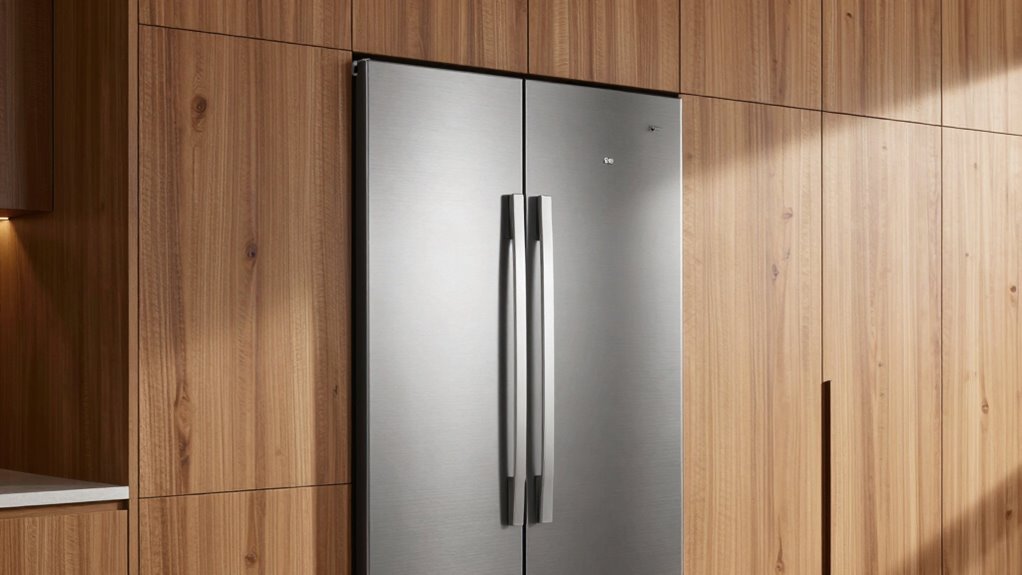

Your choice between integrated and freestanding appliances has the biggest impact on your cabinet design. Integrated appliances blend seamlessly into your cabinetry, creating a sleek, uniform look, but they require custom panels and precise installation. Freestanding units are easier to install and more flexible but can disrupt visual flow. Making this decision influences cabinet sizes, configurations, and overall kitchen style. Keep exploring to discover how to balance functionality and aesthetics in your space.

Get furniture and decor delivered free with Prime
- Fast, free delivery on millions of items
- Prime Video, Amazon Music and more included
- Member-only deals all year
Key Takeaways
- Choosing integrated appliances necessitates custom cabinetry for a seamless, cohesive look.
- Refrigerator type (built-in vs. freestanding) significantly influences cabinet dimensions and configurations.
- Appliance placement near prep zones optimizes workflow and impacts cabinet layout.
- Selecting appliances with specific dimensions affects cabinet sizing and the need for custom panels.
- Advanced, smart appliances may require specialized cabinet adjustments for proper integration.
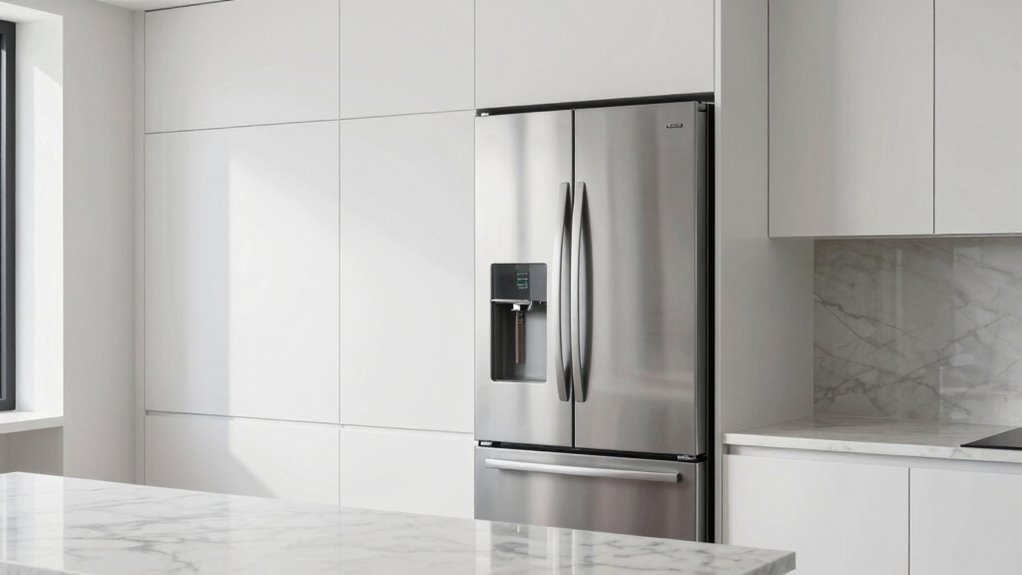
Choosing the right appliances is one of the most critical decisions you’ll make in kitchen design because they directly influence your cabinet layout and style. When considering appliances, you’ll want to think about how integrated appliances can seamlessly blend into your cabinetry, creating a sleek, uniform look. Integrated appliances, such as built-in refrigerators, dishwashers, and microwaves, are designed to sit flush with your cabinets, eliminating bulky gaps and giving your kitchen a modern, streamlined appearance. This choice affects not only aesthetics but also functionality, as appliance placement must be carefully planned to guarantee ease of use and efficient workflow.
Choosing appliances influences your kitchen’s style, layout, and workflow, especially when opting for integrated, seamless cabinetry solutions.
Your decision to incorporate integrated appliances will considerably impact your cabinet design. For example, opting for a fully integrated refrigerator means your cabinetry needs to accommodate it perfectly, often requiring custom panels that match your cabinet doors. This integration creates a cohesive visual flow, but it demands precision during installation and careful consideration of how appliances will be accessed. In contrast, freestanding appliances may be easier to install and replace but can break the visual continuity of your cabinetry, making the kitchen look more cluttered or segmented.
When planning appliance placement, you need to think about how each piece fits into your overall kitchen layout. Proper placement enhances both functionality and aesthetics, ensuring that cooking, cleaning, and prep areas flow naturally. For instance, placing the refrigerator near your prep zone minimizes unnecessary movement, while positioning the oven and microwave at a comfortable height improves convenience. Consider how integrated appliances can free up counter space and contribute to a minimalist look, but be aware of their specific dimensions and how they will influence cabinet sizes or custom cabinetry needs. Additionally, understanding appliance dimensions is crucial to ensure your cabinets are designed to perfectly accommodate your chosen appliances. It’s also beneficial to stay informed about latest appliance trends to keep your kitchen both modern and functional. Moreover, staying updated on technology innovations can help you select appliances that offer improved energy efficiency and smart features, enhancing your overall kitchen experience. Being aware of installation requirements is essential to avoid surprises during the setup process and ensure your appliances are both accessible and aesthetically integrated.
built-in refrigerator with custom panels
As an affiliate, we earn on qualifying purchases.
As an affiliate, we earn on qualifying purchases.
Frequently Asked Questions
How Do Appliance Sizes Influence Overall Kitchen Layout?
Appliance dimensions play a vital role in your kitchen planning because they directly influence your layout. Larger appliances require more space, affecting cabinet sizes and placement. You need to measure carefully to guarantee smooth workflow and accessibility. If you choose big refrigerators or ovens, you’ll have to adjust cabinet dimensions and possibly reconfigure your design. Thoughtful planning around appliance sizes helps create a functional, efficient kitchen that maximizes space.
What Materials Are Best for Built-In Appliance Integration?
Imagine a kitchen where appliances blend effortlessly—what materials achieve this seamless integration? Stainless steel, custom wood panels, and glass fronts work best for built-in appliances, offering durability and a sleek look. These appliance materials allow for seamless integration, making your cabinetry appear continuous and clutter-free. Choosing the right materials enhances both aesthetics and functionality, transforming your kitchen into a harmonious space where appliances become part of the design story.
How Can I Ensure Appliances Match My Cabinet Style?
To guarantee your appliances match your cabinet style, start by choosing appliances with an appliance color that complements your cabinets, like matching or contrasting tones. Opt for brands known for cohesive designs or customizable options to coordinate finishes easily. You can also consider panel-ready appliances that allow you to match the cabinet material and style seamlessly, creating a unified, polished look in your kitchen.
Are There Energy-Efficient Appliance Options That Fit Custom Cabinets?
Absolutely, you can find energy-efficient appliances that fit custom cabinets—because who doesn’t want their kitchen to scream “eco-chic”? Smart technology now offers sleek, eco-friendly options that seamlessly integrate into your design. Imagine a fridge that whispers its energy savings or a dishwasher that’s as intelligent as your Wi-Fi. These eco-friendly choices guarantee your kitchen is stylish, sustainable, and smart—without sacrificing your cabinet’s perfect aesthetic.
What Is the Typical Timeline for Appliance and Cabinet Installation?
You typically spend a few weeks on appliance and cabinet installation. First, you’ll schedule delivery and installation, which usually takes a day or two. During this time, you’ll manage appliance maintenance, making sure everything works smoothly, and stay updated on appliance trends to choose modern, energy-efficient options. The entire process depends on your project scope, but planning ahead helps guarantee a seamless integration of your appliances into your custom cabinets.
Conclusion
Choosing the right appliance is like wielding a magic wand—your cabinet design hinges on that decision. It shapes the flow, style, and function of your space, so don’t rush it. Remember, even in a world where tech is king, the classics never go out of style—like a trusty Dutch oven or a vintage stove. Get it right, and your kitchen will be a timeless masterpiece, a true proof of your vision and taste.
Evergreen bestsellers Picks
bestsellers
As an affiliate, we earn on qualifying purchases.