Pressure pool cleaners use your pool’s filtration system and water pressure to move around and clean, making them great for large debris but less effective in tight spots. Robotic cleaners, on the other hand, operate independently with their own power, offering thorough coverage, including hard-to-reach areas. They are more efficient but tend to cost more upfront. Want to know which type suits your pool? Keep exploring to find out more.
Key Takeaways
- Pressure cleaners rely on pool’s filtration system and are effective for large debris but less so for tight spots and small particles.
- Robotic cleaners operate independently with advanced navigation, providing thorough, systematic cleaning of all pool areas.
- Pressure cleaners tend to consume more energy due to reliance on pool pump, while robotic units are more energy-efficient.
- Robotic cleaners are versatile, suitable for various pool shapes, and require less manual guidance, unlike pressure cleaners.
- Initial costs for robotic cleaners are higher, but they often offer lower long-term maintenance and operational expenses.
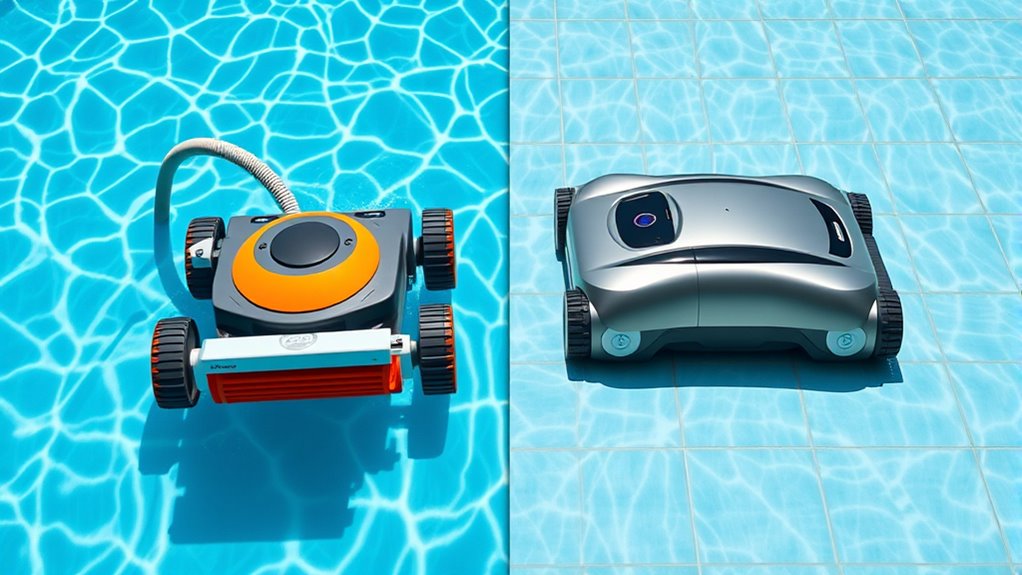
Pressure pool cleaners operate by attaching to your pool’s filtration system and use water pressure to propel themselves around the pool. They typically have hoses that connect to your skimmer or dedicated pressure line, which powers their movement. These cleaners are generally effective at picking up large debris like leaves and twigs because their vigorous scrubbing action can dislodge stubborn dirt. However, their cleaning efficiency can be limited when it comes to small debris or reaching tight corners, especially in pools with complicated shapes. They tend to move in a somewhat random pattern, which might mean some areas get less attention, requiring you to run the cleaner longer to achieve thorough cleanliness. Additionally, their reliance on existing pool equipment means their performance can vary depending on your pool’s setup and pump capacity. Using a pressure cleaner also often requires more manual intervention to guide it around tricky spots in complex pools. Some models can also be affected by water flow restrictions, which may reduce their effectiveness.
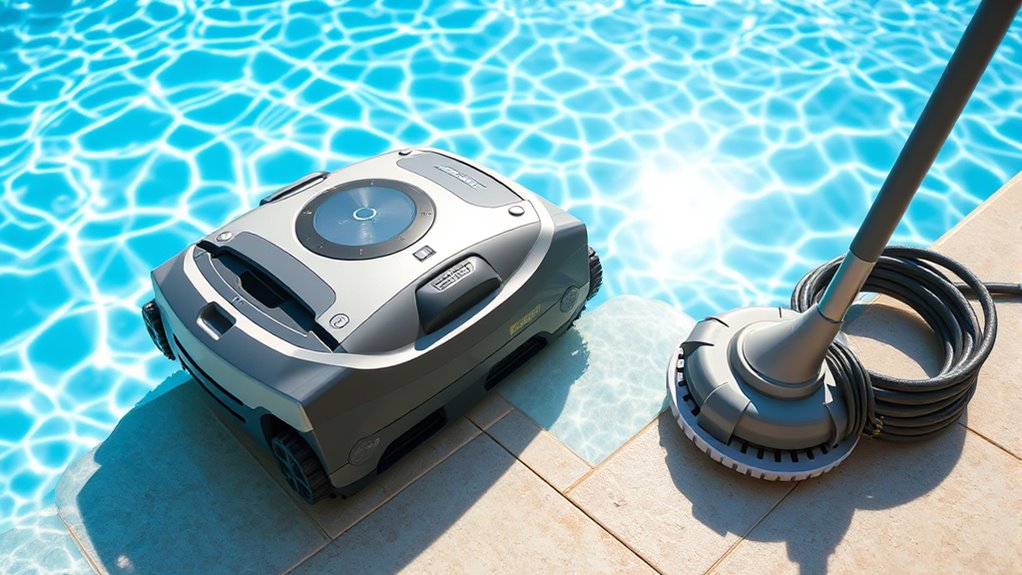
Robotic pool cleaners, on the other hand, operate independently using their own power source—usually a rechargeable battery or direct electrical connection. They are designed with advanced navigation systems that map out your pool’s layout, allowing them to clean more systematically and thoroughly. This leads to higher cleaning efficiency because they cover every inch of the pool methodically, including steps, corners, and hard-to-reach spots. Plus, because they’re programmable, you can schedule cleaning sessions to fit your routine, and many models automatically return to their charging stations when done. While robotic cleaners tend to be more expensive initially, they often save you time and effort by providing a more consistent and thorough clean. Furthermore, their ability to adapt to different pool shapes makes them a versatile choice for various pool designs. The technology behind robotic cleaners continues to improve, enhancing their effectiveness and ease of use.
Energy consumption is another important aspect to think about. Pressure cleaners generally consume more energy because they rely on your pool’s pump, which is already running during filtration. This might not be a big deal if your pump is energy-efficient, but if it’s older or less efficient, running it longer can increase your electricity bill. Robotic cleaners, however, have their own power supply and use less overall electricity during operation. Although they require an initial investment, their energy efficiency can translate into lower operating costs over time. Choosing between these options often depends on your priority for energy savings versus upfront costs. Additionally, robotic cleaners’ smart programming features contribute to their efficiency and convenience.
In the end, your choice hinges on your specific needs and priorities. If you want a budget-friendly option that’s easy to set up and handles large debris well, a pressure cleaner might be suitable. But if you’re after a more thorough cleaning with less manual effort and better energy efficiency, a robotic cleaner could be the smarter investment. Considering the beneficial features of each type can help you make an informed decision that best fits your pool maintenance routine.
As an affiliate, we earn on qualifying purchases.
Frequently Asked Questions
Which Pool Cleaner Is More Energy-Efficient?
When choosing a pool cleaner, you wonder which is more energy-efficient. You’ll find that robotic cleaners typically use less energy because they operate with lower power and optimize their cleaning cycles. They also require less maintenance, reducing overall energy consumption related to upkeep. On the other hand, pressure cleaners may consume more energy due to higher motor power and more frequent maintenance needs. So, robotic cleaners usually save you energy and effort.
Can Pressure Cleaners Clean All Pool Surfaces Effectively?
Think of your pool as a canvas needing the right brush. When you ask if pressure cleaners can handle all surfaces, remember that surface compatibility varies. They excel on larger, flat areas but might struggle with delicate or textured surfaces. For ideal cleaning effectiveness, choose a cleaner suited to your pool’s specific surfaces. Otherwise, you risk leaving spots untouched, like a painter missing a stroke on a complex masterpiece.
How Often Should I Maintain Pressure Vs Robotic Cleaners?
You should consider maintenance frequency and cleaning schedules based on your pool’s size and usage. Generally, pressure cleaners need weekly inspections and occasional parts checks, while robotic cleaners often require less frequent maintenance, usually monthly. Regularly empty filters and clean brushes to keep both working efficiently. Adjust your cleaning schedule as needed—more often during heavy use or after storms—to make certain your pool stays clean and ready for swimming.
Are Robotic Cleaners Suitable for Large or Irregular Pools?
Robotic cleaners are suitable for large or irregular pools, especially if you have a complex pool shape or extensive area. They can easily navigate uneven surfaces and tight spots, making them ideal for bigger or uniquely shaped pools. Just make sure to choose a model with appropriate coverage and navigation features, so it efficiently cleans your pool size and shape without missing spots. This way, you keep your pool spotless with minimal effort.
What Are the Typical Costs of Pressure Versus Robotic Cleaners?
You want to compare costs between pressure and robotic pool cleaners. Typically, robotic cleaners cost more upfront, often between $300 and $1,200, but they have lower maintenance frequency and energy costs. Pressure cleaners are usually cheaper initially, around $100 to $400, but might need more frequent maintenance and higher energy use over time. Consider your budget and pool size to decide which option offers better value.
Conclusion
So, whether you opt for the powerful push of pressure cleaners or the smart, silent efficiency of robotic ones, remember—your pool’s cleanliness is in your hands. Ironically, the very machines designed to make your life easier might just turn your backyard into a battleground of cords and gears. But hey, at least you’ll have plenty of stories to tell about that one time your cleaner decided to go on an adventure. Happy cleaning!