
To plan an effective column refrigeration system, you first evaluate the thermal load by considering product density, ambient conditions, insulation, and heat ingress. Select compressors and evaporators suited to your cooling demands, ensuring proper placement, insulation, and refrigerant flow design to maximize efficiency and stability. Incorporate advanced controls like sensors and VSDs for precise regulation, and consider energy recovery options. A detailed understanding of these elements helps achieve reliable, energy-efficient operation—exploring further reveals how to refine each component for ideal performance.
Key Takeaways
- Conduct detailed thermal load assessments considering product density, ambient conditions, and insulation to size the refrigeration system accurately.
- Select and configure appropriate compressors, evaporators, and multiple zones for temperature stratification and efficient cooling.
- Design refrigerant piping with proper sizing, insulation, and layout to ensure optimal flow, pressure stability, and system reliability.
- Integrate advanced control systems with sensors and algorithms for precise temperature regulation and energy optimization.
- Incorporate energy-saving measures such as heat recovery and perform simulations to validate system efficiency and performance.
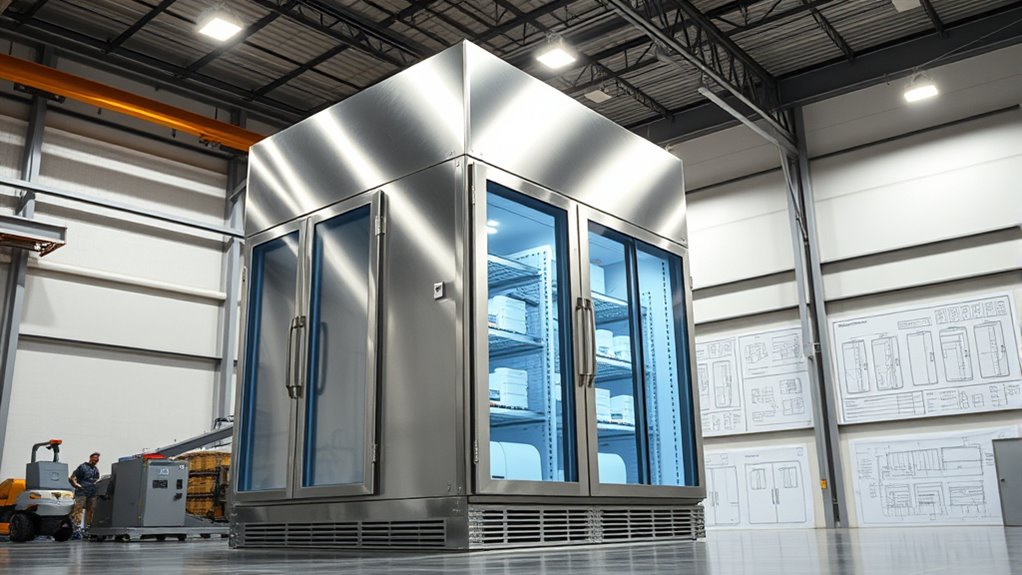
Are you prepared to develop an effective refrigeration plan that guarantees peak performance and energy efficiency? When focusing on column refrigeration systems, meticulous planning becomes essential to optimize capacity, maintain precise temperature control, and minimize operational costs. These systems typically serve applications requiring consistent temperature zones across multiple storage compartments, making their design and configuration critical to overall facility efficiency. To begin, you must assess the thermal load accurately, considering factors such as product density, ambient conditions, insulation quality, and potential heat ingress. This detailed evaluation ensures the refrigeration system is neither undersized—causing temperature fluctuations and product spoilage—nor oversized, which leads to unnecessary energy consumption and increased capital costs.
Next, the selection of compressors and evaporators must align with the specific cooling demands. In column systems, multiple evaporators are often employed to serve different zones within the storage vertical, allowing for temperature stratification. Proper placement and insulation of these evaporators are essential to prevent thermal bridging and temperature cross-contamination. The compressors should be chosen based on their capacity, efficiency ratings, and ability to modulate load. Variable-speed drives (VSDs) are highly recommended, as they enable precise capacity adjustments aligned with real-time thermal loads, therefore reducing energy wastage during partial load conditions. The refrigerant circuit design must facilitate optimal flow control, with appropriately sized expansion valves and pressure regulators to maintain consistent evaporator pressures and temperatures.
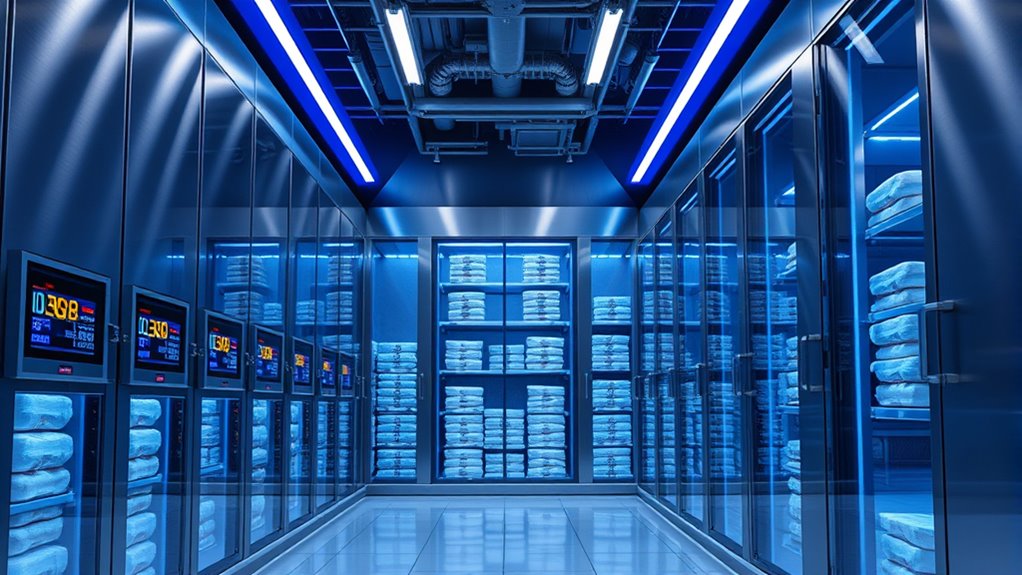
Selecting compressors and evaporators with variable-speed drives optimizes cooling efficiency and temperature control in column refrigeration systems.
Furthermore, the piping network requires careful layout to minimize pressure drops and refrigerant velocity issues. Proper insulation of piping prevents thermal losses and ensures system stability. The control system plays a pivotal role; it must integrate temperature sensors, pressure transducers, and differential pressure controllers to enable dynamic system regulation. Implementing advanced control algorithms allows for real-time monitoring and adjustments, maintaining setpoint temperatures with minimal fluctuation. Regular maintenance schedules, including leak detection, coil cleaning, and refrigerant level checks, are essential to sustain system efficiency over time. Additionally, monitoring skin health and safety is vital, as improper handling or overexposure to certain refrigerants can pose health risks.
Finally, energy efficiency should be integrated into every design decision. Consider incorporating economizers or heat recovery systems where feasible, to utilize waste heat or reduce compressor load during off-peak periods. Conducting thorough simulations during the planning phase can identify potential inefficiencies and validate design choices before installation. By meticulously addressing these technical aspects—load assessment, component selection, piping layout, control integration, and energy optimization—you ensure your column refrigeration system operates reliably at peak performance with minimal energy expenditure. This disciplined approach not only extends equipment lifespan but also guarantees consistent product quality and operational cost savings over the long term.
Frequently Asked Questions
How Do Ambient Temperature Fluctuations Affect Refrigeration Efficiency?
Ambient temperature fluctuations directly impact refrigeration efficiency by altering heat transfer rates. When temperatures rise, your system works harder to maintain the desired internal conditions, increasing energy consumption and strain on components. Conversely, cooler ambient conditions reduce load, improving efficiency. To optimize performance, you should implement adaptive controls, insulation, and proper system sizing to compensate for these fluctuations, ensuring consistent cooling while minimizing energy use and operational costs.
What Are the Best Insulation Materials for Column Refrigeration?
You should select high-performance insulation materials like polyurethane foam, polystyrene foam, or polyisocyanurate for column refrigeration. These materials offer low thermal conductivity, excellent moisture resistance, and structural stability under cold temperatures. Polyurethane foam, in particular, provides superior insulation with a high R-value per inch, reducing heat transfer. Make certain the insulation is properly installed with vapor barriers to prevent moisture ingress, optimizing efficiency and maintaining consistent refrigeration performance.
How Often Should Refrigeration Systems Undergo Maintenance Checks?
You should schedule refrigeration system maintenance every 3 to 6 months to guarantee ideal performance. Regular checks help identify potential issues like refrigerant leaks, compressor wear, or electrical faults before they cause costly breakdowns. During these inspections, verify temperature consistency, clean coils, test safety controls, and ensure proper insulation. Consistent maintenance not only extends equipment lifespan but also maintains energy efficiency, preventing unexpected failures and preserving product integrity.
What Are Common Causes of Refrigeration System Failures?
You often face refrigeration system failures caused by refrigerant leaks, compressor overloads, dirty or clogged evaporator coils, and faulty thermostats. Electrical issues like worn-out wiring or contactors also contribute. Additionally, inadequate maintenance can lead to refrigerant contamination or compressor failure. Regular inspections help identify these problems early, ensuring system reliability. Addressing these causes promptly minimizes downtime, preserves energy efficiency, and extends equipment lifespan.
How Can Energy Consumption Be Minimized in Refrigeration Planning?
You can minimize energy consumption by optimizing compressor efficiency through regular maintenance, ensuring proper insulation to reduce heat gain, and selecting energy-efficient components like variable frequency drives. Implementing advanced controls for precise temperature regulation and load management also helps reduce unnecessary energy use. Additionally, upgrading to modern refrigeration technologies and employing demand-based operation strategies further cuts energy costs while maintaining system performance.
Conclusion
By meticulously planning your column refrigeration system, you guarantee the heartbeat of your storage facility remains steady. Think of each component as a gear in a finely tuned clock—when synchronized, it maintains precise temperature control, symbolizing reliability and efficiency. Neglecting this planning risks chaos akin to a broken gear, compromising product integrity. With detailed design and proactive management, your refrigeration setup becomes a resilient engine, safeguarding your inventory’s freshness and your operation’s success.