
TL;DR

Get furniture and decor delivered free with Prime
- Fast, free delivery on millions of items
- Prime Video, Amazon Music and more included
- Member-only deals all year
A Livingetc guide to choosing bed sheets says thread count alone is a poor measure of quality and that fiber type, weave and manufacturing matter more. It also cautions that “breathable” is an imprecise marketing term, with comfort depending in part on how fibers handle moisture.
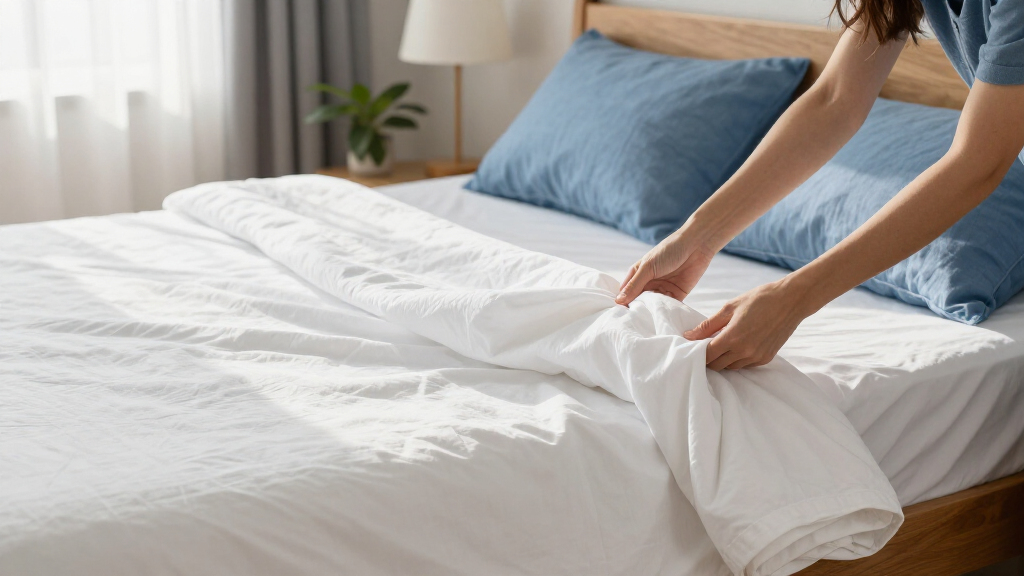
Livingetc has published a guide to choosing bed sheets that warns shoppers not to treat a high thread count or a “breathable” label as proof of quality. The report draws on bedding industry experience and textile science, and points readers toward fiber quality, weave, finishing and construction when comparing products.
The guide challenges the common assumption that more threads per square inch always mean better sheets. Thread count measures the number of horizontal and vertical threads in a square inch, but the report says the figure cannot establish quality on its own. Its interviewee, bedding consultant Paul Donegan, describes it as one part of a broader quality equation.
Donegan says 200 to 400 thread count can represent good-quality cotton bedding. Counts of 600 to 800 or higher also appear in premium products, he says, when they use high-quality fibers. The report cautions that some very high counts can be presented in ways that count multiple strands in a yarn, so shoppers should check what the figure means rather than relying on the number alone.
The guide also examines the label “breathable.” University of Alberta textile science professor Rachel McQueen says the term is imprecise because woven fabrics are porous, while sleep comfort also depends on how fibers interact with moisture. The report contrasts polyester, which she says takes in little moisture, with cotton and silk, which absorb more.
What Sheet Labels Can’t Tell You
Sheets are a frequent-use household purchase, and premium sets can cost hundreds of pounds or dollars, according to the report. A label built around a single number or broad comfort claim can make it difficult to compare products—and may lead shoppers to pay more without knowing whether the material suits their preferences.
Looking at fiber, weave and finishing gives buyers a more useful basis for comparison than thread count alone. The guide also points to responsible production and the manufacturer’s environmental and social practices as factors worth checking, widening the decision beyond softness or price.
There is no single sheet type that the source identifies as best for everyone. Personal comfort, care requirements and product construction all matter, so the practical value of the guide is in helping readers ask better questions before buying, not promising a guaranteed improvement in sleep.
Products Worth Considering

LG C2 Series 65-Inch OLED evo 4K Smart TV (OLED65C2PUA, 2022)

Samsung 42-Inch Class OLED S90F 4K Smart TV (2025)

Bose TV Speaker (2nd Gen) Compact Soundbar with Bluetooth and HDMI-ARC, Black
As an affiliate, we earn on qualifying purchases.
The Guide’s Material Checklist
The report’s author says the advice draws on personal testing of bedding brands over the previous year and interviews with specialists, including textile researchers, bedding industry veterans and color consultants. The author also notes that styling a bed for a photo or display is not the same as seeing how sheets feel after repeated washing and use.
For thread count, the guide gives shoppers a reference range for cotton, while stressing that fiber quality and manufacturing have greater bearing on the finished product. It does not claim that a particular count guarantees durability or comfort. Multi-ply counting is presented as one reason an advertised total may give an incomplete picture.
For comfort claims, the report focuses on moisture handling rather than treating “breathability” as a precise technical specification. It does not provide a standardized test or a universal ranking of fabrics. Shoppers should therefore read product details alongside the marketing language and consider the material’s characteristics and their own needs.
“Thread count matters, but it’s only one part of the quality equation.”
— Paul Donegan, founder of The Linen Consultancy
What the Guide Does Not Establish
The source does not provide independent laboratory comparisons of sheet brands, a standardized definition of “breathable,” or controlled sleep tests showing that one material improves sleep for all users. The cited comments explain textile properties but do not establish a universal buying formula.
It also does not give a complete price comparison, detailed washing and durability results across materials, or a full set of recommendations for every climate and sleeper. The report’s examples and expert interviews are useful guidance, but product-specific claims still need to be checked against each manufacturer’s specifications.
Questions to Ask Before Buying
The guide offers a way to compare bedding, but it does not report a pending test or further development. For shoppers, the next step is to check fiber composition, weave and finishing, then compare care instructions and the manufacturer’s production information. Treat thread count and “breathable” as clues rather than complete descriptions.
When a product advertises an unusually high count, buyers can ask how it is calculated and what fibers are used. Comfort remains personal, and the report gives no guarantee that a specific count or material will suit every sleeper. The source does not state whether Livingetc plans additional testing or follow-up coverage.
Key Questions
Does a higher thread count mean better sheets?
Not by itself. The Livingetc guide says thread count is one factor, while fiber quality, weaving and finishing also affect the product. It cites 200 to 400 as a range that can represent good-quality cotton bedding, not as a guarantee.
What thread count is a reasonable starting point for cotton sheets?
Consultant Paul Donegan says 200 to 400 can represent good-quality cotton bedding. The guide advises considering the fibers and manufacturing alongside the number.
What does “breathable” mean on a sheet label?
The report says the term is imprecise. Textile professor Rachel McQueen points to moisture handling as one factor in comfort and says different fibers interact with moisture differently.
What should I compare besides thread count?
Check the fiber type, weave, finishing and craftsmanship, as well as care details and information about responsible production. The guide does not identify one best option for every sleeper.
Source: rss