
TL;DR

Get furniture and decor delivered free with Prime
- Fast, free delivery on millions of items
- Prime Video, Amazon Music and more included
- Member-only deals all year
A Matter Alpha report describes replacing most of an apartment’s older Zigbee devices with Matter products during the first month in a new home. The writer says the setup covers lighting, controls, climate, sensors and power monitoring, but some Matter-connected switches lack features available through their manufacturers’ own platforms.
Matter Alpha has published a first-month report on building a new apartment’s smart home mainly with Matter devices, describing a system spanning lighting, wall controls, climate, sensors and power monitoring. The account says Matter made it possible to bring products from multiple brands into a shared setup, but also found that some features available through device makers’ own systems were missing when products were controlled through Matter.
The writer says moving into a larger apartment created an opportunity to rebuild the system and replace nearly all of the previous Zigbee devices. The setup uses Home Assistant as its primary controller. The writer then shares devices that need manual phone control with Apple Home and uses Home Assistant Link, formerly called Home Assistant Cloud, for Google Home and Amazon Alexa. The report does not provide a full device count or a complete inventory of the finished home.
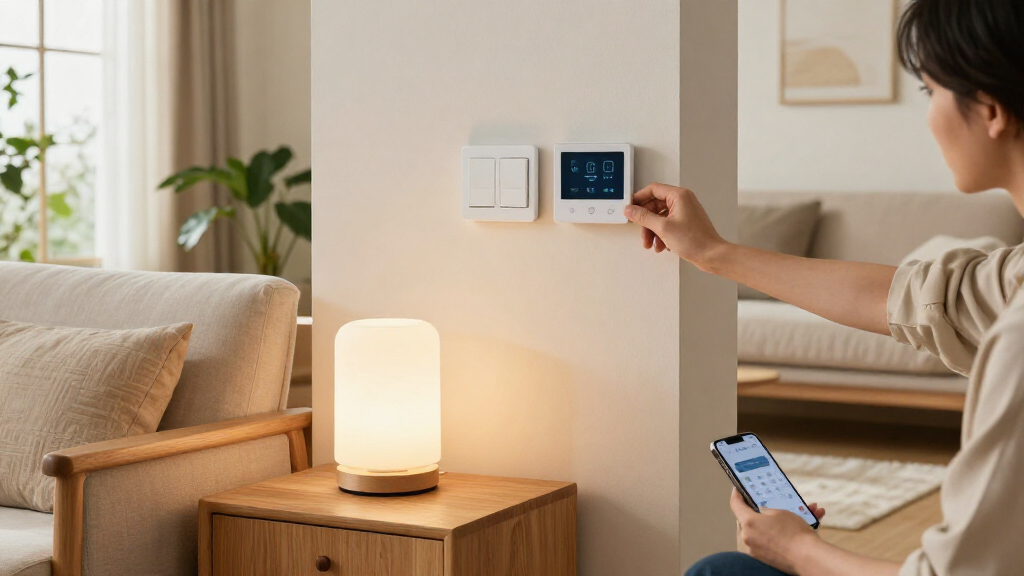
Lighting and wall controls came first because the writer says these are among the most frequently used smart-home functions. The report describes installing about 10 Aqara EU Switch H2 and Dimmer Switch H2 devices over Thread to control fans, lights and ceiling fixtures. The writer says the models’ support for neutral-free wiring helped with retrofits in existing wall boxes, but reports that their Matter controls lack decoupled relay mode and offer few dimmer configuration options.
Other equipment described includes Govee and Nanoleaf ceiling lights, IKEA pendant lights and bulbs, and floor and table lamps fitted with bulbs from several manufacturers. The writer says several standalone bridges, including Philips Hue and SONOFF hardware, were retired because they were no longer needed for most of the setup. For some proprietary local-network devices, the report says the writer instead uses software such as eWeLink Cube and Homey Self-Hosted Server.
Matter’s Convenience Has Limits
The report offers a practical account of a question facing people choosing smart-home equipment: whether a common connection standard can simplify a system without sacrificing device-specific functions. A single controller and cross-platform sharing can reduce reliance on separate hubs, according to the writer’s experience, and make it easier to combine products from different brands.
But the switch and dimmer experience points to a trade-off. Interoperability does not guarantee feature parity: the writer says the Aqara controls work through Matter but lack functions the writer wants for smart-bulb automations and dimming. For buyers, that means checking not only whether a product supports Matter, but also which controls and settings are exposed in the platform they plan to use.
The account is one user’s report, not a controlled comparison of Matter against Zigbee or other protocols. It provides useful details about a real setup, but does not establish how the same devices perform in other homes, networks or software versions.
Products Worth Considering

Roborock RockNeo Q110H Wire-Free Robot Lawn Mower

Samsung 48-Inch S90H OLED 4K Smart TV (2026)

Philips Hue Large Smart Light Tube, Black – White and Color Ambiance LED Color-Changing Light – 1 Pack
As an affiliate, we earn on qualifying purchases.
From Zigbee to Matter
The writer began with an existing smart-home system and says network credentials remained mostly unchanged after the move. Rather than starting without any established infrastructure, the writer powered the main controllers back on, cleared most old device entries and rebuilt around Home Assistant as the primary controller. That distinction matters: the report describes a migration and reconfiguration, not a test of setting up every component from scratch.
The account also shows that “all-Matter” is not a claim that every component uses Matter directly. It describes retiring much of the Zigbee equipment while keeping or using bridges and software to connect certain devices. The writer says some products support Matter alongside another protocol, and that locally networked devices can be brought into the system through software bridges. The article’s title reflects the direction of the setup rather than a verified, protocol-by-protocol audit of every device.
““They are no better than their Zigbee counterparts over Matter right now.””
— Matter Alpha report author
Open Questions About Device Support
The source material describes the first month but does not give a publication date, full device-by-device compatibility results or long-term reliability data. It is also unclear which software or firmware versions were in use, whether the reported switch limitations vary by platform, and whether later updates could add the missing controls.
The report says it replaced nearly all older Zigbee gear, while also describing devices and bridges that use other protocols or connect through software. It does not provide enough detail to verify that every part of the apartment’s system communicates through Matter. The writer’s findings should be read as a personal setup report, not a guarantee of performance across Matter devices generally.
The Search for Better Switches
The writer says they are continuing to run the apartment with the installed switches while looking for better neutral-free wall-switch alternatives. The report does not name a replacement or give a timeline for changing the setup. Further updates would be needed to show whether another product resolves the feature gaps or whether software changes improve the current devices’ Matter controls.
For readers planning a similar system, the account suggests confirming the specific features available through a chosen controller before buying, especially for switches, dimmers and automations. The writer’s next step is to keep testing the setup in daily use; no broader product verdict or follow-up result is provided in the source.
Key Questions
What happened in the report?
Matter Alpha published a personal account of rebuilding a new apartment’s smart home mainly around Matter devices during the writer’s first month there.
What controller does the writer use?
The writer says Home Assistant is the primary controller, with selected devices shared with Apple Home and Home Assistant Link used for Google Home and Amazon Alexa.
What problem did the writer find with the switches?
The writer reports that the Aqara switches and dimmers lack decoupled relay mode for smart-bulb automations and have limited dimmer configuration options when exposed through Matter.
Does the report prove that Matter devices work poorly?
No. It describes one person’s setup and experience. It does not provide a controlled comparison or establish how the products perform with other controllers, networks or software versions.
What is the writer planning to do next?
The writer says they are keeping the installed switches for now while looking into alternatives for neutral-free wall switches. The report gives no replacement or timeline.
Source: matteralpha.com