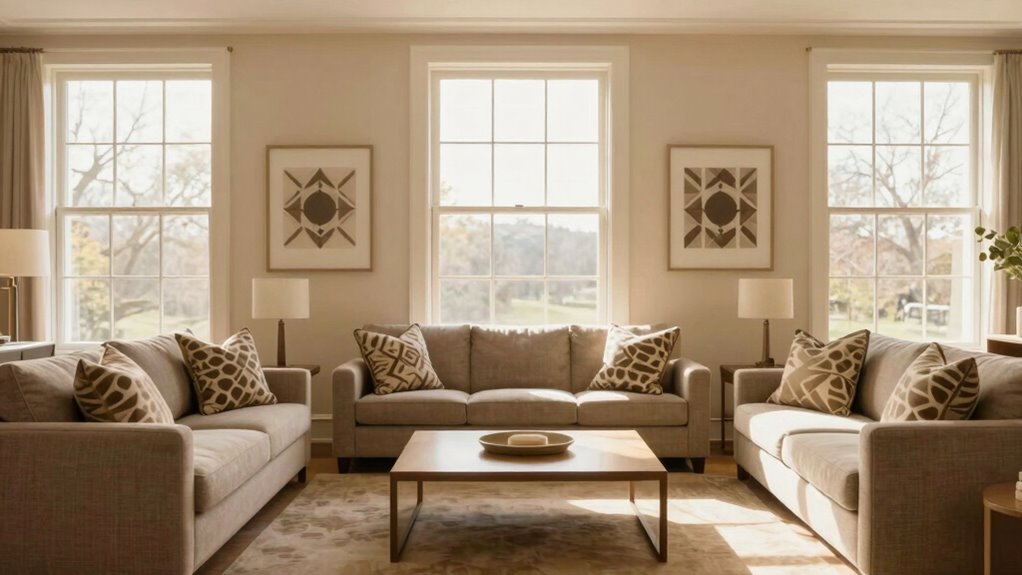

Repetition helps make a space feel more cohesive by consistently applying elements like color, furniture styles, and shapes throughout the design. This creates a sense of harmony and unity, guiding your eye smoothly across different areas and making the space feel intentional. When you repeat key elements, it reinforces themes and prevents clutter, giving your environment a polished look. Keep exploring to discover more ways to create a balanced, inviting space with repetition.
Key Takeaways
- Repetition creates visual harmony, making different elements feel connected and unified within the space.
- It guides the eye smoothly, establishing a cohesive flow throughout the environment.
- Consistent use of colors and patterns reinforces themes and enhances aesthetic continuity.
- Repeating furniture styles or shapes builds rhythm, contributing to a balanced, orderly appearance.
- Thoughtful repetition prevents clutter, promoting a polished, inviting, and cohesive atmosphere.
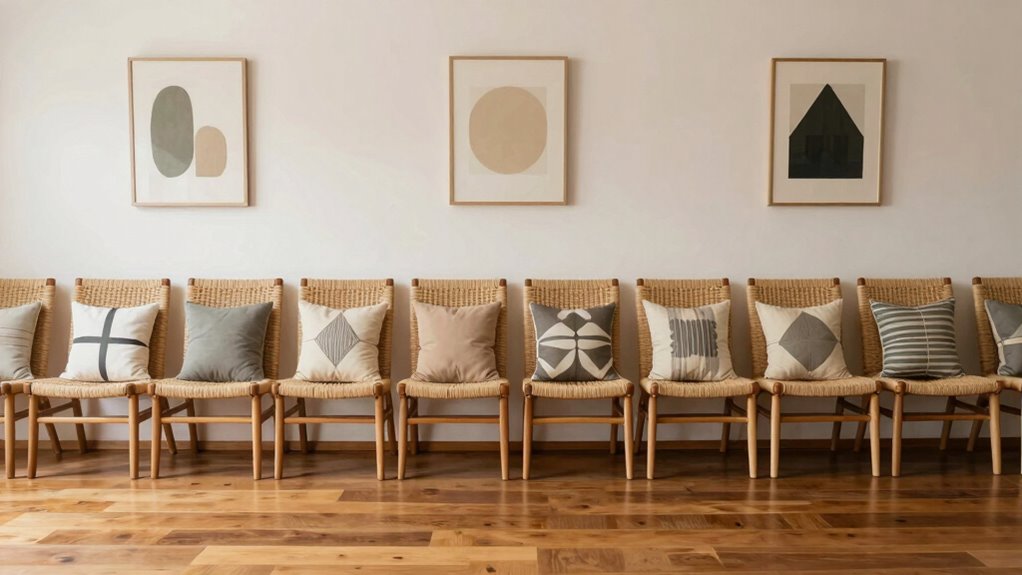
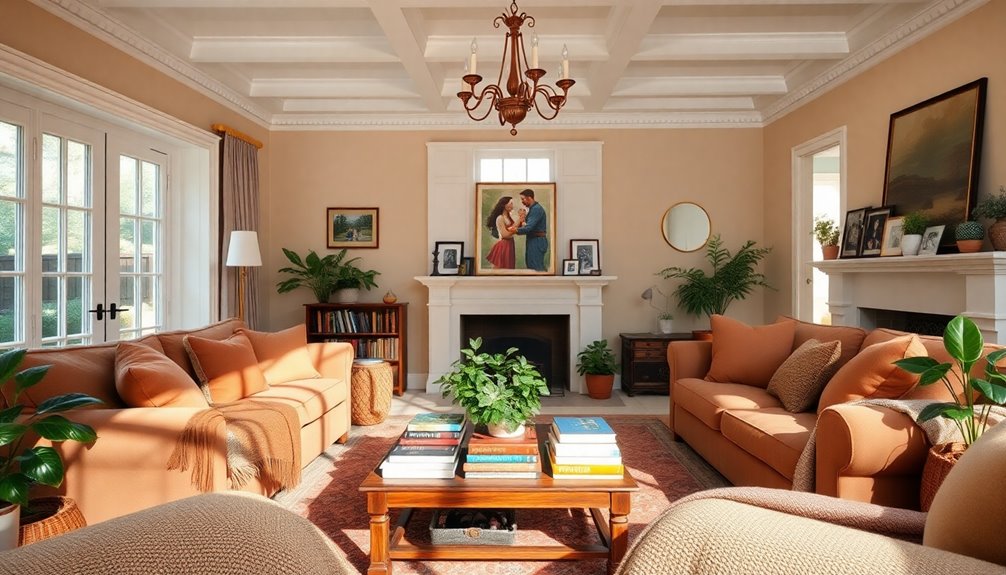
Have you ever noticed how repeating certain elements in a design or layout can create a sense of harmony and unity? It’s like stitching together a puzzle—each piece fits more naturally when similar elements are echoed throughout the space. Repetition isn’t just about pattern; it’s about establishing visual rhythm. When you pay attention to color consistency, for example, you reinforce a theme that guides the eye smoothly from one area to another. Using the same or similar shades across different objects or walls creates a cohesive look that feels intentional and well thought out. It prevents your space from looking cluttered or chaotic, instead giving it a polished, unified appearance. This consistency in color acts as a visual anchor, helping everything seem connected, even when individual pieces are different in shape or size.
Repeating colors creates harmony, guiding the eye and unifying your space with intentional, cohesive design.
Furniture alignment also plays a pivotal role in creating cohesion through repetition. When you arrange furniture in a systematic way—such as lining up chairs, sofas, or tables in parallel lines or symmetrical patterns—you generate a sense of order that the eye naturally follows. It’s a simple yet powerful method to tie the room together. Repeating similar furniture styles or shapes throughout the space further enhances this effect, making the design feel intentional and harmonious. When furniture pieces mirror each other or align consistently, it emphasizes the rhythm of the layout, making the space feel balanced and inviting. Such uniformity guides movement and creates a visual flow that’s easy to follow, reducing confusion and creating a calming environment. Recognizing visual rhythm as a fundamental aspect of design helps in understanding how repetition influences our perception of space. Incorporating repetition techniques thoughtfully can elevate the overall aesthetic and create a more cohesive atmosphere. Paying attention to visual patterns allows for a more deliberate approach to designing spaces that are both functional and aesthetically pleasing. Additionally, understanding how spatial relationships are formed through repetition can help in optimizing room layouts for better flow and usability.
This approach works best when you’re deliberate about how often you repeat these elements. Too much repetition can feel monotonous, but just enough creates a visual language that your eye recognizes and appreciates. You could, for example, use a recurring color palette in different decor items, like cushions, curtains, and artwork, to reinforce the theme. Similarly, aligning furniture in a way that reflects the room’s overall style—whether modern, traditional, or eclectic—builds a sense of rhythm and unity. When these elements are repeated thoughtfully, they establish a pattern that your brain naturally seeks, making the space feel cohesive and intentional.
Ultimately, repetition isn’t about duplication for its own sake; it’s about creating a visual harmony that makes your space feel complete. When you focus on color consistency and furniture alignment, you craft a environment that’s not only aesthetically pleasing but also comfortable and easy to navigate. This intentional repetition transforms a collection of individual pieces into a unified, inviting space where everything feels connected and purposeful.

CHI AN HOME Wicker 23 Inch Jute Wall Decor Baskets, Set of 6 Extra Large Woven Jute Wall Plates, 23",21",15",13",12,10", Decorative Baskets for Wall Arts, Wall Hanging for Bedroom, Living Room, Office
- Handwoven by Skilled Artisans: Durable, shape-retaining jute wall plates
- Made from Natural Jute: Eco-friendly, biodegradable wall decor
- Set of 6 in Graduating Sizes: Variety of large wall plates for display
As an affiliate, we earn on qualifying purchases.
As an affiliate, we earn on qualifying purchases.
Frequently Asked Questions
How Does Repetition Influence a Space’s Visual Flow?
Repetition influences a space’s visual flow by creating pattern consistency and rhythm, guiding your eye smoothly across the room. When you repeat colors, shapes, or textures, it establishes a sense of unity and order. This rhythm draws attention naturally, making the space feel harmonious and well-organized. By intentionally using repetition, you guarantee that the design elements work together seamlessly, enhancing the overall cohesiveness and making the space more inviting and comfortable.
Can Repetition Make a Space Feel Cluttered or Overwhelming?
Repetition can sometimes make a space feel cluttered or overwhelming if you overdo it, increasing clutter risk and causing visual overload. When you use too many repeating patterns or elements without variation, your space might look chaotic instead of cohesive. To avoid this, balance repetition with contrasting textures or colors, and keep a mindful eye on spacing. This way, repetition enhances unity without overwhelming your senses.
What Types of Elements Are Best for Repetition in Design?
You should focus on repeating elements like color consistency and pattern harmony. These create visual unity without overwhelming the space. Use consistent color palettes across walls, furniture, and accessories to tie everything together. Incorporate complementary patterns in textiles or decor that echo each other. By doing so, you guarantee the repetition enhances cohesion, making your space feel balanced and harmonious rather than chaotic or cluttered.
How Does Repetition Impact a Space’s Emotional Atmosphere?
Repetition enhances a space’s emotional resonance and creates mood consistency, making you feel more connected and comfortable. When you see familiar patterns or colors repeated, it fosters a sense of harmony and stability. This emotional stability helps set the tone, whether calming or energizing. By maintaining consistent elements, repetition guides your mood, making the environment feel unified and thoughtfully designed, encouraging positive feelings and a welcoming atmosphere.
Are There Cultural Considerations When Using Repetition in Design?
Repetition in design is like hitting two birds with one stone—balancing aesthetic harmony and cultural symbolism. You need to take into account cultural nuances, as certain patterns or colors might carry specific meanings or evoke different emotions. What works beautifully in one culture could offend in another. So, always research cultural context, respecting traditions and symbolism, to create a space that feels both harmonious and culturally sensitive.
Conclusion
By embracing repetition, you gently weave a sense of familiarity and comfort into your space. It’s like a quiet, reassuring whisper that unites every corner, making your surroundings feel more like home. While subtle, this consistency creates a soothing rhythm that calms the mind and heart. So, trust in the gentle power of repetition—sometimes, the smallest touches can nurture the deepest feelings of belonging and harmony.