
Before moving your kitchen plumbing, ask if your existing water supply and drainage lines are close enough to your new location to avoid costly rerouting. Check if your current plumbing can handle the new setup without upgrades, and confirm the layout supports easy access for future repairs. Be sure to consult a professional to assess your home’s plumbing infrastructure and guarantee compliance with safety standards. Keep exploring to discover more essential questions for a smooth relocation process.
Key Takeaways
- Confirm the proximity of existing plumbing lines to minimize rerouting costs and complexity.
- Identify access points for future plumbing repairs and maintenance needs.
- Ensure plumbing rerouting complies with local building codes and safety standards.
- Assess whether the new location accommodates proper drainage and water supply requirements.
- Consult a licensed plumber to evaluate the feasibility and potential challenges of moving plumbing.
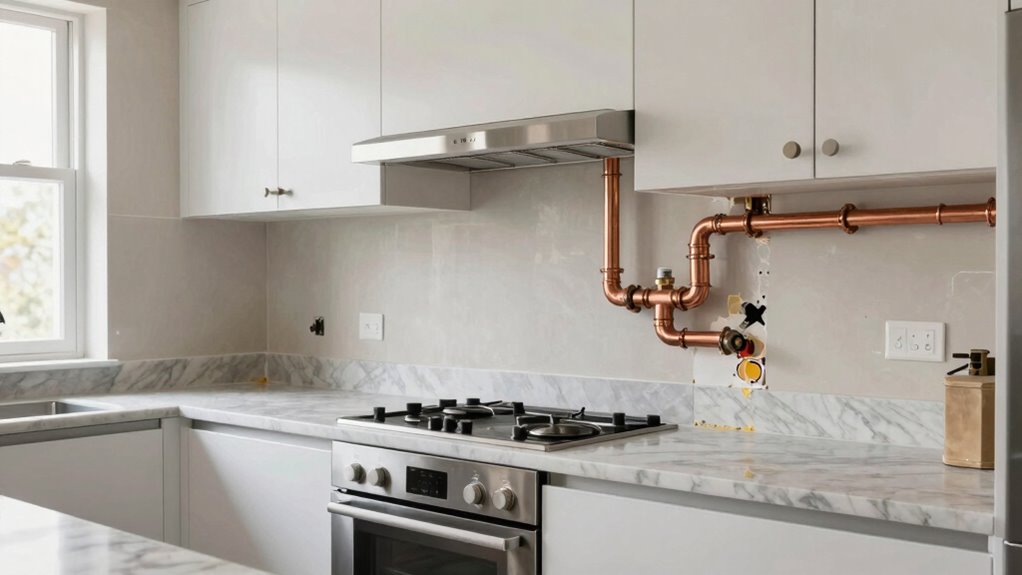
Are you facing the dilemma of whether to relocate your kitchen? Moving a kitchen involves more than just packing up cabinets and appliances; it requires careful planning around essential systems like plumbing, electrical wiring, and appliance placement. Before making any moves, you need to ask yourself some critical questions to avoid costly mistakes down the line. One of the most important considerations is how your appliance placement will change with the new layout. Will your refrigerator, stove, dishwasher, and sink fit comfortably? Will their new positions optimize functionality and workflow? Thinking about appliance placement early helps you design a space that’s both practical and efficient, saving you from having to redo work later.
Along with considering where appliances will go, you should also evaluate the electrical wiring. Moving a kitchen isn’t just about shifting fixtures; it involves ensuring your electrical system can support all your appliances safely and effectively. Check whether your current wiring can handle the additional load or if it needs upgrading. For instance, large appliances like ovens and refrigerators require dedicated circuits, and relocating them might mean reconfiguring your electrical wiring. Failing to address this can lead to electrical hazards, frequent breaker trips, or even damage to your appliances. Consulting a licensed electrician before you begin the move can save you from surprises and ensure your new setup complies with safety standards. Additionally, understanding the electrical load capacity of your home can help you plan more effectively and avoid overloads. Being aware of your home’s electrical infrastructure can also aid in preventing future electrical issues. Knowing the limitations of your electrical system can help you make smarter decisions about appliance placement and wiring upgrades.
Ensure your electrical system supports all appliances safely; consult a licensed electrician before moving your kitchen.
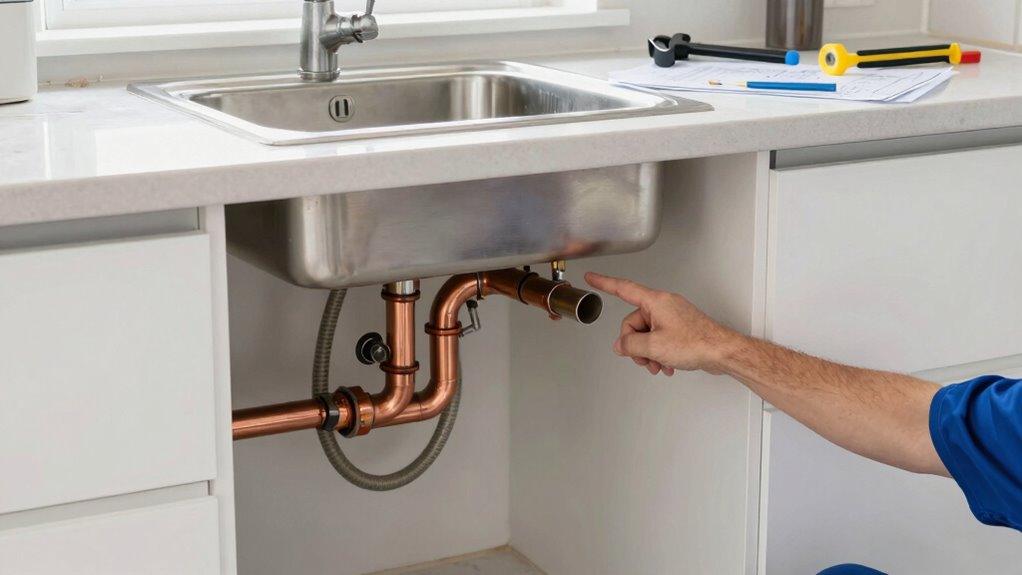
Another key question to ask is whether your existing plumbing can be adapted to the new kitchen location. Moving plumbing lines isn’t a simple task; it involves rerouting water supply and drainage systems, which can become complex and costly. Sometimes, relocating the kitchen near existing plumbing lines makes the process smoother and more affordable. If you’re planning to move the kitchen to a different part of your home, assess how far the existing plumbing can stretch and whether rerouting is feasible within your budget. You may also need to consider access points for future repairs and maintenance, ensuring your new layout doesn’t complicate plumbing service. Proper plumbing rerouting planning can help prevent future issues and additional expenses. Knowing the location of main water lines beforehand can further streamline this process and minimize disruptions. It’s also wise to consult with a plumber early to identify potential challenges and solutions.
In addition to these technical considerations, think about how the new kitchen layout impacts overall space and traffic flow. Will the new location maximize natural light? Does it open up the space for easier movement? These questions can help you create a kitchen that’s not only functional but also inviting. By thoroughly evaluating appliance placement, electrical wiring, and plumbing needs before you move, you set yourself up for a successful relocation—one that minimizes surprises and maximizes comfort and efficiency in your new space.

Kitchen Sink Drain Kit,1-1/2”,for Most Kitchen Sink Drain Repair Kit and Bathroom Sink Drain Kit, Kitchen Sink P Trap Drain Kit 1 1/2” for Sink Plumbing Kit, Completed Sink Pipe Replacement Kit
Universal Compatibility: This kitchen sink plumbing kit comes with all tubualr parts that removes the guesswork from any…
As an affiliate, we earn on qualifying purchases.
As an affiliate, we earn on qualifying purchases.
Frequently Asked Questions
How Long Does a Kitchen Plumbing Relocation Typically Take?
A kitchen plumbing relocation usually takes between one to three days, depending on the complexity of your kitchen design and appliance placement. If your new setup requires rerouting pipes or installing new fixtures, expect it to take longer. You should work closely with your plumber to plan the move efficiently, ensuring minimal disruption. Clear communication about your desired appliance placement and design will help streamline the process and avoid delays.
What Is the Cost Range for Relocating Kitchen Plumbing?
Imagine your kitchen with sleek new pipes running smoothly behind the walls. The cost estimation for relocating kitchen plumbing generally falls between $1,000 and $5,000, depending on the complexity. Factors like the length of new plumbing lines and the plumbing materials used influence the price. You’ll want to budget for both materials and labor, ensuring your new setup is both functional and durable for years to come.
Are Permits Required for Kitchen Plumbing Relocation?
Yes, permits are typically required for kitchen plumbing relocation. You need to check local permit requirements and plumbing regulations to guarantee compliance. Permit requirements can vary depending on your city or county, so it’s crucial to contact your local building department. Securing the necessary permits helps avoid future legal issues and ensures that your plumbing work meets safety standards and code regulations. Always verify permit needs before starting the project.
Can I Relocate the Kitchen Plumbing Myself?
You can try relocating your kitchen plumbing yourself, but it’s not always advisable. DIY considerations include understanding your home’s plumbing layout and having the right plumbing tools. While minor adjustments might be manageable, complex moves usually require professional expertise to prevent leaks or damage. If you’re confident and experienced with plumbing projects, go ahead; otherwise, hiring a licensed plumber guarantees safety, code compliance, and a smoother process.
What Are Common Challenges Faced During Kitchen Plumbing Relocation?
During kitchen plumbing relocation, you’ll often face challenges with appliance installation and plumbing fixtures. Ensuring proper alignment of pipes for appliances like dishwashers or sinks can be tricky, especially if existing plumbing isn’t straightforward. You might encounter issues with water pressure or leaks, requiring precise adjustments. Planning your layout carefully and consulting a professional can help avoid these common challenges, ensuring your new kitchen functions smoothly and efficiently.
![[2-Pack] PROCURU 24-Inch (2Ft) x 3/8" Comp x 1/2" FIP Faucet Hose Connector, Braided Stainless Steel Supply Line, Certified Safe (9SF24-2P)](https://m.media-amazon.com/images/I/41ni88AwPxL._SL500_.jpg)
[2-Pack] PROCURU 24-Inch (2Ft) x 3/8" Comp x 1/2" FIP Faucet Hose Connector, Braided Stainless Steel Supply Line, Certified Safe (9SF24-2P)
24 inch (2 Ft.) length faucet supply line connector for cold or hot water
As an affiliate, we earn on qualifying purchases.
As an affiliate, we earn on qualifying purchases.
Conclusion
Before you move your kitchen, asking the right plumbing questions can save you from a disaster that’s bigger than a hurricane. Make certain you understand your current plumbing layout, identify potential obstacles, and plan for necessary upgrades. Ignoring these questions could turn your dream kitchen into a nightmare of leaks and floods. So, be thorough—because rushing this step is like trying to outrun a storm without a raincoat. Take your time, ask questions, and guarantee your move is smooth sailing!

Dreyoo HCK44 Range Hood Power Cord Kit, Convert Your Range Hood to Plug in, Hardwire to Plug in Conversion Kit Replacement, Compatible with Broan, Nutone and Other Range Hood
HCK44 Power Cord Kit: this power cord kit is a part of your range hood, converting your range…
As an affiliate, we earn on qualifying purchases.
As an affiliate, we earn on qualifying purchases.

Sink Drain Pipe 1-1/2", Flexible Sink Drain Pipe,Adjustable P Trap for Kitchen Sink Drain and Garbage Disposal, 11"-31.5"P Trap Bathroom Sink, 1-1/4" Adapter Included
Flexible Design: Our Sink Drain Kit features a flexible sink drain pipe that easily adapts to your plumbing…
As an affiliate, we earn on qualifying purchases.
As an affiliate, we earn on qualifying purchases.