Smart night lights with sleep training modes combine bedtime cues with light, sound, or routines to help make sleep habits easier to follow. I’d put the Hatch Baby Sound Machine and Night Light with Routine Builder first for families who want app-managed routines, while the Tommee Tippee Groclock stands out for a clear, child-facing wake-up cue and the VTech V-Hush for a simple plug-in setup. The main tradeoff is between flexible controls and an easy-to-understand routine your child can follow without an app. Some picks focus more on soothing sound than sleep training, while others prioritize a clock or visual cue. Read on for the full comparison and help choosing the right kind of support for your household.

Get furniture and decor delivered free with Prime
- Fast, free delivery on millions of items
- Prime Video, Amazon Music and more included
- Member-only deals all year
Complete the kit


Key Takeaways
- Routine control separates the leaders: Hatch’s Routine Builder gives app-focused households more flexibility, while clock-based options such as the Groclock make the sleep cue easier for a child to read.
- A light and sound machine is not automatically a sleep trainer: Dreamegg, Momcozy, and Babysense emphasize soothing features, so buyers should check whether they offer a repeatable training cue rather than assuming they do.
- Simple visual signals can beat extra features: The Groclock and Mella are more directly suited to children learning when it is time to get up than sound-first machines.
- There is a meaningful setup tradeoff: App-controlled choices offer more adjustment, but plug-in or dedicated-clock designs can be easier to operate consistently at bedtime.
- Specialized designs serve different ages and routines: CrySensor and baby-focused sound options target soothing, while alarm-clock and routine-system models better suit families building a child-led bedtime pattern.
| Dreamegg Baby Sound Machine with Night Light and App Control |  | Best Overall for Customizable Routines | Sound options: 34: 11 nature sounds, 7 ambient sounds, 6 white noise sounds, and 10 melodies | Night light modes: Solid Color, Sunlight, and Dynamic | Dynamic light options: Color Changing, Color Fading, and Sunlight Breathing | VIEW ON AMAZON | See Our Full Breakdown |
| Hatch Baby Sound Machine and Night Light with Routine Builder (Mint) | 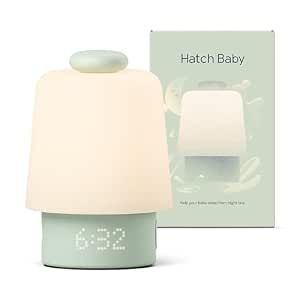 | Best for Guided Routine Building | Color: Mint | Functions: Sound machine, night light, and routine builder | Sounds and content: Pink noise, heartbeat, stories, and songs | VIEW ON AMAZON | See Our Full Breakdown |
| VTech V-Hush Plug-In Sleep Soother and Night Light |  | Best for Personalized Audio | Power: Plugs into a standard wall outlet | Night light colors: More than 250 customizable colors | Audio content: More than 40 stories, songs, lullabies, and soothing sounds | VIEW ON AMAZON | See Our Full Breakdown |
| Tommee Tippee Dreammaker Baby Sleep Machine with Pink Noise, Red Night Light, and CrySensor |  | Best for Automatic Cry Response | Light type: Ambient red light with pulsing glow | Sound type: Pink noise described as womb sounds | CrySensor: Integrated; automatically activates light and sound on cry detection | VIEW ON AMAZON | See Our Full Breakdown |
| Dinosaur Kids Alarm Clock with App Control and Night Light |  | Best for Older Toddlers Learning Wake Times | Display: Digital | Power source: Corded electric | Materials: Silicone casing and plastic frame | VIEW ON AMAZON | See Our Full Breakdown |
| Baby Night Light and White Noise Machine with App Control |  | Best for Sound and Schedule Customization | Built-in sounds: 36 | Sound categories: 9 natural, 9 object, 9 environmental, and 9 sleep sounds | Night light: 7 adjustable colors; single-color and automatic-cycle modes | VIEW ON AMAZON | See Our Full Breakdown |
| Frida Baby 3-in-1 Alarm Clock, Sound Machine, and Nightlight |  | Best for Toddlers Learning Bedtime Cues | Sound options: 7: white noise, pink noise, heartbeat, lullaby, bird, waves, and wind | Sleep trainer colors: Red for bedtime, yellow 15 minutes before wake time, green for wake time | Timer settings: 15, 30, or 60 minutes | VIEW ON AMAZON | See Our Full Breakdown |
| Momcozy Smart White Noise Machine with Night Light |  | Best for App-Set Nursery Routines | Sound options: 34: 11 white noises, 3 fan sounds, 8 lullabies, and 12 nature sounds | Sound volume range: 40–110 dB | Night light: 7 colors | VIEW ON AMAZON | See Our Full Breakdown |
| Tommee Tippee Groclock Sleep Trainer Clock, Alarm Clock and Nightlight for Young Children, USB-Powered |  | Best Picture-Based Sleep Trainer | Power source: USB; cable included, adapter not included | Cable length: 1.8 m | Brightness control: Adjustable and can be turned off | VIEW ON AMAZON | See Our Full Breakdown |
| LittleHippo Mella Kids’ Sleep Trainer Alarm Clock with Night Light and Sound Machine, Arctic Blue |  | Best All-in-One Visual Sleep Trainer | Display type: LCD | Power source: Corded; requires a power adapter | Mounting type: Tabletop | VIEW ON AMAZON | See Our Full Breakdown |
| Babysense Baby Sound Machine with Night Light |  | Best for App Customization and Portability | Sounds: 28 sleep and wake-up sounds | Night light colors: 16 million | Brightness: Stepless dimming | VIEW ON AMAZON | See Our Full Breakdown |
| Fisher-Price Lumalou Better Bedtime Routine System |  | Best for Interactive Bedtime Routines | Age range: 0–8 years | Mounting: Wall-mounted | Functions: Sleep trainer, sound machine, and routine helper | VIEW ON AMAZON | See Our Full Breakdown |
More Details on Our Top Picks
Dreamegg Baby Sound Machine with Night Light and App Control
The Dreamegg is the most flexible pick here for families who want one device to coordinate sound, lighting, and wake routines. Its 34 sound choices span white noise, nature sounds, ambient audio, and melodies, while the app lets caregivers adjust settings remotely. The okay-to-wake clock, alarm, timer, child lock, and adjustable display brightness give it more routine controls than the focused Tommee Tippee Dreammaker, which centers on pink noise and automatic cry response rather than customizable schedules. That range is useful as a child’s bedtime needs change, but it also means more settings to manage. Remote control depends on the app, and the supplied details do not specify power or connectivity requirements, so I’d check those before choosing it for a particular nursery setup.
Pros:- 34 sound options cover white noise, nature sounds, ambient audio, and melodies.
- App control allows remote changes to sound, light, timers, and volume.
- Okay-to-wake clock and alarm support scheduled sleep and wake routines.
- Child lock and display brightness control add useful nursery adjustments.
Cons:- Remote adjustments rely on the companion app.
- The provided product details do not specify power or connectivity requirements.
Best for: Caregivers who want a broad sound library, adjustable night lighting, and app-managed sleep and wake routines in one device.
Not ideal for: Families who prefer simple, on-device controls or need confirmed power and connectivity details before buying.
- Sound options:34: 11 nature sounds, 7 ambient sounds, 6 white noise sounds, and 10 melodies
- Night light modes:Solid Color, Sunlight, and Dynamic
- Dynamic light options:Color Changing, Color Fading, and Sunlight Breathing
- Controls:App control
- Routine features:Timer, alarm clock, and okay-to-wake clock
- Additional controls:Child lock and display brightness control
Our verdict“Choose the Dreamegg if you want the broadest mix of app control, sound choices, and wake-routine features among these five picks.”
Hatch Baby Sound Machine and Night Light with Routine Builder (Mint)
Hatch suits parents who want to build a repeatable bedtime sequence through custom lights, sounds, and schedules rather than choose settings one night at a time. Remote setup through the Hatch Sleep app is convenient when a caregiver is away from the nursery, and the physical button and volume control offer a useful alternative for quick adjustments. Compared with the VTech V-Hush, which adds voice recording and Bluetooth streaming, Hatch puts more emphasis on its routine builder and included three months of Hatch+, with sleep guidance and premium content. That content may help families looking for structured support, but continued access may require an optional subscription, and app features require a compatible phone. I’d favor it over the VTech for guided scheduling, not for families who want the most varied listed audio formats.
Pros:- Routine builder combines customizable lights, sounds, and schedules.
- App enables remote settings and schedule changes.
- Three months of Hatch+ access includes sleep guidance and premium content.
- Physical button and volume control allow some direct adjustments.
Cons:- Continued Hatch+ access may require an optional subscription.
- App features require a compatible phone.
- The listed sound and content options are less extensive than the VTech V-Hush’s 40-plus audio items.
Best for: Parents who want app-scheduled bedtime routines and a short period of included sleep guidance to help establish consistent cues.
Not ideal for: Families who want to avoid app dependence or ongoing subscription options, or who value voice recording and Bluetooth audio streaming.
- Color:Mint
- Functions:Sound machine, night light, and routine builder
- Sounds and content:Pink noise, heartbeat, stories, and songs
- App control:Remote settings and schedules through the Hatch Sleep app
- Included subscription:Three months of Hatch+; optional subscription afterward
- In the box:Power adapter and instructions
Our verdict“Pick Hatch if guided, app-based routine building matters more to you than a broad audio library or subscription-free access to all content.”
VTech V-Hush Plug-In Sleep Soother and Night Light
The VTech V-Hush stands apart for families who want bedtime cues to include familiar voices and chosen audio, not just preset sounds. It offers more than 40 stories, songs, lullabies, and soothing sounds, plus voice recording and Bluetooth streaming from a phone. Its app also supports customizable light and sleep schedules, giving it some routine-building ability, though the supplied details do not specify a dedicated okay-to-wake display like the Dreamegg’s. The 250-plus light colors allow fine-grained nursery customization, but they may be more choice than a family needs for a simple sleep signal. Unlike the battery-free, adapter-included Hatch, this model plugs directly into a wall outlet, which avoids battery management but limits placement to an available outlet. App features also require a smartphone.
Pros:- More than 40 stories, songs, lullabies, and soothing sounds provide varied audio choices.
- Voice recording can add a familiar caregiver cue to the routine.
- Bluetooth supports streaming audio from a phone.
- App customization includes light colors and sleep schedules.
Cons:- Placement depends on access to a standard wall outlet.
- App features require a smartphone.
- The listed features do not include a dedicated okay-to-wake clock like the Dreamegg.
Best for: Caregivers who want to record their voice, stream audio, or choose from a large collection of stories and lullabies alongside app-set schedules.
Not ideal for: Families without a convenient wall outlet near the sleep space, or those who want an explicitly listed okay-to-wake clock.
- Power:Plugs into a standard wall outlet
- Night light colors:More than 250 customizable colors
- Audio content:More than 40 stories, songs, lullabies, and soothing sounds
- Connectivity:Bluetooth
- App:MyVTech Soother
- Voice recording:Supported
Our verdict“Choose the VTech V-Hush if personalized audio and voice recording matter more than flexible placement or a clearly specified wake-training clock.”
Tommee Tippee Dreammaker Baby Sleep Machine with Pink Noise, Red Night Light, and CrySensor
The Dreammaker takes a narrower approach than the Dreamegg: rather than offering an app-based menu of sounds and wake routines, it pairs pink noise and a pulsing red light with a CrySensor that activates the selected light and sound when it detects a baby crying. That automatic response may suit caregivers seeking a simple settling aid during the night, without relying on a phone to trigger it. Its light and audio are intentionally focused, though, so it does not provide the color variety of the VTech V-Hush or the Dreamegg’s mix of lighting modes and sounds. The product description cites scientific development and a sleep-laboratory connection, but the provided details don’t specify adjustable schedules or a child-facing okay-to-wake cue. The single red light color and possibility that it may feel too bright for some infants are meaningful limits.
Pros:- CrySensor automatically activates the chosen light and sound when crying is detected.
- Pink noise and a pulsing red glow create a consistent, focused settling cue.
- The simple feature set avoids the larger menus found on the Dreamegg and VTech V-Hush.
- Developed with a leading sleep laboratory, according to the product description.
Cons:- Night light is limited to red, unlike the color choices on the VTech V-Hush.
- The light may be too bright for some infants.
- Provided details do not list app control, schedule customization, or an okay-to-wake clock.
Best for: Caregivers of babies who want a focused pink-noise and red-light soother with automatic activation in response to cries.
Not ideal for: Families seeking multiple light colors, a broad sound library, app-based schedule controls, or a clear okay-to-wake signal.
- Light type:Ambient red light with pulsing glow
- Sound type:Pink noise described as womb sounds
- CrySensor:Integrated; automatically activates light and sound on cry detection
- Development:Created with a leading sleep laboratory
Our verdict“Pick the Dreammaker if automatic cry-triggered pink noise and red light are your priorities, and skip it if you need flexible training schedules or lighting choices.”
Dinosaur Kids Alarm Clock with App Control and Night Light
This dinosaur-themed clock is the clearest fit here for a child who is beginning to connect colored light cues with bedtime and wake-up time. It combines sleep-training lights with two alarms, snooze, six nature sounds, and app controls for alarms, lighting, brightness, sounds, and timers. That makes it more child-facing than the baby-focused Tommee Tippee Dreammaker, whose CrySensor responds to crying rather than teaching a child when it is time to get up. The silicone casing is designed to withstand drops up to five feet, a practical touch for a bedside device within a child’s reach. The tradeoff is a corded power requirement and a more playful design that may not suit every room. Its three display brightness levels also give fewer listed adjustment steps than a more configurable display might.
Pros:- Sleep-training colors and a gradual light mode provide visual routine cues.
- App control covers alarms, lights, brightness, sounds, and timers.
- Dual alarms, six nature sounds, and adjustable volume add routine flexibility.
- Silicone casing is designed to withstand drops up to five feet.
Cons:- Corded electric power limits placement to areas near an outlet.
- Three display brightness levels offer limited adjustment steps.
- Dinosaur styling may not suit families seeking a neutral nursery design.
Best for: Families with toddlers or young children who need a visual bedtime and wake-up cue, dual alarms, and a child-friendly, drop-resistant casing.
Not ideal for: Caregivers seeking a battery-powered or outlet-independent light, or a baby soother centered on automatic response to crying.
- Display:Digital
- Power source:Corded electric
- Materials:Silicone casing and plastic frame
- Dimensions:5.28 x 5.28 inches
- Alarms:Two
- Sounds and volume:Six white noise sounds and eight volume levels
- Night light settings:Three warm settings, gradual transition mode, and seven colors
- Controls and snooze:Bluetooth app control; five-minute snooze, up to three times
- Drop resistance and mounting:Designed for drops up to five feet; tabletop use
Our verdict“Choose this clock for a young child learning visual wake-time cues, but choose the Dreammaker instead if your priority is an infant-focused cry response.”
Baby Night Light and White Noise Machine with App Control
I’d choose this model for households that want the most variety in one compact sleep aid: 36 built-in sounds, seven light colors, Bluetooth audio, and app controls for timers and schedules. That flexibility can help parents tailor bedtime and nap routines without settling for a small preset library. Compared with the Frida Baby 3-in-1, it offers far more sound choices and remote adjustment, while Frida’s color-coded clock gives toddlers a more direct visual cue for when to get up. The tradeoff is that this model’s sleep-training benefit depends on its scheduled settings; the description doesn’t detail a child-facing wake-up display. App control also means reaching for a phone, and no power source or battery life is specified, making portability harder to judge.
Pros:- 36 built-in sounds across nine sound categories
- App controls can adjust sound, lighting, timers, and schedules remotely
- Seven light colors with single-color and automatic-cycle modes
- Bluetooth supports playback of additional audio
Cons:- App-based adjustments require a smartphone
- Power source and battery life are not specified
- Sleep-training cues are less clearly defined than a color-coded toddler clock
Best for: Parents who want many sound choices and app-adjustable light, sound, and sleep schedules for a nursery or multiple sleep spaces
Not ideal for: Families who want a clear, child-facing color clock or need confirmed cordless operation
- Built-in sounds:36
- Sound categories:9 natural, 9 object, 9 environmental, and 9 sleep sounds
- Night light:7 adjustable colors; single-color and automatic-cycle modes
- Controls:Manual buttons and app remote control
- Connectivity:Bluetooth
- Functions:White noise machine, night light, and sleep trainer
- Listed use locations:Strollers, cribs, nurseries, bedrooms, offices, and yoga rooms
Our verdict“Choose it if sound variety and app-set routines matter more than a clearly described visual wake-up cue.”
Frida Baby 3-in-1 Alarm Clock, Sound Machine, and Nightlight
The Frida Baby 3-in-1 earns its place for making sleep training easy to read: red signals bedtime, yellow marks the 15-minute warning, and green means it’s time to wake. That simple sequence gives toddlers a clearer cue than the Tommee Tippee Groclock’s colorful picture-based time display, while the Groclock offers two programmable settings and an optional audible alarm. Frida also combines a sound machine and three-level warm nightlight, with a toddler lock to help keep settings in place. Its seven built-in sounds are a smaller selection than the 34 on the Momcozy, so it’s less suited to parents who want a broad sound library. Bluetooth lets you set the clock and play custom sounds, but phone dependence for those controls may frustrate families seeking fully onboard customization.
Pros:- Red, yellow, and green cues break bedtime and wake-up into clear stages
- Combines sleep-training clock, sound machine, and nightlight
- Three warm-glow levels and blackout mode offer lighting flexibility
- Toddler lock helps prevent children from changing settings
Cons:- Seven built-in sounds are fewer than the options on the Momcozy
- Bluetooth setup and custom sounds require a phone
- The listed timer choices are limited to 15, 30, or 60 minutes
Best for: Parents of toddlers who need a simple, color-coded bedtime and wake-up routine with a built-in nightlight
Not ideal for: Families who want many built-in sounds or prefer not to use a phone for Bluetooth setup and custom audio
- Sound options:7: white noise, pink noise, heartbeat, lullaby, bird, waves, and wind
- Sleep trainer colors:Red for bedtime, yellow 15 minutes before wake time, green for wake time
- Timer settings:15, 30, or 60 minutes
- Nightlight:3 warm-glow levels
- Connectivity:Bluetooth
- Additional features:Toddler lock, backlit buttons, and blackout mode
Our verdict“Pick Frida Baby if a toddler-friendly color routine matters more than a large sound library or phone-free control.”
Momcozy Smart White Noise Machine with Night Light
Momcozy is a practical match for parents who want app scheduling in a plug-in sound machine rather than a toddler-facing training clock. Its 34 sounds span white noise, fans, lullabies, and nature, while the app or device controls can adjust brightness and schedules. Compared with the Baby Night Light and White Noise Machine with App Control, Momcozy specifies its power setup and offers a stated volume range, but it requires a 2.4 GHz Wi-Fi network for app control rather than relying on Bluetooth. That makes home scheduling more explicit, at the cost of network compatibility and freedom from an outlet. The seven-color light adds atmosphere, though the description doesn’t identify a distinct color-coded wake-up cue. I’d favor Frida Baby instead if a child needs a simple visual signal for when to get out of bed.
Pros:- 34 sounds cover white noise, fan sounds, lullabies, and nature
- Sound, brightness, and schedules can be adjusted through the app or device controls
- Seven light colors allow a change in nighttime lighting
- Specified 40–110 dB volume range gives parents a defined adjustment range
Cons:- Requires a continuous power connection
- App control requires a 2.4 GHz Wi-Fi network and does not support 5 GHz
- Does not specify a distinct color-coded wake-up cue like the Frida Baby clock
Best for: Caregivers who want a plug-in nursery sound machine with app-set schedules, adjustable volume, and touch controls
Not ideal for: Families needing a cordless or travel-ready unit, or whose home network only supports 5 GHz Wi-Fi
- Sound options:34: 11 white noises, 3 fan sounds, 8 lullabies, and 12 nature sounds
- Sound volume range:40–110 dB
- Night light:7 colors
- Connectivity:2.4 GHz Wi-Fi required for app control
- Controls:Companion app and device controls
- Power:Plug-in; use a certified 5V 1A/2A adapter or reputable phone charger
Our verdict“Choose Momcozy for scheduled nursery sound and light settings if a compatible Wi-Fi network and outlet are available.”
Tommee Tippee Groclock Sleep Trainer Clock, Alarm Clock and Nightlight for Young Children, USB-Powered
The Groclock puts the sleep-training lesson ahead of sound features: colorful pictures help toddlers grasp when to stay in bed and when it’s time to get up. That makes it a focused alternative to the LittleHippo Mella, which uses colors and facial expressions, and to Frida Baby’s red-yellow-green cues. Groclock’s edge is routine flexibility, with two programmable settings for weekday/weekend schedules or a nap and an optional audible alarm. It also works as a nightlight, and brightness can be turned off for children who sleep better without a glow. Unlike Mella, the listing doesn’t include sound-machine options, so it won’t replace a separate device for soothing audio. USB power avoids battery changes, but the adapter is not included.
Pros:- Colorful pictures make wake-time concepts more approachable for young children
- Two programmable settings support weekday/weekend or nap routines
- Adjustable brightness can be lowered or turned off
- USB power avoids reliance on disposable batteries
Cons:- USB adapter is not included
- No built-in sound-machine options are specified
- Optional digital clock and audible alarm may require additional setup
Best for: Parents of toddlers who respond well to pictures and need separate programmed wake times for weekdays and weekends or naps
Not ideal for: Families seeking built-in sleep sounds or a ready-to-plug-in package with the power adapter included
- Power source:USB; cable included, adapter not included
- Cable length:1.8 m
- Brightness control:Adjustable and can be turned off
- Nightlight:Yes
- Digital clock:Optional display
- Time settings:2 programmable settings
- Audible alarm:Optional
Our verdict“Choose Groclock if picture-based time cues and two routine settings matter more than integrated soothing sounds.”
LittleHippo Mella Kids’ Sleep Trainer Alarm Clock with Night Light and Sound Machine, Arctic Blue
Mella brings the sleep-training signal directly to a child’s bedside: colors and facial expressions show when it is bedtime and when waking is allowed. It’s a more expressive visual approach than the Tommee Tippee Groclock’s picture-based display, while Frida Baby adds an intermediate yellow warning before its green wake cue. Mella also includes three sleep sounds, five light colors, three alarm sounds, and countdown timers, so parents can build a simple routine without adding a separate clock and nightlight. Its small tabletop footprint may suit a bedside table, but the corded setup limits where it can go and the listing doesn’t specify battery backup. The sound selection is modest beside the 34 options on Momcozy, making Mella a better fit for families prioritizing clear training cues over sound variety.
Pros:- Colors and facial expressions give children an easy-to-read sleep and wake signal
- Combines a sleep trainer, nightlight, alarm, and sound machine
- Five night-light colors and countdown timers support a customizable routine
- ABS plastic and silicone construction is specified as child-safe
Cons:- Requires a power adapter and no battery backup is specified
- Three sleep sounds offer less variety than the Momcozy’s 34 options
- Tabletop use and corded power limit placement flexibility
Best for: Parents of young children who want a compact bedside trainer with visual bedtime and wake-up cues, basic sounds, and countdown timers
Not ideal for: Families who need a portable or cordless device, or want an extensive sound library and confirmed battery backup
- Display type:LCD
- Power source:Corded; requires a power adapter
- Mounting type:Tabletop
- Sleep sound options:3
- Night-light colors:5
- Alarm sounds:3
- Dimensions and weight:4.25 in W × 4.5 in H; 8 oz
- Materials and color:ABS plastic and silicone; Arctic Blue
Our verdict“Choose Mella for clear visual sleep cues and a compact bedside setup, not for portability or a large sound selection.”
Babysense Baby Sound Machine with Night Light
The Babysense Baby Sound Machine suits parents who want app-set routines and a light they can tailor to a nursery, without paying for ongoing app access. Its 28 sleep and wake-up sounds, stepless dimming, and wide color selection give families room to adjust the sleep environment as a child’s preferences change. Compared with the Hatch Baby Sound Machine and Night Light with Routine Builder, Babysense puts portability front and center: its rechargeable battery supports more than 10 hours of continuous sound and light, or up to 22 hours of mixed use. Physical controls also offer a fallback when app access is inconvenient. The tradeoff is that app connectivity requires 2.4GHz Wi-Fi, not 5GHz, and this is more of a customizable sound-and-light aid than a dedicated visual sleep trainer.
Pros:- 28 sleep and wake-up sounds give families varied audio choices.
- Stepless brightness adjustment and 16 million color options allow tailored nursery lighting.
- Rechargeable battery supports portable use without requiring constant wall power.
- App access and family sharing for up to three people are included without subscription fees.
Cons:- App connectivity requires a 2.4GHz Wi-Fi network and does not support 5GHz.
- Battery runtime varies by use, and continuous sound and light last over 10 hours rather than up to 22 hours.
- Its sound and light routines do not provide the child-facing visual sleep cues found on the Fisher-Price Lumalou.
Best for: Parents who want remotely adjustable sounds, colors, and routines in a rechargeable device they can move between rooms.
Not ideal for: Families whose home Wi-Fi uses only 5GHz, or parents seeking a dedicated visual clock that teaches a child when to stay in bed.
- Sounds:28 sleep and wake-up sounds
- Night light colors:16 million
- Brightness:Stepless dimming
- Battery life:Over 10 hours of continuous sound and light; up to 22 hours of mixed use
- Charging:USB Type-C rechargeable
- Wi-Fi requirement:2.4GHz; 5GHz not supported
- App:Free, with no subscription or fees
- Physical controls:Yes
- Family sharing:Up to 3 family members
Our verdict“Choose Babysense if you want a portable, app-customizable sound machine and night light, but pick a dedicated sleep trainer if your child needs visual wake-up guidance.”
Fisher-Price Lumalou Better Bedtime Routine System
The Fisher-Price Lumalou is the most task-focused choice here: it pairs a sleep trainer and sound machine with a routine helper that gives children on-screen icons and remote-guided tasks. That makes it a stronger fit for families working on predictable bedtime steps than the Babysense, which offers more portable, customizable light and sound but lacks the same interactive routine cues. The Smart Connect app lets caregivers set sleep and wake times and personalize routines, while multi-color lights and soothing music support the wind-down period. Its wall-mounted design keeps the unit off a nightstand or floor. The compromises are a smartphone app requirement for initial setup and remote batteries that need replacing. It is designed for children up to age 8, so families wanting a longer-lasting or travel-friendly option may prefer another device.
Pros:- Combines sleep training, soothing audio, and bedtime routine support in one system.
- App customization lets caregivers set routines and sleep and wake times.
- Remote task icons and visual rewards help make routine steps easier for children to follow.
- Wall mounting saves floor and nightstand space.
Cons:- A compatible smartphone and app are required for initial setup.
- The remote requires batteries that need periodic replacement.
- Its stated age range ends at 8 years, and the wall-mounted design is less suited to portable use than Babysense.
Best for: Caregivers of babies and young children who want a wall-mounted system that guides bedtime tasks and supports a repeatable sleep routine.
Not ideal for: Families who need a portable, rechargeable light, want to avoid app setup, or expect a sleep trainer to serve a child beyond age 8.
- Age range:0–8 years
- Mounting:Wall-mounted
- Functions:Sleep trainer, sound machine, and routine helper
- App compatibility:Smart Connect app for iOS and Android
- Lighting:Multi-color LED lights
- Audio:Soothing music and sleep playlists
- Control:Remote with task icons
Our verdict“Choose Lumalou if your priority is a structured, interactive bedtime routine for a young child rather than a portable, highly customizable night light.”

How We Picked
I compared these products by how directly they support the promise in this roundup: pairing a night light with a sleep-training cue, rather than offering light and sound alone. I gave greater weight to clear routine controls, child-readable cues, and the ability to fit bedtime and wake-up habits than to a long list of soothing sounds. I also considered setup demands, whether controls rely on an app or are available on the device, and how readily the product could fit a family’s existing routine.
The order reflects those differences. Products with explicit routine-building or sleep-training functions rank ahead of options that mainly provide white noise, night lighting, or comfort features. I also weighed ease of use and audience fit: a focused clock can be a stronger training tool than a feature-rich sound machine, while a simple plug-in soother may work better for caregivers who do not want app controls. Because the product list spans infant soothing and child wake-time training, I distinguish those jobs rather than treating them as interchangeable.
Factors to Consider When Choosing Smart Night Lights With Sleep Training Modes
Before choosing, decide what behavior you want the device to support. A soothing night light can help shape the sleep environment, but a training mode needs a clear, repeatable signal your child can understand. These broader questions can help you avoid buying features that do not match your family’s routine.
Decide Whether You Need Soothing or a Training Cue
Start with the problem you want to solve: settling at bedtime, signaling when it is okay to get up, or both. White noise and a dim light may support a calm sleep setting, but they do not necessarily teach a child to wait until morning. A color change, clock face, or scheduled cue is more directly tied to learning a routine. A common mistake is to assume that any smart or app-connected night light includes genuine sleep-training functions. Check what the child sees and hears at the relevant times, not just how many settings the caregiver can adjust. If your child is still an infant, soothing features may matter more now; an older child may benefit more from a clear wake-up signal.
Choose a Cue Your Child Can Understand
A sleep cue only helps if your child can recognize it without needing you to explain it again every night. Visual clocks and distinct light states can make the rule more concrete than a sound or a setting hidden in an app. Match the cue to your child’s age, language skills, and comfort with clocks or colors. Avoid changing the signal often, since consistency is part of how a routine becomes familiar. Also think about whether siblings share a room: a bright display or audible alert that works for one child may wake another. The simplest readable cue can be more useful than a more elaborate feature set.
Balance App Flexibility With Bedtime Simplicity
App control can make it easier to adjust schedules, light colors, and sound from another room, but it adds setup and account or phone dependence. On-device buttons or a dedicated clock can be easier when a caregiver needs to make a quick change without opening an app. Decide who will manage the settings and whether that person will be available at bedtime and early morning. Before buying, check which functions work directly on the unit and which require a phone. Do not choose an app-led model for flexibility alone if the routine will be managed by someone who prefers physical controls. The best interface is the one your household will use consistently.
Check Nighttime Light and Sound Behavior
Consider how the device behaves after lights-out, not only how it looks during setup. A display that is too bright, a sound that changes unexpectedly, or an alert that is hard to disable can undermine the quiet routine you are trying to build. Look for controls that let you distinguish a gentle night light from a wake-up signal. If sound is part of the plan, consider whether you want steady white noise, other soothing audio, or no sound at all. Avoid paying for extensive sound options if your child responds mainly to a visual cue. Give equal attention to how easily you can keep the nighttime setting predictable.
Plan for Placement, Power, and Nightly Operation
Placement affects both usefulness and safety: a cue must be visible to the child, while cords and controls should stay out of reach where appropriate. A plug-in design can save surface space but limits placement to a suitable outlet; a tabletop unit may offer more flexibility but occupies bedside room. Check the power arrangement and whether the product’s intended location matches your nursery or child’s bedroom. Think through who will turn it on, change its routine, and respond if the schedule needs an adjustment. A device that fits the room and the family’s habits is more likely to become part of the routine than one that requires daily workarounds. Keep the setup simple enough that caregivers can use it the same way.
Pay for Features That Match Your Child’s Stage
More modes are not automatically more useful, especially when a child needs one clear bedtime rule. An infant-focused sound machine may be a sensible fit for soothing now, while an older child may get more from a dedicated wake-time trainer. If you expect to use the product across stages, check whether its controls and cues remain relevant as your child grows. A premium app system makes more sense when you will use its routine customization, rather than as a substitute for a consistent bedtime plan. For a beginner, a straightforward clock or light cue may be easier to introduce than several overlapping modes. Choose for your present routine first, then treat future flexibility as a bonus.
Frequently Asked Questions
Does every night light with white noise actually train a child to sleep?
No. White noise and a gentle light can support a calming sleep environment, but sleep training usually calls for a repeatable cue tied to bedtime or wake-up time. A child-facing clock or scheduled light signal is more directly suited to teaching when it is time to stay in bed or get up. Check the product’s stated modes and how the cue works before treating it as a trainer. If you mainly need help settling a baby, a sound-focused model may still fit, but it serves a different purpose.
Should I choose an app-controlled model or a dedicated sleep trainer clock?
Choose an app-controlled model if caregivers want to set or adjust routines from a phone and will use those controls regularly. A dedicated clock may be a better match if your child needs a visible, consistent wake-up cue and you want fewer settings to manage. App access does not automatically make the child-facing signal clearer. Check whether routine changes can also be made on the device, especially if more than one caregiver handles bedtime. The right choice depends on who controls the routine and who needs to understand the cue.
Is one device suitable from the baby stage through preschool?
It depends on whether the product’s functions match each stage. Babies may benefit more from soothing sound and a gentle night light, while preschoolers often need a clear visual signal for when to get up. A sound machine can remain useful as a child grows, but its soothing features do not replace a sleep-training display. Think about the main need for the next stage, not just the features that sound versatile today. If you want one device for years, verify that its controls and cues can adapt to a child’s changing routine.
What should I check before relying on a light cue for early mornings?
Check that the cue is easy for your child to distinguish and that its schedule can match your household’s morning routine. A color or clock signal only works if the child understands what it means and sees it from the bed. Consider whether the display is visible without being distracting at night, and whether the wake-up indication includes sound that could disturb someone else. Keep the rule simple and repeat it consistently rather than changing the signal day to day. If the child cannot interpret the cue yet, a caregiver-led routine may still be needed.
Which features are worth prioritizing if I want to avoid unnecessary complexity?
Prioritize the feature tied to your actual challenge: a routine schedule, a child-readable wake-up cue, or soothing sound. Then look for straightforward controls and a nighttime setting that will not disrupt sleep. Extra sounds, app options, and multiple light effects may be useful for some households, but they can add setup without improving the core routine. Compare what is controlled on the device with what requires a phone, and consider who will use it each night. A focused product that fits your habits can be easier to use consistently than a more elaborate system.
Conclusion
For most families seeking connected routine control, I’d start with the Hatch Baby Sound Machine and Night Light with Routine Builder as the best overall pick. The Tommee Tippee Groclock is my choice for a child who needs a direct, clock-based wake-up cue, while the LittleHippo Mella suits shoppers looking for a dedicated sleep-trainer clock with added sound and light functions. For beginners who prefer a straightforward plug-in setup, the VTech V-Hush is a simpler starting point, though its soothing focus is not the same as a dedicated wake-time trainer. If your priority is baby soothing, compare the sound-focused Dreamegg, Momcozy, and Babysense options; choose a routine-led model instead if teaching a child when to get up is the main goal.
Halloween Picks
halloween
As an affiliate, we earn on qualifying purchases.