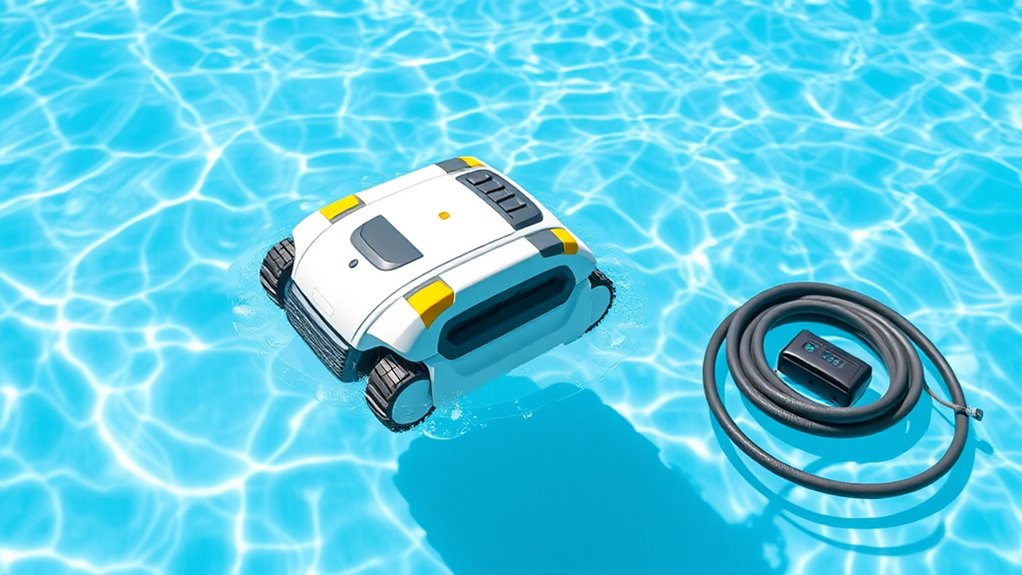

Pressure side pool cleaners use a dedicated return line or booster pump to blast debris into a filter bag, making them the go-to choice for pools that collect leaves, acorns, and other heavy debris that robots and suction cleaners struggle with. For most in-ground pool owners, the Polaris Vac-Sweep 360 is the best overall pick because it runs without a booster pump, offers three jets for strong cleaning action, and has a long track record of reliability. If you want maximum power and a larger debris capacity, the Polaris Vac-Sweep 380 is the premium alternative, while the Amptyhub Upgraded 4-Wheel Sweeper stands out as a value option for above-ground and smaller in-ground pools. The main tradeoffs in this category come down to whether your pool has a dedicated booster line, how much debris you deal with weekly, and how much you want to spend on a machine versus ongoing wear parts. Keep reading for the full breakdown of all eleven models.

Get furniture and decor delivered free with Prime
- Fast, free delivery on millions of items
- Prime Video, Amazon Music and more included
- Member-only deals all year
Complete the kit


Key Takeaways
- Booster pump compatibility is the single biggest divider in this lineup: the Polaris 380, 280, and Pentair Platinum require a dedicated 3/4 hp booster pump, while the Polaris 360 and 65 and all three MAKHOON and both Amptyhub models run off a standard return line — choosing wrong means an expensive retrofit or a cleaner that barely moves.
- Brand-name Polaris models cost more upfront but have decades of documented parts availability, so worn tires, bearings, and bags are easy to replace; the budget MAKHOON and Amptyhub units trade that support network for a lower entry price.
- The Polaris 380’s three-jet design and the Quattro T2’s oversized debris chamber outperformed two-jet models conceptually for heavy leaf loads, but both demand more water pressure to perform — underpowered pools will see them crawl instead of clean.
- The Polaris 65 is the only model here designed for above-ground pools; every other option assumes an in-ground installation with a proper wall fitting and dedicated pressure line.
- Four-wheel models (both Amptyhub units and all three MAKHOON variants) climb walls and handle deep-end transitions more consistently than three-wheel designs like the Polaris 360, but they typically sacrifice some turning agility in tight pool corners.
| Amptyhub Upgraded 4-Wheel Pool Pressure Side Sweeper |  | Best for Stable Coverage | Wheel design: 4 wheels | Pool type: In-ground | Fitting: Threaded 1-1/2-inch female pipe | VIEW ON AMAZON | See Our Full Breakdown |
| Polaris Vac-Sweep 360 Pressure-Side Cleaner for In-Ground Pools |  | Best Without a Booster Pump | Pool type: In-ground | Power source: Pool return-line water pressure | Booster pump: Not required | VIEW ON AMAZON | See Our Full Breakdown |
| Amptyhub Pool Pressure Side Sweeper with Four Wheels |  | Best for Replacement-Part Compatibility | Brand: Amptyhub | Wheel count: 4 | Pool type: In-ground | VIEW ON AMAZON | See Our Full Breakdown |
| MAKHOON Four-Wheel Pressure-Side Pool Cleaner |  | Best for Specified Pressure Requirements | Cleaning type: Pressure-side | Power source: Hydraulic | Required inlet: 1.5-inch female thread | VIEW ON AMAZON | See Our Full Breakdown |
| Polaris Vac-Sweep 65 Pressure-Side Automatic Pool Cleaner |  | Best for Above-Ground Pools | Model: 6-130-00 | Pool type: Above-ground | Compatible surfaces: Vinyl or fiberglass | VIEW ON AMAZON | See Our Full Breakdown |
| Polaris Vac-Sweep 380 Pressure-Side Pool Cleaner |  | Best for Heavy Debris Loads | Power Source: Separate Polaris booster pump | Cleaning Time: 3 hours or less | Pool Compatibility: In-ground; vinyl, fiberglass, gunite, pebble, and tile | VIEW ON AMAZON | See Our Full Breakdown |
| Pentair Kreepy Krauly Platinum Pressure-Side Inground Pool Cleaner, White/Gray |  | Best Wall Coverage | Model: LL505PM | Pool Type: In-ground | Coverage: Floors and walls | VIEW ON AMAZON | See Our Full Breakdown |
| Polaris Vac-Sweep 280 Pressure-Side In-Ground Pool Cleaner |  | Best Value Pressure-Side Workhorse | Pool Type: In-ground | Power Source: AC via separate booster pump | Cleaning Time: 3 hours or less | VIEW ON AMAZON | See Our Full Breakdown |
| Polaris Quattro T2 Pressure Side Pool Cleaner for Inground Pools |  | Best Premium Pick | Power Source: Dedicated booster pump (sold separately) | Installation Type: Pressure side | Debris Intake: 2.75 inches | VIEW ON AMAZON | See Our Full Breakdown |
| MAKHOON Pool Pressure Side Sweeper with 4 Wheels |  | Best Budget Alternative | Power Source: Hydraulic (booster pump) | Installation Type: Pressure side | Required Inlet: 1.5-inch female thread | VIEW ON AMAZON | See Our Full Breakdown |
| MAKHOON Upgrade Pool Pressure Side Sweeper with 4-Wheel Structure |  | Best Budget Backup Unit | Design: 4-wheel structure | Fitting: Threaded 1-1/2″ female pipe fitting | Requires booster pump: Yes (not included) | VIEW ON AMAZON | See Our Full Breakdown |
| pressure side pool cleaner | Pool type | Power source |
|---|---|---|
| Amptyhub Upgraded 4-Wheel Pool | In-ground | — |
| Polaris Vac-Sweep 360 Pressure | In-ground | Pool return-line water pressure |
| Amptyhub Pool Pressure Side Sw | In-ground | — |
| MAKHOON Four-Wheel Pressure-Si | — | Hydraulic |
| Polaris Vac-Sweep 65 Pressure- | Above-ground | — |
| Polaris Vac-Sweep 380 Pressure | — | Separate Polaris booster pump |
| Pentair Kreepy Krauly Platinum | In-ground | — |
| Polaris Vac-Sweep 280 Pressure | In-ground | AC via separate booster pump |
| Polaris Quattro T2 Pressure Si | — | Dedicated booster pump (sold separately) |
| MAKHOON Pool Pressure Side Swe | — | Hydraulic (booster pump) |
| MAKHOON Upgrade Pool Pressure | In-ground pools | — |
More Details on Our Top Picks
Amptyhub Upgraded 4-Wheel Pool Pressure Side Sweeper
The four-wheel layout gives this Amptyhub a stability-focused role among the booster-pump cleaners here. It suits in-ground pool owners who want broad floor coverage and already have the required pump and a threaded 1-1/2-inch female fitting. Compared with the Polaris Vac-Sweep 360, it needs a separate booster pump, while the 360 runs from return-line pressure; that makes this pick less convenient for an unprepared pool setup. Its compatibility with Polaris 380 replacement debris bags can simplify routine part replacement, though the supplied information does not specify a bag or hose length. Jet power may need adjustment before it reaches every part of the pool, so owners should expect some setup tuning. I’d choose it for stability and familiar replacement-part compatibility, not for pump-free operation.
Pros:- Four-wheel design is intended to provide more stability than three-wheel models
- Wide ground coverage is suited to varied in-ground pool shapes
- Debris bags compatible with Polaris 380 replacement parts
- Threaded 1-1/2-inch female pipe fitting is specified for installation
Cons:- Requires a separate booster pump, which is not included
- Jet power may need adjustment to cover the full pool
Best for: In-ground pool owners with a booster pump who want a four-wheel cleaner and access to 380-compatible replacement bags
Not ideal for: Owners without a booster pump or who want a cleaner that runs from a standard return line without added equipment
- Wheel design:4 wheels
- Pool type:In-ground
- Fitting:Threaded 1-1/2-inch female pipe
- Booster pump:Required; not included
- Debris bag compatibility:Polaris 380 replacement parts
- Cleaning setup:Pressure-side sweeper
Our verdict“Choose this Amptyhub if your in-ground pool already has a booster pump and stable four-wheel coverage is your priority.”
Polaris Vac-Sweep 360 Pressure-Side Cleaner for In-Ground Pools
The Polaris Vac-Sweep 360 stands apart from the other in-ground pressure-side picks by running on pool return-line pressure, so it avoids the separate booster pump required by the Amptyhub four-wheel sweepers. Its three venturi jets and 2.25-inch inlet are designed to handle larger debris, while the filter bag keeps collected leaves and grit out of the pool’s pump basket and filter. That setup makes it a practical choice for owners whose plumbing supports it, but it still needs a suitable return line; a standard line may require a retrofit. The included 31-foot hose offers more reach than the Polaris Vac-Sweep 65’s 24-foot hose, though the 65 is built for above-ground pools rather than in-ground use. I’d put the 360 ahead when avoiding a booster pump matters most.
Pros:- Runs from pool return-line water pressure without a booster pump
- Three venturi jets and a 2.25-inch inlet are designed for large debris
- Filter bag captures debris before it reaches the pool pump basket and filter
- Specified for vinyl, fiberglass, gunite, pebble, and tile surfaces
Cons:- Needs a suitable return-line setup; a standard line may require a retrofit kit
- The included filter bag is single-chamber
Best for: In-ground pool owners with a suitable return-line setup who want pressure-side cleaning without a separate booster pump
Not ideal for: Owners whose pool lacks a compatible return line and who do not want to retrofit the plumbing
- Pool type:In-ground
- Power source:Pool return-line water pressure
- Booster pump:Not required
- Venturi jets:3
- Inlet size:2.25 inches
- Feed hose length:31 feet
- Included filter bag:Single-chamber
- Compatible surfaces:Vinyl, fiberglass, gunite, pebble, and tile
- Return-line setup:Dedicated line recommended; standard line can be retrofitted
Our verdict“Pick the Vac-Sweep 360 if your in-ground pool supports its return-line connection and you want to avoid a booster pump.”
Amptyhub Pool Pressure Side Sweeper with Four Wheels
This Amptyhub has a straightforward appeal for owners who want a four-wheel in-ground sweeper and value access to Polaris 380-compatible replacement parts. Its specified plastic construction and familiar threaded 1-1/2-inch female-pipe fitting give buyers useful setup details, though they do not remove the need for a separate booster pump. Compared with the MAKHOON Four-Wheel Pressure-Side Pool Cleaner, this model does not specify a 4-bar pressure requirement or a stated weight, while MAKHOON lists both; the Amptyhub’s supplied data is less demanding to interpret but still leaves pump and jet adjustment to the owner. It is similar in broad role to the other Amptyhub four-wheel model in this group, so I’d pick it when the stated material and 380-part compatibility matter. Owners seeking pump-free operation should look at the Polaris Vac-Sweep 360.
Pros:- Four-wheel design is intended to improve stability over three-wheel models
- Compatible with Polaris 380 replacement parts
- Specified high-quality plastic construction
- Threaded 1-1/2-inch female-pipe fitting is identified
Cons:- Requires a separate booster pump that is not included
- Jet power may need adjustment for full-pool coverage
- Supplied product data does not state hose length or a required operating pressure
Best for: In-ground pool owners with a booster pump who want a plastic four-wheel sweeper and 380-compatible replacement parts
Not ideal for: Pool owners who need a no-booster setup or a cleaner with clearly specified pressure and hose requirements
- Brand:Amptyhub
- Wheel count:4
- Pool type:In-ground
- Fitting:Threaded 1-1/2-inch female pipe
- Power requirement:Separate booster pump; not included
- Debris bag compatibility:Polaris 380 replacement parts
- Material:Plastic
Our verdict“Choose this Amptyhub when you have a booster pump and want a four-wheel cleaner with specified 380-compatible replacement parts.”
MAKHOON Four-Wheel Pressure-Side Pool Cleaner
The MAKHOON Four-Wheel is the clearest fit here for owners whose pool already has its specified dedicated inlet and can supply 4-bar water pressure. Those requirements make it less flexible than the Polaris Vac-Sweep 360, which uses return-line pressure without a separate booster pump, and similar in pump dependence to the Amptyhub four-wheel models. MAKHOON does at least spell out the connection and pressure conditions, helping buyers check fit before installation. Its adjustable hose setup can suit different pool lengths, but the hose may need tuning to limit tangling, adding setup work. At 8.19 kg, it is also a substantial unit to handle compared with an unspecified-weight option such as the Amptyhub. I’d shortlist it only when the pool plumbing matches its stated inlet and pressure needs.
Pros:- Four-wheel design is intended to cover a wider area
- Required 1.5-inch female-thread inlet is clearly specified
- 4-bar water-pressure requirement gives owners a concrete plumbing check
- Hose setup can be adjusted for different pool lengths
Cons:- Requires a separate booster pump, sold separately
- Not suitable for pools without the dedicated inlet
- Hose adjustments may be needed to prevent tangling
- Specified weight of 8.19 kg may make handling less convenient
Best for: In-ground pool owners with a dedicated 1.5-inch female-thread inlet and a booster-pump setup capable of the specified pressure
Not ideal for: Owners without the dedicated inlet, without a booster pump, or who want a cleaner that needs little hose adjustment
- Cleaning type:Pressure-side
- Power source:Hydraulic
- Required inlet:1.5-inch female thread
- Required water pressure:4 bar
- Booster pump:Required; sold separately
- Pool compatibility:In-ground pools with a dedicated inlet
- Wheels:4
- Weight:8.19 kg
- Color:Black and white
Our verdict“Choose the MAKHOON if your in-ground pool meets its inlet and pressure requirements and you can accommodate hose tuning.”
Polaris Vac-Sweep 65 Pressure-Side Automatic Pool Cleaner
The Polaris Vac-Sweep 65 fills a different niche from the in-ground cleaners above: it is designed for uneven-bottom above-ground pools up to five feet deep. It uses the pool’s filtration system and captures leaves, twigs, and pebbles in a detachable bag before they reach the filter, which can reduce debris sent through the pool’s main filtration path. The included 24-foot hose is specified for pools up to 24 feet round. Unlike the Polaris Vac-Sweep 360, it is not a broad in-ground option with a 31-foot hose and multi-surface compatibility; its narrower pool fit is the point. Owners should also be prepared to troubleshoot movement, since the cleaner may circle or fail to move. I’d choose it for a compatible above-ground pool, not as a substitute for an in-ground pressure-side model.
Pros:- Designed for uneven-bottom above-ground pools
- Detachable bag captures leaves, twigs, and pebbles before they reach the pool filter
- Uses the existing filtration system
- Includes a 24-foot float hose and debris bag
Cons:- Compatibility is limited to suitable above-ground pools up to 24 feet round
- Movement may require troubleshooting if it circles or fails to move
- Specified for pools no deeper than 5 feet
Best for: Owners of vinyl or fiberglass above-ground pools up to 24 feet round, five feet deep, with uneven bottoms
Not ideal for: In-ground pool owners, pools larger than the stated size, or buyers who want dependable movement without troubleshooting
- Model:6-130-00
- Pool type:Above-ground
- Compatible surfaces:Vinyl or fiberglass
- Maximum pool depth:5 feet
- Hose length:24 feet
- Maximum pool size:24 feet round
- Connection:1.5-inch threaded return line
- Cleaning time:Three hours or less
- Included:24-foot float hose, filter bag, and owner’s manual
Our verdict“Choose the Vac-Sweep 65 if your above-ground pool fits its size and depth limits and you want debris collected before it reaches the filter.”
Polaris Vac-Sweep 380 Pressure-Side Pool Cleaner
The Vac-Sweep 380 stands out for its three venturi jets, which give it more cleaning thrust than the two-jet Polaris 280 and translate into faster coverage and stronger debris pickup. That extra power matters most for pools surrounded by trees, where leaves, acorns, and pebbles pile up quickly — the 2.25-inch inlet and oversized filter bag swallow material that would clog suction-side cleaners. It finishes most pools in under three hours while scrubbing both floors and walls across virtually every surface type. Compared with the Pentair Kreepy Krauly Platinum, the 380 trades a bit of wall-climbing stability for raw debris-moving capacity. The tradeoff is real, though: a separate Polaris booster pump is required, which adds to the total investment if your setup doesn’t already have one.
Pros:- Three venturi jets deliver stronger thrust and faster cleaning than two-jet rivals
- Large 2.25-inch inlet handles leaves, acorns, and pebbles
- Sweeps and scrubs both floors and walls
- Works on vinyl, fiberglass, gunite, pebble, and tile surfaces
Cons:- Requires a separate Polaris booster pump sold separately
- Single-chamber filter bag needs frequent emptying during heavy debris seasons
Best for: Owners of in-ground pools in leafy yards who need to clear large, heavy debris quickly
Not ideal for: Buyers on a tight budget or without an existing booster pump, since the added pump raises the total cost
- Power Source:Separate Polaris booster pump
- Cleaning Time:3 hours or less
- Pool Compatibility:In-ground; vinyl, fiberglass, gunite, pebble, and tile
- Inlet Size:2.25 inches
- Included Hose:31 feet
- Filter Bag:Single-chamber
Our verdict“This pick makes the most sense for debris-heavy in-ground pools where three-jet power and a wide inlet save time every week.”
Pentair Kreepy Krauly Platinum Pressure-Side Inground Pool Cleaner, White/Gray
Where the Polaris 280 focuses on floor-and-wall sweeping with twin jets, the Kreepy Krauly Platinum leans on a four-wheel platform and dual thrust jets that keep it planted on inclined surfaces — so it climbs walls without tipping, a common frustration with lighter cleaners. Most pools finish in 1–3 hours, and the large debris intake makes short work of leaf falls. Its surface flexibility is a genuine advantage: concrete, vinyl, and fiberglass are all supported without changing parts. Compared with the MAKHOON four-wheeler, the Platinum offers brand-backed engineering and a 33-foot hose, but the debris bag empties often during autumn, and like every pressure-side model here it demands an independent booster pump. This model is better suited to pool owners who prioritize wall and step coverage over raw debris volume.
Pros:- Four-wheel design resists tipping on inclines and walls
- Dual thrust jets improve climbing and coverage
- Compatible with concrete, vinyl-lined, and fiberglass pools
- Cleans most pools in 1–3 hours
Cons:- Requires an independent booster pump
- Debris bag needs regular emptying, especially during leaf season
Best for: In-ground pool owners with complex shapes, steps, and inclined walls where tipping is a problem
Not ideal for: Anyone expecting a plug-and-play purchase — the required booster pump adds cost and plumbing work
- Model:LL505PM
- Pool Type:In-ground
- Coverage:Floors and walls
- Compatible Surfaces:Concrete/gunite, vinyl-lined, fiberglass
- Hose Length:33 feet
- Cleaning Time:1–3 hours
- Weight:21 pounds
Our verdict“A strong choice for buyers whose priority is stable wall and incline cleaning rather than maximum debris capacity.”
Polaris Vac-Sweep 280 Pressure-Side In-Ground Pool Cleaner
The Vac-Sweep 280 is the proven budget entry in Polaris’s lineup: dual venturi jets, a 2.25-inch inlet, and a 31-foot feed hose included in the box. It cleans the same surface range as its bigger sibling, the 380, but with one less jet — meaning slightly slower coverage on heavy debris days, yet a lower total cost and fewer wear parts to replace over the years. At 6.2 pounds, it’s far lighter than the Polaris Quattro T2, which makes hauling it out of the pool and rinsing the filter bag a one-handed job. The tradeoffs: like all Polaris pressure-side models it needs a booster pump, and the manufacturer points buyers toward professional installation, so DIYers should budget for setup help. This option stands out for buyers who want the classic Polaris formula without paying for premium features.
Pros:- Lower-cost entry into the Polaris pressure-side lineup
- Light 6.2-pound body is easy to remove and service
- Collects both small and large debris through a 2.25-inch inlet
- 31-foot feed hose and filter bag included
Cons:- Requires a separate booster pump
- Professional installation is listed, adding setup cost
Best for: Budget-conscious in-ground pool owners who want the classic Polaris design at a lower entry cost
Not ideal for: Hands-off DIYers hoping to self-install, since professional installation is recommended
- Pool Type:In-ground
- Power Source:AC via separate booster pump
- Cleaning Time:3 hours or less
- Hose Length:31 feet
- Inlet Size:2.25 inches
- Weight:6.2 pounds
- Compatible Surfaces:Vinyl, fiberglass, gunite, pebble, tile
Our verdict“The smart pick for buyers who want dependable Polaris cleaning and are willing to accept slower coverage than the three-jet 380.”
Polaris Quattro T2 Pressure Side Pool Cleaner for Inground Pools
The Quattro T2 is the most capable cleaner in this lineup, and its price of admission shows it. TankTrax track drive replaces wheels entirely, giving it wall-climbing traction that the Polaris 380’s jet-based approach can’t match on slippery tile or pebble finishes. The 2.75-inch intake with dual-stage filtration handles bigger debris than the 280 or 380’s 2.25-inch inlets, and front and side scrubbing brushes actively loosen grime from floor to waterline instead of just sweeping it loose. With a 75-pound load capacity and up to 70 feet of reach, it’s built for large pools. The drawbacks mirror its ambition: a dedicated booster pump is sold separately, it’s restricted to in-ground pools, and at 28 pounds it’s a two-handed lift out of the water. This pick makes the most sense for owners who want robotic-grade scrubbing in a pressure-side package.
Pros:- TankTrax track drive climbs walls better than wheeled rivals
- Extra-large 2.75-inch intake with dual-stage filtration
- Active front and side brushes scrub floor to waterline
- Handles pools up to 70 feet with a 75-pound load capacity
Cons:- Requires a dedicated booster pump sold separately
- In-ground pools only — no above-ground compatibility
- Heavy 28-pound body makes removal from the pool awkward
Best for: Owners of large in-ground pools with tile or pebble finishes who want aggressive scrubbing and wall climbing
Not ideal for: Above-ground pool owners or buyers without a booster pump, since it’s inground-only and requires the separate pump
- Power Source:Dedicated booster pump (sold separately)
- Installation Type:Pressure side
- Debris Intake:2.75 inches
- Load Capacity:75 pounds
- Max Reach:Up to 70 feet
- Weight:28 pounds
- Dimensions:15.5 x 15.5 x 10.75 inches
Our verdict“The premium choice for large inground pools where track-drive traction and active scrubbing justify the higher cost.”
MAKHOON Pool Pressure Side Sweeper with 4 Wheels
The MAKHOON four-wheel sweeper targets buyers who want pressure-side cleaning without paying Polaris prices. Its four-wheel layout offers more stability than three-wheel designs, and the adjustable fit accommodates a range of pool shapes. Compared with the Polaris 280, you give up brand pedigree, refined jet engineering, and the polished debris bag system — but you keep the core benefit of pressure-side cleaning: booster-pump-powered sweeping that captures debris before it reaches your filter. The catch is compatibility. It demands a dedicated 1.5-inch female-thread inlet running at 4 Bar, so older pools or setups without a dedicated pressure line may face costly plumbing work. The hose also ships coiled and needs a day or two to relax before the cleaner tracks properly. This model is better suited to handy owners with modern plumbing who want the lowest possible spend.
Pros:- Four-wheel design provides more stability than three-wheel cleaners
- Adjustable to fit a variety of pool sizes and shapes
- Upgraded hose and components for durability
- Includes troubleshooting guidance for hose tangling
Cons:- Requires a booster pump and dedicated 1.5-inch female-thread inlet at 4 Bar
- Hose arrives coiled and needs 1–2 days to straighten before use
- Lacks the refinement and support network of established brands like Polaris
Best for: DIemIY-minded owners of newer in-ground pools with a dedicated 1.5-inch pressure line who want the lowest cost
Not ideal for: Owners of older pools without a dedicated threaded inlet, since required plumbing upgrades get expensive
- Power Source:Hydraulic (booster pump)
- Installation Type:Pressure side
- Required Inlet:1.5-inch female thread
- Required Pressure:4 Bar
- Wheels:4
- Compatibility:In-ground pools
- Color:Black & White
Our verdict“A workable low-cost pressure-side option — provided your pool already has the dedicated inlet and booster plumbing it requires.”
MAKHOON Upgrade Pool Pressure Side Sweeper with 4-Wheel Structure
This MAKHOON model makes the most sense for pool owners who already run a booster pump setup and want a workhorse sweeper without paying Polaris-name pricing. Its four-wheel structure keeps it planted on the floor, and because it accepts Polaris 380-compatible debris bags, replacement parts stay cheap and easy to find — a real advantage over fully proprietary designs like the Pentair Kreepy Krauly Platinum. Compared with the Polaris Vac-Sweep 380 it borrows parts from, this option trades some refinement for value, but the cleaning mission is similar: cover ground efficiently with an adjustable feed hose that adapts to different pool shapes and sizes. The tradeoffs are real, though. It requires a separate booster pump that isn’t included, and some owners will need to fine-tune the jet power before it reliably reaches every corner of the pool.
Pros:- Four-wheel design provides stability and long-lasting durability on the pool floor
- Debris bag and replacement parts compatible with Polaris 380 keep maintenance affordable
- Adjustable feed hose accommodates a variety of in-ground pool sizes
- Efficient coverage pattern cleans more ground per cycle
Cons:- Requires a separate booster pump that is not included
- May need jet power adjustment out of the box to reach the entire pool
- Useless for pools without a booster pump setup
Best for: Budget-conscious owners of in-ground pools who already have a dedicated booster pump and want Polaris 380-compatible replacement parts
Not ideal for: Anyone without an existing booster pump installation — the added pump expense erases the savings and complicates setup
- Design:4-wheel structure
- Fitting:Threaded 1-1/2″ female pipe fitting
- Requires booster pump:Yes (not included)
- Debris bag compatibility:Polaris 380 replacement parts
- Pool type:In-ground pools
- Hose:Adjustable feed hose
- Maintenance:Easy-access design with widely available parts
Our verdict“A sensible low-cost sweeper for booster-pump-equipped in-ground pools — as long as you’re willing to fine-tune jet power and source your own pump.”

How We Picked
I evaluated these eleven cleaners against the factors that actually determine long-term satisfaction: booster pump requirements, debris-handling capacity, wall and floor coverage, hose and fitting compatibility, and the realistic cost of keeping the machine running after year one. A cleaner that scrubs flawlessly for one season then dies because replacement wheels are unavailable scores poorly in my framework, which is why established Polaris and Pentair models anchor the top of the ranking despite their higher prices. I also weighed installation friction heavily — models that connect to an existing return line rank friendlier for beginners than booster-pump-only units that may require professional plumbing.
The ranking logic follows a simple hierarchy: full-featured, well-supported cleaners for demanding in-ground pools come first, followed by booster-free options that balance performance and convenience, then value-tier four-wheel sweepers for budget-conscious buyers. Where two models appear nearly identical on paper — as with the three MAKHOON variants — I differentiated them by design details like wheel structure, sweep hose configuration, and stated compatibility, and flagged the practical differences that matter at purchase time.
| pressure side pool cleaner | Pool type | Power source |
|---|---|---|
| Amptyhub Upgraded 4-Wheel Pool | In-ground | — |
| Polaris Vac-Sweep 360 Pressure | In-ground | Pool return-line water pressure |
| Amptyhub Pool Pressure Side Sw | In-ground | — |
| MAKHOON Four-Wheel Pressure-Si | — | Hydraulic |
| Polaris Vac-Sweep 65 Pressure- | Above-ground | — |
| Polaris Vac-Sweep 380 Pressure | — | Separate Polaris booster pump |
| Pentair Kreepy Krauly Platinum | In-ground | — |
| Polaris Vac-Sweep 280 Pressure | In-ground | AC via separate booster pump |
| Polaris Quattro T2 Pressure Si | — | Dedicated booster pump (sold separately) |
| MAKHOON Pool Pressure Side Swe | — | Hydraulic (booster pump) |
| MAKHOON Upgrade Pool Pressure | In-ground pools | — |
Factors to Consider When Choosing Pressure Side Pool Cleaners
Before settling on a specific model, it helps to understand the mechanics and tradeoffs that shape every pressure side cleaner purchase. These six factors separate a cleaner that transforms your pool routine from one that becomes a garage ornament.Booster Pump or Dedicated Line: Know Your Pool’s Plumbing First
This is the mistake that ruins more pressure side cleaner purchases than anything else. Some cleaners — the Polaris 380 and 280, and the Pentair Kreepy Krauly Platinum among this group — need a dedicated booster pump supplying roughly 30 psi to function at all, while booster-free models like the Polaris 360 connect directly to a dedicated return line. If your pool was built without that plumbing, installing a booster pump adds a major expense plus ongoing electricity costs, often exceeding the price of the cleaner itself. Check your equipment pad before you shop: a second, smaller pump next to your main pump means you have the infrastructure; a single pump means you should focus on return-line models. Buyers who ignore this step end up with cleaners that limp around the pool or don’t move at all, and return shipping on a 40-pound machine is never fun.
Debris Load: Match the Cleaner to What Actually Falls in Your Pool
Pressure side cleaners earn their keep on heavy, chunky debris — leaves, twigs, acorns, and seeds that clog suction cleaners and overwhelm robotic filters. But capacity varies widely. Models with oversized debris chambers or large filter bags, like the Polaris Quattro T2, go longer between emptyings and handle leaf-dump situations better, while smaller-bodied cleaners fill up quickly in autumn. If your pool sits under trees, paying more for capacity and durable bag material saves real time every week. Conversely, if your debris is mostly fine silt and sand, a pressure side cleaner may be the wrong category entirely — that workload belongs to a suction cleaner or robot. Be honest about your worst week, not your average week, when sizing this purchase.
Wheel Count and Climbing Ability
Three-wheel versus four-wheel design changes how a cleaner navigates. Four-wheel models — both Amptyhub units, all three MAKHOON variants, and the Pentair Platinum — track more stably up walls and across deep-end slopes, which matters if your pool has a steep bowl shape or a deep end beyond eight feet. Three-wheel designs like the Polaris 360 turn more tightly and cover small or oddly shaped pools faster, but they can lose traction on slippery walls or vinyl surfaces. Neither approach is objectively better; it depends on your pool geometry. Also check tire material: hard plastic wheels wear down on rough plaster finishes and are a recurring replacement cost on every cleaner in this category.
Parts Availability and Long-Term Cost of Ownership
Every pressure side cleaner is a wear-item machine: tires, bearings, sweep hoses, and filter bags all degrade, typically within one to three seasons depending on usage. Polaris and Pentair have decades-deep parts networks, so a five-year-old Vac-Sweep 280 can be rebuilt indefinitely with inexpensive components. Budget brands like MAKHOON and Amptyhub often have thinner replacement pipelines, meaning a worn part can effectively end the machine’s life. When comparing prices, mentally add two years of wear parts to each option — the gap between a budget sweeper and a name-brand Polaris narrows considerably, and sometimes inverts. This is the single strongest argument for buying into an established ecosystem if you plan to stay in your home for a while.
Above-Ground vs. In-Ground Compatibility
Most pressure side cleaners are engineered exclusively for in-ground pools, and using them in an above-ground pool produces poor coverage and premature wear on the liner. Within this group, only the Polaris Vac-Sweep 65 is built for above-ground and small in-ground applications, running off a standard return line with no booster requirement. If you own an above-ground pool, resist the temptation to buy a bigger, cheaper in-ground model — the hose lengths, backup valve behavior, and wheel designs simply don’t translate. Check the manufacturer’s stated pool type and surface compatibility (plaster, vinyl, fiberglass) before committing, since wheel and hose drag can scuff vinyl liners over time.
Run Time, Timer Habits, and Energy Costs
Pressure side cleaners typically need to run two to three hours per cleaning cycle, and booster-pump models consume noticeably more electricity than return-line models because you’re powering a second motor. Pairing the cleaner with a pool automation system or timer lets you schedule cleanings during off-peak utility hours, which compounds into real savings over a season. Booster-free models like the Polaris 360 also let you run the cleaner whenever the main pump runs, simplifying your routine. If your electricity rates are high or your pump is a single-speed legacy unit, factor the ongoing energy draw into your decision — a cheaper cleaner with a booster pump can cost more per year to operate than a pricier booster-free model.
Frequently Asked Questions
Can I run a Polaris 380 or 280 without a booster pump?
No — these models are engineered around the constant, regulated pressure only a dedicated booster pump provides. Running them off a standard return line produces water pressure far below their design spec, so the cleaner will move sluggishly, miss large sections of the floor, and the backup valve won’t cycle properly. If you don’t have a booster pump and don’t want to install one, choose a return-line model like the Polaris 360 instead, which delivers comparable cleaning without the extra equipment. Installing a booster pump after the fact involves plumbing work, an electrical connection, and an ongoing energy cost that usually makes the 360 the more economical path for pools without existing booster plumbing.
Are the budget MAKHOON and Amptyhub cleaners a smart buy compared to Polaris?
They can be, if your expectations match what they deliver. These units cost far less upfront and handle moderate debris loads in small to mid-size pools reasonably well, especially for owners who treat a cleaner as a semi-disposable convenience. The tradeoff is longevity and support: replacement wheels, bearings, and hoses are harder to source than Polaris parts, so when something wears out, you may be shopping for a whole new machine rather than a ten-dollar component. Polaris cleaners cost more but are rebuildable for many years, which is why they dominate this ranking for long-term owners. If you’re in a rental property, a starter home you’ll leave soon, or just want to test whether a pressure side cleaner suits your routine, the budget models are a defensible entry point.
How often do I need to replace parts on a pressure side cleaner?
Expect wear items on roughly a one-to-three season cycle depending on pool size, run time, and surface texture. Tires wear fastest on rough plaster finishes, followed by sweep hoses that crack from UV exposure and filter bags that stretch or tear. Filter bags should be rinsed after every few cycles — a clogged bag reduces cleaning power dramatically because the jets lose pressure behind the debris. The good news with Polaris and Pentair models is that every wear part is individually replaceable and widely stocked, so a worn tire costs a few dollars rather than a new machine. Budget an annual maintenance amount when you buy, because no pressure side cleaner in any price tier is truly maintenance-free.
Will a pressure side cleaner also scrub algae off my walls and floor?
Not really — pressure side cleaners collect debris, but they don’t scrub surfaces the way robotic cleaners with brushes do. Their tail sweeps and jet action stir up fine particles, but algae films and biofilm need brushing or chlorine to resolve. If your main problem is slimy walls rather than leaves and grit, a robotic cleaner or a manual brushing routine will serve you better, possibly paired with a pressure side cleaner for the heavy debris workload. Many owners run both machine types for exactly this reason: the pressure side unit handles the daily leaf and seed load while a robot handles periodic deep scrubbing. Understanding this division of labor prevents the common disappointment of expecting one machine to solve every pool problem.
My cleaner stays in one corner or moves in tight circles — what’s wrong?
Circular or stuck behavior almost always traces back to pressure or flow issues rather than a broken unit. Check that the wall filter screen isn’t clogged, verify the filter bag isn’t full, and confirm the feed hose is the correct length — a hose that’s too long causes the cleaner to coil into the same corner repeatedly. On models with backup valves, a stuck valve will trap the cleaner in one area, and these valves are inexpensive to replace. Jet blockages from debris are another frequent culprit and can be cleared with a fine wire. Before assuming a defect, run through this checklist; the majority of ‘dead cleaner’ complaints resolve with a cleaned screen, adjusted hose length, or replaced backup valve.
Conclusion
The right choice here depends almost entirely on your plumbing and your debris load. For most in-ground pool owners, the Polaris Vac-Sweep 360 is the best overall pick — it combines booster-free installation with proven Polaris engineering and broad parts availability. If money is no object and you have a booster pump already installed, the Polaris Vac-Sweep 380 is the best premium option, with the Polaris Quattro T2 close behind for buyers whose pools drown in leaves each fall. The best value goes to the Polaris Vac-Sweep 280 — a slightly older design than the 380, but nearly as capable and cheaper to buy and maintain. For beginners or anyone nervous about installation, the 360 again wins for its simple return-line hookup, while the Pentair Kreepy Krauly Platinum suits owners already invested in the Pentair ecosystem who want four-wheel stability on steep pool walls. Above-ground pool owners should skip everything else and go straight to the Polaris Vac-Sweep 65, the only model in this group built for that job. Finally, the Amptyhub and MAKHOON models fill the budget niche — reasonable for light debris loads, rental properties, or first-time buyers testing the waters, as long as you accept thinner parts support down the road.
Halloween Picks

10.5 ft Lighted Pumpkin and Ghost Halloween Inflatable Archway

27FT Giant Inflatable Pumpkin Lighted Outdoor Halloween Decor

11.2-Foot Halloween Inflatable Pumpkin with LED Lights
As an affiliate, we earn on qualifying purchases.