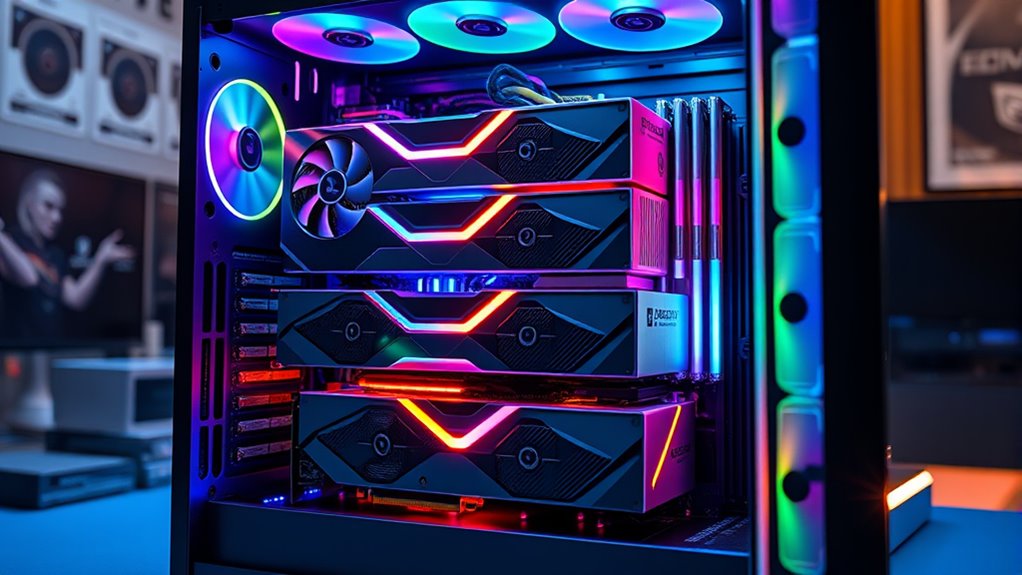

For a high-end gaming rig, I’d start with the ASUS TUF Gaming GeForce RTX 5090 as the best overall choice for buyers who want the highest performance tier and 32GB of memory. The ASUS TUF RTX 5080 is a more balanced alternative, while the GIGABYTE Radeon RX 9070 XT Gaming OC offers a different route for players who want a strong gaming-focused card without stepping into the most demanding tier. The right pick depends on resolution, the games and features you use, your power supply, and how much room your case has. A flagship card can be wasted in a system that cannot feed or cool it, while a lower tier may mean compromises at demanding settings. Read on for the full comparison and guidance on matching a card to your rig.

Get furniture and decor delivered free with Prime
- Fast, free delivery on millions of items
- Prime Video, Amazon Music and more included
- Member-only deals all year
Complete the kit


Key Takeaways
- The RTX 5090 is the clear flagship tier in this lineup: its 32GB of GDDR7 gives it more memory headroom than the 16GB RTX 5080 models, but it calls for a rig built around a high-power, large card.
- RTX 5080 buyers have several board designs to weigh: the MSI SUPRIM Liquid SOC adds liquid cooling, while the ASUS TUF and GIGABYTE Gaming OC use air cooling; the Founders Edition offers a more direct reference-style option.
- The RX 9070 XT cards are the main AMD alternatives: GIGABYTE Gaming OC and ASUS Prime share a 16GB class, so cooler design, dimensions, and system fit help distinguish them.
- Generational labels do not tell the whole story: the RTX 4090 and RTX 3090 remain distinct high-tier options, but their older generations make feature support, power needs, and condition especially relevant.
- The lineup spans beyond premium enthusiast needs: the RTX 5070 and RX 580 suit narrower budgets or less demanding builds better than the flagship cards, though neither matches the lineup’s highest performance tiers.
| GIGABYTE Radeon RX 9070 XT Gaming OC 16G Graphics Card, 16GB GDDR6 |  | Best AMD Pick | GPU: AMD Radeon RX 9070 XT | Memory: 16GB GDDR6 | GPU clock speed: 3060 MHz | VIEW ON AMAZON | See Our Full Breakdown |
| NVIDIA GeForce RTX 4080 16GB GDDR6X Graphics Card |  | Best for Ray Tracing | GPU: NVIDIA GeForce RTX 4080 | Graphics memory: 16GB GDDR6X | Boost clock: 2.51 GHz | VIEW ON AMAZON | See Our Full Breakdown |
| NVIDIA GeForce RTX 3090 Founders Edition Graphics Card |  | Best for High-Memory Builds | Chipset: NVIDIA GeForce RTX 3090 | Video memory: 24GB GDDR6X | Memory interface: 384-bit | VIEW ON AMAZON | See Our Full Breakdown |
| MSI Gaming RTX 5080 16G SUPRIM Liquid SOC Graphics Card |  | Best Liquid-Cooled Premium Pick | Chipset: NVIDIA GeForce RTX 5080 | Architecture: NVIDIA Blackwell | Video memory: 16GB GDDR7 | VIEW ON AMAZON | See Our Full Breakdown |
| ASUS ROG Strix GeForce RTX 4090 Gaming Graphics Card | 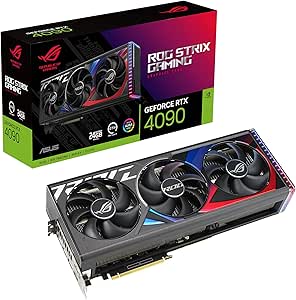 | Best for Maximum Headroom | GPU: NVIDIA GeForce RTX 4090 | Memory: 24GB GDDR6X | Interface: PCI Express 4.0 | VIEW ON AMAZON | See Our Full Breakdown |
| Kelinx AISURIX RX 580 8GB GDDR5 Graphics Card |  | Best for Legacy Builds | GPU architecture: Polaris 20 XTX | Process: 14 nm | Memory: 8GB GDDR5 | VIEW ON AMAZON | See Our Full Breakdown |
| GIGABYTE GeForce RTX 5080 Gaming OC 16G Graphics Card (GV-N5080GAMING OC-16GD) |  | Best for High-Resolution Gaming | GPU: NVIDIA GeForce RTX 5080 | Architecture: NVIDIA Blackwell | Memory: 16GB GDDR7 | VIEW ON AMAZON | See Our Full Breakdown |
| ASUS TUF Gaming GeForce RTX 5090 32GB GDDR7 OC Edition Graphics Card |  | Best Premium Flagship | Graphics processor: NVIDIA GeForce RTX 5090 | Memory: 32GB GDDR7 | Boost clock: Up to 2580 MHz in OC mode; 2550 MHz default | VIEW ON AMAZON | See Our Full Breakdown |
| ASUS TUF Gaming GeForce RTX 5080 16GB GDDR7 OC Edition Graphics Card |  | Best for Heavy-Duty Air Cooling | GPU: NVIDIA GeForce RTX 5080 | Architecture: NVIDIA Blackwell | Memory: 16GB GDDR7 | VIEW ON AMAZON | See Our Full Breakdown |
| ASUS Prime Radeon RX 9070 XT OC Edition 16GB Graphics Card |  | Best for Quiet, Flexible AMD Builds | GPU: AMD Radeon RX 9070 XT | Memory: 16GB GDDR6 | Boost clock: Up to 3030 MHz OC mode; up to 3010 MHz default mode | VIEW ON AMAZON | See Our Full Breakdown |
| NVIDIA GeForce RTX 5080 Founders Edition |  | Best for AI-Assisted 4K Gaming | Architecture: NVIDIA Blackwell | AI features: Tensor Cores, FP4, and DLSS 4 | Latency technology: NVIDIA Reflex 2 with Frame Warp | VIEW ON AMAZON | See Our Full Breakdown |
| ASUS TUF Gaming GeForce RTX 5070 12GB GDDR7 OC Edition Graphics Card |  | Best for Cooling-Focused Builds | GPU: NVIDIA GeForce RTX 5070 | Memory: 12 GB GDDR7 | Boost clock: 2640 MHz (OC mode) / 2610 MHz (Default) | VIEW ON AMAZON | See Our Full Breakdown |
| premium graphics cards for gaming rig | Memory | Cooling | GPU | Interface |
|---|---|---|---|---|
| GIGABYTE Radeon RX 9070 XT Gam | 16GB GDDR6 | GIGABYTE WINDFORCE with Hawk fans | AMD Radeon RX 9070 XT | PCIe 5.0; PCIe x16 |
| NVIDIA GeForce RTX 4080 16GB G | — | — | NVIDIA GeForce RTX 4080 | PCI Express 4.0; compatible with PCI Express 3.0 |
| NVIDIA GeForce RTX 3090 Founde | — | — | — | — |
| MSI Gaming RTX 5080 16G SUPRIM | — | Liquid | — | — |
| ASUS ROG Strix GeForce RTX 409 | 24GB GDDR6X | 3 Axial-tech fans; vapor chamber | NVIDIA GeForce RTX 4090 | PCI Express 4.0 |
| Kelinx AISURIX RX 580 8GB GDDR | 8GB GDDR5 | — | — | PCI Express 3.0 x16 |
| GIGABYTE GeForce RTX 5080 Gami | 16GB GDDR7 | WINDFORCE, 3 fans | NVIDIA GeForce RTX 5080 | PCI Express x16 (PCIe 5.0) |
| ASUS TUF Gaming GeForce RTX 50 | 32GB GDDR7 | 3 Axial-tech fans | — | PCI Express x16 (PCIe 5.0) |
| ASUS TUF Gaming GeForce RTX 50 | 16GB GDDR7 | Three Axial-tech fans; phase-change GPU thermal pad | NVIDIA GeForce RTX 5080 | — |
| ASUS Prime Radeon RX 9070 XT O | 16GB GDDR6 | Axial-tech fans; phase-change GPU thermal pad | AMD Radeon RX 9070 XT | — |
| NVIDIA GeForce RTX 5080 Founde | — | — | — | — |
| ASUS TUF Gaming GeForce RTX 50 | 12 GB GDDR7 | 3 Axial-tech fans, phase-change GPU thermal pad | NVIDIA GeForce RTX 5070 | PCI-Express x16 (PCIe 5.0) |
More Details on Our Top Picks
GIGABYTE Radeon RX 9070 XT Gaming OC 16G Graphics Card, 16GB GDDR6
I’d choose the GIGABYTE Radeon RX 9070 XT Gaming OC for a premium gaming rig built around AMD, especially if its 16GB of GDDR6 suits the games and display you have in mind. WINDFORCE cooling and Hawk fans are intended to manage heat under load, while the card’s RGB lighting gives it a visible role in a showcase build. Compared with the MSI Gaming RTX 5080 SUPRIM Liquid SOC, this card uses conventional fan cooling and a PCIe 5.0 interface; the MSI instead offers liquid cooling and newer listed display outputs. The provided specifications don’t establish a performance ranking between them, so I’d base the choice on platform preference, case fit, and cooling setup. Its listed dimensions still call for a case clearance check, and the description gives no power or noise figures.
Pros:- 16GB of GDDR6 memory
- WINDFORCE cooling system with Hawk fans
- RGB lighting for coordinated builds
- PCIe 5.0 interface
Cons:- 11.34-inch length may rule it out for compact cases
- The provided data gives no power draw or noise figures for planning a build
Best for: AMD-focused builders seeking 16GB of graphics memory, active air cooling, and RGB for a gaming PC with room for an 11.34-inch card.
Not ideal for: Builders who want liquid cooling or DisplayPort 2.1a outputs, or anyone whose case cannot accommodate the listed card dimensions.
- GPU:AMD Radeon RX 9070 XT
- Memory:16GB GDDR6
- GPU clock speed:3060 MHz
- Memory clock speed:2600 GHz (as listed)
- Interface:PCIe 5.0; PCIe x16
- Cooling:GIGABYTE WINDFORCE with Hawk fans
- Maximum display resolution:7680 x 4320
- Dimensions:11.34 x 5.2 inches
Our verdict“Pick this GIGABYTE for an AMD-based gaming rig with space for a full-length air-cooled card and a preference for RGB.”
NVIDIA GeForce RTX 4080 16GB GDDR6X Graphics Card
The GeForce RTX 4080 makes sense for a gaming rig where dedicated ray tracing support and NVIDIA’s graphics feature set matter more than having the newest listed memory generation. Its 16GB of GDDR6X and 9,728 CUDA cores give this model a clearly specified foundation, and the two-fan layout is a more restrained cooling configuration than the three-fan ASUS ROG Strix RTX 4090. That can make the 4080 easier to fit, though its nearly 12-inch length still needs checking. The RTX 4090 offers 24GB of memory and a larger cooler, making it the more expansive choice for workloads that use that capacity. This RTX 4080 is limited to a listed maximum of 3840 × 2160 and PCIe 4.0, so buyers prioritizing newer outputs or 8K capability may prefer the RTX 5080 options.
Pros:- 16GB of GDDR6X memory
- Dedicated ray tracing support
- Two-fan design
- Compatible with PCIe 3.0 systems
Cons:- Listed maximum resolution is 3840 × 2160
- PCIe 4.0 interface lacks the PCIe 5.0 listing of the GIGABYTE RX 9070 XT
Best for: NVIDIA-focused gamers who prioritize ray tracing support, 4K output, and a two-fan card over the RTX 4090’s larger memory capacity.
Not ideal for: Builders targeting the listed 7680 x 4320 resolution or seeking DisplayPort 2.1a connectivity available on the MSI RTX 5080.
- GPU:NVIDIA GeForce RTX 4080
- Graphics memory:16GB GDDR6X
- Boost clock:2.51 GHz
- CUDA cores:9,728
- Interface:PCI Express 4.0; compatible with PCI Express 3.0
- Video outputs:DisplayPort, HDMI
- Maximum resolution:3840 × 2160
- Fans:2
- Dimensions:11.97 × 4.84 inches
Our verdict“Choose the RTX 4080 if ray tracing and a specified 4K ceiling fit your build better than the RTX 4090’s extra memory.”
NVIDIA GeForce RTX 3090 Founders Edition Graphics Card
The RTX 3090 Founders Edition earns a place for buyers who want 24GB of GDDR6X and a 384-bit memory interface in a gaming and creation system. That memory capacity is the standout difference beside the 16GB RTX 4080 and MSI RTX 5080 in this group; it can be useful when games or creative projects need more video memory, though the data here does not show a direct performance comparison. Its outputs include three DisplayPort 1.4a ports and HDMI 2.1, which gives multi-display builds several connection options. The tradeoff is an older named generation than those newer cards, plus the supplied description flags high power use and a large physical size. I’d check case space and the rest of the system’s power plan before choosing it.
Pros:- 24GB of GDDR6X video memory
- 384-bit memory interface
- Three DisplayPort 1.4a outputs and one HDMI 2.1 output
- Three-year NVIDIA India warranty as listed
Cons:- High power consumption is identified in the product data
- Large physical size may not fit smaller cases
- Older RTX generation than the RTX 4080, RTX 5080, and RTX 4090 in this roundup
Best for: Gaming and creative-workstation builders who specifically need 24GB of video memory and multiple display connections.
Not ideal for: Compact-PC builders or anyone choosing a card for lower power needs rather than high memory capacity.
- Chipset:NVIDIA GeForce RTX 3090
- Video memory:24GB GDDR6X
- Memory interface:384-bit
- Outputs:3x DisplayPort 1.4a, 1x HDMI 2.1
- Warranty:3 years (NVIDIA India)
- Power use:High power consumption noted in product description
Our verdict“Choose the RTX 3090 Founders Edition when its 24GB memory capacity matters more to your build than a newer generation.”
MSI Gaming RTX 5080 16G SUPRIM Liquid SOC Graphics Card
For a premium gaming rig designed around liquid cooling, the MSI RTX 5080 SUPRIM Liquid SOC is the most specialized pick here. Its RTX 5080 GPU, 16GB of GDDR7, and listed 2760 MHz boost clock are paired with a liquid cooling setup, so it suits builders who have already planned for radiator space and installation. The ASUS ROG Strix RTX 4090 takes a different route: its three-fan air cooler and 24GB of GDDR6X put more emphasis on memory capacity and a self-contained card cooler. MSI counters with DisplayPort 2.1a and HDMI 2.1b outputs and a listed 7680 x 4320 maximum resolution. The liquid system adds case planning and setup complexity, and 16GB may be less appealing than the 24GB offered by the 4090 and RTX 3090.
Pros:- RTX 5080 chipset with a listed 2760 MHz boost clock
- 16GB of GDDR7 memory
- Liquid cooling
- Three DisplayPort 2.1a outputs and one HDMI 2.1b output
Cons:- Liquid cooling requires radiator space and installation planning
- 16GB of memory is less than the 24GB on the RTX 4090 and RTX 3090 in this lineup
Best for: Enthusiast builders planning a liquid-cooled case who want an RTX 5080 with GDDR7 and current listed display outputs.
Not ideal for: Buyers who want a simpler air-cooled installation or prioritize 24GB of memory over the MSI’s 16GB.
- Chipset:NVIDIA GeForce RTX 5080
- Architecture:NVIDIA Blackwell
- Video memory:16GB GDDR7
- Memory interface:256-bit
- Boost clock:2760 MHz
- Cooling:Liquid
- Display outputs:3x DisplayPort 2.1a, 1x HDMI 2.1b
- Maximum resolution:7680 x 4320
Our verdict“Pick the MSI if your premium build is already planned for liquid cooling and you value its GDDR7 and newer listed outputs.”
ASUS ROG Strix GeForce RTX 4090 Gaming Graphics Card
The ASUS ROG Strix RTX 4090 is the choice for a gaming rig where 24GB of GDDR6X, substantial cooling hardware, and flagship positioning take priority over a compact build. ASUS lists three enlarged Axial-tech fans, a vapor chamber, and a 3.5-slot diecast design; that cooler is a defining distinction from the two-fan RTX 4080, while the 4090 also carries 8GB more memory. The MSI RTX 5080 SUPRIM Liquid SOC offers a liquid-cooled alternative with newer listed DisplayPort 2.1a outputs, but has 16GB of memory. This Strix card’s 14.07-inch length and 3.5-slot thickness make case fit a major constraint, and the product data flags high power requirements. Its DisplayPort 1.4a and HDMI 2.1a outputs are also older listings than MSI’s.
Pros:- 24GB of GDDR6X memory
- Three enlarged Axial-tech fans and vapor chamber cooling
- Three DisplayPort 1.4a outputs and HDMI 2.1a
- Three-year warranty
Cons:- 3.5-slot, 14.07-inch design needs a spacious case
- High power requirements are flagged in the product data
- Display outputs are listed as DisplayPort 1.4a and HDMI 2.1a, rather than the MSI RTX 5080’s newer versions
Best for: Enthusiast gamers and creators building a spacious, high-power system who want 24GB memory and a substantial air-cooling assembly.
Not ideal for: Small-case builders or buyers whose power budget, available slots, or preference for newer display outputs point to another card.
- GPU:NVIDIA GeForce RTX 4090
- Memory:24GB GDDR6X
- Interface:PCI Express 4.0
- Memory clock speed:2520 MHz
- Video outputs:DisplayPort 1.4a, HDMI 2.1a
- Cooling:3 Axial-tech fans; vapor chamber
- Form factor:3.5-slot
- Dimensions:14.07 x 5.9 inches
- Warranty:3 years
Our verdict“Choose the ROG Strix RTX 4090 when your case and power setup can accommodate it and you want 24GB with a substantial air cooler.”
Kelinx AISURIX RX 580 8GB GDDR5 Graphics Card
The Kelinx AISURIX RX 580 is the outlier in this premium-focused lineup: its 8GB of GDDR5 and PCIe 3.0 interface suit an older gaming PC more than a high-end new rig. It can drive a display up to 4K, but that resolution figure describes output support, not a promise of smooth modern 4K gaming. Compared with the ASUS Prime Radeon RX 9070 XT or either RTX 5080, it gives up newer memory, architecture and gaming features. Its semi-automatic fans can stop at low load, which may keep desktop use quiet, while the dual-slot design is less demanding on case space than the larger premium cards. The tradeoffs are its age, 185W maximum draw and an 8-pin power requirement. The listing also gives conflicting output counts, so check the card’s actual ports before buying.
Pros:- 8GB of GDDR5 memory
- Semi-automatic fans stop under low load
- Dual-slot form factor can suit builds with limited expansion space
Cons:- Older Polaris architecture and PCIe 3.0 interface trail the newer cards in this roundup
- 185W maximum draw and an 8-pin connector require a compatible power supply
- Product listing gives conflicting video-output counts
Best for: Owners of older gaming PCs who need a dual-slot replacement card for lighter gaming and 4K display output.
Not ideal for: Builders targeting demanding modern games, high-refresh 4K play or current ray-tracing features; newer cards in this roundup are much better suited to those goals.
- GPU architecture:Polaris 20 XTX
- Process:14 nm
- Memory:8GB GDDR5
- Memory frequency:1750 MHz
- Stream processors:2048
- Interface:PCI Express 3.0 x16
- Power draw:185 W maximum
- Power connector:1 x 8-pin
- Form factor:Dual-slot
Our verdict“Choose the RX 580 for a compatible older PC and lighter gaming, but pick a newer card for a premium gaming rig.”
GIGABYTE GeForce RTX 5080 Gaming OC 16G Graphics Card (GV-N5080GAMING OC-16GD)
The GIGABYTE GeForce RTX 5080 Gaming OC pairs NVIDIA’s Blackwell architecture with 16GB of GDDR7, DLSS 4 support and a triple-fan cooler. That mix makes it a strong fit for a gaming rig built around high resolutions and ray tracing, with the listed maximum display resolution reaching 7680 x 4320. Against the ASUS TUF Gaming RTX 5090, it offers less memory and sits below that card’s flagship position, but may be a more practical choice for gamers who do not need 32GB. Compared with the ASUS TUF RTX 5080, this Gigabyte model’s supplied specs do not state a power supply requirement or connector, leaving an important compatibility detail to verify. Its 13.46-inch length and 5.59-inch width also call for a careful case check, and a high-end GPU can draw substantial power.
Pros:- 16GB of GDDR7 memory on a 256-bit interface
- Blackwell architecture with DLSS 4 support and enhanced RT and Tensor Cores
- WINDFORCE triple-fan cooling system
- PCIe 5.0 support and listed 7680 x 4320 maximum resolution
Cons:- Large dimensions may not fit smaller cases
- High-end GPU can require substantial power
- Supplied product data does not specify the power connector or recommended supply
Best for: PC builders seeking a current-generation graphics card for high-resolution gaming, ray tracing and DLSS 4 features.
Not ideal for: Compact-case builders or buyers who need a clearly stated power connector and supply requirement before choosing a card.
- GPU:NVIDIA GeForce RTX 5080
- Architecture:NVIDIA Blackwell
- Memory:16GB GDDR7
- Memory interface:256-bit
- GPU clock speed:2.73 GHz
- Interface:PCI Express x16 (PCIe 5.0)
- Cooling:WINDFORCE, 3 fans
- Maximum resolution:7680 x 4320
- Dimensions:13.46 x 5.59 inches
Our verdict“Pick this RTX 5080 for a high-resolution gaming rig with room for a large card and a power supply suited to a demanding GPU.”
ASUS TUF Gaming GeForce RTX 5090 32GB GDDR7 OC Edition Graphics Card
The ASUS TUF Gaming RTX 5090 OC takes the flagship slot in this group with 32GB of GDDR7, DLSS 4 and 772 AI TOPS. That memory capacity gives demanding games and other GPU-heavy workloads more headroom than the 16GB GIGABYTE RTX 5080 Gaming OC. A dual BIOS lets a builder choose Quiet or Performance mode, and the three Axial-tech fans with 0dB technology can reduce fan noise during light use. The 2.5-slot layout is a notable space advantage over the 3.6-slot ASUS TUF RTX 5080, despite the card’s substantial 13.7-inch length. This remains a large, high-end part, and the supplied data does not include a power requirement or connector type. Buyers should confirm both power and case fit before building around it.
Pros:- 32GB of GDDR7 memory
- Blackwell architecture with DLSS 4 support and 772 AI TOPS
- Quiet and Performance BIOS modes
- Three Axial-tech fans with 0dB technology for quieter light use
Cons:- 13.7-inch length can rule out smaller cases
- High-end flagship GPU can place substantial demands on system power
- Supplied product data does not state power supply or connector requirements
Best for: Enthusiasts building a high-end gaming rig who want flagship-class GPU features and 32GB of video memory.
Not ideal for: Small-case builders or buyers who want power connector and supply details stated in the supplied specifications.
- Graphics processor:NVIDIA GeForce RTX 5090
- Memory:32GB GDDR7
- Boost clock:Up to 2580 MHz in OC mode; 2550 MHz default
- AI performance:772 AI TOPS
- Video outputs:3 x DisplayPort 2.1a, 2 x HDMI 2.1b
- Interface:PCI Express x16 (PCIe 5.0)
- Cooling:3 Axial-tech fans
- BIOS modes:Quiet and Performance
- Dimensions:13.7 x 5.7 inches
Our verdict“Choose the RTX 5090 for a spacious flagship build where 32GB of memory and top-tier features matter more than easy fit or power simplicity.”
ASUS TUF Gaming GeForce RTX 5080 16GB GDDR7 OC Edition Graphics Card
The ASUS TUF Gaming RTX 5080 OC is aimed at a build that prioritizes cooling hardware and a reinforced design. Its three Axial-tech fans, phase-change GPU thermal pad and protective PCB coating distinguish it from the GIGABYTE RTX 5080 Gaming OC, whose supplied details emphasize WINDFORCE triple-fan cooling without the same thermal-pad or coating claims. Both cards offer 16GB of GDDR7 and PCIe 5.0, so this ASUS model’s appeal is its specified cooling and build features rather than a larger memory capacity. The tradeoff is physical and electrical: a 3.6-slot cooler, 13.7-inch length and 16-pin connector call for ample room and a suitable power setup. The 850W minimum supply requirement makes advance system planning especially important.
Pros:- 16GB of GDDR7 with NVIDIA Blackwell architecture and DLSS 4
- Three Axial-tech fans and phase-change GPU thermal pad
- Protective PCB coating and military-grade components
- GPU bracket included
Cons:- 3.6-slot cooler and 13.7-inch length demand generous case clearance
- Requires an 850W minimum power supply with a 16-pin connector
- At 4.3 lb, the card’s weight makes the included bracket useful for support
Best for: Builders with a roomy case and suitable 850W-or-higher power supply who want a heavily cooled RTX 5080 for sustained gaming.
Not ideal for: Compact-case owners or anyone whose power supply lacks the required 16-pin 12V-2×6 connector and capacity.
- GPU:NVIDIA GeForce RTX 5080
- Architecture:NVIDIA Blackwell
- Memory:16GB GDDR7
- Boost clock:2730 MHz OC mode; 2700 MHz default mode
- Cooling:Three Axial-tech fans; phase-change GPU thermal pad
- Power requirement:850W minimum; 16-pin 12V-2×6 (12VHPWR) connector
- Video outputs:3 x DisplayPort 2.1a, 2 x HDMI 2.1b
- Slot thickness:3.6 slots
- Dimensions and weight:13.7 x 5.7 inches; 4.3 lb
Our verdict“Choose this RTX 5080 if your case and power supply can accommodate its large cooler and you value its specified thermal and protective hardware.”
ASUS Prime Radeon RX 9070 XT OC Edition 16GB Graphics Card
The ASUS Prime Radeon RX 9070 XT OC brings AMD’s RX 9070 XT GPU into a comparatively restrained 2.5-slot design. Its dual BIOS offers Quiet and Performance profiles, while 0dB technology can stop the fans during light use; those controls give it a different emphasis from the ASUS TUF RTX 5080, whose 3.6-slot cooler takes up more expansion space. The Prime combines axial-tech fans, dual-ball bearings and a phase-change thermal pad with GPU Tweak III controls. Its 16GB of GDDR6 is a different memory offering from the GDDR7 RTX 5080 models, so buyers should weigh the complete GPU platform rather than treating memory type alone as a performance verdict. The supplied details omit power requirements, outputs and card dimensions, making compatibility checks necessary even with the slimmer slot design.
Pros:- 16GB of GDDR6 memory
- Dual BIOS with Quiet and Performance profiles
- 0dB technology supports fan-stop operation during light gaming
- Axial-tech fans, dual-ball bearings and phase-change thermal pad
Cons:- 2.5-slot design still requires case-clearance checks
- Supplied product data omits power and connector requirements
- Supplied product data does not list video outputs or card dimensions
Best for: AMD-focused gaming builders who want a 16GB RX 9070 XT with quiet and performance profiles in a less bulky slot layout.
Not ideal for: Buyers who need published power, port or exact dimension details before selecting a card, or who specifically want an NVIDIA RTX 5080.
- GPU:AMD Radeon RX 9070 XT
- Memory:16GB GDDR6
- Boost clock:Up to 3030 MHz OC mode; up to 3010 MHz default mode
- Game clock:Up to 2480 MHz OC mode; up to 2460 MHz default mode
- Slot design:2.5-slot
- Cooling:Axial-tech fans; phase-change GPU thermal pad
- Fan bearings:Dual-ball
- BIOS:Dual BIOS with Quiet and Performance profiles
- Software:GPU Tweak III
Our verdict“Choose the Prime RX 9070 XT for an AMD gaming build that values quiet controls and a slimmer slot layout, after confirming fit and power needs.”
NVIDIA GeForce RTX 5080 Founders Edition
The NVIDIA GeForce RTX 5080 Founders Edition earns its place for buyers who want Blackwell’s latest gaming features without choosing a larger partner-card design. DLSS 4 and Tensor Core features can help supported games deliver smoother play, while full ray tracing with neural rendering targets more detailed lighting and effects. Compared with the ASUS TUF Gaming GeForce RTX 5070 OC Edition, this is the higher-tier pick for demanding graphics workloads; the TUF’s listed cooling hardware and durability features make its strengths clearer for buyers focused on sustained cooling and physical protection. The Founders Edition’s supplied data gives no memory capacity, dimensions, or cooling details, so I can’t judge case fit or headroom from this listing alone. Its appeal is the feature set, with game support shaping how much those features matter.
Pros:- Blackwell architecture with Tensor Core and FP4 features
- DLSS 4 support for compatible games
- Reflex 2 with Frame Warp for supported low-latency play
- Full ray tracing with neural rendering
Cons:- The supplied product data does not specify VRAM capacity
- The supplied product data does not include dimensions or cooling details
- Benefits from DLSS 4 and neural rendering depend on supported games
Best for: PC builders prioritizing Blackwell, DLSS 4, and ray tracing features for demanding gaming setups.
Not ideal for: Buyers who need confirmed VRAM capacity, cooler dimensions, or specific cooling details before checking case fit.
- Architecture:NVIDIA Blackwell
- AI features:Tensor Cores, FP4, and DLSS 4
- Latency technology:NVIDIA Reflex 2 with Frame Warp
- Graphics technology:Full ray tracing with neural rendering
- Product type:Video card
- GPU family:NVIDIA GeForce RTX 5080
Our verdict“Choose this Founders Edition for its Blackwell gaming features if you can confirm its memory and physical fit from the full listing.”
ASUS TUF Gaming GeForce RTX 5070 12GB GDDR7 OC Edition Graphics Card
The ASUS TUF Gaming GeForce RTX 5070 OC Edition is aimed at builders who value a heavily specified cooler and reinforced construction alongside Blackwell features. Its three Axial-tech fans and phase-change GPU thermal pad are designed to manage heat during sustained play, while PCB coating and GPU Guard add physical protection. Against the NVIDIA GeForce RTX 5080 Founders Edition, the TUF’s listed 12GB of GDDR7 and detailed output selection make its configuration easier to assess, but it sits in a lower GPU tier. The tradeoff is the card’s 3.125-slot, 13-inch body, which can crowd a compact case, plus less memory than higher-tier alternatives. It suits a roomy gaming rig where cooling hardware and durability matter more than maximizing VRAM capacity.
Pros:- Three Axial-tech fans and phase-change GPU thermal pad
- Protective PCB coating and GPU Guard
- 12GB GDDR7 with DLSS 4 support
- Three DisplayPort 2.1a and two HDMI 2.1b outputs
Cons:- The 3.125-slot, 13-inch design limits case compatibility
- 12GB VRAM is less than the capacity listed for higher-tier cards
- OC-mode boost clock requires selecting that operating mode
Best for: Builders with a spacious case who want a cooling-focused RTX 5070 and value reinforced construction.
Not ideal for: Small-case builders or gamers whose workloads need more than 12GB of graphics memory.
- GPU:NVIDIA GeForce RTX 5070
- Memory:12 GB GDDR7
- Boost clock:2640 MHz (OC mode) / 2610 MHz (Default)
- Interface:PCI-Express x16 (PCIe 5.0)
- Video outputs:3 x DisplayPort 2.1a, 2 x HDMI 2.1b
- Cooling:3 Axial-tech fans, phase-change GPU thermal pad
- Form factor:3.125-slot
- Dimensions:13 in L x 5.5 in W
- Maximum resolution:7680 x 4320
Our verdict“Pick the TUF RTX 5070 if your case has room and you want substantial cooling and durability features in a 12GB Blackwell card.”

How We Picked
I ranked these cards for gaming rigs by the job they can do, not by model name alone. The main factors are performance tier, memory capacity and generation, cooling approach, board design, and the practical demands a card places on a build. I also considered whether the product looks suited to a broad range of gaming systems or a more specific setup, such as a liquid-cooled enthusiast rig.
The RTX 5090 leads for buyers prioritizing the top performance tier and memory headroom. RTX 5080 models follow as high-end choices with more variation in cooler style and size; the RX 9070 XT entries offer a separate 16GB option. Older RTX 40 and 30 series cards rank below newer choices where generation and feature set matter, while the RTX 5070 and RX 580 are included for buyers whose needs do not justify a flagship. Exact results depend on the game, resolution, settings, and the rest of the PC, so I treat the ranking as a guide to fit rather than a universal frame-rate guarantee.
| premium graphics cards for gaming rig | GPU | Interface |
|---|---|---|
| GIGABYTE Radeon RX 9070 XT Gam | AMD Radeon RX 9070 XT | PCIe 5.0; PCIe x16 |
| NVIDIA GeForce RTX 4080 16GB G | NVIDIA GeForce RTX 4080 | PCI Express 4.0; compatible with PCI Express 3.0 |
| NVIDIA GeForce RTX 3090 Founde | — | — |
| MSI Gaming RTX 5080 16G SUPRIM | — | — |
| ASUS ROG Strix GeForce RTX 409 | NVIDIA GeForce RTX 4090 | PCI Express 4.0 |
| Kelinx AISURIX RX 580 8GB GDDR | — | PCI Express 3.0 x16 |
| GIGABYTE GeForce RTX 5080 Gami | NVIDIA GeForce RTX 5080 | PCI Express x16 (PCIe 5.0) |
| ASUS TUF Gaming GeForce RTX 50 | — | PCI Express x16 (PCIe 5.0) |
| ASUS TUF Gaming GeForce RTX 50 | NVIDIA GeForce RTX 5080 | — |
| ASUS Prime Radeon RX 9070 XT O | AMD Radeon RX 9070 XT | — |
| NVIDIA GeForce RTX 5080 Founde | — | — |
| ASUS TUF Gaming GeForce RTX 50 | NVIDIA GeForce RTX 5070 | PCI-Express x16 (PCIe 5.0) |
Factors to Consider When Choosing Premium Graphics Cards For Gaming Rigs
Before choosing a premium graphics card, I’d match its strengths to the games and system you actually have. A card’s tier is only one part of the decision: power delivery, case clearance, cooling, display target, and feature preferences can change which option makes sense.
Match the Card to Your Resolution and Games
Start with the resolution and refresh rate you want to sustain, then check performance results for the specific games you play. Demanding ray tracing, high-resolution textures, and fast refresh targets can increase the load well beyond what a casual 1080p setup needs. Upscaling and frame generation support may also affect how smooth a game feels, but support and results vary by title. A common mistake is buying the largest card available while using a monitor that cannot show the difference. If a monitor upgrade is planned soon, choose for that future target; otherwise, put the budget toward the rest of the system.
Check Power Supply and Case Fit Before Ordering
Look up the card’s power connector requirements, recommended system power, physical length, thickness, and clearance around the power cable. Large triple-slot designs can block expansion slots, and a long card may collide with front fans or a radiator. A flagship upgrade can also expose an aging or undersized power supply, so leave capacity for transient demand rather than planning around a bare minimum. Measure the case yourself; product photos rarely convey how much room remains after installation. For compact builds, a physically smaller card may be the better purchase even if it belongs to a lower performance tier.
Choose Cooling for Your Case and Tolerance for Noise
Air-cooled cards are simpler to install and avoid adding a pump and radiator to the system. Liquid-cooled designs can move heat to a radiator, but they need a compatible mounting position and add more installation steps and components. Case airflow still matters: a powerful card in a warm, restricted enclosure may run louder or reduce boost behavior. Check the cooler’s dimensions and fan layout alongside the case’s intake and exhaust plan. Buyers who want straightforward maintenance should favor a well-sized air cooler, while liquid cooling makes more sense when the full rig is planned around it.
Treat Memory Capacity as Headroom, Not a Performance Promise
More video memory can help with high-resolution textures, large creative workloads, and games that use substantial asset packs. It does not automatically make one GPU faster than another, since the graphics processor and memory bandwidth also shape performance. The 32GB RTX 5090 stands apart from the 16GB cards here, but that extra capacity matters most to buyers with workloads that can use it. Check the memory needs of your games and the resolution you target instead of assuming a higher number guarantees longer useful life. Avoid paying for capacity that your intended use cannot exploit.
Compare Features and Generation Alongside Raw Speed
Newer GPU generations can bring updated rendering features, encoding support, and efficiency changes that matter beyond average frame rates. Buyers should confirm that the games and applications they use support the features they care about, since vendor tools do not translate equally to every title. An older high-tier card may still suit a gaming rig, but its age, power draw, and available warranty can change the value of the purchase. When comparing an RTX 3090 or RTX 4080 with newer options, check independent game results at your target settings and verify the card’s condition if it is used. Pick the feature set you will actually use rather than choosing by generation number alone.
Spend on the Whole Gaming Rig
A graphics card cannot deliver its full value if the processor, memory, cooling, or display becomes the limiting part of the system. At very high frame rates, the CPU can matter more; at high resolutions, the GPU usually carries a greater share of the work. A premium card may also require a stronger power supply and better case airflow, so include those needs in the upgrade plan. One common mistake is exhausting the build budget on the GPU and leaving no room for the monitor that would show its strengths. If the rest of the rig is several generations old, compare the cost and benefit of a balanced system upgrade.
Frequently Asked Questions
Should I choose an RTX 5090 or an RTX 5080 for a 4K gaming rig?
The RTX 5090 is the pick for buyers pursuing the highest performance tier and who can support its power, size, and cooling needs. The RTX 5080 is a more restrained high-end choice, with several board designs in this lineup and 16GB of memory. Your games, graphics settings, and target refresh rate determine whether the extra tier has practical value. Check independent results for the titles you play, along with your power supply and case clearance. If your display or processor is the current limit, address that before moving to the flagship.
Is a 16GB RX 9070 XT a sensible alternative to an RTX 5080?
It can be, especially if your gaming priorities align with the performance and feature support available on the AMD card. Both families in this roundup include 16GB options, so capacity alone does not settle the choice. Compare results for your own games, including ray tracing and any upscaling features you rely on. Also weigh the exact card’s dimensions, cooling, and connectors, since the ASUS Prime and GIGABYTE Gaming OC designs may fit differently. The better option is the one that meets your target settings and works cleanly with your system.
Do I need 32GB of graphics memory for gaming?
Most buyers should not treat 32GB as a requirement simply because it appears on a flagship. It can provide useful headroom for demanding high-resolution assets or workloads beyond gaming, but many gaming choices depend more on the GPU tier and the specific title. The RTX 5090 is the only 32GB entry in this roundup, while several cards offer 16GB. Check actual memory use in the games and settings you care about, especially if you use texture mods. If those needs are modest, a 16GB card may leave room in the build for a better display or other upgrades.
Can an older RTX 3090 or RTX 4080 still make sense in a new build?
Yes, if its performance in your games, feature set, power needs, and purchase condition suit the build. The RTX 4080 is a newer generation than the RTX 3090, but both sit below the newest flagship tier represented here. Verify warranty coverage and card condition when buying used, and inspect power and cooling requirements before installing either one. Compare current independent benchmarks at your target resolution instead of relying on launch-era rankings. A newer card may be the stronger fit if you value its added generation features or a fresh warranty.
Is the RTX 5070 or RX 580 a good match for a premium gaming rig?
The RTX 5070 can suit a high-quality gaming build when the buyer has a more moderate performance target and does not need the top tier. The RX 580 is a much older, lower-tier option, so it makes sense mainly for a basic or legacy system rather than a new premium rig. Neither should be chosen just because it appears in a roundup of premium cards; their roles differ from the RTX 5080 and RTX 5090. Check current game support, expected settings, and the rest of the PC before committing to the RX 580. For a new enthusiast build, I would focus on the newer upper-tier choices unless a specific constraint points elsewhere.
Conclusion
For the best overall, I’d choose the ASUS TUF RTX 5090 when the rig, display, and power supply can support its flagship tier. The best value among high-end picks is the GIGABYTE RX 9070 XT Gaming OC for buyers whose games and feature needs suit AMD; the ASUS Prime RX 9070 XT is another 16GB option with a different board design. For the best premium RTX 5080, compare the air-cooled ASUS TUF and GIGABYTE Gaming OC with MSI’s liquid-cooled SUPRIM SOC based on fit and cooling preference. The best for beginners is the RTX 5070 for a new gaming build with moderate targets, since the RX 580 is better treated as a legacy or basic-system card. For specialized needs, choose the RTX 5090 for maximum tier and memory headroom, the MSI liquid model for a build designed around a radiator, or an older RTX 4080 or RTX 3090 only when verified performance, condition, and system fit make it the better match.
Halloween Picks
halloween
As an affiliate, we earn on qualifying purchases.