Setting up a classroom lab with iMacs means balancing performance, budget, and long-term software support across dozens of student workstations. After comparing six current options, the Apple 2024 iMac with M4 chip, 16GB unified memory, and 256GB SSD (new) stands out as the best overall pick for most labs — it pairs modern Apple silicon with enough memory for multi-user accounts and gets the longest macOS support window. The 27-inch Intel iMac (2020) remains a strong runner-up when screen real estate matters more than chip speed, and the renewed M3 iMac offers a budget-friendly path to Apple silicon. The core tradeoff in this category is simple: newer M-series chips cost more upfront but stay useful years longer, while renewed Intel models are cheap now but face shrinking software support. Read on for the full breakdown of each model and who it fits best.

Get furniture and decor delivered free with Prime
- Fast, free delivery on millions of items
- Prime Video, Amazon Music and more included
- Member-only deals all year
Complete the kit


Key Takeaways
- The 16GB M4 iMac beat the 24GB M4 model for most labs because extra memory matters less than SSD size and per-seat cost when deploying multiple machines.
- Every renewed option in this lineup carries the same hidden risk: battery-free all-in-ones age well physically, but Intel-based iMacs (the 21.5-inch and 27-inch models) are first in line to lose macOS updates.
- The 27-inch 5K display is the only option here suited to video editing, design, and music production courses — no 24-inch model replaces that screen real estate.
- 256GB SSDs were the most common bottleneck across the lineup; labs running creative software should treat 512GB as the practical minimum.
- The 21.5-inch Core i5 iMac is the cheapest entry point but should only anchor labs doing basic web and document work, since its macOS Sierra-era hardware is already outside Apple‘s support window.
| Apple iMac 27-inch Retina 5K (2020, 8GB RAM, 512GB SSD) |  | Best Display for Design and Media Labs | Display: 27-inch Retina 5K, 5120 × 2880 pixels | Processor: 3.3GHz 6-core 10th-generation Intel Core i5 | Graphics: AMD Radeon Pro 5300 | VIEW ON AMAZON | See Our Full Breakdown |
| Apple 2023 iMac 24-inch with M3 chip (8GB RAM, 256GB SSD) – Silver (Renewed) |  | Best Budget Pick for General-Purpose Labs | Chip: Apple M3 | Display: 24-inch 4.5K Retina, 500 nits | Memory: 8GB unified | VIEW ON AMAZON | See Our Full Breakdown |
| Apple 2024 iMac All-in-One Desktop with M4 Chip, 24-inch Retina Display, 24GB Unified Memory, 512GB SSD – Silver | 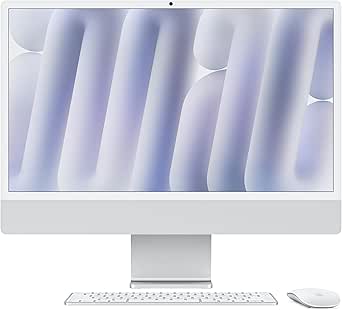 | Best Overall for Demanding Coursework | Processor: Apple M4 (10-core CPU, 10-core GPU) | Display: 24-inch 4.5K Retina, 500 nits | Memory: 24GB unified | VIEW ON AMAZON | See Our Full Breakdown |
| Apple 2024 iMac with M4 Chip, 24-inch Retina Display, 16GB Unified Memory, 256GB SSD, Silver (Renewed) |  | Best Balance of Power and Price | Processor: Apple M4, 8-core, 3.2GHz | Display: 24-inch 4.5K Retina, 4480 × 2520, up to 1 billion colors | Memory: 16GB unified | VIEW ON AMAZON | See Our Full Breakdown |
| Apple 2024 iMac All-in-One Desktop Computer with M4 Chip, 24-inch Retina Display, 16GB Unified Memory, 256GB SSD Storage – Silver |  | Best New-Unit Pick for Standard Classrooms | Processor: Apple M4 (8-core CPU, 8-core GPU) | Display: 24-inch 4.5K Retina, 500 nits | Memory: 16GB unified | VIEW ON AMAZON | See Our Full Breakdown |
| Apple iMac 21.5-inch All-in-One Desktop, 2.7GHz Core i5, 8GB Memory, 256GB SSD (Renewed) |  | Best Ultra-Budget Fleet Option | Brand: Apple | Model: ME086LL/A | Display: 21.5 inches | VIEW ON AMAZON | See Our Full Breakdown |
| imac for classroom lab | Display | Memory | Storage | Processor |
|---|---|---|---|---|
| Apple iMac 27-inch Retina 5K | 27-inch Retina 5K, 5120 × 2880 pixels | 8GB DDR4 (max 128GB) | 512GB SSD | 3.3GHz 6-core 10th-generation Intel Core i5 |
| Apple 2023 iMac 24-inch with M | 24-inch 4.5K Retina, 500 nits | 8GB unified | 256GB SSD | — |
| Apple 2024 iMac All-in-One Des | 24-inch 4.5K Retina, 500 nits | 24GB unified | 512GB SSD | Apple M4 (10-core CPU, 10-core GPU) |
| Apple 2024 iMac with M4 Chip | 24-inch 4.5K Retina, 4480 × 2520, up to 1 billion colors | 16GB unified | 256GB SSD | Apple M4, 8-core, 3.2GHz |
| Apple 2024 iMac All-in-One Des | 24-inch 4.5K Retina, 500 nits | 16GB unified | 256GB SSD | Apple M4 (8-core CPU, 8-core GPU) |
| Apple iMac 21.5-inch All-in-On | 21.5 inches | 8GB | 256GB SSD | 2.7GHz Intel Core i5 |
More Details on Our Top Picks
Apple iMac 27-inch Retina 5K (2020, 8GB RAM, 512GB SSD)
For classroom labs centered on graphic design, video editing, or photography, this model’s 27-inch Retina 5K display is still the biggest and sharpest screen in this lineup. Compared with the 24-inch Apple 2024 iMac with M4 Chip, the extra screen real estate matters when students are working in timeline-heavy or multi-panel creative software. The 512GB SSD is double the storage of both M4 base models here, which means less pressure on shared lab drives. The tradeoff is the aging Intel Core i5 architecture — it will run current macOS versions today, but its long-term software support window is shorter than any Apple-silicon machine in this roundup. The 8GB of RAM is also tight for demanding creative workloads, though the machine technically supports expansion to 128GB, something no M-series iMac can claim.
Pros:- Largest and sharpest display in the lineup at 27 inches and 5K resolution
- 512GB SSD doubles the storage of the base M4 configurations
- RAM is upgradeable up to 128GB, unlike any Apple-silicon iMac
- Thunderbolt 3 ports support fast external drive arrays for video work
Cons:- Intel processor has a shorter remaining macOS support timeline than M-series chips
- Ships with only 8GB of RAM, which is lean for creative software
- Bulky and heavy at 19.7 pounds compared with the slim 24-inch M4 iMacs
Best for: Media and design classrooms that need a large 5K canvas and the flexibility to expand RAM over time
Not ideal for: Labs planning to keep machines for 6+ years, since Intel Macs will lose macOS updates sooner than Apple-silicon models
- Display:27-inch Retina 5K, 5120 × 2880 pixels
- Processor:3.3GHz 6-core 10th-generation Intel Core i5
- Graphics:AMD Radeon Pro 5300
- Memory:8GB DDR4 (max 128GB)
- Storage:512GB SSD
- Ports:2x Thunderbolt 3 (USB-C)
- Weight:19.7 pounds
Our verdict“This pick makes the most sense for visual-arts labs that prioritize screen size and RAM expandability over long-term platform longevity.”
Apple 2023 iMac 24-inch with M3 chip (8GB RAM, 256GB SSD) – Silver (Renewed)
When a school needs to fill a lab with a dozen machines on a tight budget, this renewed M3 iMac is the most sensible entry point in the batch. The M3 chip handles web research, documents, and coding coursework with ease, and the included color-matched Magic Keyboard and Magic Mouse are one less accessory line item per seat. Compared with the Apple 2024 iMac with M4 Chip, 16GB, 256GB, you give up half the unified memory, which becomes noticeable when students juggle many browser tabs alongside productivity apps. The 256GB SSD also fills quickly if coursework includes media files. Compared with the renewed Intel 27-inch model, though, the M3’s efficiency and longer support horizon make it the safer long-term purchase despite the smaller screen.
Pros:- M3 chip delivers fast everyday performance with excellent energy efficiency
- Keyboard and mouse included, simplifying lab deployment
- Modern connectivity with Wi-Fi 6E, Bluetooth 5.3, and USB4 ports
- Strong ecosystem integration for classrooms already using iPads
Cons:- 8GB of RAM is the practical floor for multitasking students
- 256GB SSD fills fast with shared coursework and media
- Renewed condition means cosmetic or battery-history variability between units
Best for: Schools equipping writing, research, and coding labs where many identical machines are needed at low per-seat cost
Not ideal for: Video or music production classes — the 8GB of RAM and 256GB storage will bottleneck creative workflows quickly
- Chip:Apple M3
- Display:24-inch 4.5K Retina, 500 nits
- Memory:8GB unified
- Storage:256GB SSD
- Ports:2x Thunderbolt / USB 4, headphone jack
- Wireless:Wi-Fi 6E, Bluetooth 5.3
- Condition:Renewed
Our verdict“A smart buy for budget-driven labs that need dependable Apple-silicon machines in volume rather than maximum per-seat power.”
Apple 2024 iMac All-in-One Desktop with M4 Chip, 24-inch Retina Display, 24GB Unified Memory, 512GB SSD – Silver
This configuration is the machine I would put at the head of a modern classroom lab. The 10-core M4 chip paired with 24GB of unified memory means it can sustain heavy multitasking — think Xcode, Logic Pro, and a browser full of documentation — without the memory pressure that stalls the 8GB M3 iMac. The 512GB SSD matches the Intel 27-inch model’s storage while delivering far faster day-to-day responsiveness, and four Thunderbolt 4 ports support up to two external 6K displays, so it can anchor an instructor station with dual monitors. The 12MP Center Stage camera is also a genuine classroom asset for hybrid or recorded lessons. The obvious tradeoff is cost: buying several of these strains most school budgets, and the RAM and storage are soldered forever, so the configuration you order is the one you live with.
Pros:- 24GB of unified memory is the most in this lineup, keeping demanding apps smooth
- Four Thunderbolt 4 ports and dual 6K external display support
- 12MP Center Stage camera ideal for hybrid and recorded instruction
- 512GB SSD plus 10-core M4 handles creative and development workloads
Cons:- Highest-cost configuration in the roundup
- Unified memory and storage cannot be upgraded after purchase
- 24-inch display is smaller than the Intel model’s 27-inch panel
Best for: Instructor stations and advanced labs teaching programming, music production, or multimedia where machines must last a full refresh cycle
Not ideal for: Labs buying 15+ seats at once — the premium configuration makes per-student cost hard to justify for basic coursework
- Processor:Apple M4 (10-core CPU, 10-core GPU)
- Display:24-inch 4.5K Retina, 500 nits
- Memory:24GB unified
- Storage:512GB SSD
- Ports:Up to 4x Thunderbolt 4
- Camera:12MP Center Stage
- Wireless:Wi-Fi 6E, Bluetooth 5.3
- Weight:9.77 pounds
Our verdict“The best choice when a lab can afford it — enough memory and ports to stay capable through years of heavier coursework.”
Apple 2024 iMac with M4 Chip, 24-inch Retina Display, 16GB Unified Memory, 256GB SSD, Silver (Renewed)
This renewed model occupies a smart middle ground: it carries the current-generation M4 chip and a genuinely useful 16GB of unified memory at a lower cost than the new 24GB flagship. Compared with the renewed 8GB M3 iMac, the doubled memory is the difference between students hitting swap-file slowdowns mid-lesson and sessions running smoothly. Against the new 16GB M4 iMac (B0DL75531G), the hardware is nearly identical on paper — the main compromises are the renewed condition and a less detailed accessory description, so buyers should verify what peripherals ship with each unit. The 256GB SSD remains the weak point; any lab saving large project files will want network storage or external drives from day one. EPEAT Gold and Energy Star certifications also help with institutional procurement requirements.
Pros:- Current M4 chip with 16GB of memory at a reduced price point
- Same 4.5K Retina display as the flagship configuration
- EPEAT Gold and Energy Star certified for institutional purchasing
- Built-in camera, mics, and speakers eliminate per-seat peripherals
Cons:- 256GB SSD is tight for media-heavy coursework
- Renewed condition introduces unit-to-unit variability
- No mention of color-matched keyboard and mouse included
Best for: Schools wanting current M4 performance and 16GB of memory across many seats without paying new-unit pricing
Not ideal for: Labs that must guarantee identical pristine hardware and full accessory kits for every seat — renewed units can vary
- Processor:Apple M4, 8-core, 3.2GHz
- Display:24-inch 4.5K Retina, 4480 × 2520, up to 1 billion colors
- Memory:16GB unified
- Storage:256GB SSD
- Built-in Features:Webcam, microphone, speakers
- Certifications:EPEAT Gold, Energy Star
- Condition:Renewed
Our verdict“The value sweet spot for labs that need modern performance in volume and can tolerate refurbished hardware.”
Apple 2024 iMac All-in-One Desktop Computer with M4 Chip, 24-inch Retina Display, 16GB Unified Memory, 256GB SSD Storage – Silver
For administrators who need brand-new hardware with full warranty coverage, this is the standard classroom configuration. The M4 chip with 16GB of unified memory comfortably covers the software most schools actually run — office suites, browsers, coding environments, and light photo editing — and it does so with the same silicon as the pricier 24GB model, just with two fewer GPU cores in this 8-core variant. Compared with its renewed sibling, this model gives you factory condition, the full 12MP Center Stage camera and six-speaker Spatial Audio setup, and predictable packaging for district asset tagging. The 256GB SSD is the shared weakness of both 16GB configurations here; without external or cloud storage, a lab of these will hit storage ceilings within a semester of media projects.
Pros:- Brand-new condition with full manufacturer warranty
- 16GB of memory handles multitasking student workloads well
- Four Thunderbolt 4 ports support external displays and fast drive docks
- Best-in-class webcam and speaker system for hybrid lessons
Cons:- 256GB base storage fills quickly with class projects
- Costs more than the nearly identical renewed 16GB M4 model
- RAM and storage are not upgradeable post-purchase
Best for: Districts requiring new, warrantied machines for standard classroom labs with typical productivity and coding workloads
Not ideal for: Media-production programs — the 256GB SSD will need supplemental storage almost immediately
- Processor:Apple M4 (8-core CPU, 8-core GPU)
- Display:24-inch 4.5K Retina, 500 nits
- Memory:16GB unified
- Storage:256GB SSD
- Ports:Up to 4x Thunderbolt 4
- Camera:12MP Center Stage
- Wireless:Wi-Fi 6E, Bluetooth 5.3
- Weight:9.72 pounds
Our verdict“The right call when warranty certainty and uniform new hardware matter more than squeezing out maximum value per seat.”
Apple iMac 21.5-inch All-in-One Desktop, 2.7GHz Core i5, 8GB Memory, 256GB SSD (Renewed)
When a lab needs to fill an entire wall of workstations on a shoestring budget, this renewed 21.5-inch iMac makes the most sense for sheer affordability. Compared with the Apple 2023 iMac 24-inch with M3 chip, it gives up a lot of performance and display quality, but at a fraction of the cost per seat, letting a department equip twice as many students. The 256GB SSD is a genuine advantage over older spinner-drive refurb Macs — boot times and app launches stay tolerable in a classroom setting. The tradeoffs are real: the Intel Core i5 struggles with video editing or running modern creative suites, and macOS Sierra ships outdated, so expect an IT session updating each unit before deployment. Accessories may be generic, which matters if you were counting on Apple keyboards and mice. This is a workhorse for word processing, browsing, and basic coursework — nothing more ambitious.
Pros:- Lowest-cost way to equip multiple macOS workstations at once
- SSD storage keeps boot and app load times acceptable for class sessions
- Inspected, tested, and cleaned by an Amazon-qualified supplier with defective parts typically replaced
- Includes a minimum 90-day supplier-backed warranty
- Compact all-in-one design simplifies cabling and desk setup in tight labs
Cons:- Aging Intel Core i5 and macOS Sierra limit performance with modern creative and development software
- Renewed condition means cosmetic wear and generic accessories are possible
- 8GB of memory is tight once multiple apps or browser tabs are open
Best for: Schools and adult-education programs that need many low-cost machines for typing, browsing, and office-style coursework
Not ideal for: Labs teaching video editing, app development, or modern graphics work — the Intel chip and aging OS can’t keep up
- Brand:Apple
- Model:ME086LL/A
- Display:21.5 inches
- Processor:2.7GHz Intel Core i5
- Memory:8GB
- Storage:256GB SSD
- Operating System:macOS 10.12 Sierra
- Condition:Renewed
- Warranty:Minimum 90-day supplier-backed
Our verdict“Buy this only when seat count matters more than horsepower — it’s the cheap way to fill a lab with basic Macs, not a machine for demanding coursework.”

How We Picked
I ranked these iMacs against what actually determines success in a classroom lab environment: how many years of macOS updates each model is likely to receive, whether the memory and storage can handle 25–35 student accounts per machine, total cost when multiplied across a full lab, and how well the hardware holds up to daily student use. Apple silicon models scored higher on longevity and power efficiency (which matters for labs running eight hours a day), while Intel models earned points only where screen size or price justified the shorter support runway.
I also weighed renewed versus new as a deliberate strategy, not just a discount. A renewed M-series iMac often makes more sense than a new Intel-era machine at the same price, because the chip generation predicts usefulness better than the condition label. That logic drove the ordering: the new and higher-spec M4 models lead, renewed M-series machines fill the value tier, and the Intel iMacs land where their screens or price tags earn them a spot — and no higher.
Factors to Consider When Choosing Imac For Classroom Labs
Choosing iMacs for a classroom lab is a fleet decision, not a single-purchase decision. These are the factors that separate a lab that runs smoothly for five years from one that needs replacing in three.macOS Support Windows Are the Real Lifespan
The single most expensive mistake in lab planning is buying machines near the end of their software support. Apple typically supports a Mac for roughly seven years after it stops being sold, and once a model drops off the macOS compatibility list, browsers, security patches, and education apps follow within a year or two. This is why a renewed M3 iMac is a smarter long-term buy than a cheaper Intel machine, even when the Intel model looks identical on a spec sheet. Administrators should map every purchase against a replacement calendar: if the machine won’t receive updates through your planned five-year deployment, the discount is an illusion. Districts that skip this step often end up with a lab that’s physically fine but locked out of required testing software and security compliance standards mid-deployment.
Unified Memory vs. RAM in Multi-User Labs
Classroom iMacs live a harder life than home machines because every student account adds caches, profiles, and background processes. On Apple silicon, unified memory is shared between the CPU and GPU, so a lab running photo or video editing software will feel 8GB pinch quickly once two dozen user profiles accumulate. 16GB is the practical floor for a mixed-use lab, and it’s why the mid-tier M4 model outranks both cheaper 8GB options despite similar chip performance. The 24GB configuration only pays off if your curriculum leans heavily on creative software with large projects. One pattern worth knowing: you cannot upgrade memory later on any iMac sold here, so the configuration you buy is the configuration you live with for the entire deployment.
Storage: Why 256GB Fills Faster Than You Expect
Lab storage disappears faster than home storage because each student account claims space for documents, app data, and locally cached files. A 256GB drive that feels roomy for one user can strain under 30 accounts plus a suite of creative applications. The 512GB configurations in this lineup exist precisely for this reason, and they’re worth the premium for any lab teaching media production or keeping coursework on local storage rather than a server. The cheaper path is combining 256GB machines with a robust network storage or cloud-managed workflow, but that shifts complexity onto your IT setup. Decide your storage strategy before purchase, because like memory, iMac SSDs cannot be upgraded after the fact.
New vs. Renewed: Reading the Real Risk
Renewed iMacs can cut per-seat cost enough to fund an extra machine or two, but the savings aren’t uniform across this lineup. A renewed M-series iMac carries modest risk — the internals have no moving parts beyond fans, and the failure points are largely cosmetic. Renewed Intel iMacs are a different calculation, because the mechanical hard-drive-era architecture and older thermal design mean higher failure odds stacked on top of an already-short software runway. Whichever route you take, buy renewed units from resellers that offer return windows and verify the cycle count and cosmetic grading policy in writing. For labs, a mixed fleet strategy — renewed machines for general-use stations, new machines for the teacher station and high-demand seats — often hits the best balance of budget and reliability.
Screen Size Should Match Curriculum, Not Preference
The 24-inch versus 27-inch question is really a curriculum question. The 27-inch 5K panel gives students room for timelines, palettes, and side-by-side reference material — a genuine productivity difference in video, design, and code-review coursework. The 24-inch display is sharper per inch and better suited to document work, research, and general classroom tasks, while taking less desk depth in tight labs. Screen size also affects physical planning: 27-inch machines change sightlines, desk spacing, and even power layout in older buildings. Match the display to what students actually do in the room, not to what looks impressive on a procurement sheet.
Management and Deployment Features
Every Apple silicon iMac here supports modern device management out of the box, which matters enormously when you’re imaging or reconfiguring dozens of machines each semester. Apple silicon machines enforce stricter security architecture, which can complicate some legacy classroom software that expects full kernel access — verify your key titles run natively before committing a whole lab to M-series chips. Intel models remain the fallback for schools locked into older Windows-in-VM workflows or specialized software without Apple silicon updates. This compatibility check belongs in the pilot phase, not after delivery. A single test unit per model can save a semester of workarounds.
Frequently Asked Questions
How long will an Intel iMac realistically last in a classroom lab?
Intel iMacs are already outside Apple’s current macOS feature cycle, and each annual macOS release drops more of them from the supported list. Realistically, the 27-inch 2020 model has a few remaining years of full macOS updates, while the 21.5-inch Core i5 model is effectively at the end of its supported life and should only run software that works on its existing OS version. For a lab planned around a five-year deployment, an Intel machine consumes most of its useful window before the first semester ends. That said, if your lab only runs web-based tools and doesn’t need current macOS, an Intel iMac can still serve as a low-cost terminal. The decision hinges on whether your software requirements move with macOS or stay frozen.
Is 8GB of unified memory enough for student workstations?
For general classroom work — browsers, documents, slideshows, and web apps — 8GB handles one student at a time without much friction. The problem in labs is accumulation: dozens of user profiles, cached data, and any creative software running simultaneously push 8GB into swap territory, which makes machines feel slow and shortens perceived lifespan. If your budget only stretches to 8GB on some seats, deploy those machines to your lightest-use stations and put 16GB units where creative or technical coursework happens. Also remember that Apple silicon memory is not upgradeable, so an 8GB purchase is permanent. Given how small the price gap is between the 8GB and 16GB M4 configurations at fleet scale, I’d treat 16GB as the default for any mixed-use lab.
Are renewed iMacs a smart buy for schools, or a false economy?
Renewed Apple silicon iMacs are generally a sound bet because these machines have no battery to degrade and very few mechanical failure points, so a well-graded unit behaves close to new. The value drops sharply for renewed Intel models, where you inherit both older hardware and the remaining support window, so the discount has to be substantial to justify it. The key protections are procedural: buy from resellers with explicit return policies, confirm the cosmetic grading standard, and inspect units on arrival rather than at semester start. For funding-constrained labs, a renewed M3 or M4 machine often delivers more usable years per dollar than a new budget configuration. Treat renewing as a longevity play on the chip generation, not just a price play.
Should a lab choose the 24GB M4 iMac or several cheaper machines instead?
For most classroom labs, spreading budget across more 16GB machines beats concentrating it in one 24GB flagship. The 24GB configuration shines only in specific scenarios: a teacher station running heavy workloads, a shared render machine for video courses, or a specialized seat for 3D and music production. In a room of 25 students, one extra workstation usually delivers more educational value than extra memory on a single machine. The exception is a small lab of four to six seats where every machine doubles as a production station — there, the memory ceiling becomes the ceiling for the whole program. Decide whether your constraint is seat count or per-seat capability before choosing.
Do these iMacs work with school device management and shared-device workflows?
All the Apple silicon models here support modern MDM enrollment and shared-device configurations, which is how most labs juggle many students per machine cleanly. This is one area where the M-series machines clearly outpace the Intel holdouts, since some current management features and enrollment behaviors assume Apple silicon. Before committing a full lab, pilot one unit with your actual MDM solution and your required classroom apps, because a handful of legacy education titles still haven’t shipped native Apple silicon versions or workarounds. The Intel models can fill those legacy gaps, which is a legitimate reason to keep one or two around even in an otherwise modern fleet. Plan the pilot during a break, not during the semester, so surprises don’t cost teaching time.
Conclusion
The right pick depends entirely on what your lab teaches and how long you need it to last. For best overall, the new 2024 iMac M4 with 16GB/256GB hits the sweet spot of modern performance, multi-user memory headroom, and the longest support runway at a defensible per-seat price. For best premium, the 24GB M4 iMac is the choice for creative and technical programs where per-seat capability outweighs seat count, especially as a teacher or production station. For best value, the renewed M3 iMac 24-inch gets you into Apple silicon at a reduced cost with only modest risk — a better long-term buy than any new Intel option. For best for beginners and light-use labs, the renewed M4 16GB iMac offers current-generation capability at the lowest entry point among supported machines. Finally, for specific needs: the 27-inch 5K iMac belongs in design, video, and music labs where the big display is the tool, and the 21.5-inch Core i5 iMac only makes sense as a web-and-documents terminal on a very tight budget. Whatever you choose, buy for the chip generation and the support window first — in a classroom lab, software longevity is worth more than any spec on the box.
Fall Picks
fall essentials
As an affiliate, we earn on qualifying purchases.