
TL;DR

Get furniture and decor delivered free with Prime
- Fast, free delivery on millions of items
- Prime Video, Amazon Music and more included
- Member-only deals all year
A House Beautiful report recommends wiping granite counters with a soft cloth and a stone-safe cleaner, cleaning acidic spills promptly, and checking the seal periodically. It advises resealing at least annually, or every six months for heavily used kitchens, while noting that needs vary by use and finish.
House Beautiful has published a granite countertop care guide recommending stone-safe daily cleaning, quick cleanup of acidic spills and periodic resealing. The advice matters to homeowners because granite’s natural porosity and wear on its protective seal can leave it more vulnerable to stains over time.
The report says granite counters typically receive a protective seal before installation, which slows the absorption of spills but does not make the stone impervious. It recommends promptly wiping up acidic liquids such as vinegar, wine and coffee, which may leave marks, particularly on lighter-colored granite. For routine cleaning, the report advises avoiding harsh or abrasive products; it specifically cautions that some glass cleaners contain ammonia, which can dull stone.
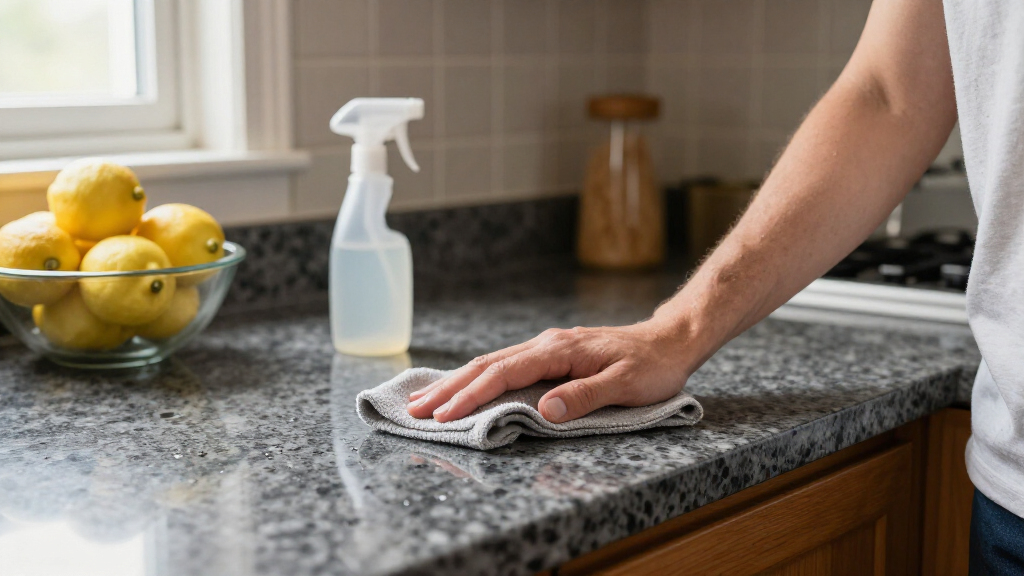
For daily cleanup, the guide recommends a cleaner formulated for granite or other stone and a soft cloth. Its suggested method for a more thorough wipe-down is to apply a stone-specific product, wipe in a circular motion, then use a clean, dry cloth to buff the surface. The report names Weiman products as examples. Those are brand recommendations in the source article, not an independent comparison of cleaners.
For longer-term care, the report recommends resealing the full surface at least once a year, with six-month intervals as a possible schedule for kitchens that see heavy use. It describes a water test: sprinkle water on the counter and wait about 15 minutes. If water remains on the surface, the seal is holding; if it sinks in and leaves dark spots, the article says resealing may be due. Follow the chosen sealer’s label instructions, including its drying time, before using the counter for food preparation.
Protecting Stone From Stains
The guidance addresses two different risks: surface damage from unsuitable cleaners and staining when liquid penetrates stone. Prompt spill cleanup and products made for stone can help avoid exposing granite to substances the report says may dull or mark it. Resealing is presented as maintenance for the protective layer, not a guarantee that spills cannot stain.
There is no single interval that suits every counter. Kitchen use, countertop finish and local wear can affect how often the surface needs attention. Edges and high-use zones may need closer monitoring than broad, less-used areas. The report’s advice gives homeowners a basic check, but it does not establish that every granite surface responds identically.
Products Worth Considering

Shark Navigator Lift-Away Upright Vacuum Cleaner (NV356E)

Shark Rocket Pet Plus Corded Stick Vacuum, Lightweight, Bordeaux, HV322

Ring Alarm 5-Piece Wireless Security System
As an affiliate, we earn on qualifying purchases.
Daily Cleaning and Periodic Sealing
Granite is a natural stone with pores, and the source report says manufacturers apply a protective layer before installation. That layer can gradually wear with daily kitchen use, which is why the article separates everyday cleaning from periodic sealing. Cleaning removes spills and residue; resealing is intended to help limit absorption.
The article also distinguishes finishes and locations. It says honed granite may be more porous than a glossy finish and may need more frequent resealing. Counter edges, the area around a cooktop and spaces where meals are eaten receive particular attention because they can see more wear or spills. The source recommends sealing beneath sink lips and applying two coats to edges, but homeowners should check that a product is suitable for their particular stone and follow its label.
““You should put down heavy cookware gently to avoid chips to your counters’ edges or corners.””
— House Beautiful report
Sealing Needs Vary by Counter
The source does not provide testing data comparing sealing schedules, cleaners or brands, and it does not establish that the water test is definitive for every granite type or sealer. Its recommended interval is general guidance: the right schedule may depend on use and finish. The supplied material also does not give the report’s publication date or identify an independent stone-care expert consulted for the advice. Check the countertop installer’s guidance and product labels if instructions differ.
Check the Surface and Product Label
Homeowners can begin by cleaning with a product labeled for granite or natural stone, wiping acidic spills promptly and using a soft cloth. The report’s water test can serve as a prompt to review the seal; dark spots after the stated wait may indicate that resealing is needed. Before applying a sealer, confirm that it is appropriate for the countertop and follow its instructions for application, ventilation and drying time.
After sealing, allow the surface to dry for the period specified by the product maker before food preparation. Monitor areas that receive frequent use and repeat the check as needed. The source does not specify a universal next inspection date, so ongoing care should follow the countertop and sealer manufacturers’ guidance.
Key Questions
How often should granite countertops be resealed?
The House Beautiful report recommends resealing at least once a year, and says homeowners with heavily used kitchens may consider every six months. Actual needs can vary by stone, finish and use.
How can I check whether the seal may need attention?
The report suggests sprinkling water on the counter and waiting about 15 minutes. Water that remains on the surface suggests the seal is holding; water that sinks in and leaves dark spots may signal that resealing is due. Treat this as a guide, not a guarantee for every countertop.
What should I use to clean granite?
Use a cleaner labeled for granite or natural stone and a soft cloth. The report cautions against harsh or abrasive products and notes that some glass cleaners contain ammonia, which may dull stone.
Which spills should I wipe up quickly?
Clean up acidic liquids such as vinegar, wine and coffee promptly. The report says they may leave marks, especially on light-colored granite.
Do countertop edges need extra care?
The report says edges and corners are more vulnerable to chips from heavy cookware. It also recommends paying closer attention to edges when sealing because they may wear faster than flat areas.
Source: rss