
The easiest way to test furniture layouts before moving anything is by using visual tools like scaled floor plans or digital design apps. Measure your room accurately and create a scaled drawing, including windows and doors. Use paper cutouts or drag-and-drop digital furniture pieces to experiment with different arrangements. This approach helps you see how everything fits and makes adjustments quick and stress-free. Keep exploring for more ways to make your space perfect.

Get furniture and decor delivered free with Prime
- Fast, free delivery on millions of items
- Prime Video, Amazon Music and more included
- Member-only deals all year
Key Takeaways
- Create a scaled floor plan on paper or digitally to experiment with furniture placement without physical effort.
- Use paper cutouts or digital models of furniture to test different arrangements easily.
- Utilize home design apps to drag-and-drop furniture and visualize layouts virtually.
- Measure room dimensions accurately to ensure furniture proportions and placement are realistic.
- Incorporate color and aesthetic considerations into virtual or paper plans for cohesive space planning.
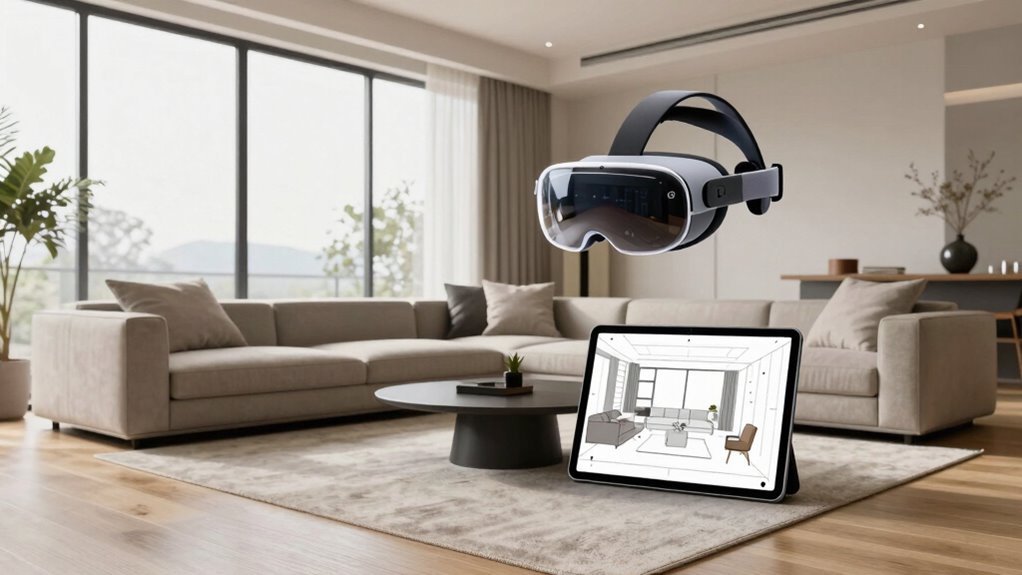
Designing a functional and comfortable space begins with effective furniture layout testing. Before you lift a single piece of furniture, it’s vital to visualize how everything will come together in your room. Using simple methods, you can experiment with different arrangements to find the best setup for your space. One of the easiest ways to do this is by creating a scaled floor plan on paper or digitally. Measure your room accurately, then draw it to scale, including windows, doors, and fixed features. This preparation ensures your space planning is precise and efficient. This allows you to move paper cutouts or digital furniture pieces around without any physical effort. As you do this, pay close attention to color coordination. Choosing a color palette that complements your walls, flooring, and decor helps you envision how the furniture will blend into your overall aesthetic. When you test different layouts, consider how the colors will flow and create harmony, ensuring your space feels cohesive rather than chaotic. Incorporating visualization techniques can further enhance your ability to see how the finished space will look. Space optimization is another essential aspect that testing helps you achieve. With a clear visual plan, you can identify the best placement for each piece, making sure you’re not crowding the room or leaving awkward gaps. You’ll see if your furniture fits comfortably without blocking walkways or access to windows and doors, which is vital for both functionality and safety. This process also helps you prioritize what pieces are necessary, scale down oversized furniture, or identify opportunities for multi-functional items that maximize your available space. Additionally, understanding room proportions can improve your layout choices and overall design flow. Considering furniture scale early in your planning prevents the frustration of moving heavy furniture only to discover it doesn’t fit or look right in the actual room. Being aware of furniture proportions also helps you maintain a balanced and harmonious aesthetic. Using technology can make this process even easier. Many home design apps let you upload room dimensions and drag-and-drop furniture to test different layouts virtually. This approach allows you to experiment endlessly without any physical effort or risk. Plus, it’s a great way to visualize how different color schemes and furniture arrangements will look together, giving you confidence before making any moves.
digital furniture layout planner
As an affiliate, we earn on qualifying purchases.
As an affiliate, we earn on qualifying purchases.
Frequently Asked Questions
How Accurate Are Virtual Furniture Layout Tools?
Virtual furniture layout tools are quite accurate for visualizing your space, especially when you adjust color schemes and lighting effects. They help you see how furniture fits and how different lighting impacts the room’s ambiance. However, keep in mind that some details, like exact sizes or textures, might not be perfect. Use these tools as a guide, but trust your instincts and measurements for the final plan.
Can I Test Furniture Layouts Without Physical Space Measurements?
Yes, you can test furniture layouts without precise space measurements by using room customization apps or virtual design tools. These platforms let you personalize decor and experiment with different arrangements easily. You simply input your room dimensions, and then you can move furniture around to see what fits best. This approach helps you visualize your space, make adjustments, and guarantee your decor personalization aligns perfectly before you move anything.
What Budget-Friendly Options Exist for Layout Testing?
If you want cost-effective solutions, try DIY visualization tools like free online room planners. For example, Sarah used a free app to experiment with her living room layout without spending a dime. These tools allow you to drag and drop furniture to see how everything fits. They’re perfect for testing different arrangements before moving or buying furniture, saving you money and helping you make confident decisions.
How Long Does It Typically Take to Plan a Layout?
Planning a layout usually takes a few hours to a day, depending on your space and how detailed you get. You’ll want to take into account color schemes and lighting options to see how they affect the room’s feel. As you experiment with furniture placement, incorporate different lighting options to test ambiance. This process helps you visualize your ideal setup, making adjustments before moving anything, saving you time and effort.
Are There Specific Design Principles to Follow for Optimal Layouts?
You should follow specific design principles for ideal layouts, like prioritizing design harmony and space optimization. Keep traffic flow clear, balance furniture sizes with the room’s scale, and consider focal points to create a welcoming atmosphere. Remember, a well-thought-out plan is the foundation—think of the layout as a symphony where every piece plays its part, ensuring your space looks great and functions smoothly.
Conclusion
By visualizing your furniture layout, you’re not just arranging objects—you’re charting the course of your new chapter. Think of your space as a canvas awaiting your personal brushstrokes, each piece a symbol of comfort and style. Testing before moving is like planting seeds for a harmonious garden, ensuring everything blooms perfectly. Embrace this process, and you’ll craft a home that reflects your essence, where every element whispers a story of thoughtful design and new beginnings.
Columbus Day / Indigenous Peoples' Day Picks
long weekend sales
As an affiliate, we earn on qualifying purchases.