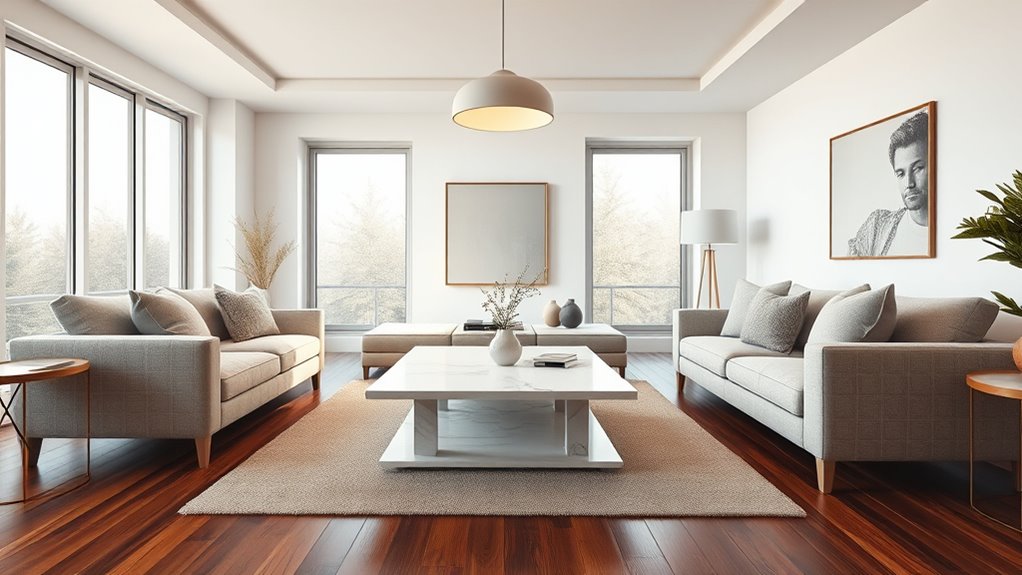

To photograph your interiors like a pro, focus on choosing the right perspective—experiment with higher or lower angles and use wide-angle lenses to capture the entire space without distortion. Prioritize natural light, shooting during times when sunlight filters softly through windows, and soften harsh midday sunlight with curtains or reflectors. Keep your composition clean, use leading lines, and highlight focal points. Mastering lighting and framing will elevate your shots, and if you keep exploring, you’ll uncover even more professional techniques.
Key Takeaways
- Use natural light during optimal times and soften harsh sunlight with curtains or reflectors for even, flattering illumination.
- Choose the right perspective and angles to showcase space’s personality, experimenting with higher or lower viewpoints.
- Declutter and focus on architectural details, furniture, or focal points, using leading lines and negative space for balanced composition.
- Adjust camera settings like aperture to control depth of field and highlight textures, ensuring sharp, professional-looking images.
- Review and refine each shot, combining precise framing and expert lighting to create polished, compelling interior photographs.

Have you ever wondered how to capture the true essence of your interiors? The secret lies in understanding the delicate balance of composition and lighting. To start, consider the perspective that best showcases your space’s personality. Instead of snapping from eye level, experiment with higher or lower angles to add depth and interest. A wide-angle lens can help encompass an entire room, but be cautious of distortion—use it selectively to highlight spaciousness without warping lines. Think about leading lines; furniture arrangements, architectural features, or even patterns on the floor can draw the viewer’s eye into the scene, creating a natural flow that feels inviting.
Lighting is your most powerful tool in interior photography. Natural light, if available, is often ideal for its soft, diffuse quality. Plan your shoot during times when sunlight filters through windows gently, avoiding harsh midday rays that create unflattering shadows and overexposed highlights. Use curtains or sheer fabrics to soften direct sunlight or bounce light around the room with a reflector or a white sheet. If natural light is limited, supplement with artificial lighting—think about using off-camera flashes, LED panels, or even portable lamps. The goal is to evenly illuminate the space, highlighting textures and colors without creating stark contrasts or overly bright spots.
Pay close attention to the details of composition. Clean and declutter your space before shooting; a tidy room makes the architecture and design elements stand out more clearly. Position your camera at a height that reveals the most compelling features—sometimes eye level works, but at times a slightly elevated or lowered angle captures the spatial relationships better. Remember to keep the horizon straight and avoid tilting the camera unless you’re intentionally adding a dynamic effect. Frame your shot thoughtfully: include interesting focal points like a statement piece of furniture, artwork, or architectural details, but don’t overcrowd the scene. Use negative space to give your images breathing room, allowing the eye to rest and focus on key elements.
Finally, pay attention to the details that tell a story—textures, color palettes, and accents. Adjust your aperture to control depth of field; a narrower focus can emphasize a particular feature while blurring the background, or vice versa, to engage viewers. Additionally, understanding lighting techniques can help you achieve more professional results. Take your time, review your shots carefully, and make small adjustments to composition and lighting. When you combine precise framing with expert lighting, your interior photos will transcend simple documentation—they’ll evoke emotion and showcase your space’s unique character with professional finesse.
Frequently Asked Questions
What Camera Settings Are Best for Interior Photography?
You should set your camera to a low ISO, around 100-400, to keep images clear and noise-free. Use a small aperture like f/8 to f/11 for sharp depth of field, ensuring both foreground and background are in focus. Keep your shutter speed steady—around 1/60 to 1/125 seconds—using a tripod if needed. Adjust white balance for natural lighting, and shoot in RAW for maximum editing flexibility.
How Do I Deal With Harsh Window Lighting?
To handle harsh window lighting, you should use a polarizing filter to reduce glare and contrast. Position yourself to balance natural light with interior lighting, avoiding direct sunlight hitting your lens. Use HDR mode or bracket exposures for even lighting across the scene. Adjust your aperture to control depth of field, and consider adding sheer curtains to diffuse harsh sunlight naturally. This approach guarantees balanced, detailed interior shots with minimized glare.
What Equipment Is Essential for Professional Interior Shots?
You’ll want a wide-angle lens to capture spaciousness and detail, a sturdy tripod for stability, and a remote shutter release to avoid camera shake. A reflector or fill light helps soften harsh shadows and balance interior lighting, while a circular polarizer reduces unwanted reflections. For precise exposure, consider a light meter. These tools, combined with your eye for composition and lighting, make certain your shots look professional and inviting.
How Can I Make Small Rooms Look Larger?
To make small rooms look larger, use wide-angle lenses to capture more space, and shoot from a corner to maximize depth. Keep the lighting bright and even, avoiding harsh shadows, by using natural light or soft diffusers. Declutter, choose neutral colors, and incorporate mirrors to reflect light and create an illusion of openness. Pay attention to composition—frame shots to emphasize height and space, making the room feel more expansive.
What Post-Processing Techniques Improve Interior Photos?
To enhance interior photos, brighten shadows with careful dodging, subtly boosting contrast for depth. Use perspective correction to straighten lines and maintain architectural integrity, while sharpening details like textures and furniture edges. Adjust white balance to preserve natural tones, and consider a slight vignette to draw focus inward. These techniques refine your composition, emphasize lighting, and create a balanced, inviting atmosphere that feels both professional and true to life.
Conclusion
Now that you understand the importance of composition and lighting, remember that well-lit, thoughtfully arranged interiors attract 70% more online engagement. Focus on natural light, avoid clutter, and use symmetry to create balance. Pay attention to angles that showcase your space’s best features, and don’t be afraid to experiment until it feels just right. With these tips, you’ll capture stunning interior shots that truly highlight your space’s personality and charm.