
To decide what to keep, donate, or replace, start by thoroughly evaluating each item’s usefulness, condition, and emotional value. Ask yourself if you’ve used it in the past year, if it fits your current lifestyle, and whether it sparks joy. Be honest about its condition and relevance. Organize your thoughts and belongings systematically. Following these steps will help you make clear, practical decisions and maintain a clutter-free space; further tips can guide your process.
Key Takeaways
- Assess each item’s usage, condition, and emotional value to determine if it should be kept, donated, or replaced.
- Use clear categories—Keep, Donate, or Replace—to streamline decision-making and prevent clutter.
- Prioritize donating items unused in the past year or that no longer serve your needs.
- Evaluate if replacements are genuinely necessary, focusing on quality and current lifestyle fit.
- Regularly review belongings to ensure your possessions align with your evolving needs and priorities.

Deciding what to keep, donate, or replace can streamline your space and simplify your life. The key is to approach this task systematically, focusing on practicality and your current needs. Begin by gathering all items in a specific area, such as a closet, garage, or drawer. Seeing everything at once helps you assess what you truly use or value. As you handle each item, ask yourself: Do I use this regularly? Does it serve a purpose? Do I love it? If the answer to these questions is no, consider whether it’s worth keeping. If not, set it aside for donation or disposal.
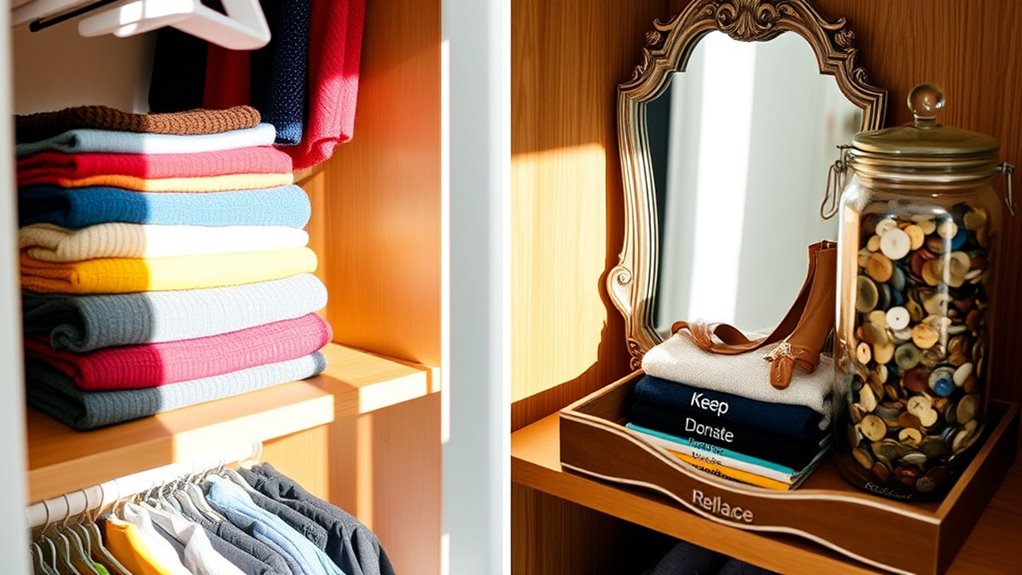
Next, create specific categories for your items: Keep, Donate, or Replace. Be honest about the condition and relevance of each item. For example, clothing that no longer fits or is out of style should be donated or discarded. Items that are broken or damaged beyond repair are candidates for disposal unless they can be fixed efficiently. Items you haven’t used in the past year are often prime candidates for donation, as they’re unlikely to be needed in the future. This process prevents clutter from accumulating again and ensures your space is filled only with things that add value or joy.
When considering replacements, evaluate whether the item is genuinely needed or if there’s an alternative that can be more efficient. For instance, if a kitchen gadget is rarely used, replace it with a more versatile tool or skip it altogether. For items you decide to replace, set a budget and prioritize quality over quantity. This approach minimizes unnecessary purchases and helps you avoid accumulating more clutter.
As you proceed, organize your keep piles methodically. Place items you want to retain in designated spaces, making sure they’re stored in a way that’s accessible and logical. For items to donate, gather them in bags or boxes, and schedule a drop-off or pick-up. For items to replace, create a list to guide your shopping, focusing on necessity and durability. This systematic approach reduces decision fatigue and keeps you focused on your goal of a clutter-free environment.
Finally, commit to regular reviews of your belongings, perhaps every six months. Reassessing your items ensures you don’t fall back into clutter and helps you stay aligned with your lifestyle and priorities. Incorporating storage solutions can further optimize your space and make organizing easier. By maintaining a disciplined, methodical process, you’ll find it easier to keep your space organized, functional, and free of unnecessary possessions. This proactive approach conserves time, reduces stress, and creates a more intentional living environment.
Frequently Asked Questions
How Often Should I Reassess My Belongings?
You should reassess your belongings every six months to a year. Regular checks help you stay organized and prevent clutter from building up. Set a specific date or season, like spring or fall, to review your items. During this time, evaluate what you use regularly, what’s outdated, or no longer serves a purpose. This method keeps your space functional and makes certain you only keep what truly adds value to your life.
What Items Are Best Suited for Donation?
Like the phoenix rising, your clothes, toys, and household items can find new life through donation. Focus on gently used clothing, non-perishable food, and functional household goods. Items that no longer serve your needs or are in good condition are ideal. Avoid donating damaged or outdated items. By carefully selecting these, you give others a chance to benefit and create space for what truly matters in your home.
How Do I Determine the Worth of Items to Replace?
You determine the worth of items to replace by researching their current market value online, considering their age and condition. Check if similar new items cost markedly more than your used version, which signals a good replacement opportunity. Factor in your budget and how often you use the item. If repairs cost more than replacement or the item no longer meets your needs, it’s time to replace it.
What Are Eco-Friendly Disposal Options?
Think of eco-friendly disposal options like a well-balanced recipe. You can recycle items such as paper, glass, and certain plastics at local centers, or donate usable goods to charities. Compost organic waste to enrich soil. For electronics, seek specialized recycling programs or take them to certified e-waste facilities. Avoid landfills when possible, and always verify local guidelines. This methodical approach minimizes environmental impact and guarantees responsible disposal.
How Can I Stay Motivated During Decluttering?
You stay motivated during decluttering by setting clear goals and breaking the process into manageable steps. Visualize the benefits, like a tidy space or less stress, to keep your spirits high. Celebrate small wins along the way, and remind yourself of the purpose behind decluttering. Keep a timer to stay focused, and play motivating music. Consistency and positive reinforcement will help you maintain momentum throughout the process.
Conclusion
By carefully sorting your belongings, you can reclaim space and reduce clutter. Did you know that the average person spends 2.5 days annually searching for lost items? If you decide to keep, donate, or replace thoughtfully, you’ll save time and create a more organized environment. Take a systematic approach, evaluate each item objectively, and make intentional decisions. This simple process can transform your space and streamline your daily routine effectively.