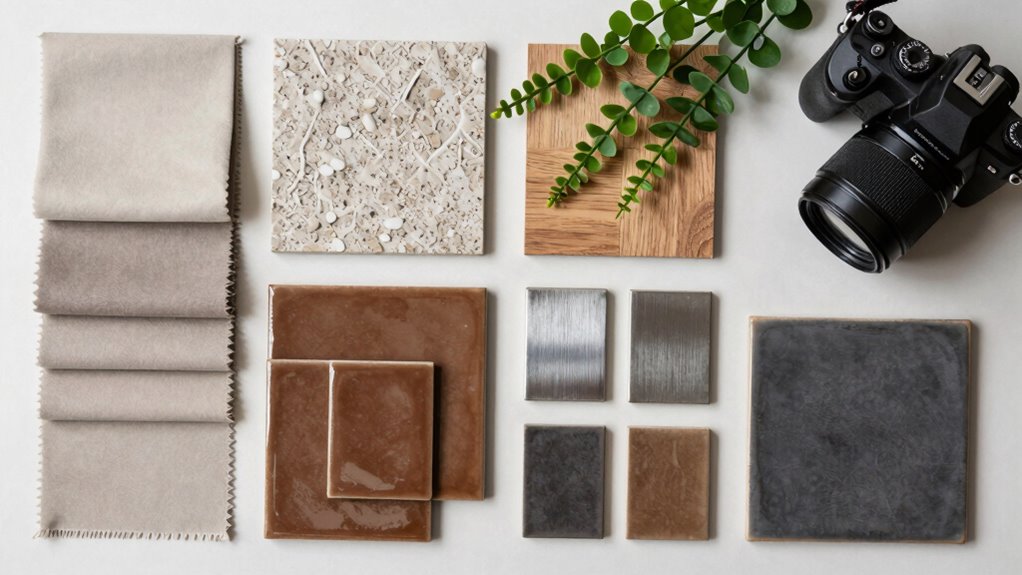

To create a better materials board for a remodel, start by gathering quality samples from trusted sources and organizing them clearly. Visualize how textures, colors, and finishes work together using physical or digital tools, experimenting by swapping items. Be mindful of your budget and the supply chain to avoid delays or shortages. Keep track of sources and costs, ensuring everything reflects your style and project needs. Keep going to discover more tips for an effective and inspiring materials board.

Get furniture and decor delivered free with Prime
- Fast, free delivery on millions of items
- Prime Video, Amazon Music and more included
- Member-only deals all year
Key Takeaways
- Curate a balanced mix of textures, colors, and finishes to showcase harmony and overall design flow.
- Organize samples systematically with clear labels, sources, and costs for easy reference and adjustments.
- Use both physical and digital visualization tools to experiment with different material combinations.
- Prioritize sustainable and reliable sourcing to ensure quality and eco-friendliness within budget.
- Regularly review and refine the board to align with project goals, budget, and material availability.
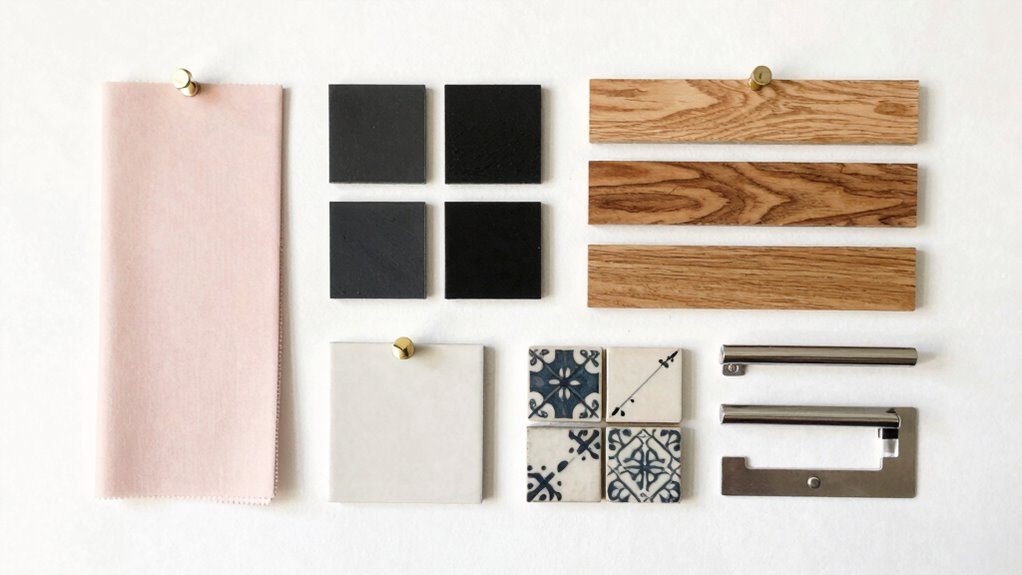
Creating a compelling materials board is an essential step in any remodel, as it helps you visualize your design and communicate your vision clearly. When you’re working on your materials board, you want to guarantee it reflects your style while remaining practical and achievable. One of the first things to think about is material sourcing. You need to gather samples and images from reliable sources — whether that’s visiting showrooms, browsing online catalogs, or working with vendors directly. Sourcing materials from trusted suppliers ensures quality and consistency, which is critical for a cohesive look. It also helps you stay organized because you’ll have a clear idea of where to find each item, from flooring and tiles to cabinetry and fixtures. Ensuring your sources are reputable can also minimize delays and issues with material quality during the project. Incorporating sustainable sourcing practices can further enhance your project’s eco-friendliness and support biodiversity. Additionally, understanding the supply chain involved in material sourcing can help you anticipate potential delays and plan accordingly. Being aware of the material availability at your chosen suppliers can also prevent unexpected shortages that might disrupt your timeline.
Budget considerations are equally important when creating your materials board. Before you even start collecting samples, set a realistic budget. This helps you filter options early on, focusing your attention on materials that fit within your financial limits. As you gather samples, keep track of costs associated with each item, so you don’t overspend when it’s time to purchase. Be mindful that high-end materials can elevate your design but may not be necessary for every element. Mixing budget-friendly options with select premium pieces can give your space a luxurious feel without breaking the bank.
As you assemble your materials board, think about the overall flow and harmony of your design. Lay out your samples in a way that shows how different textures, colors, and finishes will coexist. Use physical samples or digital tools to visualize how the materials will look together, and don’t be afraid to experiment by swapping items out to see what works best. Keep a detailed list of each material, source, and cost so you can easily reference it later during procurement. Paying attention to material sourcing and quality control can help ensure your remodel results in a space that is both beautiful and durable.
remodel materials samples organizer
As an affiliate, we earn on qualifying purchases.
As an affiliate, we earn on qualifying purchases.
Frequently Asked Questions
How Can I Incorporate Sustainable Materials Into My Board?
You can incorporate sustainable materials into your board by selecting eco-friendly options like bamboo, cork, or reclaimed wood. Include recycled materials such as glass tiles, metal fixtures, or repurposed furniture pieces. Research brands committed to sustainability, and gather samples or images that highlight these eco-conscious choices. This approach not only supports environmental efforts but also adds unique, stylish elements to your remodel, making your project both beautiful and responsible.
What Tools Are Best for Assembling a Materials Board?
Think of assembling your materials board as painting a vibrant mural. Digital tools like Canva or Photoshop help you arrange and visualize your ideas seamlessly, while physical samples add texture and authenticity. Use a scanner or camera to digitize real samples, then combine them with digital layouts. These tools act as your palette, blending colors and textures effortlessly, creating a compelling, tangible, and virtual tapestry that brings your remodel vision to life.
How Do I Prioritize Materials for Budget Constraints?
You should start by evaluating your overall budget and allocating funds to key areas first, focusing on essential materials. Establish a material hierarchy by ranking items based on importance and impact. Prioritize high-quality, durable materials for visible or high-traffic areas, and consider more budget-friendly options for secondary spaces. This way, you can make smart budget allocations while ensuring your materials board reflects your remodel’s priorities effectively.
Should I Include Sample Textures or Just Color Swatches?
You should include sample textures along with color swatches on your materials board. Texture variety adds depth and tactile interest, helping you visualize how different materials will feel and look together. Incorporating both elements guarantees better color coordination, making your design cohesive. By seeing textures and colors side by side, you can make more informed decisions, ultimately creating a more polished and harmonious remodel plan.
How Often Should I Update My Materials Board During a Project?
Did you know that projects with regularly updated materials boards are 30% more likely to stay on track? You should update your materials board at least once a month during a remodel. This guarantees your material sourcing remains aligned with your design vision and helps maintain design consistency. Frequent updates allow you to address any supply issues early, keeping your project streamlined and your design cohesive from start to finish.
Conclusion
Creating a killer materials board is like designing a vintage jukebox — it’s all about selecting the perfect pieces that harmonize seamlessly. Keep your vision clear, stay organized, and don’t be afraid to mix textures and colors. Remember, a well-crafted board guides your renovation like a map leading to hidden treasure. With patience and a keen eye, you’ll turn your space into a masterpiece, just like an artist adding the final brushstrokes to a masterpiece in a cozy, modern atelier.
Fall Picks
fall essentials
As an affiliate, we earn on qualifying purchases.