To create a home lighting plan, start by observing natural light patterns throughout the day and identify areas needing extra brightness. Consider each space’s purpose—cozy zones, work areas, or display spots—and layer ambient, task, and accent lighting for flexibility. Position fixtures carefully to avoid glare and guarantee even coverage. Choose stylish, energy-efficient options that suit your mood and personality. Continued exploration will reveal how to fine-tune your lighting for ultimate comfort and style.
Key Takeaways
- Assess natural light patterns and identify areas needing artificial lighting to enhance ambiance and functionality.
- Define each space’s purpose and select appropriate layered lighting—ambient, task, and accent—for optimal use.
- Plan fixture placement to avoid glare, ensure even distribution, and support both relaxation and activity zones.
- Incorporate dimmers and controls for adjustable lighting levels to create mood and adapt to different needs.
- Choose energy-efficient LED fixtures that complement your decor, promote well-being, and reflect your personal style.
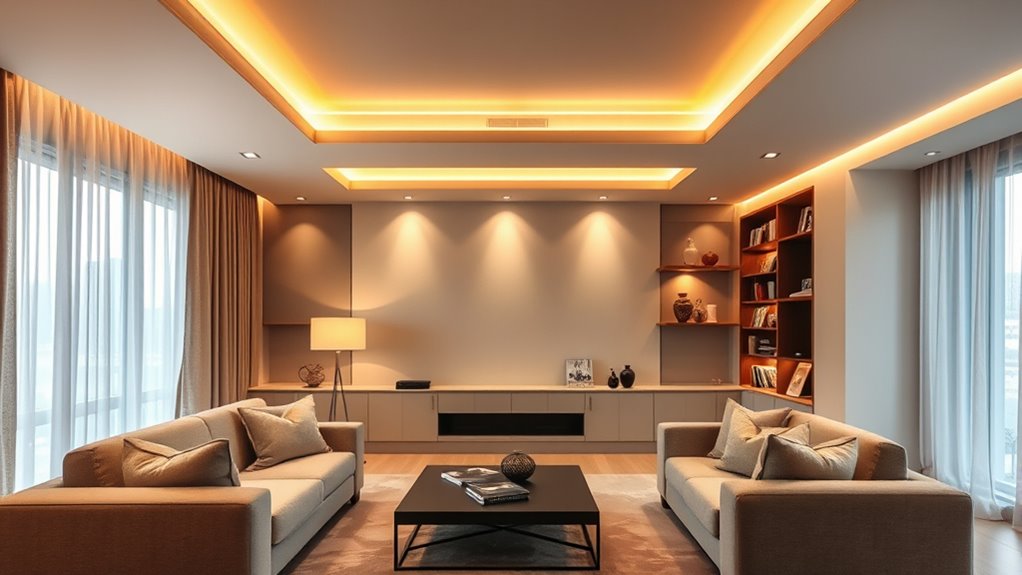
Lighting is more than just a functional necessity; it’s a powerful tool to shape the mood and atmosphere of your home. When you craft a lighting plan, you’re designing an environment that influences how you feel, how you move through your space, and how your decor shines. The first step is understanding your space’s natural light. Take note of how sunlight pours in at different times of day, and identify areas that need reinforcement with artificial light. By observing these patterns, you’ll know where to add layered lighting, ensuring your room doesn’t feel dim or overly bright.
Next, consider the purpose of each area. For a cozy reading nook, you’ll want a focused light source—perhaps a swing arm lamp or a dedicated reading light—that provides ample illumination without creating glare. In contrast, your living room benefits from a mix of ambient, task, and accent lighting. Ambient lighting sets the overall tone, so think about ceiling fixtures or dimmable LED panels that distribute light evenly. For tasks like cooking or working at a desk, targeted task lighting is essential; adjustable fixtures or under-cabinet lights can help you focus without casting shadows. Accent lighting adds depth and personality, highlighting artwork, architectural features, or decorative objects with spotlights or wall-mounted fixtures.
The key to a cohesive lighting plan is layering. You don’t want a single harsh light source; instead, combine different types of lighting at varying levels. Use dimmers whenever possible—dimming switches give you immediate control over the atmosphere, whether you want a relaxed evening or a lively gathering. When selecting fixtures, prioritize style and function, ensuring they complement your decor while fulfilling their specific roles. Consider energy efficiency too; LED lights are cost-effective, long-lasting, and eco-friendly, making them a smart choice for every space. Additionally, understanding the importance of well-being can help you design lighting that supports your health and mood.
Finally, think about the placement of your lights. Avoid placing fixtures directly above seating or work areas where they might cause glare or discomfort. Instead, position lights to illuminate the space evenly, creating a welcoming glow that invites relaxation and activity alike. Once your plan is in place, test it out. Adjust the brightness levels, swap fixtures if necessary, and fine-tune the balance until your home feels just right. With deliberate planning, your lighting becomes more than illumination—it becomes an extension of your home’s personality, mood, and style.
Frequently Asked Questions
How Do I Choose the Right Light Bulbs for My Needs?
You should consider your room’s purpose and mood when choosing bulbs. Choose warm white for cozy spaces, bright white for task areas, and dimmable options for versatility. Check the lumens for brightness and the color temperature for ambiance. Energy-efficient LED bulbs save money and last longer. Match the bulb’s base type and wattage to your fixtures, ensuring safety and ideal performance.
What Are the Best Lighting Options for Small Spaces?
Imagine your small space as a cozy stage, ready for a perfect spotlight. Opt for layered lighting—use bright, focused task lights for work areas, and soft, ambient glows to create warmth and intimacy. Slim, wall-mounted fixtures or sleek pendant lights save precious space while adding style. Choose bulbs with a high color rendering index to breathe life into your surroundings. With thoughtful lighting, your small space transforms into a vibrant, welcoming haven.
How Can I Incorporate Smart Lighting Controls?
You can incorporate smart lighting controls by installing compatible smart bulbs or switches, then connecting them to a central app or voice assistant. Use automation to set schedules, adjust brightness, or change colors with a tap or voice command. Experiment with scenes that match your mood or activity, like cozy evenings or bright mornings. With these controls, you effortlessly tailor your lighting to fit your lifestyle and enhance your space’s ambiance.
What Is the Ideal Color Temperature for Different Rooms?
You might be surprised, but the ideal color temperature varies by room. For cozy bedrooms, choose warm white around 2700K to promote relaxation. In kitchens and workspaces, opt for cooler white, around 3500-4100K, to boost alertness and focus. Living rooms benefit from a neutral tone, about 3000K, for comfort and versatility. Adjust these temperatures to match your mood and activities, creating a tailored, inviting atmosphere.
How Do I Ensure My Lighting Plan Is Energy-Efficient?
You can guarantee your lighting plan is energy-efficient by choosing LED bulbs with high lumens and low wattage, which use less energy while providing ample light. Incorporate dimmers and motion sensors to reduce unnecessary usage. Opt for natural light when possible, and strategically place fixtures to maximize coverage without excess. Regularly review your setup, replacing outdated bulbs, and align your lighting with your daily routines to minimize waste and cut costs.
Conclusion
Now that you’ve crafted your perfect lighting plan, remember, lighting isn’t just about visibility—it’s about setting a mood, telling a story in your space. Like a painter with a palette, you hold the power to transform your home into a sanctuary of comfort and style. So go ahead, experiment with shadows and highlights; let your home’s lighting be a symphony that guides your mood and moments, turning ordinary spaces into extraordinary memories.