To bring wabi-sabi textures into your everyday spaces, embrace raw, natural materials like weathered wood, linen with gentle wrinkles, and handmade ceramics with imperfect glazes. Focus on textures that reveal age, resilience, and unique character, creating a calming visual rhythm. Allow surfaces to invite touch and reflection, fostering mindfulness amid modern sleekness. If you explore further, you’ll discover subtle ways to infuse your space with authentic beauty and quiet serenity through imperfect textures.
Key Takeaways
- Incorporate weathered wood and aged materials to introduce raw, resilient textures that evoke authenticity and serenity.
- Choose handmade ceramics with uneven glazes and irregular rims for tactile, imperfect charm.
- Use linen fabrics with subtle wrinkles to add warmth, softness, and natural imperfection.
- Emphasize visible grain patterns and unpolished surfaces to create visual rhythm and calm.
- Mindfully observe and touch surfaces to foster appreciation of natural imperfections and present moment awareness.
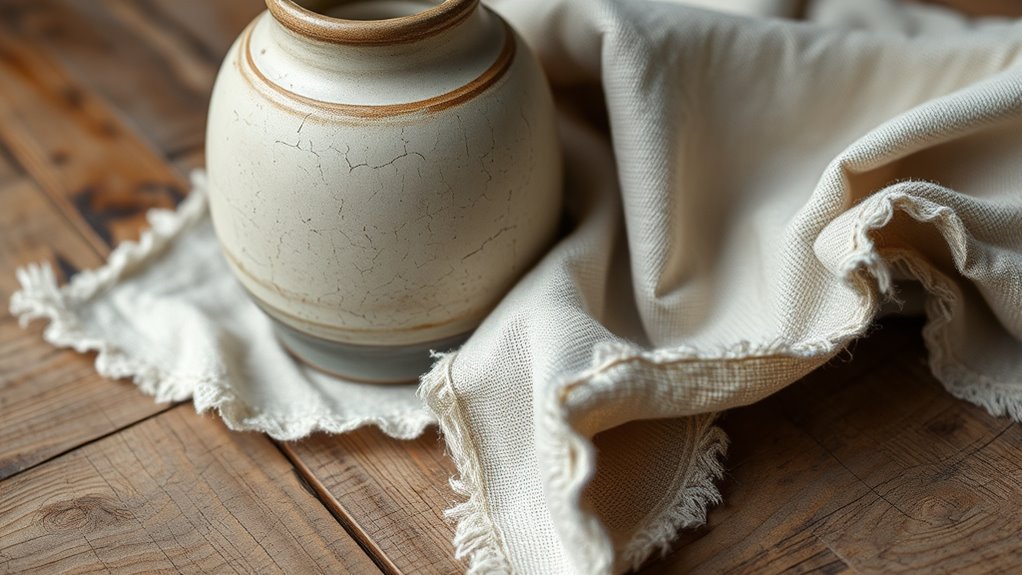
Have you ever noticed how imperfect textures can evoke a sense of quiet beauty and serenity? It’s as if these tactile imperfections whisper stories of patience, time, and natural flow—elements that can transform an ordinary space into a sanctuary of mindful appreciation. When you take a moment to observe the roughness of weathered wood, the uneven glaze of handmade ceramics, or the subtle crinkles of linen, you begin to sense a harmony rooted in authenticity. These textures, inherently imperfect yet deeply soulful, challenge the pursuit of flawlessness and instead invite you to embrace the subtle imperfections that make life beautifully unpredictable.
Imperfect textures whisper stories of patience, authenticity, and natural beauty, transforming spaces into serene havens of mindful appreciation.
Imagine running your fingers over a cracked plaster wall, feeling the irregular ridges and tiny fissures that tell of age and resilience. There’s a quiet elegance in these imperfections, a reminder that beauty isn’t about perfection but about authenticity. Wabi-sabi embraces the natural cycle of growth, decay, and renewal, and textures embody this philosophy vividly. The roughness of unpolished stone or the uneven surface of handcrafted pottery communicates a raw, visceral connection to nature’s unrefined beauty. You’re encouraged to see these irregularities not as flaws but as evidence of a genuine, handcrafted process that values the unique history embedded within each surface.
In your everyday space, incorporating these textures means choosing materials that celebrate their raw qualities. Think of a linen curtain with subtle wrinkles, a wooden table with visible grain patterns, or a ceramic bowl with an imperfectly shaped rim. These elements create a visual rhythm of irregularities that soothe the eye and calm the mind. They’re tactile reminders that life isn’t perfectly symmetrical, and that’s what makes it enthralling. When you surround yourself with such textures, you cultivate an environment where imperfections aren’t hidden but celebrated—each surface becomes a testament to the beauty of natural imperfection.
To truly appreciate wabi-sabi textures, you need to slow down and observe with intention. Touch these surfaces, notice the variations, and feel their unevenness beneath your fingertips. Let these textures serve as gentle anchors amid the modern obsession with sleek symmetry. They foster mindfulness, inviting you to find beauty in the unrefined and imperfect. Incorporating natural materials like weathered wood or linen can also enhance the rustic aesthetic of your space, emphasizing authenticity and aged character. As you incorporate these elements into your everyday spaces, you create a haven that reflects the quiet, resilient beauty of natural life—an environment that encourages you to accept imperfection as an essential part of your personal aesthetic and spiritual harmony.
Top picks for "wabi sabi textur"
Open Amazon search results for this keyword.
As an affiliate, we earn on qualifying purchases.
Frequently Asked Questions
How Do I Incorporate Wabi-Sabi Textures Into Small Spaces?
To incorporate wabi-sabi textures into small spaces, choose imperfect, organic materials like weathered wood, rough ceramics, and soft linen. Layer these textures thoughtfully, allowing their natural flaws to shine. Keep color palettes muted and earthy, creating a calming atmosphere. Use textured accessories sparingly but intentionally, like a handcrafted vase or a textured throw. This approach highlights beauty in imperfection, making your compact space feel warm, authentic, and effortlessly stylish.
Are Wabi-Sabi Textures Suitable for Outdoor Environments?
Yes, wabi-sabi textures suit outdoor environments beautifully. You’ll love how rough-hewn wood, weathered stone, and organic fibers age gracefully, adding depth and character to your garden or patio. Embrace natural imperfections and the passage of time, letting textures fade and patina develop naturally. These elements foster a serene, imperfect beauty that harmonizes with nature’s cycles, creating an authentic, calming outdoor space that feels both lived-in and thoughtfully designed.
What Are Budget-Friendly Ways to Achieve Wabi-Sabi Textures?
You can create stunning wabi-sabi textures without breaking the bank by embracing imperfections. Use reclaimed wood, weathered stones, or rough-hewn ceramics to add natural character. Dabble in DIY techniques like crackling paint or salt washes for authentic aging. Incorporate handmade textiles with irregular weaves or frayed edges. These budget-friendly touches bring an earthy, soulful vibe into your space, making it feel like a beautifully worn treasure chest of life’s imperfect moments.
How Do I Maintain Wabi-Sabi Textures Over Time?
To maintain wabi-sabi textures over time, embrace imperfection and let nature take its course. Regularly clean surfaces with gentle, natural cleaners, avoiding harsh chemicals that can strip character. Allow small dents, cracks, and patinas to develop naturally, viewing them as part of the beauty. Keep the space feeling organic by resisting over-polishing, and celebrate the aging process as an ongoing demonstration of authenticity and lived-in charm.
Can Wabi-Sabi Textures Be Combined With Modern Design Elements?
Yes, you can blend wabi-sabi textures with modern design elements effortlessly. Embrace the contrast—rough, imperfect surfaces alongside sleek, clean lines—and let their harmony create a space that feels both timeless and contemporary. Mix aged woods with glass and metal, rough ceramics with minimalist furniture, and rough textures with smooth surfaces. This juxtaposition sparks visual interest, evokes emotion, and celebrates the beauty of imperfection within modern aesthetics.
Conclusion
Embrace the beauty of imperfection—your space becomes a sanctuary of authenticity. Did you know that homes featuring natural textures like wood and stone report 30% higher satisfaction and calmness? By incorporating wabi-sabi textures, you invite a quiet elegance that celebrates life’s fleeting moments. Let the rough, organic surfaces remind you that beauty isn’t flawless but alive in every subtle crack and grain. Your everyday space transforms into a soulful retreat, rich with textures that tell your story.